SleepyPhilosophyRadio

Episodes

94 episodes233 hours15 topics

Deep readings and philosophical explorations. The complete archive, newest first.

94 episodes

November 2026

4 episodes

SpotlightNovember 2026

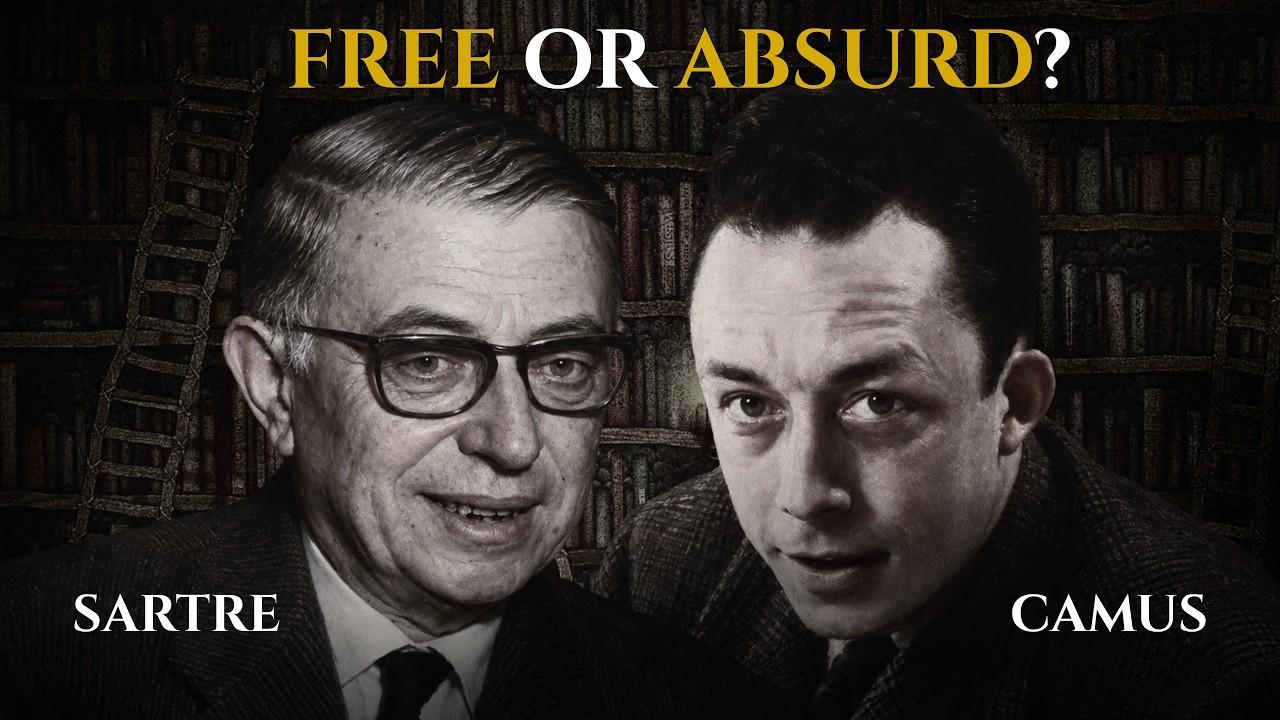
Camus and Sartre began as friends and became public opponents over The Rebel. Their argument reaches deeper than the quarrel: Camus starts with the absurd and insists on revolt with limits; Sartre starts with radical freedom and asks what commitment to history requires. The reading follows their wartime friendship, the break, and the strongest version of each view. It asks how a person acts when no final authority can decide in their place.
Can a Murder Ever Be Justified? | Dostoevsky's Crime and Punishment

On Dostoevsky

16 chapters · 4 sources

A student imagines that exceptional people may cross the moral boundaries binding everyone else. This essay follows Raskolnikov's extraordinary man theory through his published article, Porfiry's questions, the competing demands of poverty and pride, and the relationships his reasoning cannot fully explain. Sonya's care preserves responsibility instead of erasing it. Razumihin offers useful work, Dunya resists generosity that expects obedience, and a false accusation exposes the difference between respectable confidence and reliable evidence. Crime and Punishment, also searched as Prestuplenie i nakazanie, separates fear from repentance and private admission from public confession. Its Siberian epilogue asks what remains to change after a sentence has been imposed. Brief context from Poor Folk and The House of the Dead locates Dostoevsky's attention to dignity, dependence and penal life without replacing the novel with a biography. The ending leaves renewal as a beginning requiring further choices.

Play

The Universe Is Mental | The Kybalion's Seven Hermetic Principles

On Hermes Trismegistus & William Walker Atkinson

12 chapters · 4 sources

The Kybalion places a living mind beneath the visible universe and presents seven principles for understanding existence. This carefully researched narration follows Mentalism, Correspondence, Vibration, Polarity, Rhythm, Cause and Effect, and Gender, giving each its own argument and concrete examples. It distinguishes the book's American New Thought setting from its claims of ancient authority, and separates its speculative cosmology from established physics. The discussion also considers mental transmutation, deliberate attention, the relationship between a creator and a created individual, and the demand that knowledge enter action. Atkinson's Thought Vibration helps locate its publishing world, while the ancient Hermetica, including the Corpus Hermeticum, provides a contrast with the modern numbered system. The book's afterlife is considered through its portable maxims and the historical framing of The Kybalion: The Definitive Edition. The aim is to understand what the text actually proposes without turning mental practice into promises that wishes control physical events.

Play

Abandon All Hope | The History of Hell From Hades to Dante

On Dante, Augustine & 3 more

16 chapters · 6 sources

The idea of hell did not enter history in one finished form. This reading follows Egyptian judgment, Hebrew Sheol, Greek Hades, the Zoroastrian bridge, Gehenna, and arguments in early Christianity about the reach and duration of judgment. Dante gives the tradition its most enduring imaginative architecture; Milton, Swedenborg, and modern philosophers change its terms again. The focus stays on ideas about justice and the human conscience, rather than scenes of torment.

Play

October 2026

8 episodes

September 2026

8 episodes

August 2026

8 episodes

How to Live Without Wasting Your Life

On William B. Irvine

7 chapters · 6 sources

William B. Irvine turns ancient Stoic exercises into a practical philosophy for meeting loss, uncertainty, anger, and mortality.

Members

July 2026

7 episodes

June 2026

11 episodes

May 2026

10 episodes

Robert Pirsig's Zen and the Art of Motorcycle Maintenance | Book Summary

On Robert Pirsig

7 chapters · 6 sources

In nineteen seventy-four, the technical writer Robert Pirsig published a first-person account of a motorcycle journey west from Minneapolis, undertaken with his young son and two friends, which opened outward at intervals into a sustained philosophical Chautauqua on the meaning of quality in a mechanical age. This episode is a guided reading of that book from the inside.

Members

Thomas Hobbes's Leviathan | Book Summary

On Thomas Hobbes

7 chapters · 4 sources

The book written in exile in sixteen fifty-one that grounded all political authority in fear and changed the way the Western world thinks about power. In sixteen fifty-one, Thomas Hobbes published the most radical work of political philosophy in the English language. Written while England was tearing itself apart in civil war, Leviathan builds its entire argument from a single disturbing premise: that human beings, left without sovereign authority, exist in a condition of perpetual war against one another.

Members

The Stranger by Albert Camus | Book Summary

On Camus

8 chapters · 6 sources

A quiet, sentence-by-sentence reading of Albert Camus's short novel of a killing, a trial, and a final night. The episode opens in a Paris hotel room in May of nineteen forty, as a young Algerian journalist named Albert Camus finishes the first draft of a very short novel while the German army crosses into France.

Members

April 2026

7 episodes

1984 by George Orwell | Book Summary

On George Orwell

7 chapters · 5 sources

This longform episode walks patiently through Nineteen Eighty-Four, the novel George Orwell wrote from a farmhouse on a remote Scottish island in the last years of his life. We begin with the book's origins and the conditions under which it was made.

Members

March 2026

9 episodes

Society Made You Miserable | Rousseau's Complete Philosophy For Sleep

On Rousseau

10 chapters · 7 sources

What happens when a man looks at civilization and sees not progress, but a catastrophe? Jean-Jacques Rousseau believed that human beings were born free, compassionate, and whole, and that society had made them vain, competitive, and miserable. This three-hour episode traces Rousseau's life and philosophy from his youth as a wanderer through Savoy and Turin to his explosive arrival in Parisian intellectual life.

Play

Why Are We Conscious at All? | The Hard Problem for Sleep

On Thomas Nagel, David Chalmers & 2 more

10 chapters · 8 sources

Something is happening right now that no science can fully explain. There is an experience accompanying every moment of awareness, a felt quality to seeing color, hearing sound, and simply existing. This is the problem of consciousness, and it has haunted philosophy for centuries. This episode traces the question from its roots in Descartes and Leibniz through the landmark arguments of Thomas Nagel and David Chalmers, who gave the mystery its modern name: the hard problem of consciousness.

Play

How Do You Know Anything Is Real? | David Hume for Sleep

On Hume

10 chapters · 7 sources

Reason is not the master. It never was. This three-hour episode traces the life and philosophy of David Hume, the thinker who followed the evidence of the senses wherever it led, even when it overturned the deepest assumptions of Western thought. What he found shook the foundations of philosophy so thoroughly that Kant said Hume woke him from his dogmatic slumber.

Play

On Sartre, Nothingness, and the Life You Pretend to Live | Philosophy for Sleep

On Sartre

10 chapters · 6 sources

You are condemned to be free. There is no human nature to fall back on, no God-given essence waiting to unfold, no script written in advance. You exist first, and only then do you become what you make of yourself. Sartre's thought runs from his early encounter with phenomenology in prewar Paris, through the monumental arguments of Being and Nothingness, to his later engagement with Marxism and political commitment.

Play

February 2026

5 episodes

When Philosophy Failed Him, Tolstoy Found the Answer in the Gospels

On Tolstoy

10 chapters · 8 sources

Leo Tolstoy was born on a vast Russian estate in 1828, a place of quiet and privilege that would shape everything he became and everything he later sought to destroy. He wrote two of the greatest novels in any language: War and Peace, which dismantled the myth of great men by showing that history is made by the countless small decisions of ordinary people, and Anna Karenina, which asked whether passion alone could ever carry a life. But his novels were only the beginning.

Play

Why Pythagoras Believed Everything Was a Number | Philosophy for Sleep

On Pythagoras

10 chapters · 4 sources

Around 600 BCE, on the island of Samos, a man was born whose ideas would echo through mathematics, music, and mysticism for over two thousand years. Pythagoras left almost nothing in writing, and the boundary between the historical figure and the legend built around him remains impossible to draw with certainty.

Play

Why We Are Forced to Think | Deleuze's Complete Philosophy for Sleep

On Deleuze

15 chapters · 10 sources

Gilles Deleuze reimagined what philosophy could do. Where most philosophers tried to represent the world, Deleuze wanted to create something new: concepts that make thought move differently. The rhizome, the body without organs, the virtual and the actual, deterritorialization, becoming. These are not descriptions of how things are but tools for thinking in ways that escape identity, hierarchy, and transcendence.

Play

January 2026

5 episodes

On Divine Hiddenness and the Silence of God

On J. L. Schellenberg

15 chapters · 17 sources

When someone prays and hears nothing back, when a sincere seeker finds only silence, what does that tell us about whether God exists? Divine hiddenness is one of philosophy's most emotionally charged problems. If a loving God exists and wants relationship with us, why does he not make himself known to those who genuinely seek him?

Play

The Philosophy of Existential Nihilism

On Nietzsche & Camus

15 chapters · 12 sources

Nothing matters. These two words have haunted Western philosophy since the nineteenth century, when the foundations of meaning began to crack and the greatest minds were forced to confront a terrifying possibility: that the universe has no purpose and human life has no cosmic significance.

Play

Can Reason Lead Us to God? | Al-Ghazali for Sleep

On Al-Ghazali

13 chapters · 12 sources

Al-Ghazali held the most prestigious teaching position in the Islamic world when, in 1095, his voice failed him and his body rejected food. Having mastered theology, law, and philosophy, he confronted a devastating question: did he actually know anything, or had he spent his life performing knowledge for the sake of fame?

Play

Nietzsche: God is Dead and We Have Killed Him

On Nietzsche

22 chapters · 15 sources

Friedrich Nietzsche diagnosed the death of God not as triumph but as catastrophe, recognizing that the foundation Western civilization had rested on for two thousand years had collapsed. This three-hour exploration traces his journey from pastor's son in Rocken to solitary philosopher, through his masterworks including The Birth of Tragedy, Thus Spoke Zarathustra, Beyond Good and Evil, and On the Genealogy of Morals.

Play

December 2025

5 episodes

Why Revolution Needs a Vanguard | Lenin's Philosophy for Sleep

On Lenin

15 chapters · 19 sources

Vladimir Lenin transformed Marxism from a theory of historical inevitability into a theory of revolutionary action, and in doing so reshaped the twentieth century. This episode traces his intellectual development from his provincial childhood in Simbirsk through the trauma of his brother's execution, his radicalization, and his years of exile and organizing.

Play

"What If I Slept A Little More?" | Kafka's Complete Philosophy For Sleep

On Kafka

23 chapters · 22 sources

Franz Kafka was born in Prague in 1883 into three overlapping circles of exclusion: Czech majority, German minority, and Jewish community within that minority. This episode traces his life under the overwhelming shadow of his father Hermann, his night writing alongside exhausting insurance work, and the tuberculosis that killed him at forty.

Play

The Saint Who Made Aristotle Christian | All of Thomas Aquinas's Philosophy Explained

On Aquinas & Aristotle

20 chapters · 4 sources

Thomas Aquinas synthesized Aristotelian philosophy with Christian theology to build one of the most comprehensive intellectual systems in Western history. This episode follows his life from his childhood at Roccasecca through his defiance of family opposition to join the Dominican order, his studies under Albertus Magnus, and his career at the University of Paris.

Play

Synchronicity Explained | Carl Jung's Complete Psychology for Sleep

On Carl Jung

15 chapters · 3 sources

Carl Jung believed that the goal of human life is not happiness but wholeness, and that wholeness requires confronting everything within ourselves that we would rather not see. This second part of the Jung exploration examines his method of active imagination for engaging the unconscious, his theory of introversion and extraversion, and the four functions of consciousness.

Play

November 2025

3 episodes

Man's Search for Meaning | Viktor Frankl's Complete Philosophy

On Viktor Frankl

18 chapters · 6 sources

In the autumn of 1942, Viktor Frankl witnessed prisoners in Auschwitz giving away their last pieces of bread to help others. In that moment, he understood that everything can be taken from a person except the freedom to choose one's attitude toward any circumstance.

Play

October 2025

3 episodes

Beauty Will Save The World | Dostoevsky's Philosophy For Sleep

On Dostoevsky

27 chapters · 9 sources

Fyodor Dostoevsky spent four years in a Siberian labor camp and emerged convinced that human beings are not rational creatures who occasionally act irrationally, but irrational creatures who occasionally manage reason. This three-hour episode traces his life and philosophy through Crime and Punishment, Notes from Underground, The Idiot, Demons, and The Brothers Karamazov.

Play

Life Is Not A Problem To Be Solved | Kierkegaard's Philosophy To Sleep To

On Kierkegaard

22 chapters · 11 sources

This episode is a long, gentle walk through the thought of Soren Kierkegaard, the Danish philosopher who believed existence is not a puzzle to be solved but something lived inwardly, one anxious choice at a time. Writing under a constellation of pseudonyms, each embodying a different mode of life, Kierkegaard staged philosophical dramas rather than building systems.

Play

September 2025

1 episode