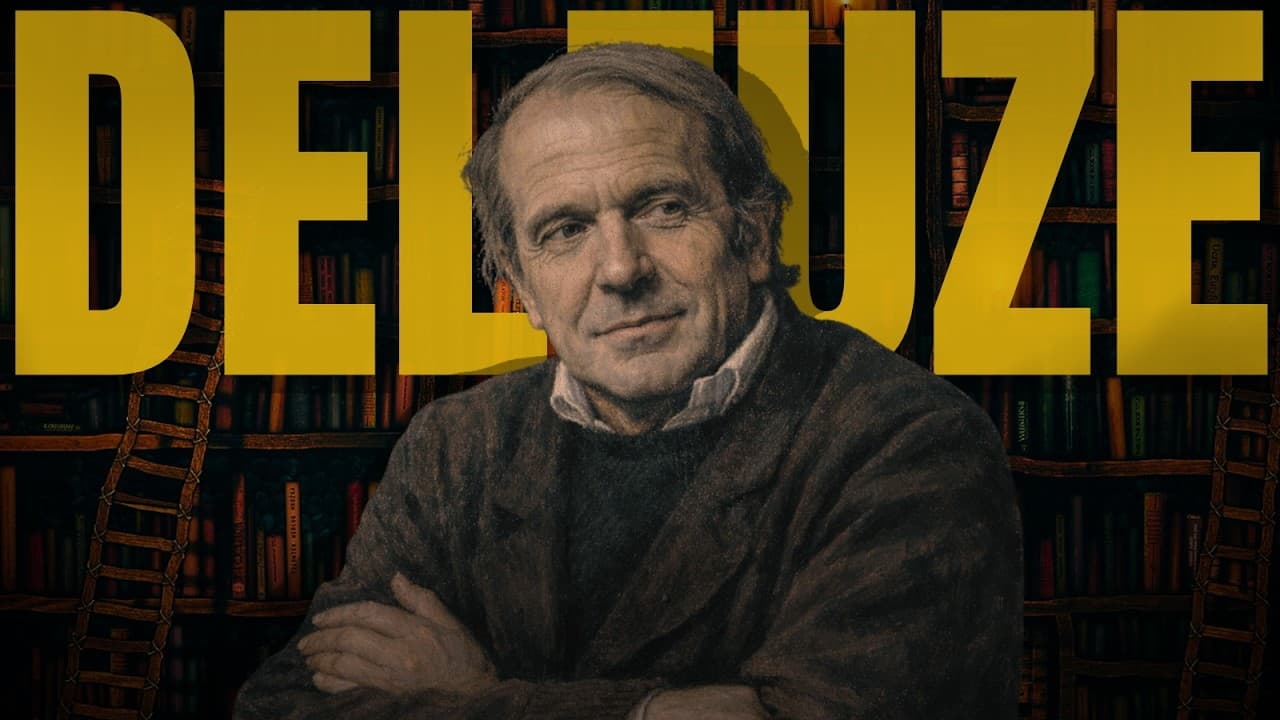
Why We Are Forced to Think | Deleuze's Complete Philosophy for Sleep
Deleuze's Complete Philosophy for Sleep
Gilles Deleuze reimagined what philosophy could do. Where most philosophers tried to represent the world, Deleuze wanted to create something new: concepts that make thought move differently. The rhizome, the body without organs, the virtual and the actual, deterritorialization, becoming. These are not descriptions of how things are but tools for thinking in ways that escape identity, hierarchy, and transcendence.
Over three hours, this episode traces his entire philosophical project, from his radical readings of Nietzsche, Bergson, and Spinoza, through his collaboration with Felix Guattari on two of the most provocative books of the twentieth century, to his philosophy of cinema and his final reflections on what philosophy actually is.
Beneath the difficulty of his writing lies one of the most consistent and ambitious philosophical visions of the last century, pointing always toward a single horizon: immanence, a world with no outside and no transcendent ground.
The full episode is on YouTube and Spotify. Please listen only in safe, restful contexts.
Enjoying the episode?
Occasional letters on philosophy, reading, and the examined life. No spam, ever.
By subscribing you consent to receiving occasional emails. Unsubscribe any time via the link in every email or at /unsubscribe.
Timestamps
- 0:00:00An Encounter with Thought
- 0:17:54A Life Without Incidents
- 0:33:34Reading as Creation
- 0:53:29Nietzsche and the Image of Thought
- 1:08:01Difference and Repetition
- 1:23:17The Virtual and the Actual
- 1:39:50Logic of Sense
- 1:57:02Meeting Guattari
- 2:10:33Anti-Oedipus
- 2:28:32Capitalism and Schizophrenia
- 2:43:22A Thousand Plateaus
- 2:59:45What Is a Body?
- 3:13:43Cinema
- 3:32:01What Is Philosophy?
- 3:46:06The Plane of Immanence
Sources & Works Cited
- 1.Gilles Deleuze. Difference and Repetition (1994)
- 2.Gilles Deleuze and Felix Guattari. Anti-Oedipus: Capitalism and Schizophrenia (1983)
- 3.Gilles Deleuze and Felix Guattari. A Thousand Plateaus: Capitalism and Schizophrenia (1987)
- 4.Gilles Deleuze and Felix Guattari. What Is Philosophy? (1994)
- 5.Gilles Deleuze. Nietzsche and Philosophy (1983)
- 6.Gilles Deleuze. Cinema 1: The Movement-Image (1986)
- 7.Gilles Deleuze. Cinema 2: The Time-Image (1989)
- 8.Claire Colebrook. Gilles Deleuze (2002)
- 9.Francois Dosse. Gilles Deleuze and Felix Guattari: Intersecting Lives (2010)
- 10.Stanford Encyclopedia of Philosophy. Gilles Deleuze (Various)
Related Episodes
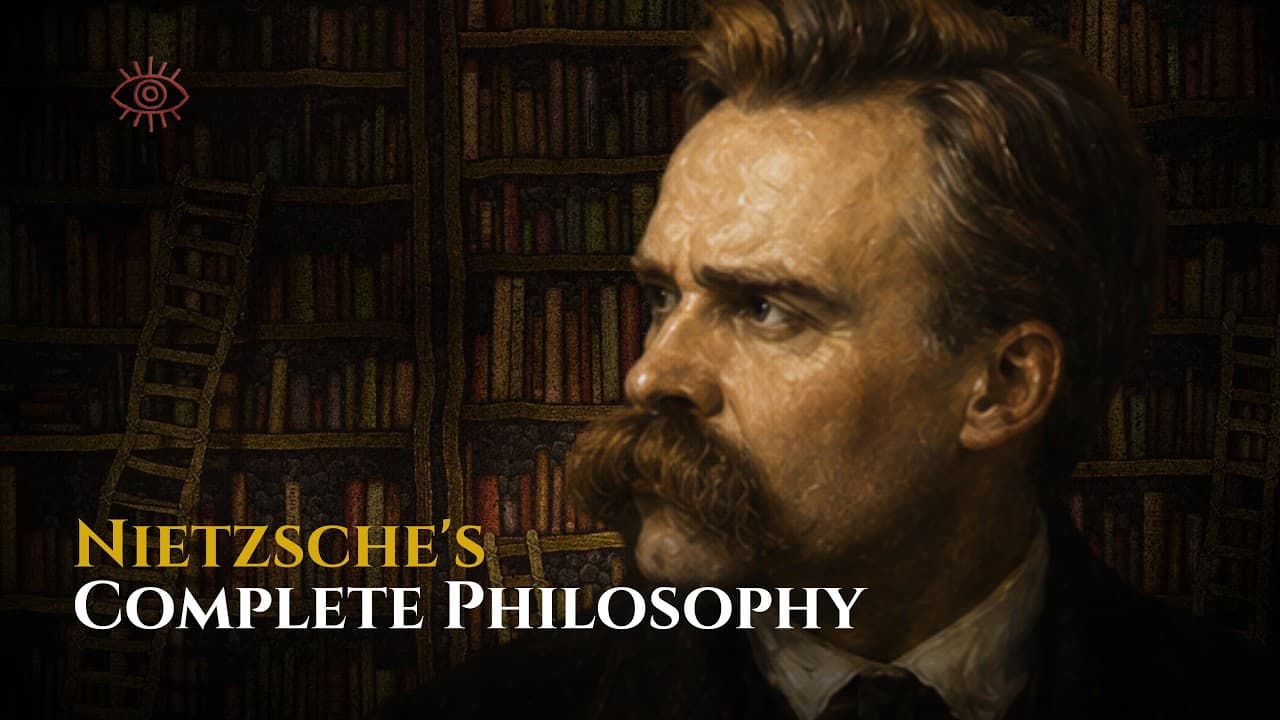
Nietzsche: God is Dead and We Have Killed Him
Nietzsche's Complete Philosophy
Friedrich Nietzsche diagnosed the death of God not as triumph but as catastrophe, recognizing that the foundation Western civilization had rested on for two thousand years had collapsed. This three-hour exploration traces his journey from pastor's son in Rocken to solitary philosopher, through his masterworks including The Birth of Tragedy, Thus Spoke Zarathustra, Beyond Good and Evil, and On the Genealogy of Morals. It examines his core concepts in depth: the death of God, will to power, eternal recurrence, the Ubermensch, amor fati, and the distinction between master and slave morality. The episode follows his friendship and break with Wagner, his decade of solitary wandering, his collapse in Turin, and the posthumous distortion of his work by his sister Elisabeth and the Nazi appropriation that followed. His influence on Freud, Heidegger, existentialism, Foucault, and Deleuze confirms that the questions Nietzsche raised about nihilism, values, and human flourishing remain urgently alive today. The full episode is on YouTube and Spotify. Please listen only in safe, restful contexts.
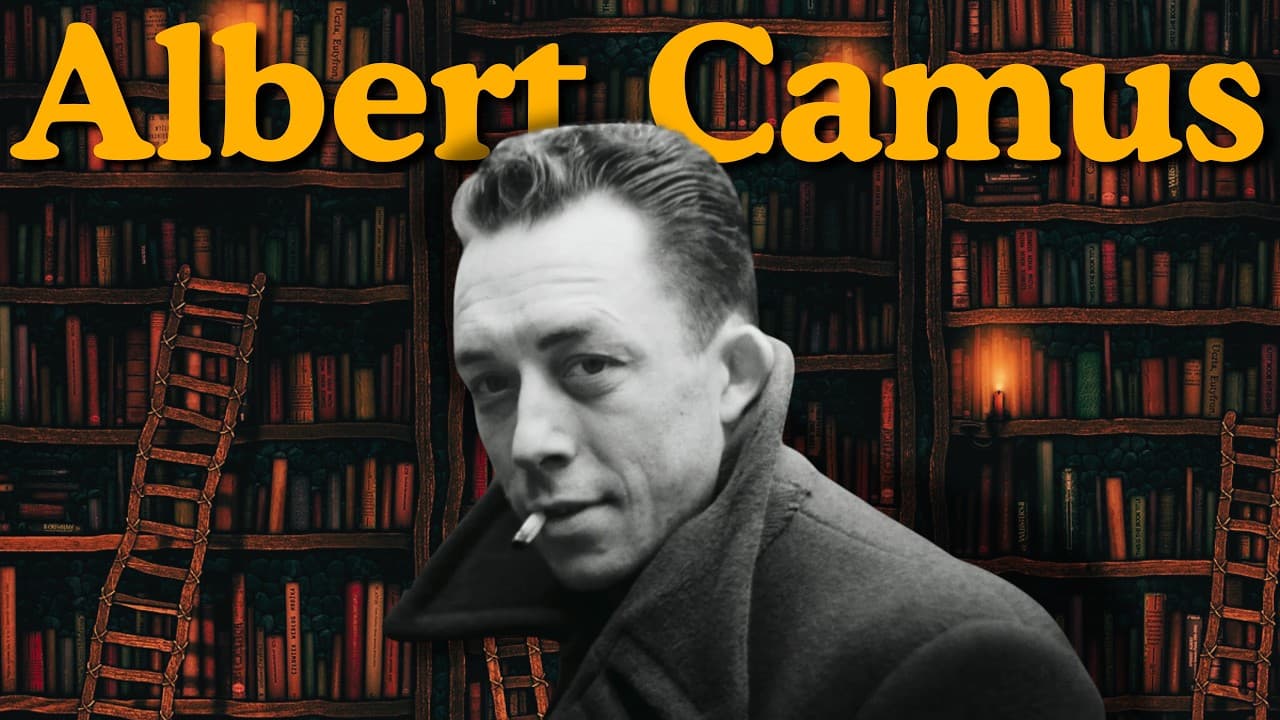
The Myth of Sisyphus | Albert Camus's Complete Philosophy for Sleep
Albert Camus's Complete Philosophy
What if a man condemned to push a boulder up a mountain for eternity is actually happy? This question opens Albert Camus's philosophy of the Absurd, the confrontation between our need for meaning and the universe's profound silence. Over four hours, we follow Camus from sun-drenched Algeria through wartime France, through The Stranger and The Plague, through his philosophical essays and his break with Sartre. We distinguish absurdism from both nihilism and existentialism, and discover why accepting meaninglessness might liberate us to live more fully than we ever imagined. The full episode is on YouTube and Spotify. Please listen only in safe, restful contexts.