Continental Philosophy

5 episodes

Continental Philosophy on Sleepy Philosophy Radio collects 5 episodes, featuring Georges Bataille, Nietzsche, Borges: long-form readings for sleep, study, and contemplation. Browse the episodes and recommended reading below.

Episodes

The Work Camp Within | Han on Achievement and Fatigue
Continental Philosophy1:15:21

The Work Camp Within | Han on Achievement and Fatigue

Byung-Chul Han traces how freedom, productivity, and positivity turn inward, leaving the achievement subject exhausted by its own demands. Byung-Chul Han's The Burnout Society begins with a change in the pathology of our age, from infectious threats to neuronal illnesses born of excess. It then moves from Foucault's disciplinary institutions into the achievement society, where the command has become a promise of possibility. The middle of the book follows the consequences through scattered attention, profound boredom, Hannah Arendt's account of labor and action, Nietzsche's education of the gaze, and the bleak office of Melville's Bartleby. In its final movements, Han turns to neuro-enhancement and Peter Handke's shared tiredness before returning to Kafka's Prometheus, Freud, depression, and the paradox of a freedom that consumes its subject. This is a slow reading of the book's actual sequence, with its literary figures and philosophical pressure kept in view. The full episode is on YouTube and Spotify. Please listen only in safe, restful contexts.

Why Humans Are Drawn to the Forbidden | Georges Bataille for Sleep
Continental Philosophy3:13:32

Why Humans Are Drawn to the Forbidden | Georges Bataille for Sleep

By day a mild librarian, by night the philosopher of excess, eroticism, and the sacred where reason ends. Georges Bataille kept one of the strangest double lives in modern thought. For decades he was a quiet librarian in Paris, courteous and unremarkable, while in private he wrote some of the most extreme and original books of his century. This episode follows him from a childhood shaped by a blind and dying father, through a lost faith and a notorious first novel, into the feuds and secret societies of the years between the wars. It traces the ideas that made him a hidden source for a whole later generation, the economy of loss and useless expenditure, the sun that gives without return, the sacred glimpsed in transgression, a mysticism with no God at the end of it, and eroticism understood as the meeting place of desire and death. Along the way it restores the man behind the scandal, the gentle scholar drawn to everything orderly thought leaves out. The full episode is on YouTube and Spotify. Please listen only in safe, restful contexts.
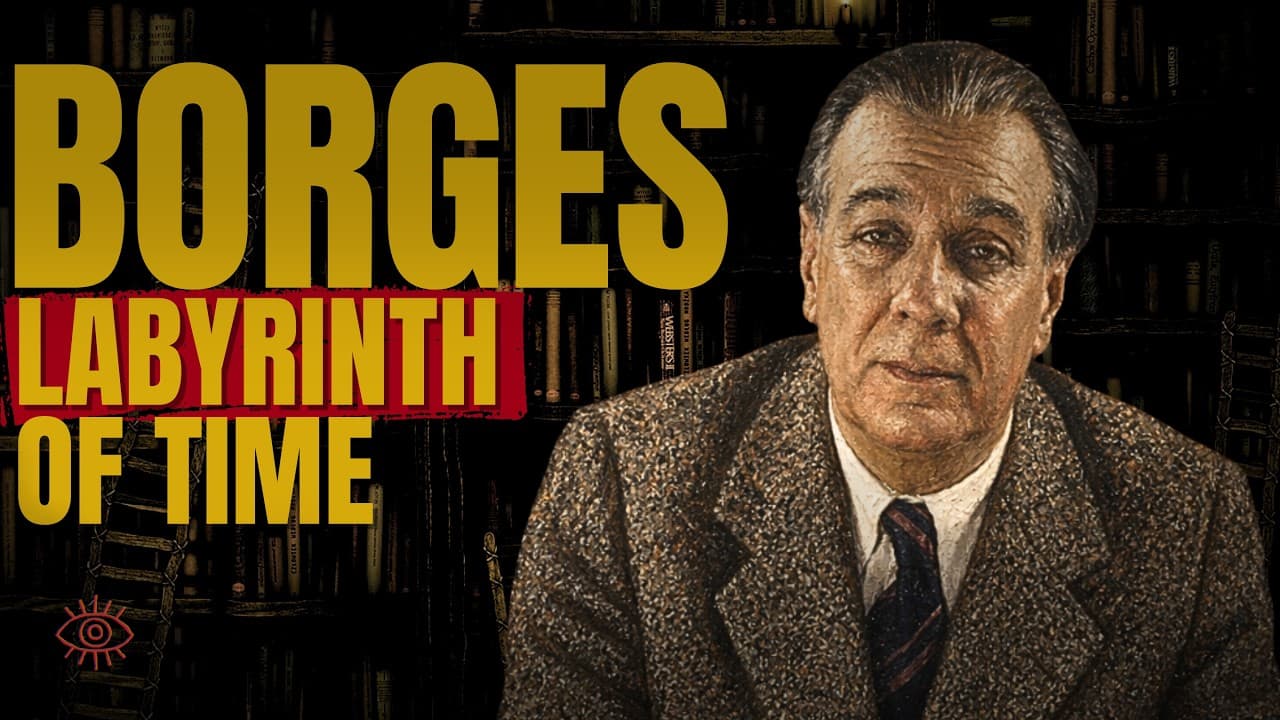
The Infinite Library That Contains the Date of Your Death | Borges for Sleep
Continental Philosophy2:55:42

The Infinite Library That Contains the Date of Your Death | Borges for Sleep

Borges's Complete Philosophy

Somewhere in an infinite library, there is a book that contains the date of your death. This is the mind of the blind Argentine librarian who thought in fictions and dreamed in paradoxes. Jorge Luis Borges was not a philosopher who wrote systematic treatises. He was a storyteller who turned philosophical problems into fables so precise and beautiful that physicists, neuroscientists, and literary theorists are still catching up to him. We walk through twenty chapters of his life and work, from the childhood library in Palermo to the quiet grave in Geneva, from Funes the Memorious to The Library of Babel to the Aleph in a Buenos Aires basement. These are stories about memory, infinity, identity, dreams, and the suspicion that the universe itself might be a text we are only partially able to read. The full episode is on YouTube and Spotify. Please listen only in safe, restful contexts.
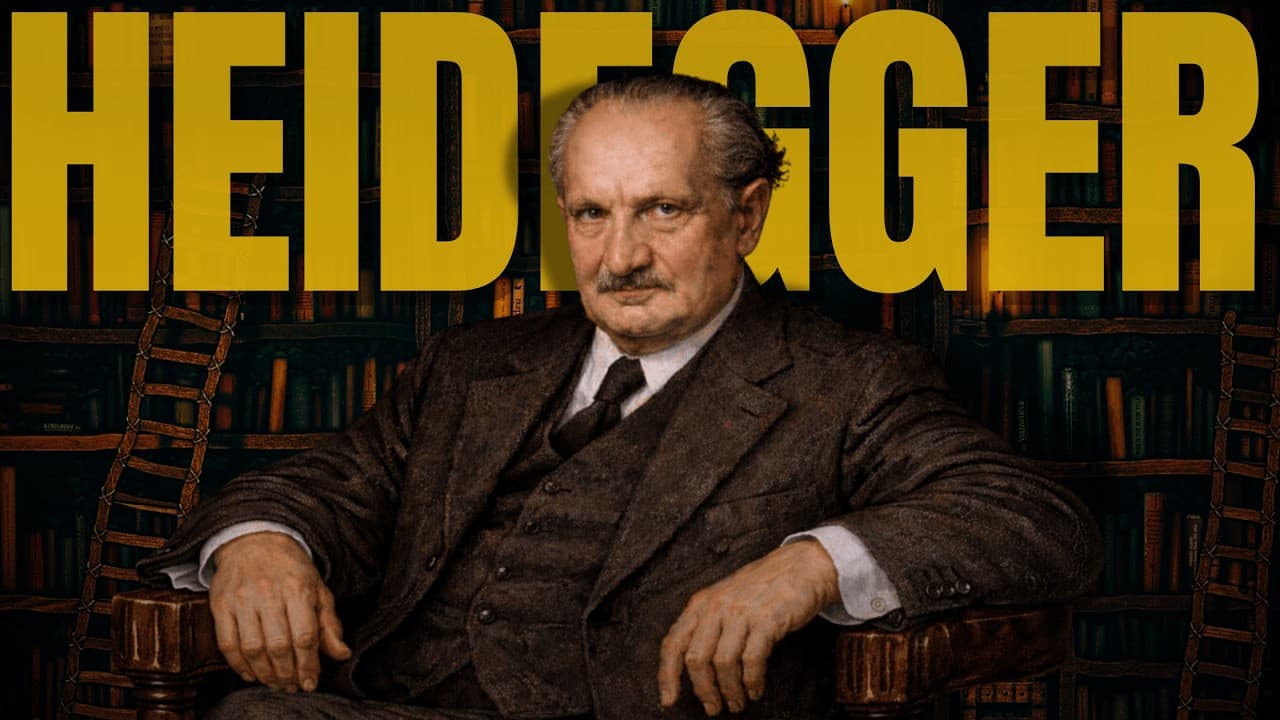
On Heidegger and the Meaning of Being | Complete Philosophy for Sleep
Continental Philosophy2:40:16

On Heidegger and the Meaning of Being | Complete Philosophy for Sleep

Dasein, Being-Toward-Death & Technology | Complete Philosophy for Sleep

Everything exists, and we almost never wonder why. This three-hour episode explores the complete philosophy of Martin Heidegger, beginning with Husserl's phenomenology and moving through the existential analytic of Being and Time: Dasein, thrownness, being-toward-death, anxiety, authenticity, and the call of conscience. The second half follows Heidegger's turn toward language, technology, and dwelling, examining why he believed modern civilization had forgotten the question of Being entirely, and what it might mean to learn to dwell poetically on the earth. The episode also addresses his involvement with National Socialism and the unresolved questions it raises about the relationship between a thinker and their thought. The full episode is on YouTube and Spotify. Please listen only in safe, restful contexts.

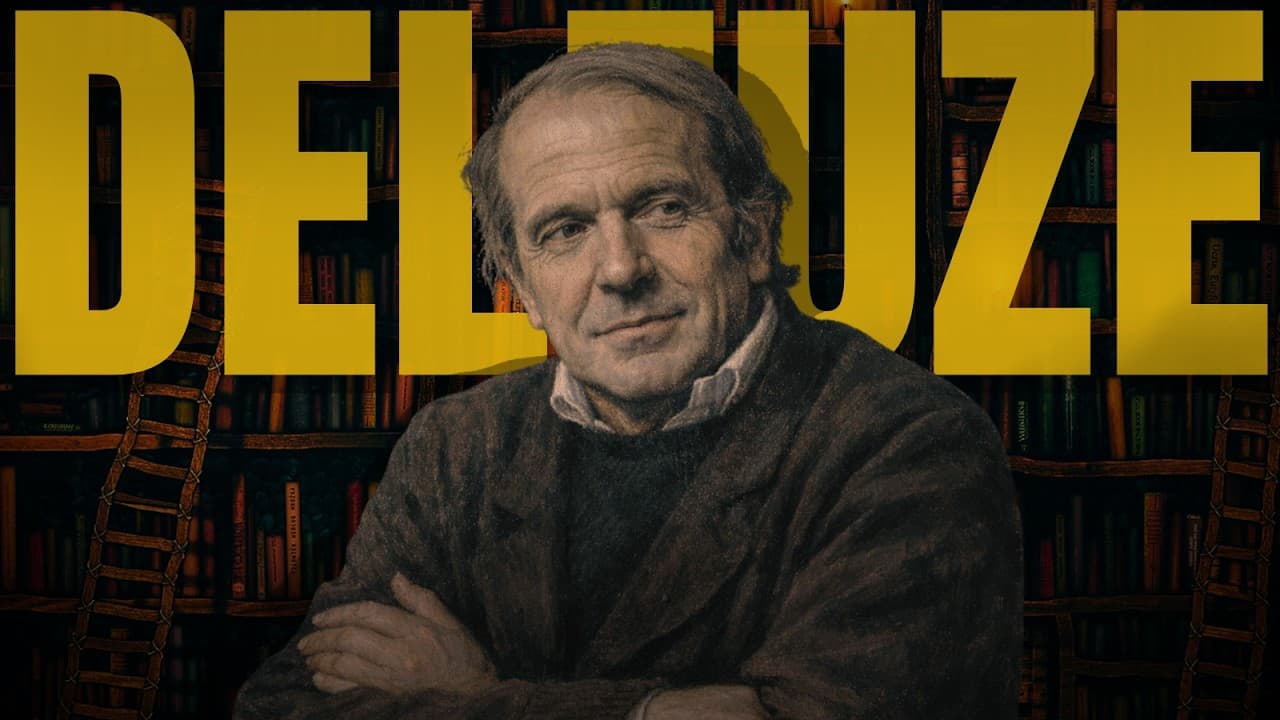
Why We Are Forced to Think | Deleuze's Complete Philosophy for Sleep
Continental Philosophy3:59:43

Why We Are Forced to Think | Deleuze's Complete Philosophy for Sleep

Deleuze's Complete Philosophy for Sleep

Gilles Deleuze reimagined what philosophy could do. Where most philosophers tried to represent the world, Deleuze wanted to create something new: concepts that make thought move differently. The rhizome, the body without organs, the virtual and the actual, deterritorialization, becoming. These are not descriptions of how things are but tools for thinking in ways that escape identity, hierarchy, and transcendence. Over three hours, this episode traces his entire philosophical project, from his radical readings of Nietzsche, Bergson, and Spinoza, through his collaboration with Felix Guattari on two of the most provocative books of the twentieth century, to his philosophy of cinema and his final reflections on what philosophy actually is. Beneath the difficulty of his writing lies one of the most consistent and ambitious philosophical visions of the last century, pointing always toward a single horizon: immanence, a world with no outside and no transcendent ground. The full episode is on YouTube and Spotify. Please listen only in safe, restful contexts.

Philosophers

More Topics