
Heidegger

Martin Heidegger asked the most fundamental question: What does it mean to be? His exploration of existence, authenticity, and being-toward-death reshaped 20th-century philosophy.

Episodes

When Life Suddenly Feels Meaningless | The Existential Crisis
Existentialism3:26:48

When Life Suddenly Feels Meaningless | The Existential Crisis

Why do people who have everything still wake at three in the morning certain that none of it means anything? This is a long, unhurried history of the moment the floor of ordinary life gives way. It begins with a celebrated novelist who, at the height of his fame and fortune, quietly hid a rope from himself, and from that single human crisis it opens outward across the centuries. We follow the confrontation with meaninglessness through the oldest scriptures and the calm arguments of antiquity, through a believer terrified by an infinite and silent cosmos, through the philosopher of endless striving, and into the thinkers who made this dread the very center of their work. We sit with the death of God, with radical freedom, with the absurd, with a survivor who found a reason to endure the unendurable, and with a tradition that meets the void by loosening its grip on the self. The episode closes not with a tidy answer but with the quiet question of how a person comes back to life. The full episode is on YouTube and Spotify. Please listen only in safe, restful contexts.
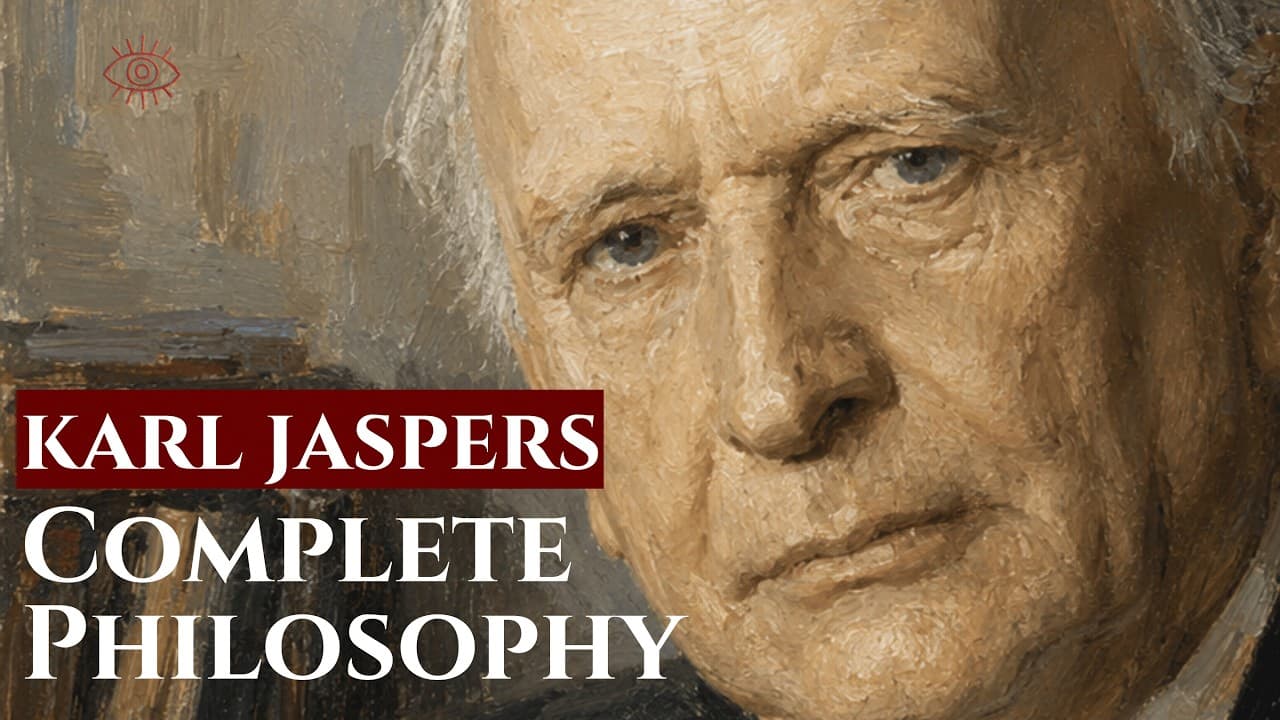

Told He Would Die by Thirty, He Outlived the Reich | Karl Jaspers Complete Philosophy for Sleep
Existentialism2:39:53

Told He Would Die by Thirty, He Outlived the Reich | Karl Jaspers Complete Philosophy for Sleep

A boy told he would die by thirty built a philosophy of openness that outlived two death sentences. Karl Jaspers trained as a doctor under the shadow of an early death, reinvented the study of the troubled mind, and then crossed quietly into philosophy to ask the largest questions a person can face. This episode follows his whole arc, from the cold northern coast where he was born, through the Heidelberg years and the marriage that shaped everything, to the ideas that made him one of the deepest thinkers of his century. We trace the situations no one escapes, the self that is never finished, the truth that lives only between two people, and the signs of something beyond all knowing. We walk through his shattered friendship with another great philosopher, the years he and his wife lived under threat, and his emergence after the war as a moral conscience who asked a ruined nation to think clearly about its guilt. It is the story of a mind that refused, against everything, to close. The full episode is on YouTube and Spotify. Please listen only in safe, restful contexts.
The Banality of Evil | Hannah Arendt Explained for Sleep
Political Philosophy2:46:17

The Banality of Evil | Hannah Arendt Explained for Sleep

Hannah Arendt's Complete Philosophy

A refugee philosopher who escaped the Holocaust asked why it had been possible, and spent the rest of her life answering. Hannah Arendt was born in Königsberg in nineteen-oh-six, studied philosophy with Heidegger and Jaspers, fled Nazi Germany in nineteen thirty-three, was interned in a French camp, and arrived in New York in nineteen forty-one with nothing but her intellect and a determination to understand what had happened to her world. What followed was one of the most extraordinary intellectual careers of the twentieth century: a ten-chapter arc that moves from her dramatic biography through her monumental account of totalitarianism, her philosophical defense of political action and the public realm, her controversial reporting on the Eichmann trial in Jerusalem, and her final unfinished inquiry into thinking, willing, and judgment. Along the way we encounter the phrase that made her famous and infamous at once, a careful examination of how bureaucratic participation in mass murder can occur without conventional evil motivation, and a sustained argument that what the modern age has lost is something genuinely irreplaceable: the space in which human beings, in all their irreducible plurality, can act together and begin something new. This episode is designed for listeners who want to spend a long and quiet night inside one of the great minds of the last century. The full episode is on YouTube and Spotify. Please listen only in safe, restful contexts.

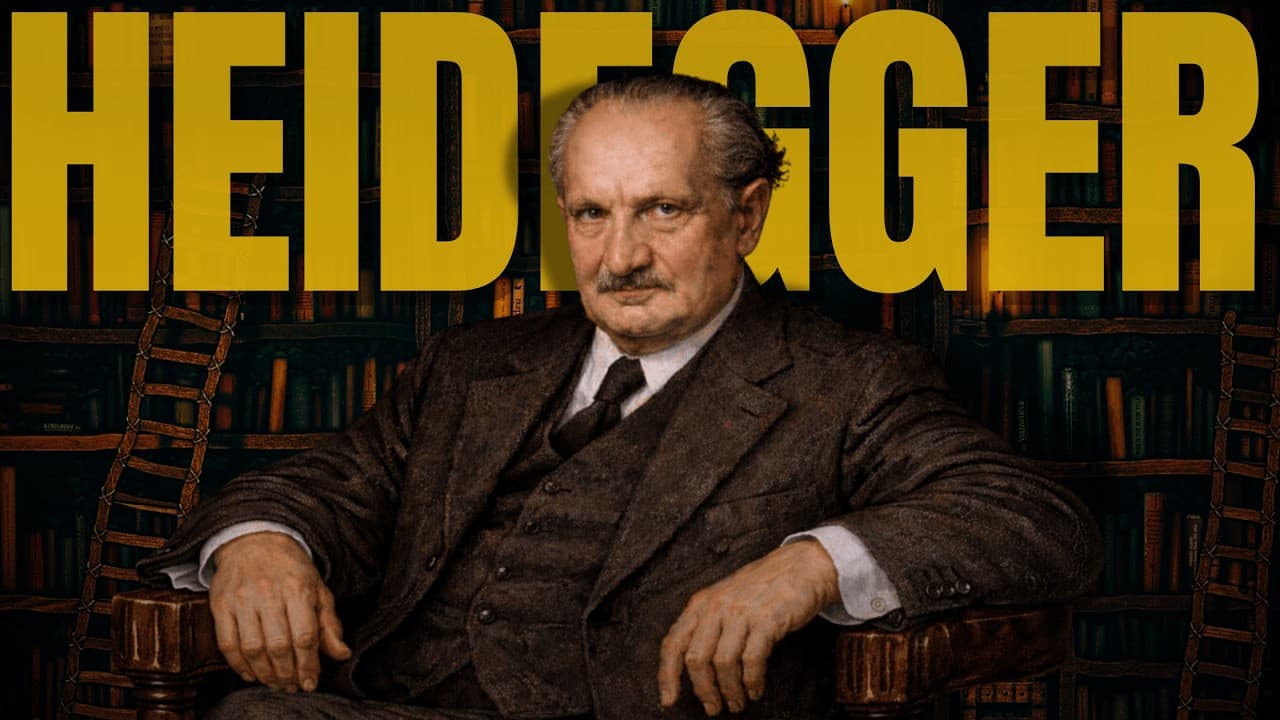
On Heidegger and the Meaning of Being | Complete Philosophy for Sleep
Continental Philosophy2:40:16

On Heidegger and the Meaning of Being | Complete Philosophy for Sleep

Dasein, Being-Toward-Death & Technology | Complete Philosophy for Sleep

Everything exists, and we almost never wonder why. This three-hour episode explores the complete philosophy of Martin Heidegger, beginning with Husserl's phenomenology and moving through the existential analytic of Being and Time: Dasein, thrownness, being-toward-death, anxiety, authenticity, and the call of conscience. The second half follows Heidegger's turn toward language, technology, and dwelling, examining why he believed modern civilization had forgotten the question of Being entirely, and what it might mean to learn to dwell poetically on the earth. The episode also addresses his involvement with National Socialism and the unresolved questions it raises about the relationship between a thinker and their thought. The full episode is on YouTube and Spotify. Please listen only in safe, restful contexts.

Related Philosophers