Sleepy Philosophy Radio

Long-form philosophy for sleep, study, and contemplation

Featured Episode

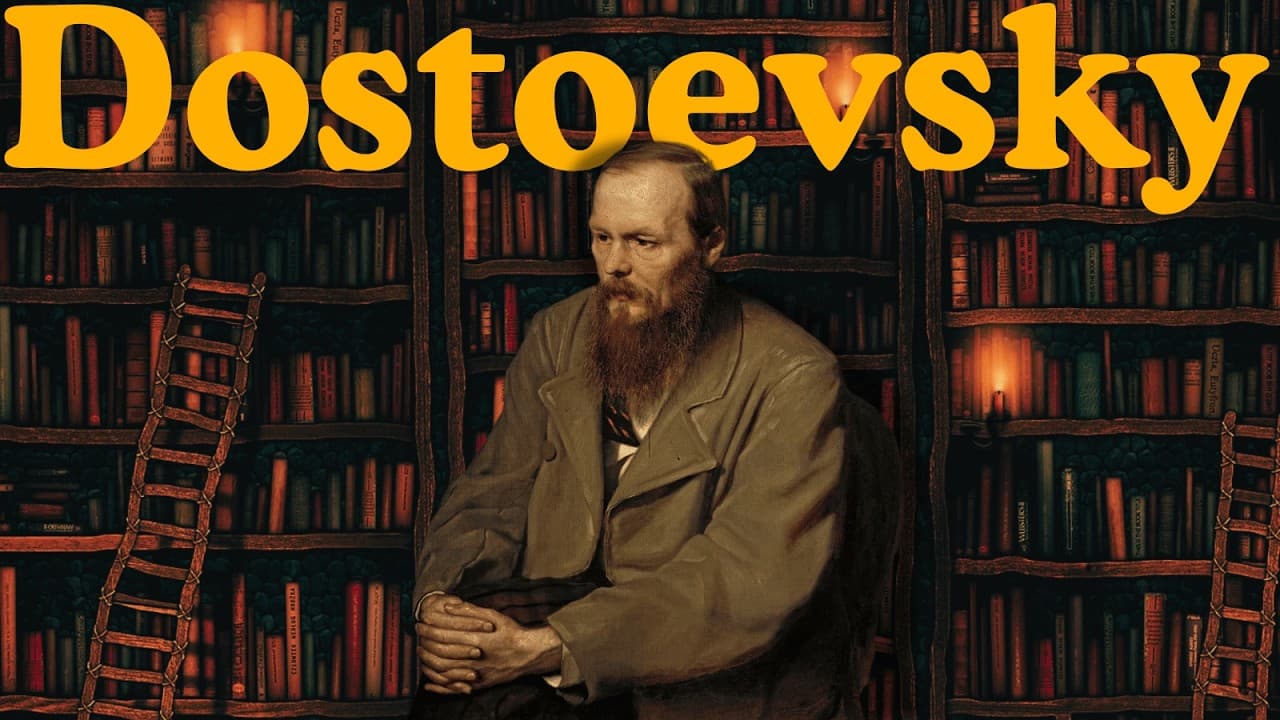
Beauty Will Save The World | Dostoevsky's Philosophy For Sleep
Existentialism

Beauty Will Save The World | Dostoevsky's Philosophy For Sleep

Dostoevsky's Philosophy for Sleep

Fyodor Dostoevsky spent four years in a Siberian labor camp and emerged convinced that human beings are not rational creatures who occasionally act irrationally, but irrational creatures who occasionally manage reason. This three-hour episode traces his life and philosophy through Crime and Punishment, Notes from Underground, The Idiot, Demons, and The Brothers Karamazov. We examine the underground man's revolt against the crystal palace of rationalism, Raskolnikov's theory of the extraordinary individual and its collapse, the problem of suffering in a world that might have no God, Ivan Karamazov's rebellion and the Grand Inquisitor, and Dostoevsky's insistence that freedom, even the freedom to suffer, is what makes us human. His novels do not argue positions. They stage collisions between ideas and watch what survives. The full episode is on YouTube and Spotify. Please listen only in safe, restful contexts.

3:18:30

Latest

Recent Episodes

Deep readings and philosophical explorations

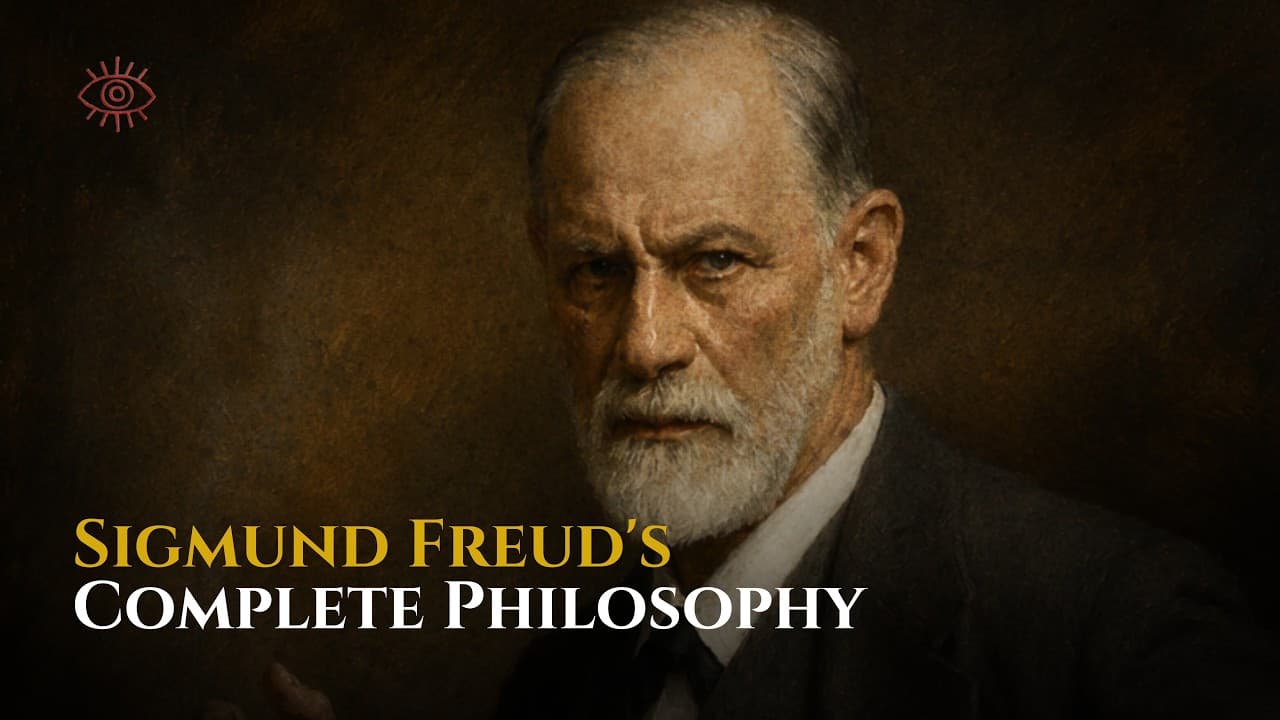
There Are No Accidents | Sigmund Freud's Complete Psychology
Psychology2:24:24

There Are No Accidents | Sigmund Freud's Complete Psychology

He set out to be the coldest of scientists, and ended by telling the strangest story modern people had ever heard about themselves. This is the life and the mind of Sigmund Freud. We begin in his consulting rooms in Vienna, among the ancient statues he could not work without, and follow him from a provincial childhood to the discovery that made his name, the claim that most of the mind is hidden, and hidden on purpose. We move through his masterwork on dreams, his scandalous account of childhood, the drama he found buried in every family, and the movement that made him famous and cost him his dearest friends. We watch his vision darken, after a war, into a theory of the wish for death and the permanent discontent of civilization. And we follow him to the end, through illness, exile, and a death met on his own terms, into the strange afterlife of ideas that science keeps rejecting and no one can quite escape. The full episode is on YouTube and Spotify. Please listen only in safe, restful contexts.
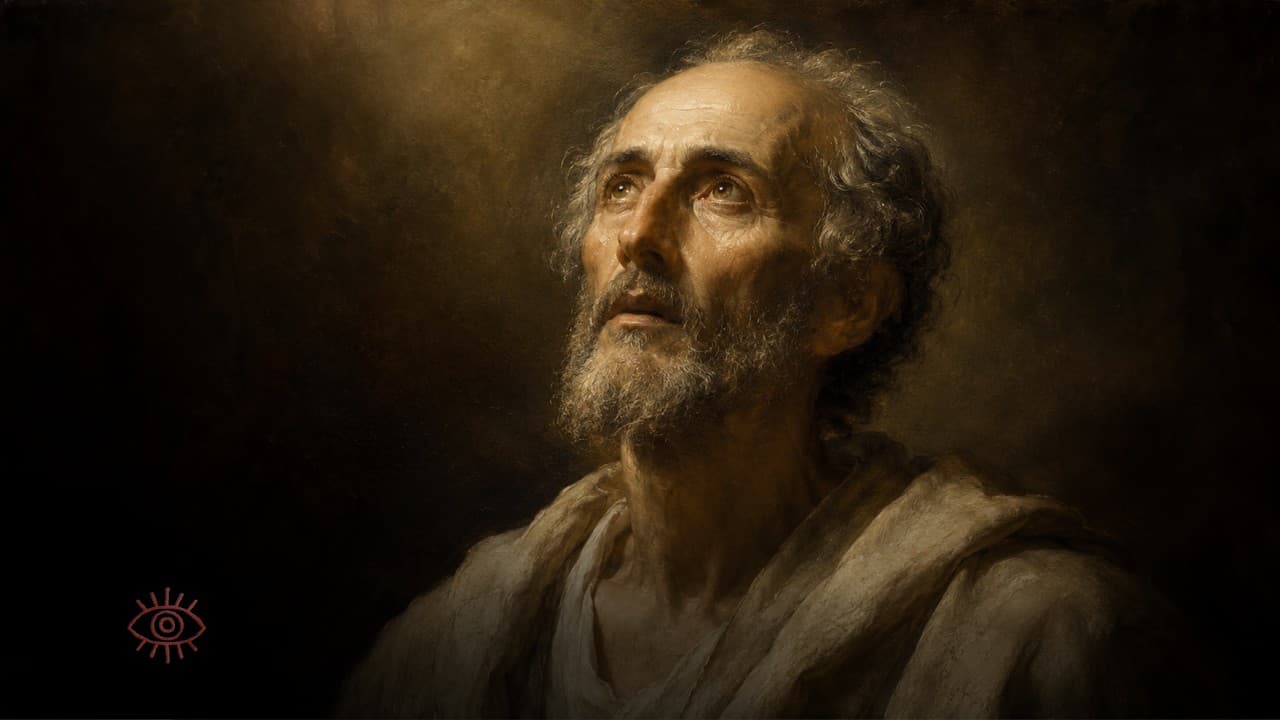
All of Neoplatonism | Plotinus's Complete Philosophy
Ancient Philosophy2:17:56

All of Neoplatonism | Plotinus's Complete Philosophy

Everything pours outward from a single nameless source, and everything is quietly trying to find its way back. In the third century, in the crowded city of Rome, a gentle teacher built the last great philosophy of the ancient world. This episode follows Plotinus, the founder of what we now call Neoplatonism, from his youth in Roman Egypt and his years with a secret master in Alexandria to the circle of devoted students who gathered around him. We trace his single luminous vision of reality, a great outpouring from one source down through mind and soul to the very edge of matter, and the long road home by which a person may climb back. We stay a while with his thoughts on beauty and on time, on evil and the goodness of the world, on the self that never fell, and on the rare and wordless union he was said to have reached four times. The full episode is on YouTube and Spotify. Please listen only in safe, restful contexts.
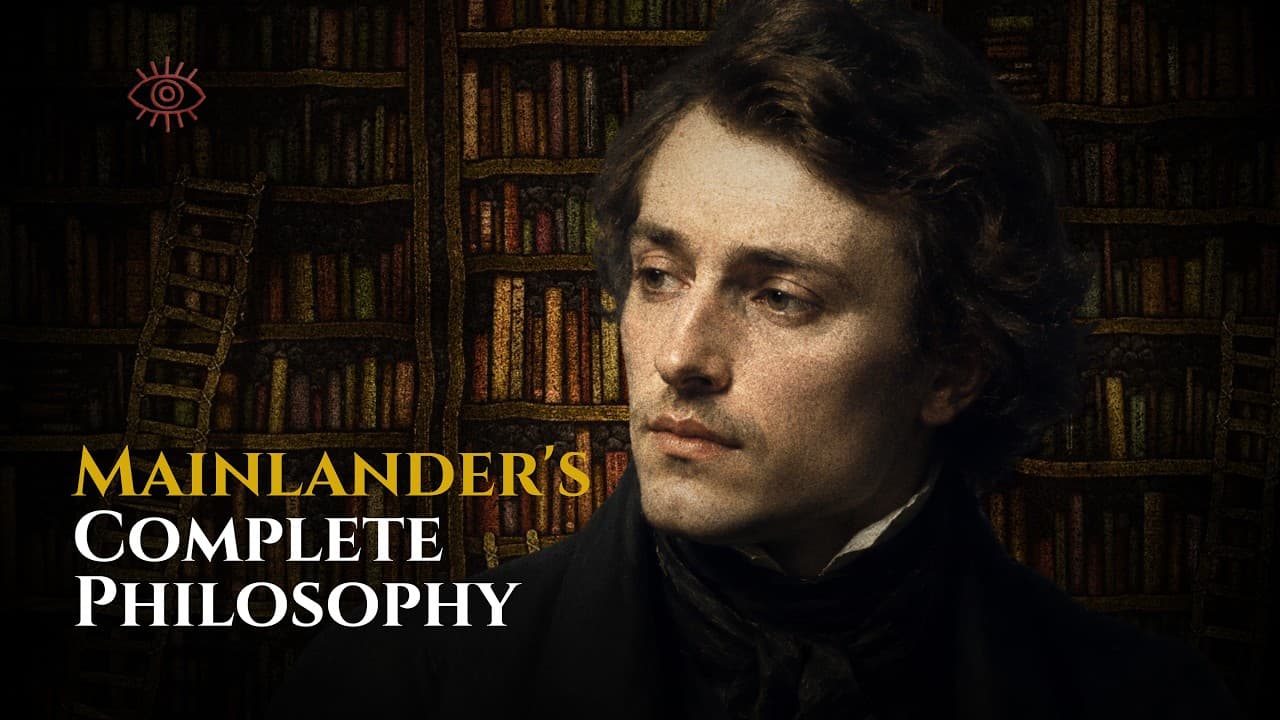
The Darkest Philosopher Who Ever Lived | Philipp Mainländer
Existentialism2:08:14

The Darkest Philosopher Who Ever Lived | Philipp Mainländer

Before the world began, he argued, God chose not to exist, and shattered into the universe in order to die. In a rented room by a German river, a mild and dutiful bank clerk finished the strangest book of his century, and then quietly ended his own life. This episode follows Philipp Mainländer, the poet and philosopher who took Schopenhauer's darkness further than anyone had dared. We trace his single great work, The Philosophy of Redemption, the strange drive he found beneath all life, the calm he took from a running-down cosmos, and the rescue he promised, which is simply rest and nothing more. Along the way we meet his gentle serenity, his quarrel across time with Nietzsche, and the uncanny way modern science has come to echo his cooling universe. It is a patient walk to the far edge of pessimism, and gently back. The full episode is on YouTube and Spotify. Please listen only in safe, restful contexts.
Capitalist Realism for Sleep
Political Philosophy1:22:47

Capitalist Realism for Sleep

Why does capitalism feel inevitable even when its crises reveal how fragile it is? Mark Fisher's Capitalist Realism is a short, restless book about the strange feeling that capitalism is not merely dominant, but unavoidable. This episode follows Fisher's own sequence, from the futureless world of Children of Men and the performance of anti capitalism in Wall E, through the classroom where students experience reflexive impotence, the post Fordist demand for no long term, and the office where bureaucracy becomes a form of anti production. We then enter the book's dreamwork of changing realities, its Kafkaesque encounter with a centerless system, and its final proposal for a Marxist Supernanny who might restore public culture without restoring the old father. A quiet reading of one of the most vivid political books of the early twenty first century. The full episode is on YouTube and Spotify. Please listen only in safe, restful contexts.
Let Go of God to Find God | Meister Eckhart's Complete Philosophy
Mysticism2:11:40

Let Go of God to Find God | Meister Eckhart's Complete Philosophy

He told nuns and weavers and widows that they should pray to be rid of God, and meant it as the deepest compliment his theology could pay. At the summit of the medieval Church, a Dominican master who governed dozens of religious houses did something no one of his rank had dared. He carried the deepest theology out of the Latin schools and preached it, in plain German, to ordinary working people. We follow him from an uncertain village in Germany to the heights of the University of Paris, and into the heart of what he taught: a God beyond all names, an uncreated spark at the bottom of the soul, a birth of the divine within us, and a path that runs not by adding but by letting everything go. We trace his tender words to the grieving, his surprising defense of the working life, and the trial that broke over him at the very end, then the long silence after his death and the strange, luminous return that made him a voice for our own restless age. The full episode is on YouTube and Spotify. Please listen only in safe, restful contexts.

He Wrote About Himself for 20 Years and Described Us All | Montaigne
Modern Philosophy2:09:57

He Wrote About Himself for 20 Years and Described Us All | Montaigne

He locked himself in a tower to study one ordinary man, and ended up describing everyone who would ever read him. In fifteen seventy-one a French nobleman withdrew from public life to a round library at the top of a stone tower, and there, to tame his own restless mind, he began the strangest and most intimate book of its age. This is the story of Michel de Montaigne and the work he modestly called his attempts, the essays that invented a whole way of writing. We begin with his unusual life, the strange education, the one friendship that shaped everything, and the loss that turned him inward. From there the great themes of the book: his bottomless doubt and its gentle motto, his study of the ever-changing self, his hatred of cruelty in a country torn apart by religious war, his acceptance of the body and its pains, and the serene wisdom of his final years. Along the way we meet a mind that set out to know one person and ended by knowing everyone. The full episode is on YouTube and Spotify. Please listen only in safe, restful contexts.

Stay in touch

Letters on the Examined Life

Occasional reflections on philosophy, reading, and the questions that keep us up at night. No spam, ever.

❧

By subscribing you consent to receiving occasional emails. Unsubscribe any time via the link in every email or at /unsubscribe.

“The ink of the scholar is more sacred than the blood of the martyr.”
Prophet Muhammad, Hadith

The Show

Philosophy for the Sleepless Mind

Sleepy Philosophy Radio started because I couldn't find what I was looking for. I wanted philosophy content that actually took its time. Something you could put on at night and just listen to for a few hours. Something that treated the thinkers seriously enough to sit with their ideas instead of skimming past them.

Every episode is built from the primary texts, the biographies, the context of what that thinker was living through and responding to. New episodes every week on YouTube and Spotify.

Coming next

Murdoch and Moral Vision

Voting will be back soon

❧