Essays
"Beauty Will Save the World": What Dostoevsky Really Meant
One of Dostoevsky's most famous quotes is also his most misunderstood
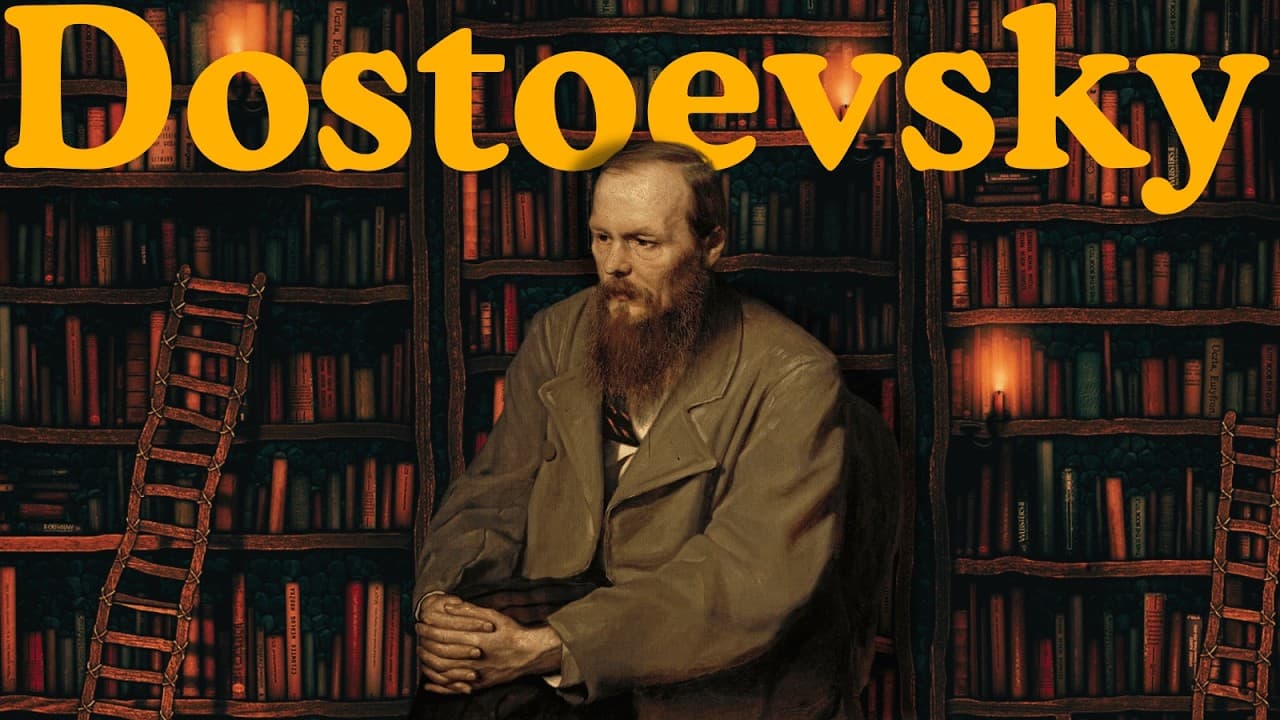
There's a particular kind of suffering that Dostoevsky understood better than almost anyone: the suffering of trying to be rational about everything.
Not the suffering of poverty, though he knew that too. Not the suffering of illness or loss, though those appear throughout his novels. I'm talking about the specific agony of the person who believes that if they could just think clearly enough, calculate precisely enough, plan systematically enough, they could solve the problem of existence itself.
Dostoevsky spent four years in a Siberian prison camp. Before that, he stood on a scaffold, blindfolded, waiting to be executed. At the last possible moment, a courier arrived with the Tsar's reprieve. The whole execution had been staged psychological torture. One of the other prisoners went permanently insane on the spot.
These experiences didn't make Dostoevsky a pessimist. They made him something more dangerous: someone who refused to accept easy answers about human nature.
The Underground Problem
In 1864, Dostoevsky published Notes from Underground, a short, vicious little book narrated by a bitter ex-civil servant living alone in St. Petersburg. The Underground Man is miserable, spiteful, and he knows it. But he's also making an argument.
His target is the progressive intellectuals of his time who believed that if people understood their rational self-interest, they would naturally act morally. Education plus reason equals virtue. Build the right social system, and human problems would solve themselves. The Crystal Palace, that great glass exhibition hall in London, became their symbol: a transparent, rational, harmonious future.
The Underground Man says: nonsense.
People don't just want happiness, he argues. They want significance. They want to assert their will, to prove they're not just predictable units in someone else's equation. A person might do something completely against their own interest just to demonstrate they're free to choose. "Two plus two equals four," he says, "but two plus two equals five is also a very fine thing sometimes."
He's not denying mathematics. He's denying that human life can be reduced to calculation.
And here's the kicker: the Underground Man is miserable precisely because he's won this argument with himself. He's proven he's free from all systems, all obligations, all connections. And that freedom has destroyed him. He can't love, can't act, can't even consistently believe in his own principles. He's trapped in his underground, endlessly talking to himself.
Freedom alone, Dostoevsky shows us, is not enough.
The Mathematics of Murder
In Crime and Punishment, a brilliant young student named Raskolnikov takes the Underground Man's logic one step further. He murders an old pawnbroker. Not for money, but to test a theory.
His reasoning is impeccable. The pawnbroker is useless, exploitative, harmful. He is talented, poor, held back by circumstances. If he takes her money, he can finish his education and do good in the world. The net result is positive. Therefore, the murder is justified.
It's utilitarianism taken to its rational conclusion. One life subtracted, many lives improved. The math works.
Except immediately after the murder, Raskolnikov begins to disintegrate. He becomes feverish, paranoid, unable to touch the money he stole. The novel isn't about whether he gets caught. It's about watching someone discover that they're not who they thought they were. That human beings have something in them that cannot simply decide to step outside morality.
What saves Raskolnikov, eventually, is not a philosophical argument. It's a person. Sonya, a young woman forced into prostitution to support her family. She suffers terribly but hasn't despaired. She reads to him the story of Lazarus, called back from death. She tells him to confess, to accept his suffering, to let it transform him.
The novel ends with Raskolnikov in Siberia, beginning a slow, painful journey toward becoming human again. Not through reason, but through love.
The Burden of Freedom
Here's what Dostoevsky kept circling back to in novel after novel: we're not built to be happy. We're built to be free. And freedom is terrifying.
In The Brothers Karamazov, Ivan Karamazov tells his younger brother Alyosha a story called "The Grand Inquisitor." Christ returns to earth during the Spanish Inquisition. He's arrested and brought before an old cardinal who has dedicated his life to the Church.
The cardinal tells Christ he made a mistake. When the devil tempted him in the wilderness Christ refused. He wanted people to choose him freely, out of love rather than compulsion.
But people can't bear freedom, the Inquisitor says. They're weak, vicious, incapable of responsibility. They want bread and security and someone to tell them what to believe. The Church has corrected Christ's error. It's given people miracle, mystery, and authority. It's taken away their terrible freedom. And it's done this, the Inquisitor insists, out of love. Out of compassion for human weakness.
Christ says nothing in response. He simply kisses the old man on his withered lips.
That silence is crucial. Christ will not compel, will not argue, will not force. He offers himself freely and leaves people free to accept or reject. Because freedom, even with all its dangers and suffering, is what makes us human.
Everyone Is Responsible for All
The phrase appears again and again in Dostoevsky's later work, especially in the teachings of Father Zosima in The Brothers Karamazov: everyone is responsible for all.
It sounds impossible. How can I be responsible for what others do?
But Dostoevsky isn't talking about legal guilt. He's talking about the deep interconnection of human lives.
We're not isolated individuals. What we do, or fail to do, ripples outward. The love we withhold, the help we refuse, the injustice we ignore. These create the conditions in which others suffer and sin. We're all part of one another. And therefore we all bear responsibility for the whole.
This isn't a burden meant to crush us. It's a recognition of our dignity. To be responsible is to be capable of response, to be able to answer the call of the other. It's what makes us persons rather than things.
What "Beauty Will Save the World" Really Means
In The Idiot, Prince Myshkin is asked if he really believes that "beauty will save the world." He doesn't answer directly. He's embarrassed, and the conversation moves on.
But the question has haunted readers ever since. What could it possibly mean?
Not that pretty things make us feel better. Not that art is more important than action. Dostoevsky meant something deeper and stranger.
For Dostoevsky, beauty wasn't aesthetic appeal or formal harmony. It was a glimpse of the transcendent. A crack in the fallen world that lets something higher shine through. True beauty is inseparable from goodness and truth.
Maybe this: beauty keeps alive the hope of salvation. It's a promise that cannot be fulfilled in this life but that we cannot afford to forget. It points toward a reality beyond suffering and corruption. Something worth striving for even if we cannot fully attain it.
Beauty reveals what is. It shows us the truth about ourselves and the world. And that revelation is painful. It strips away our illusions and forces us to confront the gap between what we are and what we might become.
But it also awakens longing. A desire for something more, something higher. And that longing is the beginning of transformation. Because once you've seen beauty, once you've glimpsed what's possible, you can never be quite satisfied with ugliness again.
Why This Still Matters
Dostoevsky doesn't give us answers. He gives us something better: the courage to face the questions honestly. To stop pretending we're simpler than we are. To accept that life is messy and contradictory and impossibly complex. And to keep choosing anyway.
To keep choosing love over calculation. Persons over systems. Mystery over certainty. Hope over despair.
To keep choosing beauty, even when the world seems determined to destroy it.
Because maybe that's what "beauty will save the world" really means. Not that beauty is powerful enough to fix everything. But that the choice to create it, to recognize it, to honor it, is what keeps us human in a world that would reduce us to functions and numbers and problems to be solved.
Maybe beauty saves the world one person at a time. One choice at a time. One moment of genuine recognition and love at a time.
That's what Dostoevsky understood. That's what he spent his life trying to show us. And that's why, more than a century after his death, we still need to listen.
The Newsletter
New essays and episodes, delivered quietly.
By subscribing you consent to receiving occasional emails. Unsubscribe any time via the link in every email or at /unsubscribe.
Reflections
Loading...
Related Episodes
Man Is Not a Piano Key | Dostoevsky's Notes from Underground
Literature's first anti-hero opens by telling us that he is sick, that he is spiteful, and that he will see no doctor out of pure defiance. In the winter of a year that would take almost everyone he loved, a broke and grieving writer set loose the strangest voice in Russian literature. This episode stays inside that single short book, Notes from Underground, and follows its narrator all the way down. We begin at the desk where it was written, then enter his war on reason, on the science of happiness, and on the gleaming palace of the perfect future. We follow him out of his head and into the world, to a humiliating dinner, a snowbound street, and an encounter with a young woman that becomes the truest and cruelest scene he ever lived. Along the way we uncover the chapter a censor quietly cut, and the buried answer it removed. What remains is the first modern confession, and a mind we still recognize as our own. The full episode is on YouTube and Spotify. Please listen only in safe, restful contexts.
One Moment of Happiness | Dostoevsky's White Nights
Four summer nights in a city where the sun never sets, and a lonely dreamer who meets a young woman waiting for someone else. This episode walks through Fyodor Dostoevsky's early story White Nights, told over four luminous Petersburg nights and a single morning. We meet the dreamer, a man so sealed inside his own head that he has befriended the houses of the city because he cannot speak to its people, and we follow what happens when he meets Nastenka weeping at a canal railing and is asked to be her friend on the single condition that he not fall in love. We trace the warmth and the self-deception of his inner life all the way down, and the quiet question the story keeps asking, what one moment of happiness is worth to a person who has been allotted almost none. No background in the book is needed to follow along. Please listen only in safe, restful contexts.
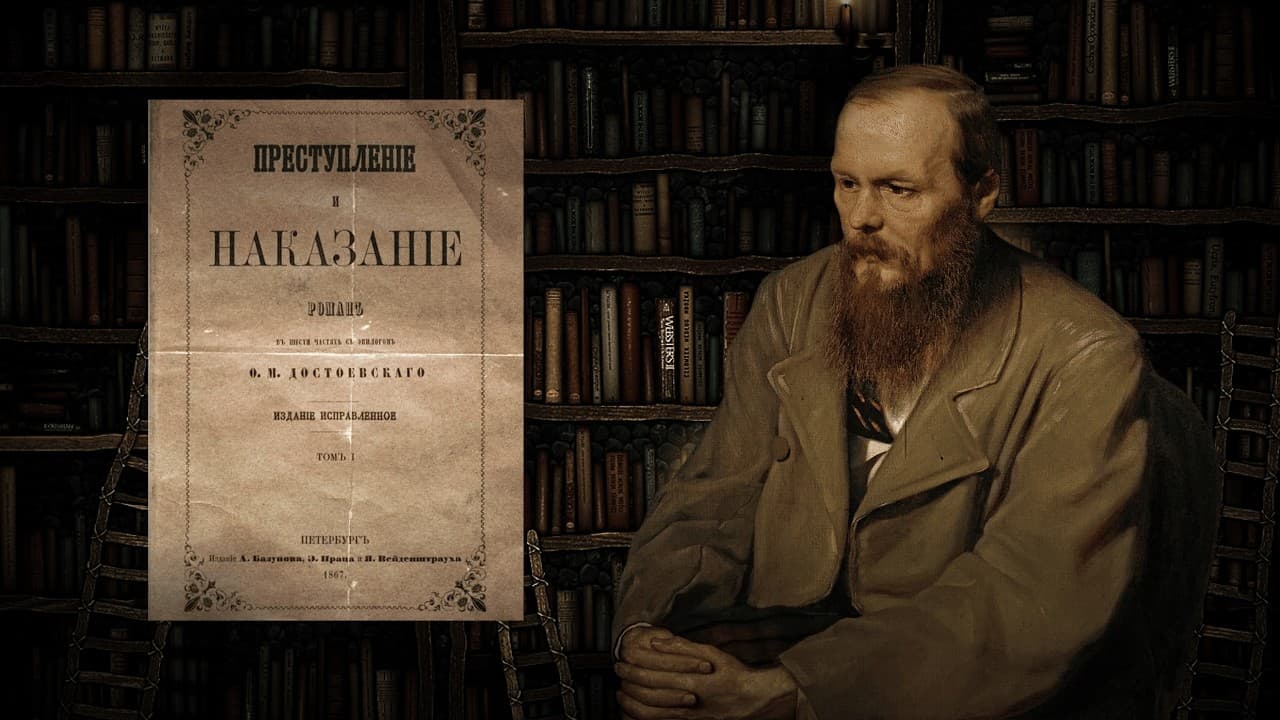
Fyodor Dostoevsky's Crime and Punishment | Book Summary
A slow walk through the novel in which a theory is put to the test with an axe. This episode traces Fyodor Dostoevsky's Crime and Punishment from the Wiesbaden hotel room where it was drafted in the summer of 1865 to the Siberian riverbank where it ends. We follow Rodion Raskolnikov from the rehearsal in the pawnbroker's apartment, through the murder and the long delirium that follows, into the cat and mouse interviews with the investigator Porfiry Petrovich, into the narrow room where Sonya reads from the Gospel of John, and finally into the Haymarket and the voluntary confession. Along the way we sit with Marmeladov in the tavern, read the mother's letter, meet Svidrigailov in his long bored afternoon, and walk with Raskolnikov through one of the longest and strangest interior arguments in the nineteenth century novel. The full episode is on YouTube and Spotify. Please listen only in safe, restful contexts.