Essays
"Nobody Knows Anything": What Plato Discovered About the Limits of Human Knowledge
Socrates went to his death claiming ignorance. Twenty-four centuries later, we still haven't answered his question.
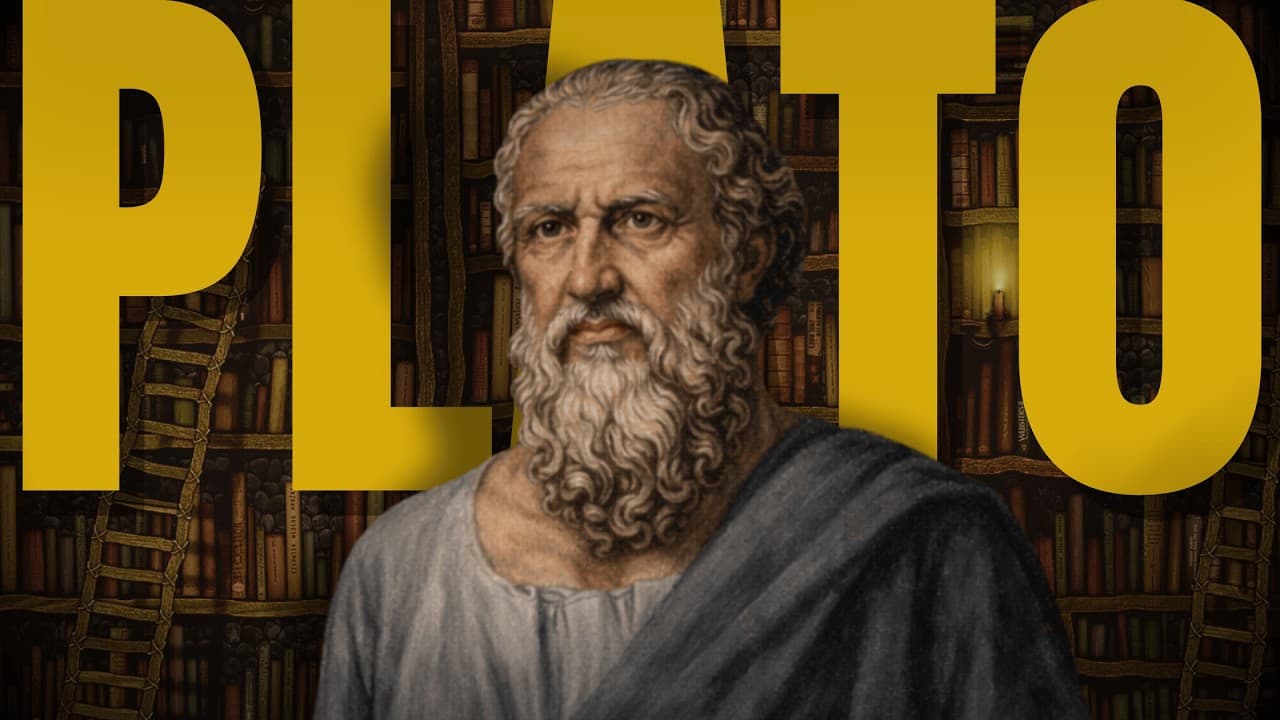
In the spring of 399 BCE, a seventy-year-old stonemason's son stood before five hundred and one Athenian citizens and made a claim that would get him killed. He said he did not know anything.
The man was Socrates. The charges were impiety and corrupting the youth of Athens. The real offense was subtler and harder to forgive. For decades, Socrates had wandered the agora questioning politicians, poets, and craftsmen, asking them to explain the things they claimed to understand: justice, courage, piety, beauty. In every case, the conversation followed the same pattern. The expert offered a confident definition. Socrates asked a few questions. The definition fell apart. The expert, who had walked into the conversation certain of what he knew, walked out unable to say what he meant. Socrates did not provide answers of his own. He simply showed that the answers other people had were not as solid as they believed.
The Oracle at Delphi had declared Socrates the wisest man in Athens. Socrates took this not as flattery but as a puzzle. He could not be the wisest, because he knew nothing. So he went looking for someone wiser, someone who actually knew the things Socrates did not. He never found that person. Every expert he questioned turned out to be mistaken about the foundations of their own expertise. The politicians could not define justice. The poets could not explain beauty. The generals could not say what courage was. Socrates concluded that the Oracle was right in a way he had not expected: he was the wisest only because he alone recognized his own ignorance. Everyone else thought they knew. He knew he did not.
Athens executed him for it. He drank the hemlock and died in a prison cell, surrounded by friends who wept while he remained calm. His student Plato, who was twenty-eight years old at the time, watched the city he had grown up in kill the best man he had ever known for the crime of asking questions. That experience shaped everything Plato wrote afterward. For the next fifty years, across dozens of dialogues, Plato returned again and again to the question Socrates had raised at his trial and answered only with a confession of ignorance: what is knowledge, and is it possible for human beings to have it?
The most direct attempt comes in the Theaetetus, a dialogue Plato likely wrote in his sixties. It is his only work devoted entirely to the question "What is knowledge?" and it is, by any conventional measure, a failure. Three definitions are proposed over the course of the conversation. All three collapse.
The young mathematician Theaetetus first suggests that knowledge is perception. What I see, hear, and feel is what I know. Socrates connects this to the sophist Protagoras, who claimed that man is the measure of all things, that each person's experience is true for that person. If knowledge is just perception, then no one can be wrong about anything, because whatever appears true to you is true for you. But we do distinguish experts from amateurs. A doctor perceives a patient's symptoms differently than a layperson does. A musician hears things in a performance that a casual listener misses. If all perception were equally valid, expertise would be meaningless. Socrates pushes further: perception gives us colours and sounds, but the mind judges that both exist, that they differ, that they relate to each other. Existence is not something you see. It is something you grasp with the intellect. Knowledge requires more than sensation.
Theaetetus tries again. Knowledge is true belief. If you believe something and it happens to be correct, you know it. Socrates demolishes this with a courtroom example that still holds up. A skilled lawyer can persuade a jury to reach the right verdict through rhetoric alone, without presenting the actual facts. The jurors believe the defendant is guilty, and the defendant is guilty, but the jurors do not know he is guilty. They were talked into a correct conclusion. Their belief is true, but it is not knowledge, because it rests on persuasion rather than understanding. You can stumble into the truth without knowing why it is true, and that is not the same as knowing.
The third attempt adds what seems to be missing. Knowledge is true belief with an account, a logos, a justification. You believe something, it is true, and you can explain why. This is remarkably close to the "justified true belief" definition that would dominate Western epistemology for the next two thousand years. But Socrates cannot determine what would count as an adequate account. If giving an account means listing the parts of a thing, that seems mechanical rather than insightful. If it means grasping the essence, then we need to know what essences are and how we grasp them, which brings us back to the question we started with. The dialogue ends without a definition. Myles Burnyeat, in his landmark 1990 study of the Theaetetus, argued that this is not an accident or a failure of philosophical nerve. The dialogue's inability to define knowledge is itself the philosophical achievement. Plato is showing that knowledge cannot be captured by any formula built from simpler concepts. It is more basic than anything we could use to explain it.
This was not Plato's only approach to the problem. In the Meno, written perhaps twenty years earlier, he came at it from a different angle. A young aristocrat named Meno asks Socrates whether virtue can be taught. Socrates, predictably, says he does not know what virtue is and therefore cannot say whether it is teachable. Meno fires back with a paradox that cuts to the heart of all inquiry. If you do not know what you are looking for, how will you recognize it when you find it? And if you already know it, why bother looking? Either way, the search for knowledge appears impossible.
Plato's answer is the doctrine of recollection. The soul is immortal. Before birth, it existed in a realm where it encountered truth directly. At birth, it forgot everything. Learning, then, is not acquiring something new. It is remembering what you already knew. To demonstrate, Socrates questions an uneducated slave boy about a geometry problem, drawing figures in the dirt. Through questions alone, without teaching the boy any mathematics, Socrates leads him to the correct solution. The boy works it out himself. Socrates takes this as evidence that the knowledge was already inside the boy, waiting to be drawn out.
It is an elegant solution, and it raises at least as many problems as it resolves. If learning is remembering, then where did the soul first learn these truths? In a previous life, where it also remembered them from an earlier one? The regress has no obvious end. And what about knowledge of the changing, physical world? The soul might have contemplated the eternal form of equality before birth, but did it also pre-know the weather in Athens on a Tuesday in March? Gail Fine's careful 2014 study of Meno's paradox, The Possibility of Inquiry, traces how this tension between recollection and empirical learning troubled not just Plato but the entire ancient tradition after him. Recollection explains how we recognize necessary truths like mathematical theorems. It does not explain how we learn that the soup is too salty.
The Republic offers Plato's most ambitious epistemological framework, though it is often read as political theory alone. In Books V through VII, Socrates draws a line divided into four unequal segments, each representing a cognitive state and its corresponding objects. At the bottom sit images: shadows, reflections, representations of representations. Above that is belief about physical objects, the ordinary sense-perception we navigate daily. Higher still is mathematical reasoning, which transcends the physical but depends on unexamined assumptions. At the top is dialectical understanding, direct intellectual grasp of the forms, the eternal structures behind appearances. The Allegory of the Cave is the emotional version of this same scheme. Prisoners chained underground watch shadows on the wall and take them for reality. One prisoner breaks free, stumbles painfully into the sunlight, and sees the world as it actually is. When he returns to tell the others, they think he has gone mad.
The thing about the Cave that tends to get overlooked is how pessimistic it is. The freed prisoner is one person. The rest stay chained. Julia Annas, in her 1981 introduction to the Republic, pointed out that Plato never claims the ascent is easy or even likely. The philosopher-kings who rule his ideal city are thought experiments, not policy proposals. Plato knew Athens would never produce them. He had watched Athens execute the closest thing to a philosopher it had ever had. The Divided Line is a map of human cognition that places almost everyone at the bottom, confusing images for truth and opinions for knowledge, with no realistic path upward. It is not a self-help program. It is a diagnosis.
That diagnosis feels uncomfortably accurate in the present. We live in an age that has produced more information than every previous civilization combined, and it is not obvious that we have more knowledge for it. Social media operates almost entirely at the lowest level of Plato's Divided Line: images of images, opinions about opinions, reactions to reactions. A person scrolling through a feed of headlines, hot takes, and reposted clips is doing exactly what the cave prisoners do, watching shadows and treating them as the whole of reality. The information is technically available. The understanding is not. Lee McIntyre's 2018 book Post-Truth makes the case that contemporary public life has lost the very distinction between knowledge and opinion that Plato spent his career trying to establish. When someone says "I did my research" and means they watched a handful of videos that confirmed what they already believed, they are living out the Republic's warning about the gap between true belief and actual understanding. Plato would not have been surprised by any of this. He had already described it, with precision, twenty-four centuries before the first algorithm was written.
If there is an answer in Plato's epistemology, it is dialectic. Not debate, which aims at winning. Not rhetoric, which aims at persuasion regardless of truth. Dialectic is the slow, uncomfortable process of questioning your own assumptions in conversation with someone willing to do the same. In Book VII of the Republic, Socrates calls it the "coping stone" of the sciences, the discipline that sits on top of everything else. His imagined philosopher-rulers spend ten years studying mathematics and five years in dialectical training before they are considered ready to govern. They begin this final phase at age thirty and do not finish until thirty-five. Plato was not being whimsical with these numbers. He was saying that the kind of knowledge worth having takes a lifetime to approach, and most people will never attempt it. Dialectic cannot be done alone. It requires a partner, someone who will push back honestly, who cares more about getting it right than about being right. It is conversation in the deepest sense. Not the exchange of prepared positions, but the joint pursuit of something neither person possesses at the start.
This is what Plato left us. Not a definition of knowledge. The Theaetetus tried to produce one and could not. Not a guaranteed method for reaching truth. Recollection depends on the soul's immortality, which is a matter of faith rather than proof. Not a realistic political program. The philosopher-king was always an ideal, never a plan. What Plato gave us was the problem itself, stated with a clarity no one before him had achieved. He showed that what most people call knowledge is really opinion. That opinion can be true without being understood. That understanding requires something beyond experience and belief. And that the pursuit of genuine understanding is so difficult that most human beings will spend their entire lives without ever seriously attempting it. Gregory Vlastos argued in his 1991 study Socrates: Ironist and Moral Philosopher that Socratic ignorance was not false modesty or rhetorical gamesmanship. Socrates meant it. He genuinely did not believe he possessed the knowledge he questioned others about. The honesty of that position is what made him dangerous, and it is what makes him worth returning to.
In the spring of 399 BCE, after the jury voted for death, Socrates addressed the courtroom one final time. He told them that the unexamined life is not worth living. He did not say the examined life is comfortable, or that it leads to certainty, or that questioning your own assumptions will make you popular at dinner parties. He said only that the alternative, going through life convinced you understand things you have never once thought through, is worse. He drank the hemlock. His student Plato, who had been there for the trial but fell ill and missed the final day, spent the next five decades writing dialogues that circled the same question from every possible angle without ever fully settling it. Twenty-four centuries later, surrounded by more information than Socrates could have imagined, we are still sitting in the cave. The shadows on the wall look sharper than they used to. The projections are higher resolution. But nobody has stood up. The old man in the courtroom said he knew nothing. He was the only honest person in the room.
The Newsletter
New essays and episodes, delivered quietly.
By subscribing you consent to receiving occasional emails. Unsubscribe any time via the link in every email or at /unsubscribe.
Reflections
Loading...
Related Episodes
All of Neoplatonism | Plotinus's Complete Philosophy
Everything pours outward from a single nameless source, and everything is quietly trying to find its way back. In the third century, in the crowded city of Rome, a gentle teacher built the last great philosophy of the ancient world. This episode follows Plotinus, the founder of what we now call Neoplatonism, from his youth in Roman Egypt and his years with a secret master in Alexandria to the circle of devoted students who gathered around him. We trace his single luminous vision of reality, a great outpouring from one source down through mind and soul to the very edge of matter, and the long road home by which a person may climb back. We stay a while with his thoughts on beauty and on time, on evil and the goodness of the world, on the self that never fell, and on the rare and wordless union he was said to have reached four times. The full episode is on YouTube and Spotify. Please listen only in safe, restful contexts.
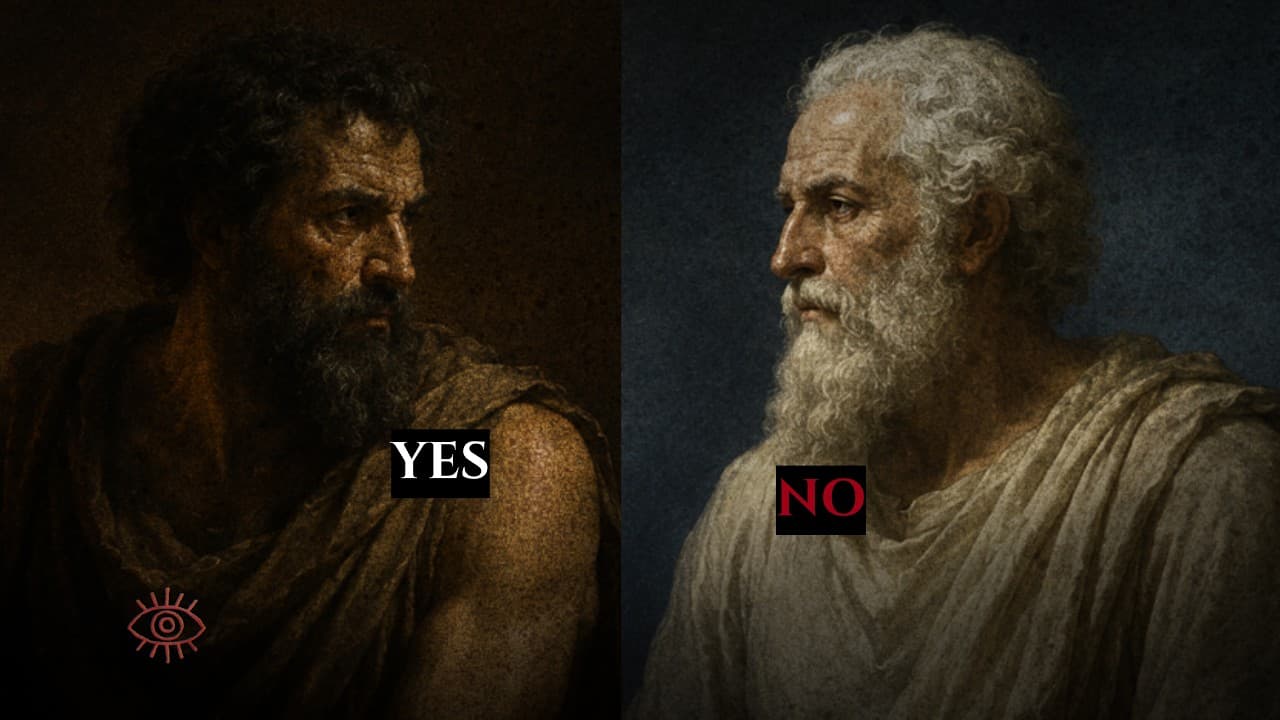
Is Change Real? | Heraclitus vs Parmenides | Philosophy for Sleep
Two Greeks at opposite edges of the ancient world gave opposite answers to the same question, and nearly every philosopher since has stood somewhere between them. This episode follows the quarrel from its beginning. We meet Heraclitus, the lonely riddler of Ephesus who hid his one book in a temple and taught that everything flows, that the world is a river and a living fire held in tune by a hidden measure. We cross the sea to meet Parmenides, the calm lawgiver of the Greek west who used pure reason to argue that change is impossible, and that whatever truly is must stand motionless and one. We follow their collision through the famous paradoxes of Zeno, through Plato's daring attempt to give each thinker a world of his own, through Aristotle's quieter answer, and into our own age, where the same argument lives on in physics and in the felt passing of time. It is a walk through the two deepest things we feel: that everything changes, and that nothing is ever truly lost. The full episode is on YouTube and Spotify. Please listen only in safe, restful contexts.