The Banality of Evil | Hannah Arendt Explained for Sleep
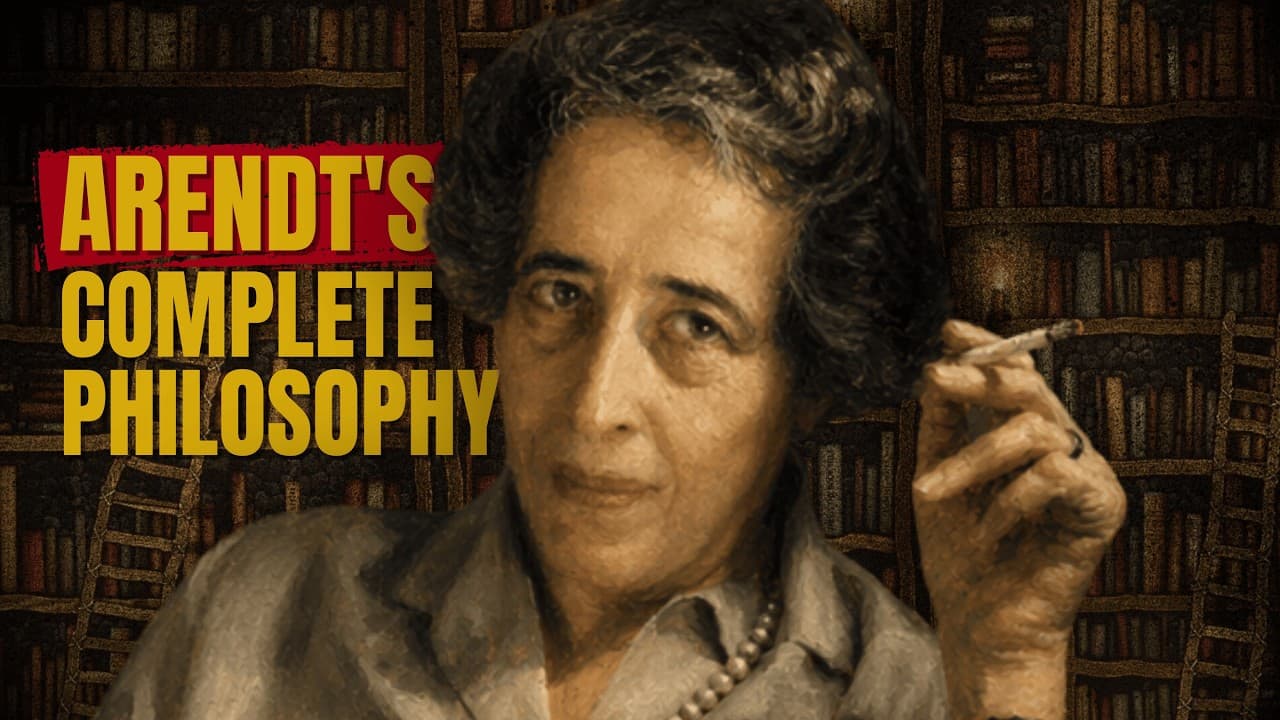
Hannah Arendt's Complete Philosophy
A refugee philosopher who escaped the Holocaust asked why it had been possible, and spent the rest of her life answering. Hannah Arendt was born in Königsberg in nineteen-oh-six, studied philosophy with Heidegger and Jaspers, fled Nazi Germany in nineteen thirty-three, was interned in a French camp, and arrived in New York in nineteen forty-one with nothing but her intellect and a determination to understand what had happened to her world. What followed was one of the most extraordinary intellectual careers of the twentieth century: a ten-chapter arc that moves from her dramatic biography through her monumental account of totalitarianism, her philosophical defense of political action and the public realm, her controversial reporting on the Eichmann trial in Jerusalem, and her final unfinished inquiry into thinking, willing, and judgment. Along the way we encounter the phrase that made her famous and infamous at once, a careful examination of how bureaucratic participation in mass murder can occur without conventional evil motivation, and a sustained argument that what the modern age has lost is something genuinely irreplaceable: the space in which human beings, in all their irreducible plurality, can act together and begin something new. This episode is designed for listeners who want to spend a long and quiet night inside one of the great minds of the last century. The full episode is on YouTube and Spotify. Please listen only in safe, restful contexts.