Ethics
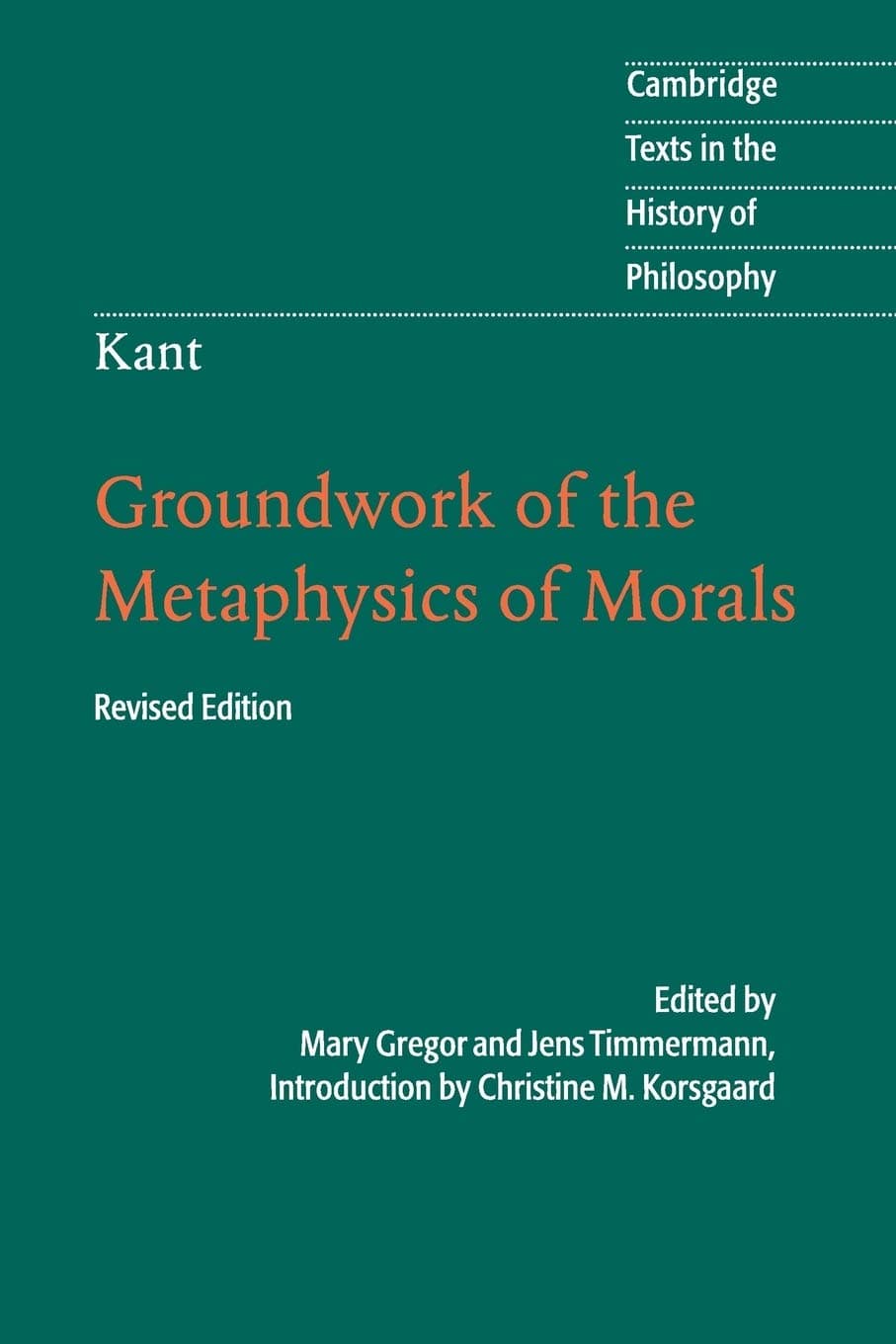
Groundwork of the Metaphysics of Morals
by Immanuel Kant(1785)
Kant's foundational work on ethics, where he introduces the categorical imperative and argues that morality is grounded in reason alone. Shorter and more accessible than the Critiques, this is the best entry point into Kant's moral philosophy.
Some links are affiliate links. Purchases help support the channel at no extra cost to you.
Episodes featuring this book
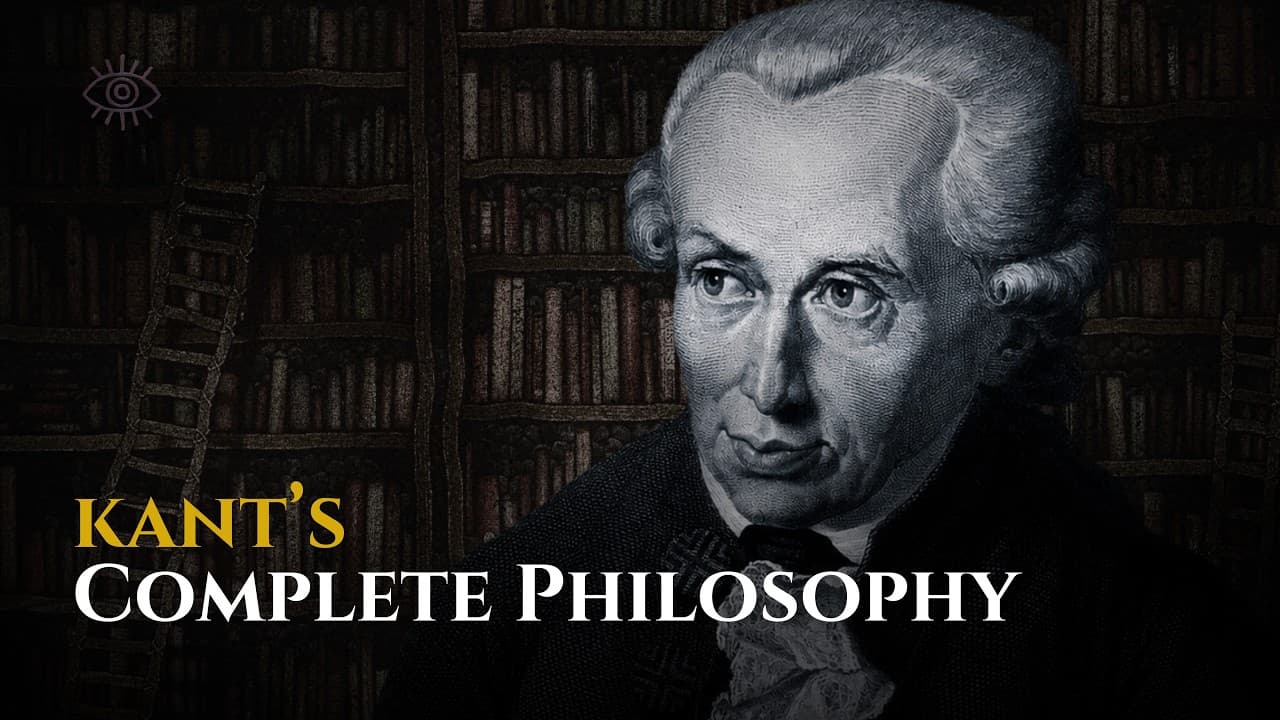
You Can Never See Reality as It Is | Kant's Philosophy for Sleep
Kant's Complete Philosophy
There is a wall between you and reality. You did not build it. You cannot remove it. It is the structure of your own mind. We follow Kant from his daily walk through the streets of Konigsberg, where neighbors set their clocks by his passing, to a body of work that reshaped every discipline it touched. We explore the crisis that shattered his faith in rationalist metaphysics and the decade of silence that followed. We unpack his Copernican revolution in thought, the claim that the mind does not passively receive the world but actively constructs it. We follow him through the Critique of Pure Reason and the architecture of transcendental idealism, through the thing in itself and the boundaries of human knowledge, through the categorical imperative and his account of morality as rational self-legislation, through the demolition of every classical proof of God's existence and the construction of a moral faith to take their place. We examine his philosophy of beauty and the sublime. And we end where Kant ended, with the starry heavens above and the moral law within. The full episode is on YouTube and Spotify. Please listen only in safe, restful contexts.
10 chapters13 sources

The Banality of Evil | Hannah Arendt Explained for Sleep
Hannah Arendt's Complete Philosophy
A refugee philosopher who escaped the Holocaust asked why it had been possible, and spent the rest of her life answering. Hannah Arendt was born in Königsberg in nineteen-oh-six, studied philosophy with Heidegger and Jaspers, fled Nazi Germany in nineteen thirty-three, was interned in a French camp, and arrived in New York in nineteen forty-one with nothing but her intellect and a determination to understand what had happened to her world. What followed was one of the most extraordinary intellectual careers of the twentieth century: a ten-chapter arc that moves from her dramatic biography through her monumental account of totalitarianism, her philosophical defense of political action and the public realm, her controversial reporting on the Eichmann trial in Jerusalem, and her final unfinished inquiry into thinking, willing, and judgment. Along the way we encounter the phrase that made her famous and infamous at once, a careful examination of how bureaucratic participation in mass murder can occur without conventional evil motivation, and a sustained argument that what the modern age has lost is something genuinely irreplaceable: the space in which human beings, in all their irreducible plurality, can act together and begin something new. This episode is designed for listeners who want to spend a long and quiet night inside one of the great minds of the last century. The full episode is on YouTube and Spotify. Please listen only in safe, restful contexts.
10 chapters5 sources

Beyond the Empty Will | Murdoch and Moral Vision
Iris Murdoch finds moral freedom in the patient work of seeing reality beyond the self. This episode follows The Sovereignty of Good as a triptych of moral inquiry. It begins with the inner change that occurs when a person learns to see another more justly, even without any outward action. It then follows Murdoch's account of prayer, Freud, grace, and the possibility of retaining moral transcendence after the traditional idea of God has faded. The final movement enters Plato's images of the sun and the cave, before turning to beauty, art, love, death, chance, and humility. Throughout, Murdoch challenges the picture of morality as a series of isolated choices and proposes attention as the patient activity through which consciousness becomes more truthful, less selfish, and more responsive to the real world. The full episode is on YouTube and Spotify. Please listen only in safe, restful contexts.
7 chapters6 sources
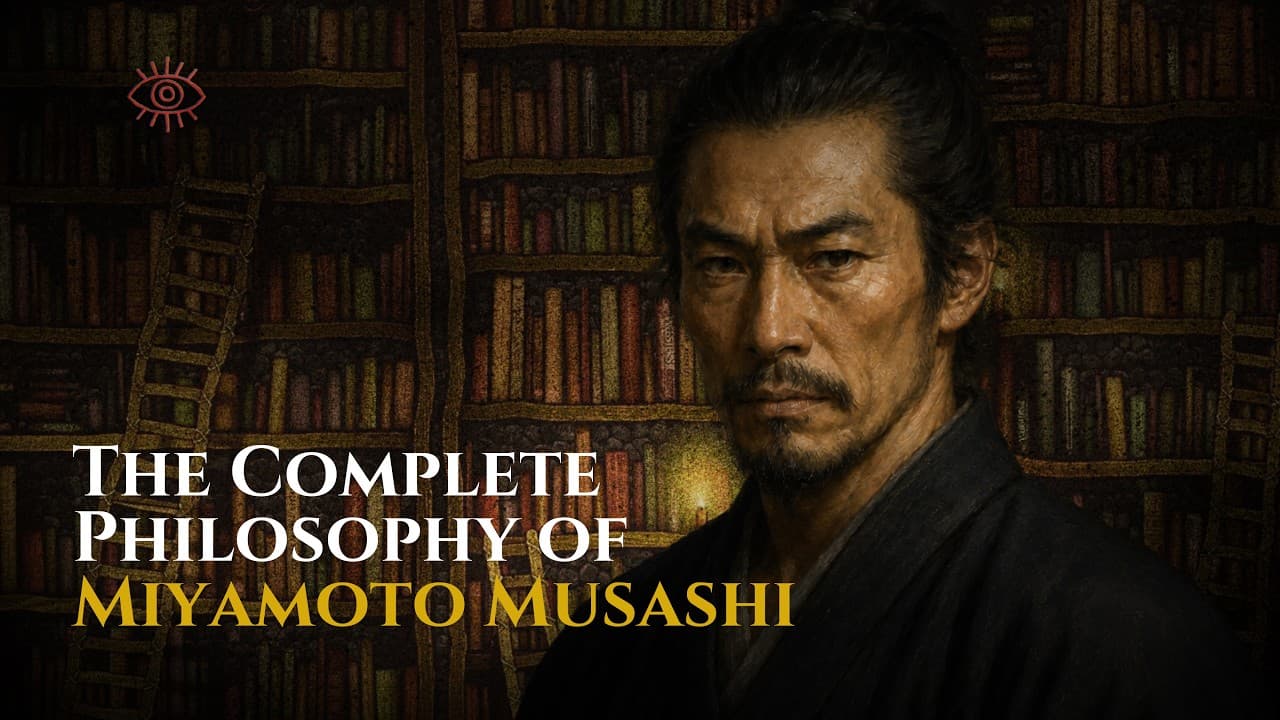
The Sword Was Never the Point | Miyamoto Musashi for Deep Sleep
He won everything his world had to offer with a sword, then spent thirty years turning away from it, toward painting, teaching, and one short and difficult book. Born into the last years of Japan's long civil wars, a rough, motherless boy killed his first opponent at thirteen and walked out onto the open road to test himself against the finest swordsmen in the land. This is the story of what he was really looking for. We follow him through the two duels that made him a legend, a broken dynasty of sword teachers in the old capital and a single stroke on a windswept island, and then through the stranger second half of his life. In a cave at the end of his days he gathered all of it into one austere book about strategy, mastery, and the clear, empty mind that waits on the far side of any discipline pursued to its depth. The full episode is on YouTube and Spotify. Please listen only in safe, restful contexts.
15 chapters6 sources
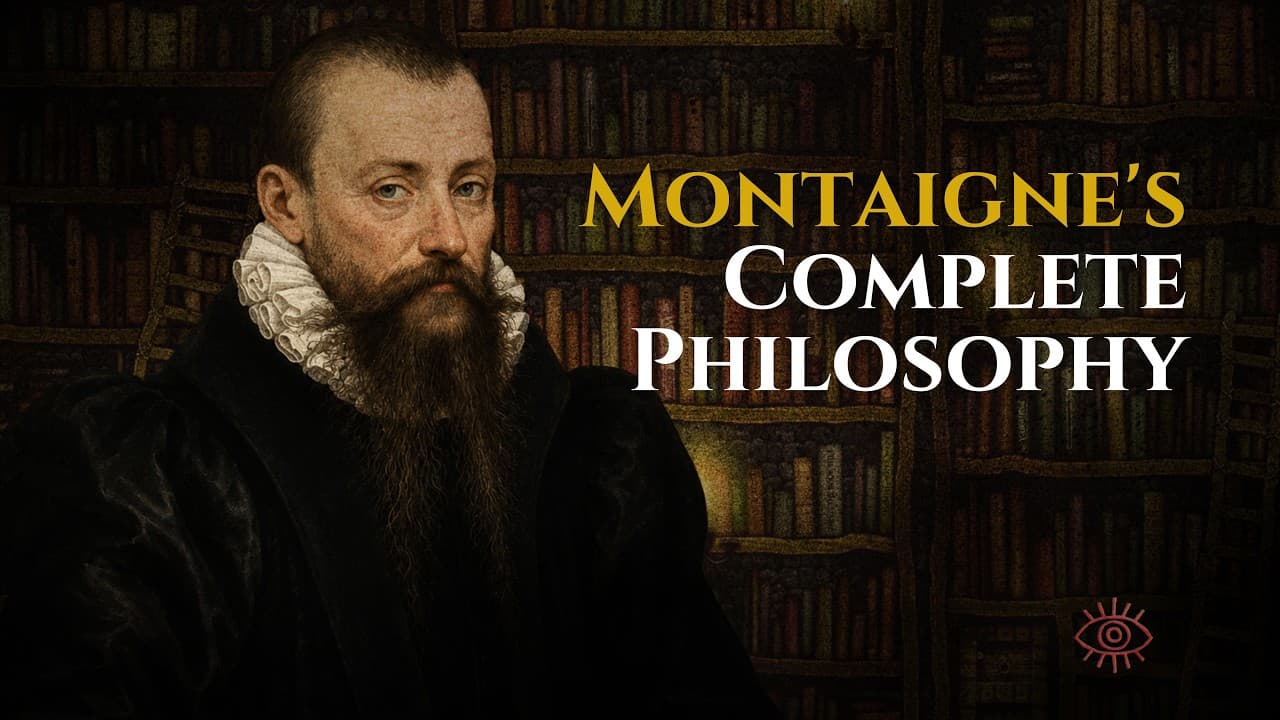
He Wrote About Himself for 20 Years and Described Us All | Montaigne
He locked himself in a tower to study one ordinary man, and ended up describing everyone who would ever read him. In fifteen seventy-one a French nobleman withdrew from public life to a round library at the top of a stone tower, and there, to tame his own restless mind, he began the strangest and most intimate book of its age. This is the story of Michel de Montaigne and the work he modestly called his attempts, the essays that invented a whole way of writing. We begin with his unusual life, the strange education, the one friendship that shaped everything, and the loss that turned him inward. From there the great themes of the book: his bottomless doubt and its gentle motto, his study of the ever-changing self, his hatred of cruelty in a country torn apart by religious war, his acceptance of the body and its pains, and the serene wisdom of his final years. Along the way we meet a mind that set out to know one person and ended by knowing everyone. The full episode is on YouTube and Spotify. Please listen only in safe, restful contexts.
15 chapters7 sources
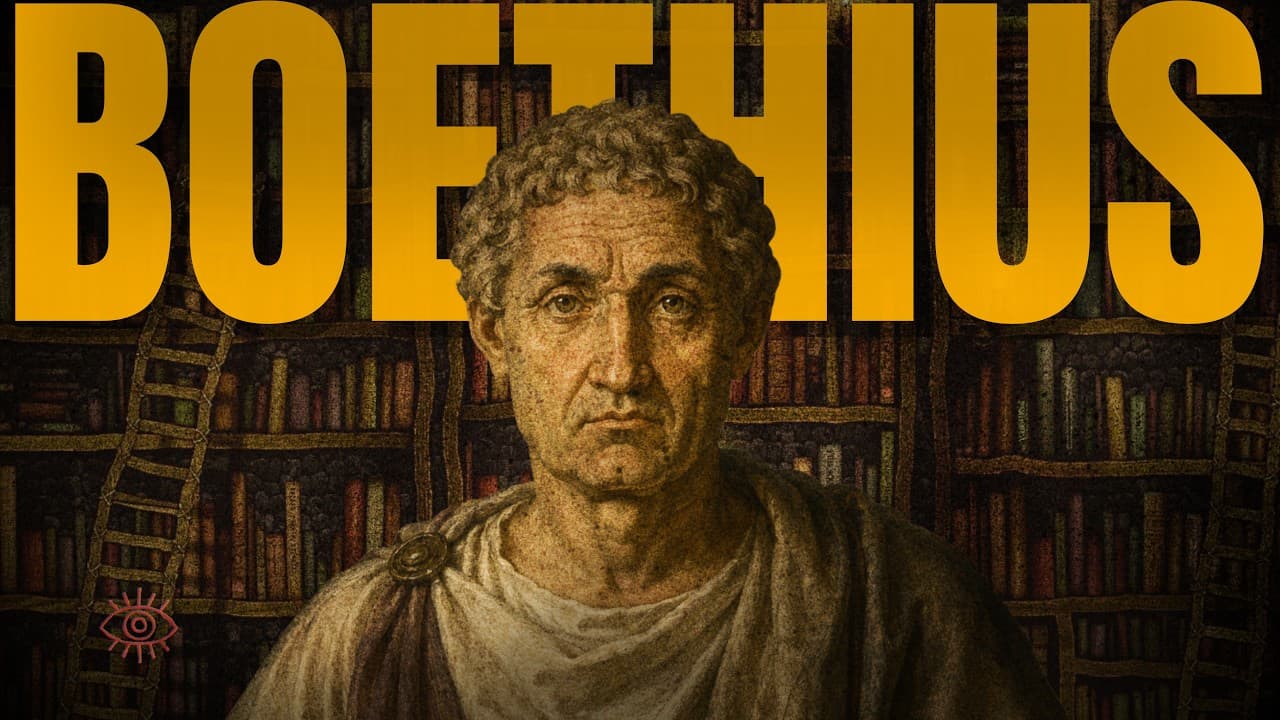
How to Stay Calm When Fortune Takes Everything | Boethius’s Complete Philosophy
A book written in a death cell, reaching for nothing but reason, went on to console a thousand years of readers. In a prison in the north of Italy, fifteen centuries ago, one of the most powerful men in the kingdom sat condemned and did something no one expected. He wrote a long conversation with Philosophy herself. We trace Boethius from the heights of Roman honor to his fall on a false charge, through the vast project by which he tried to carry the thought of Greece into a darkening West, and into the cell where, facing the end, he reached not for rescue but for the light of reason. We sit with Lady Philosophy as she confronts the wheel of fortune, the goods that never satisfy, the one good that all things seek, the puzzle of why the wicked prosper, and at last the great question of how a person can be free under a God who sees all of time at once. The full episode is on YouTube and Spotify. Please listen only in safe, restful contexts.
15 chapters6 sources