
The same episode in the app, where it keeps playing with your screen off.
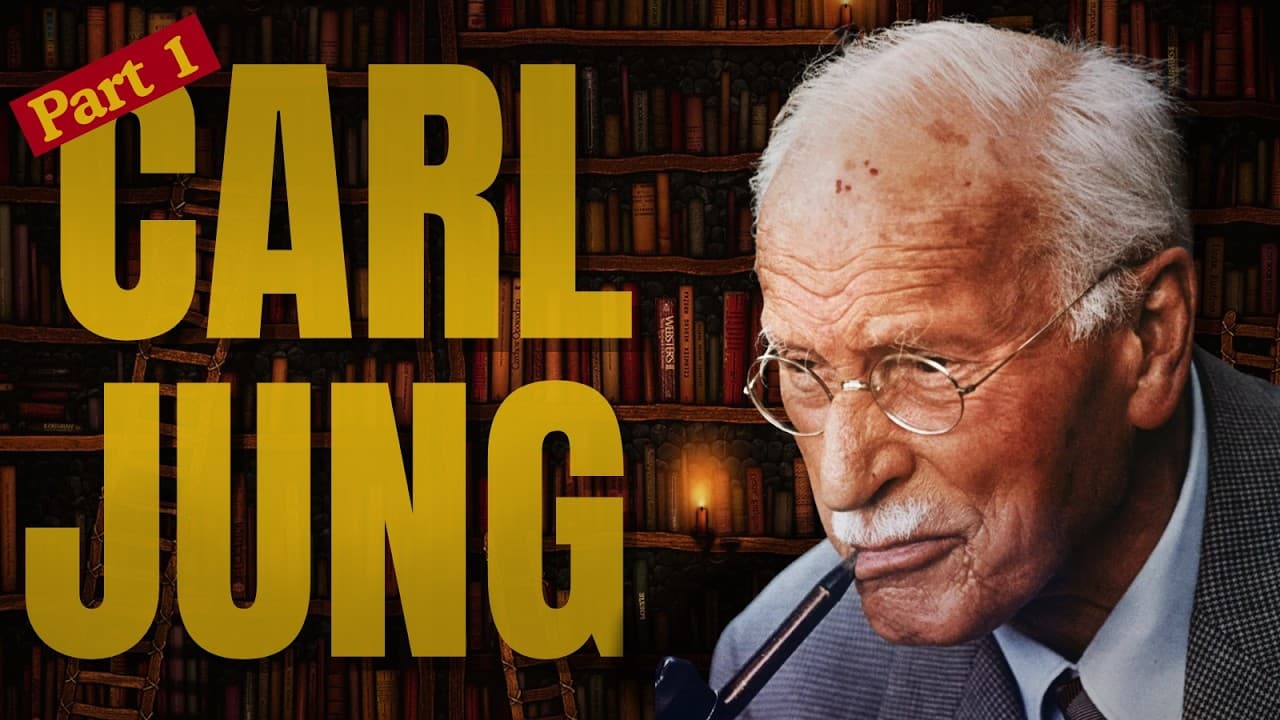
What Is Your Shadow? | Carl Jung's Shadow Work for Sleep
Carl Jung's Complete Psychology | Part 1
Carl Jung departed from Freud to forge analytical psychology, a framework that maps the hidden architecture of the psyche. This episode traces Jung's life from his early psychiatric work through his break with Freud and his descent into the unconscious that produced the Red Book.
It explores the complete structure of the mind according to Jung: the ego, persona, shadow, personal unconscious, collective unconscious, archetypes, anima and animus, and the Self. Along the way, it covers shadow work techniques, dream interpretation through amplification, and the archetypal patterns that surface in mythology, religion, and everyday life.
The full episode is on YouTube and Spotify. Please listen only in safe, restful contexts.
Timestamps
Jump into the video
- 0:00:00Introduction to Carl Jung
- 0:00:51Early life and influences
- 0:04:46Medical studies and research
- 0:10:15Psychiatric training in Zurich
- 0:15:47Collaboration and split
- 0:23:02The foundation for independence
- 0:25:35Rupture with Freud
- 0:30:12Departure from orthodoxy
- 0:35:25Personal and theoretical shifts
- 0:39:21Final break and independence
- 0:42:41Crisis and isolation
- 0:44:05Confrontation with the unconscious
- 0:47:31Exploration of the depths
- 0:52:00Inner turmoil and grounding
- 0:55:07Red Book period lessons
- 0:58:11Post-crisis rebuilding
- 1:02:07Teaching and travel
- 1:08:15Foundations of analytical psychology
- 1:13:46Controversy and legacy
- 1:17:00Conclusion of career
- 1:19:08Ego and consciousness
- 1:20:34Personal unconscious
- 1:21:35The persona
- 1:23:53The shadow archetype
- 1:25:45Shadow projection
- 1:27:35Integrating the shadow
- 1:29:43Collective shadow
- 1:31:58Psychological structure and dynamics
- 1:33:24The nature of complexes
- 1:37:05Complexes and projection
- 1:39:05Complexes in relationships
- 1:41:17Working with complexes
- 1:43:33Complexes and archetypes
- 1:46:06Complexes as interface
- 1:47:28The collective unconscious
- 1:50:45What are archetypes?
- 1:52:52Archetypal energy
- 1:55:08Key archetypes
- 1:57:02Archetypes and instincts
- 1:59:35Critiques of archetypes
- 2:02:21Living with archetypes
- 2:03:59Archetypal motifs in myth
- 2:05:57The divine child and goddess
- 2:08:44Wise old man and divine shadow
- 2:10:54Alchemy and psychology
- 2:13:15Alchemical parallels
- 2:16:00Fairy tales and ritual
- 2:19:01Archetypes as guides
- 2:20:24Revisiting the shadow
- 2:22:32Personal shadow work
- 2:25:45Ethical implications of shadow
- 2:27:22Collective shadow and history
- 2:30:40Collective shadow work
- 2:34:00Complexity of shadow
- 2:35:40Anima and animus
- 2:38:23Stages of anima development
- 2:41:01Anima projection and work
- 2:42:33Animus and its development
- 2:45:14Critiques of contraexual archetypes
- 2:47:56Projection in relationships
- 2:50:14Integration of contraexual elements
- 2:52:08The self archetype
- 2:54:38Symbols of the self
- 2:56:49Ego-self relationship
- 2:59:20Compensation and transcendence
- 3:01:52Self and religious experience
- 3:04:14Inflation and humility
- 3:06:14Realizing wholeness
- 3:08:13Jung's dream analysis
- 3:11:07Dream interpretation methods
- 3:13:40Functions of dreams
- 3:17:23Clinical use of dreams
- 3:20:56Dreams as communication
Sources & works cited
6 in all
- 1.Jung, Carl G.. The Archetypes and the Collective Unconscious (Collected Works Vol. 9, Part 1) (1969)
- 2.Jung, Carl G.. Memories, Dreams, Reflections (1989)
- 3.Jung, Carl G.. Man and His Symbols (1964)
- 4.Jung, Carl G.. The Red Book: Liber Novus (2009)
- 5.Stein, Murray. Jung's Map of the Soul: An Introduction (1998)
- 6.Stevens, Anthony. Jung: A Very Short Introduction (2001)
Similar episodes
Synchronicity Explained | Carl Jung's Complete Psychology for Sleep
On Carl Jung
15 chapters · 3 sources
Carl Jung believed that the goal of human life is not happiness but wholeness, and that wholeness requires confronting everything within ourselves that we would rather not see. This second part of the Jung exploration examines his method of active imagination for engaging the unconscious, his theory of introversion and extraversion, and the four functions of consciousness.
Play