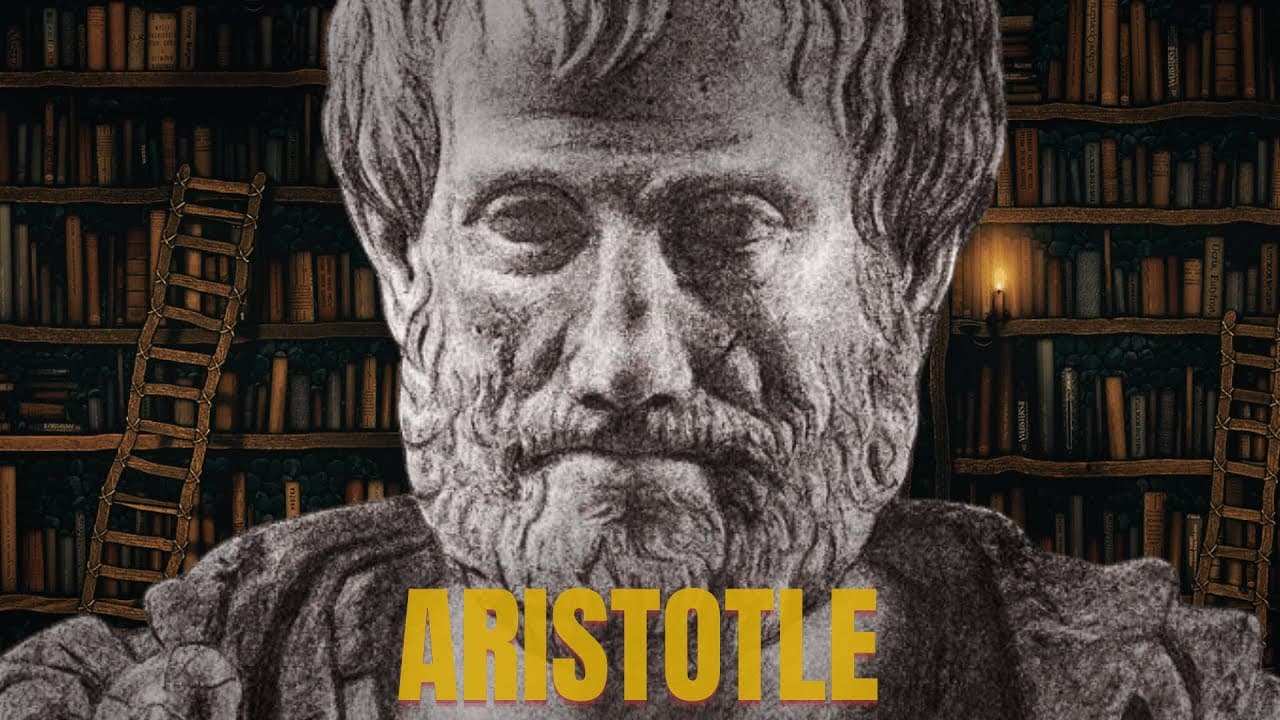
From Logic to Ethics | Aristotle's Complete Philosophy
Aristotle's Complete Philosophy
Aristotle spent twenty years studying under Plato, then walked away and built a rival system that would dominate Western thought for two millennia. This episode traces his life from the court physician's son in Stagira, through the Academy, his years tutoring Alexander the Great, and the founding of the Lyceum in Athens.
It examines his major contributions across logic, metaphysics, ethics, politics, and poetics: the categories of being, hylomorphism, the four causes, the unmoved mover, the function argument, eudaimonia as the highest good, the doctrine of the mean, practical wisdom, and the vision of the good life laid out in the Nicomachean Ethics. Dante called him the Master of Those Who Know, and for centuries no one in the Western or Islamic world could think seriously about the world without first thinking through Aristotle.
The full episode is on YouTube and Spotify. Please listen only in safe, restful contexts.
Enjoying the episode?
Occasional letters on philosophy, reading, and the examined life. No spam, ever.
By subscribing you consent to receiving occasional emails. Unsubscribe any time via the link in every email or at /unsubscribe.
Timestamps
- 00:00:00Introduction
- 00:04:36Aristotle's Early Life and Time at Plato's Academy
- 00:09:21Travels and Tutoring Alexander the Great
- 00:15:47Founding the Lyceum School in Athens
- 00:22:40Logic and the Art of Reasoning
- 00:30:15Understanding Reality: Being and Substance
- 00:38:27Physics: Motion, Change, and the Natural World
- 00:46:10Psychology: The Soul and Human Mind
- 00:53:20Ethics: Virtue and the Good Life
- 01:00:58Politics: Government and the Ideal State
- 01:08:56Rhetoric: The Art of Persuasion
- 01:15:19Poetry and Tragedy: Art and Human Experience
- 01:23:14Knowledge and How We Learn
- 01:30:27Islamic Scholars and Medieval Philosophy
- 01:38:22Renaissance Rediscovery and Modern Interpretations
- 01:45:02Contemporary Aristotelian Philosophy
- 01:52:14Conclusion: Aristotle's Lasting Legacy
Sources & Works Cited
- 1.Aristotle. The Nicomachean Ethics (2020)
- 2.Aristotle. The Politics (1992)
- 3.Aristotle. Poetics (1996)
- 4.Aristotle. Metaphysics (2016)
- 5.Hall, Edith. Aristotle's Way: How Ancient Wisdom Can Change Your Life (2019)
- 6.Natali, Carlo. Aristotle: His Life and School (2013)
- 7.Shields, Christopher (ed.). The Oxford Handbook of Aristotle (2012)
- 8.Barnes, Jonathan (ed.). The Cambridge Companion to Aristotle (1995)
- 9.Stanford Encyclopedia of Philosophy. Aristotle
- 10.Internet Encyclopedia of Philosophy. Aristotle
Related Episodes
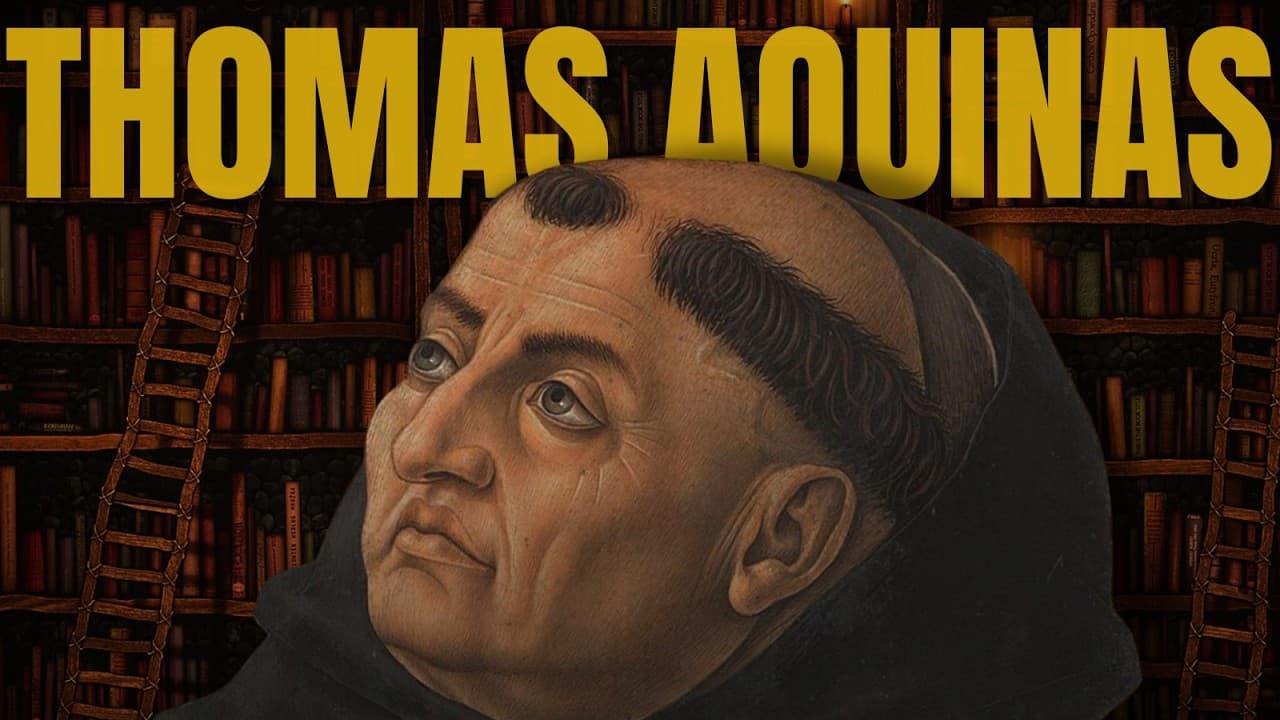
The Saint Who Made Aristotle Christian | All of Thomas Aquinas's Philosophy Explained
All of Thomas Aquinas's Philosophy Explained
Thomas Aquinas synthesized Aristotelian philosophy with Christian theology to build one of the most comprehensive intellectual systems in Western history. This episode follows his life from his childhood at Roccasecca through his defiance of family opposition to join the Dominican order, his studies under Albertus Magnus, and his career at the University of Paris. It examines his masterwork the Summa Theologica in depth, including the Five Ways of proving God's existence, his metaphysics of being and existence, divine simplicity, natural law ethics, the theory of virtue, and his understanding of grace. The story concludes with his mystical vision of December 1273, when he declared all his writings to be straw, and the long arc of his legacy from condemnation to canonization to the modern Thomistic revival. The full episode is on YouTube and Spotify. Please listen only in safe, restful contexts.
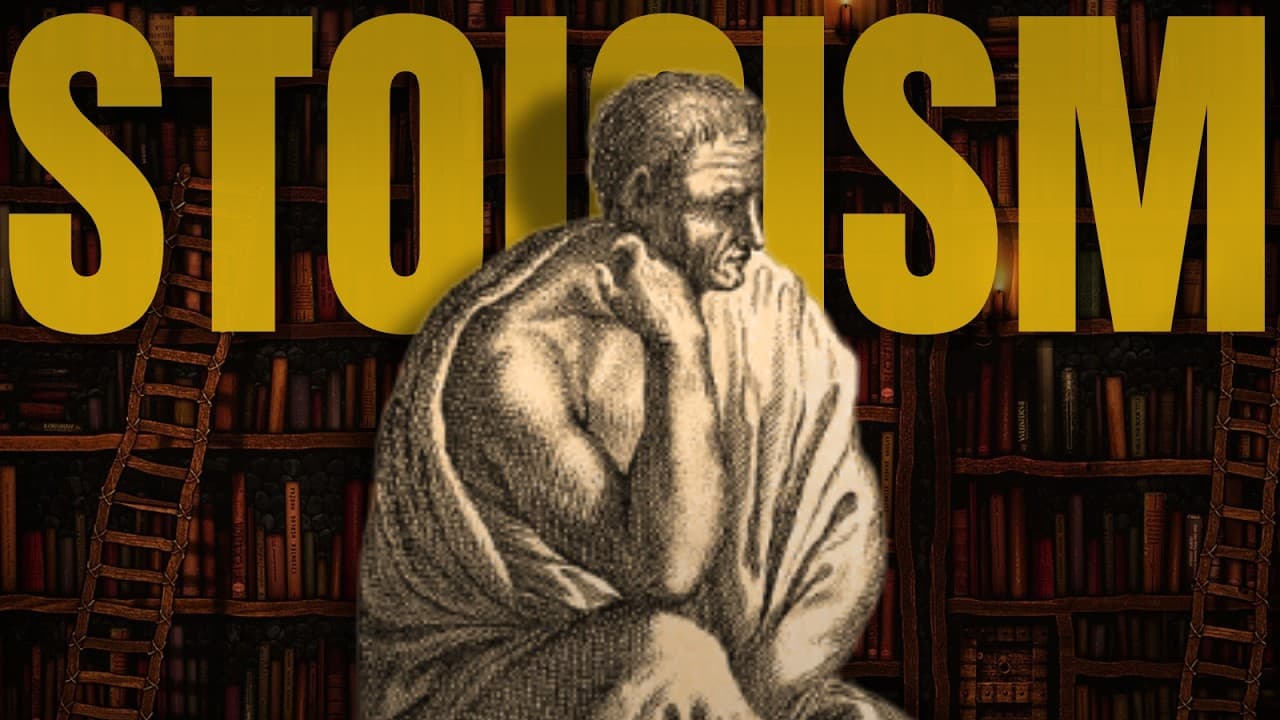
On Stoicism | The Art of Living Without Fear for Sleep
Marcus Aurelius, Seneca & Epictetus | 3 Hours of Ancient Wisdom
Marcus Aurelius governed the Roman Empire and wrote private notes reminding himself that none of it mattered. Seneca amassed enormous wealth and wrote letters on the poverty of the soul. Epictetus was born a slave and taught that no one had ever been enslaved who understood what was truly their own. This episode traces Stoic philosophy from its origins with Zeno in the Painted Stoa through its three great Roman practitioners. It examines the dichotomy of control, the four cardinal virtues, the Stoic understanding of emotion and desire, the discipline of assent, the practice of premeditatio malorum, the cosmopolitan vision of a world citizenry, and passages from the Meditations, the Letters to Lucilius, and the Enchiridion that have helped people endure difficulty for two thousand years. The full episode is on YouTube and Spotify. Please listen only in safe, restful contexts.
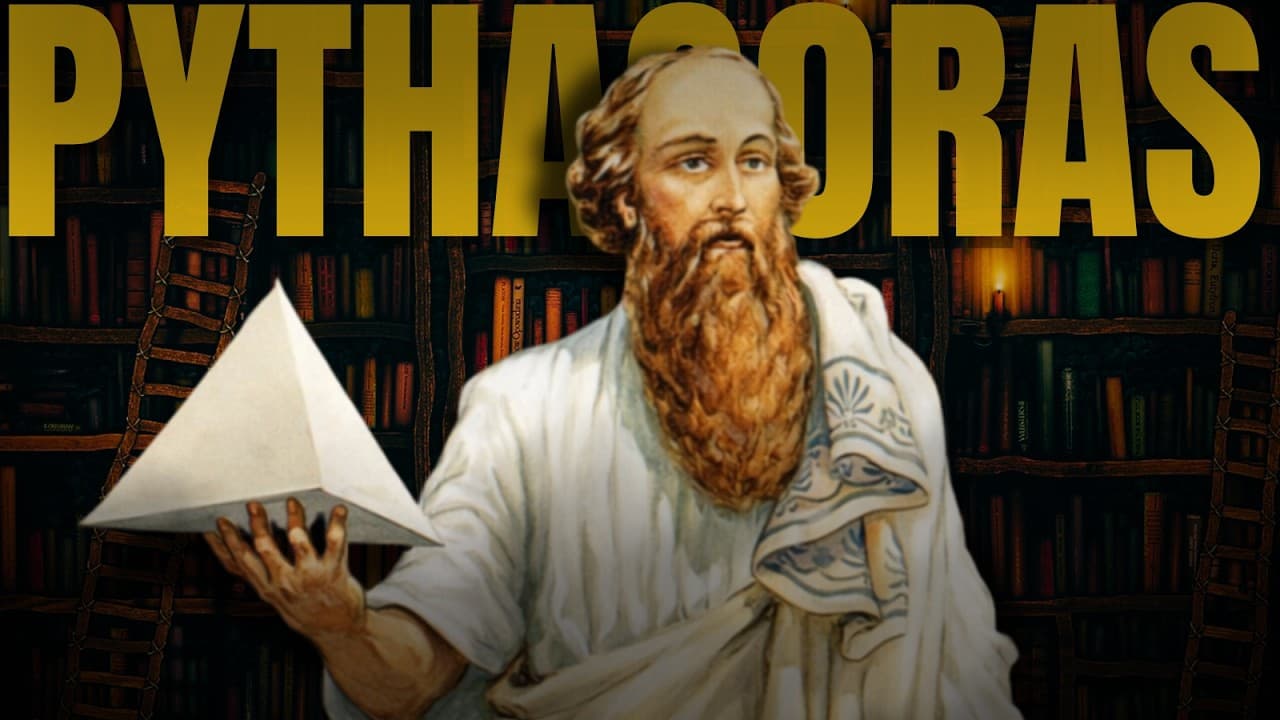
Why Pythagoras Believed Everything Was a Number | Philosophy for Sleep
The Ancient Wisdom of Pythagoras
Around 600 BCE, on the island of Samos, a man was born whose ideas would echo through mathematics, music, and mysticism for over two thousand years. Pythagoras left almost nothing in writing, and the boundary between the historical figure and the legend built around him remains impossible to draw with certainty. This episode traces what we can reconstruct: his travels through Egypt and Babylon, the secretive community he founded at Croton, the discovery that musical harmony follows mathematical ratios, and the doctrine of the transmigration of souls. We examine the Pythagorean way of life, the famous theorem and its deeper significance, the concept of cosmic harmony, and the violent end of the brotherhood. Pythagoras believed the universe was built on number, and that understanding its structure was a path to the divine. The full episode is on YouTube and Spotify. Please listen only in safe, restful contexts.