Essays
C.S. Lewis Wrote a Rebuttal to His Own Book, and Signed It N. W. Clerk
A Grief Observed, assembled from four notebooks after Joy Davidman died in 1960, takes apart the confident theodicy of The Problem of Pain, and Lewis left both books in print to argue with each other.
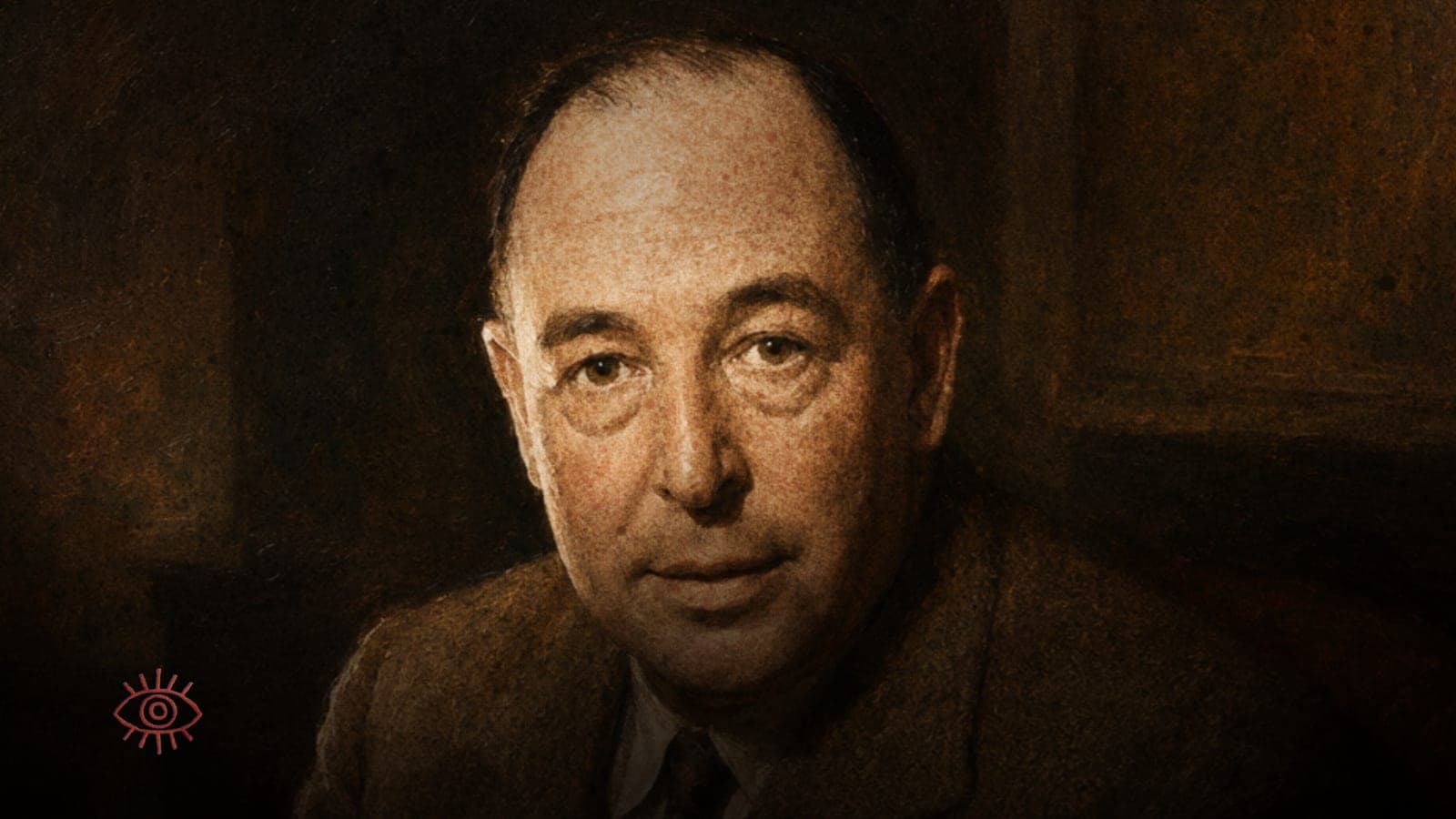
In 1961 Faber and Faber published a short book by an author nobody could place. The name on the cover was N. W. Clerk. There was no argument inside it, only four numbered parts assembled from notebooks a widower had filled after his wife died of cancer, whatever empty ones he could find about the house, kept partly to stop himself going out of his mind. The dead woman is never named. She appears throughout as H.
Clerk was C.S. Lewis. By then he was the most widely read defender of Christianity in the English language, a Cambridge professor whose wartime radio talks had made him a national explainer of the faith, and the author of seven children's books about a country called Narnia. He could not put his own name on this one. It went out under a name that was not his own, and it kept that name until he died in 1963.
He had come to belief slowly and against his will. Through the spring of 1929, in his rooms at Magdalen College, Oxford, he gave up an atheism he had held since boyhood and knelt on the floor, and described himself afterwards as the most dejected and reluctant convert in all England. No inherited faith was being tested here. He had been argued out of unbelief in his thirties by his own reasoning, and spent the following decades performing the same service for everybody else.
What the notebooks contain is a sustained assault on a position Lewis had published, under his own name, twenty years earlier. The Problem of Pain, his first work of apologetics and the start of that second career, came out in 1940. It is orderly, confident, and built like a proof: it states the oldest objection to belief in God as sharply as anyone has stated it, answers it in stages, and has been continuously reprinted ever since. A Grief Observed reports that when the pain arrived the proof was worth nothing, that the faith it defended had been a house of cards, and that the God on the far side of the argument might be a Cosmic Sadist running an experiment on creatures whose screaming is the point of the exercise.
Lewis withdrew neither book. He issued no correction to the 1940 argument, made no statement about the contradiction, and let the two of them go on selling beside each other. The most effective Christian apologist of the century had written the most damaging answer to his own apologetics, in his own voice, with another man's name on the spine.
The Problem of Pain, 1940, and the Sentence About Another Man's Toothache
His first evidence about God had been a failed prayer. In the summer of 1908, when he was nine, his mother Flora fell ill with cancer at the family house on the edge of Belfast. He prayed for her recovery with the mechanical earnestness of a frightened child, and she died in August. He wrote half a lifetime later that with her death all settled happiness, all that was tranquil and reliable, disappeared out of his life. Within weeks he was on a boat to an English boarding school whose headmaster was eventually declared insane.
Thirty two years on, with the second war just begun, a publisher asked him for a short book on suffering. He opened it by putting the objection in its most brutal form. If God were good, he would want his creatures perfectly happy; if God were almighty, he could do what he wanted; the creatures are not happy; therefore God lacks the goodness, or the power, or both. That is the objection philosophers still work over under the heading of the problem of evil, and Lewis set it at the front of his own defence unsoftened.
His first answer goes after the word almighty. Omnipotence does not include the power to do the meaningless: a square circle is not a feat God declines to perform, it is a phrase. Suppose God wants creatures who can love freely, since love under compulsion is nothing of the kind. They must be free to choose badly. Free creatures also need a shared, stable world to meet in, a nature running on fixed laws that hold regardless of what anyone wishes, which is exactly what lets the fire that warms a hand also burn it. In any case, Lewis added, only a fraction of human suffering comes from nature at all. The whips and the prisons and the bombs are the work of the same free will that makes love possible, and asking why God permits them amounts to asking why he made anyone free.
His second answer goes after the idea of goodness the objection leans on. Much of it, he thought, quietly assumes that a good God would be what he called a senile benevolence, a doting grandfather in the sky who wants the young people to enjoy themselves and asks only that a good time was had by all. That is indifference with better manners. An artist scrapes a picture back a hundred times because he cares too much to leave it botched, and would not trouble himself over a doodle. The love of God is of that costly, demanding kind, and turned on creatures as unfinished as human beings it is bound to hurt. Hence the line the book is remembered for: "God whispers to us in our pleasures, speaks in our conscience, but shouts in our pain: it is His megaphone to rouse a deaf world."
Then the admission, buried in the middle of all that confidence. It is an easy thing, Lewis conceded, to be brave about another man's toothache, and a book on suffering comes easiest to a man who is not suffering while he writes it. He wrote it the way a healthy man writes about illness, from the outside, with everything in order. He was forty one.
Joy Davidman, a Hospital Bedside Wedding, and Cancer in the Bone
Joy Davidman was born in New York in 1915, took a master's degree in English at Columbia at twenty, won the Yale Series of Younger Poets prize in 1938 for a collection called Letter to a Comrade, and joined the American Communist Party that same year. She had been raised, by her own description, a right-thinking child of materialism. She came to Christianity out of the collapse of a violent first marriage, and partly out of reading Lewis. She wrote to him. They met in August 1952.
There is a coincidence in the name Lewis cannot have missed. Since childhood he had used the word Joy for a particular experience: a sudden stab of longing for something he could not identify, arriving sidelong through small things, a toy garden his brother had made in the lid of a biscuit tin, three lines of verse about a northern god, and never satisfied by anything the world could hand over. He had built an argument for God on it and named his autobiography after it. The longing that had pointed him beyond the world delivered him, in his fifties, to a woman called Joy.
What followed is a sequence Lewis would have been embarrassed to publish as fiction. A civil marriage on 23 April 1956, contracted so that she and her two sons could stay in the country, and not described to his friends as a marriage at all. A diagnosis in October 1956: cancer, in the bone. On 21 March 1957 an Anglican priest married them in the Christian sense at her hospital bedside, with a prayer said over her for healing. And then the cancer drew back. Lewis, who had arranged his existence as a confirmed bachelor and expected nothing further from it, was handed three years he had never thought to want. The cancer returned in October 1959. She died on 13 July 1960 in Oxford, aged forty five.
He had published The Four Loves that same year. It contains the most quoted passage he ever wrote: to love at all is to be vulnerable, and anyone who wants to keep a heart intact must give it to nobody, not even to an animal, but wrap it round with little comforts and hobbies and lock it away in "the coffin of your own selfishness", where it will indeed stay unbroken, and become unbreakable and impenetrable and past all hope of redemption. The only place outside heaven, he wrote, where a person can be perfectly safe from all the dangers and disturbances of love is hell.
A man in his sixties wrote that, having lifted his own guarded heart out of its casket and handed it to a woman he already knew was dying. The costing was done in advance and it was accurate. What he had not costed, because nobody can, was what the loss would do to the machinery he had built in 1940 for explaining exactly this.
The first thing it did was make the machinery unusable.
The Cosmic Sadist and the Door Bolted From the Inside
The opening pages of the notebooks are a physical report. No one ever told him, he writes, that grief felt so like fear: the same flutter in the stomach, the same low restlessness. He records its laziness, the way the smallest ordinary task became impossible to begin. He records a sharper terror, that he was already forgetting her, that he could no longer summon her face, and that his own memory would slowly paint over the difficult, surprising, argumentative woman with a smoothed and flattering portrait of his own manufacture, until he was mourning a doll he had built himself. For a professional apologist this is a strange kind of writing. There is no audience in it.
The theology, when it arrives, does not go where a reader of the earlier book would expect. He does not report losing his belief in God. He reports something he finds worse. The conclusion he dreads, he writes, is not "so there is no God after all", but "so this is what God is really like; deceive yourself no longer". Suppose the being is there and is not good. Suppose human beings are rats in a laboratory and the figure in the white coat is a Cosmic Sadist, an eternal experimenter who works the creatures over precisely because their screaming is what he was after.
One image comes back again and again. Go to God in happiness, with praise, and you are welcomed with open arms. Go to him when your need is desperate, when every other help is vain, and what do you find: a door slammed in your face, the sound of bolting and double bolting within, and after that, silence.
He does not stay there, and he does not arrive anywhere tidy either. Across the four notebooks the picture shifts. He comes to suspect the door had never been locked, that his own frantic clutching was the thing jamming it, because a hand clenched in desperation cannot take hold of anything being offered to it. The Cosmic Sadist he reclassifies as raving, the sort of thing a man shrieks under the knife and does not mean. When something like an answer comes, it arrives not as an argument or as words but as a look, silent and certainly not unkind, as though God only shook his head, the way you would at a child too young to be told, as if to say: peace, you do not understand.
The other movement in the book is quieter and stranger. He notices that the moment he stops grasping after Joy, after the felt sense of her being nearby, she comes back to him more nearly as herself, and less as a figure assembled out of his own need. The relief in the notebooks always arrives by that route, through letting go.
The House of Cards, and Whether C.S. Lewis Lost His Faith
The question gets asked of him constantly, and the notebooks answer it in a sentence more damaging to Christian apologetics than anything his opponents managed in his lifetime. You never discover how much you believe a thing, he writes, until its truth or falsehood becomes a matter of life and death to you. Applied to himself, the finding was that his faith had been in some part a house of cards, and that grief had come through the room and put it flat on the floor.
Then the turn that keeps this from being a deconversion story. He decided the demolition was good. If it was a house of cards, the sooner knocked down the better, and nothing short of his own suffering would ever have done it. He would rather know.
So he did not lose his faith, and he did not keep it in the sense the question usually intends. What he lost was the assumption that he had been holding something solid, and the confidence that the arrangement of arguments he had built in 1940 could carry weight when weight was applied. Those arguments are not refuted anywhere in A Grief Observed. They are absent. A man who had spent twenty years explaining that pain is God's megaphone filled four notebooks with what it is like to be shouted at.
Which is where the pseudonym does its work. Privacy was part of it. The public voice, the one on the wireless and the paperback covers, could not have said these things without the saying being read as a resignation from the whole apologetic project. So the book went out as the private record of an unknown man, and it was read that way for as long as he was alive. His name went on the cover only after he had died. In every edition since, his wife is still H.
On 22 November 2013, fifty years to the day after Lewis died, a memorial stone was set in Poets' Corner in Westminster Abbey. Around his name and dates runs a line from a lecture he gave: "I believe in Christianity as I believe that the Sun has risen, not only because I see it but because by it I see everything else." The Abbey chose that sentence to represent him.
Both books about suffering are still in print. One explains why a good God permits pain. The other records what happened when the explanation was handed back to its author in the dark and made to prove itself. Neither cancels the other, and Lewis, who cared more for getting nearer the thing itself than for winning in front of a room, left them both standing.
He closed the notebooks not with an argument but with a borrowed image, from Dante, of the woman who has led the poet all the way up to the summit of heaven and there turns away from him to gaze into the eternal fountain. Joy was not his possession any longer and not the centre of his small world. She had turned to look at something larger. The last words in the four notebooks are about her turning: "She smiled, but not at me."
Adapted from a longform audio episode on C.S. Lewis, produced for Sleepy Philosophy Radio.
The Newsletter
New essays and episodes, delivered quietly.
By subscribing you consent to receiving occasional emails. Unsubscribe any time via the link in every email or at /unsubscribe.
Reflections
Loading...
Related Episodes
The Knight of Faith | A Slow Reading of Kierkegaard's Fear and Trembling
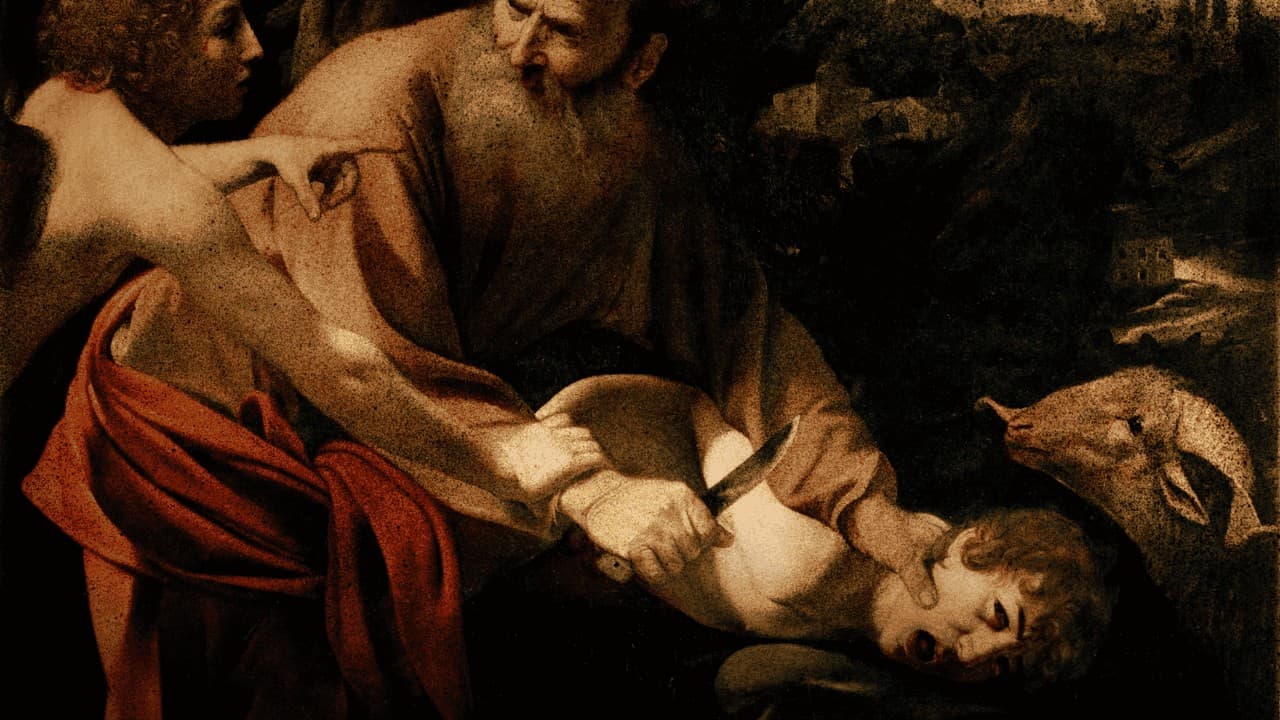
A father is commanded to kill the son he loves, and is told by no one why. Fear and Trembling is Soren Kierkegaard's strange and beautiful meditation on the binding of Isaac, written under the borrowed name Johannes de Silentio against an age that believed it had outgrown faith. This reading walks through the whole of it, the preface that quarrels with its own century, the four imagined retellings of the journey to Moriah, the eulogy that praises a man it cannot understand, the knight of faith who is impossible to tell apart from an ordinary shopkeeper, and the three problems that ask whether a single individual can ever stand higher than the moral law. It follows the argument to its quiet and unsettling close, where faith turns out to be not a stage one passes through but the task of an entire life. A complete, calm reading of one of philosophy's most demanding small books. The full episode is on YouTube and Spotify. Please listen only in safe, restful contexts.
Blaise Pascal | The Mathematician Who Found God
Pascal's Complete Philosophy
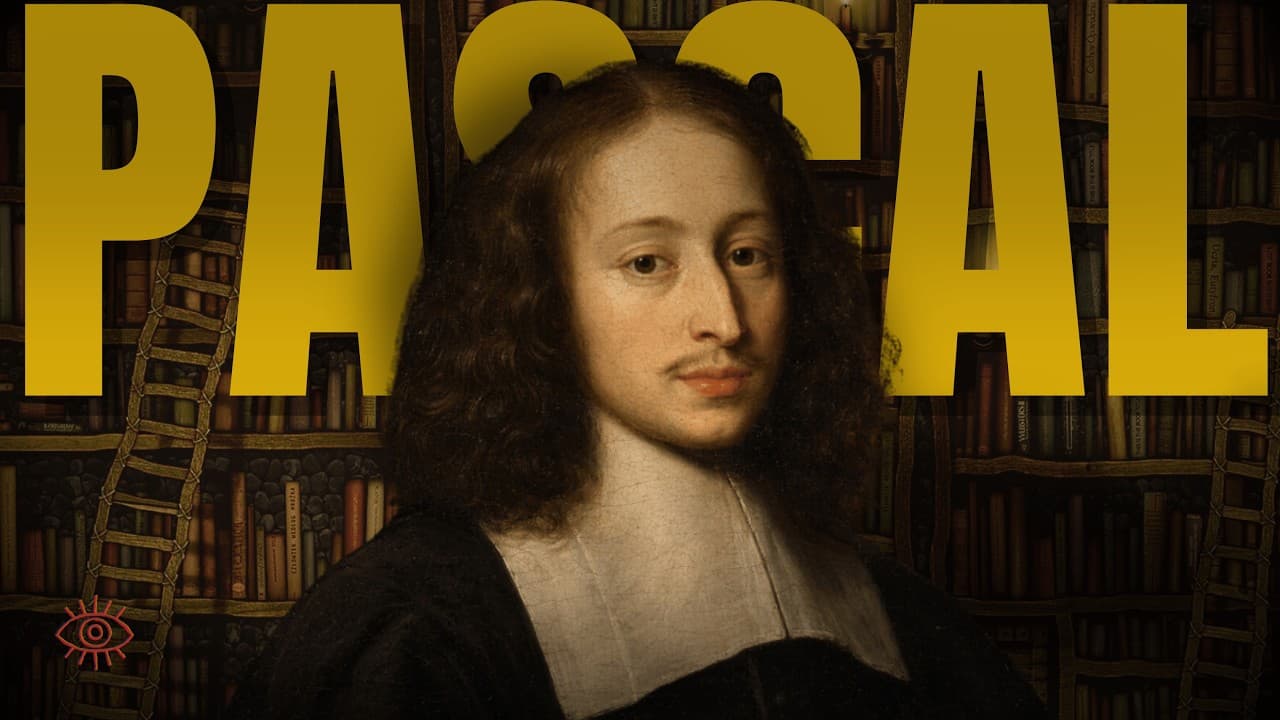
The man who proved that nature does not abhor a vacuum, and then wrote the most honest account ever given of why the universe terrifies us. Blaise Pascal lived only thirty-nine years, and in those years he changed mathematics, physics, probability theory, and the history of Western prose. But at the center of his life was a night in November of 1654 that he could never describe, only remember. After that night he turned from the world of scientific triumph toward a book he would never finish, a book about what it means to be a human being suspended between two infinites, looking for a God who chooses to remain hidden. This episode follows Pascal from the Paris household where he taught himself geometry in secret as a child to the small room in which he died, with the record of his conversion sewn into the lining of his coat. The full episode is on YouTube and Spotify. Please listen only in safe, restful contexts.
The Kingdom of God Is Within You
Leo Tolstoy's Complete Philosophy for Sleep
Leo Tolstoy was born on a vast Russian estate in 1828, a place of quiet and privilege that would shape everything he became and everything he later sought to destroy. He wrote two of the greatest novels in any language: War and Peace, which dismantled the myth of great men by showing that history is made by the countless small decisions of ordinary people, and Anna Karenina, which asked whether passion alone could ever carry a life. But his novels were only the beginning. In his fifties, the foundations of meaning collapsed beneath him entirely, and he turned to the Gospels with genuine seriousness for the first time. What he found there was not a theology but a practice: nonresistance to evil, love without exception, simplicity, and labor. These teachings cost him his marriage, his comfort, and his standing in the Orthodox Church, which excommunicated him in 1901. They also inspired Gandhi and Martin Luther King Jr., who built movements on the same tradition Tolstoy began. The full episode is on YouTube and Spotify. Please listen only in safe, restful contexts.