
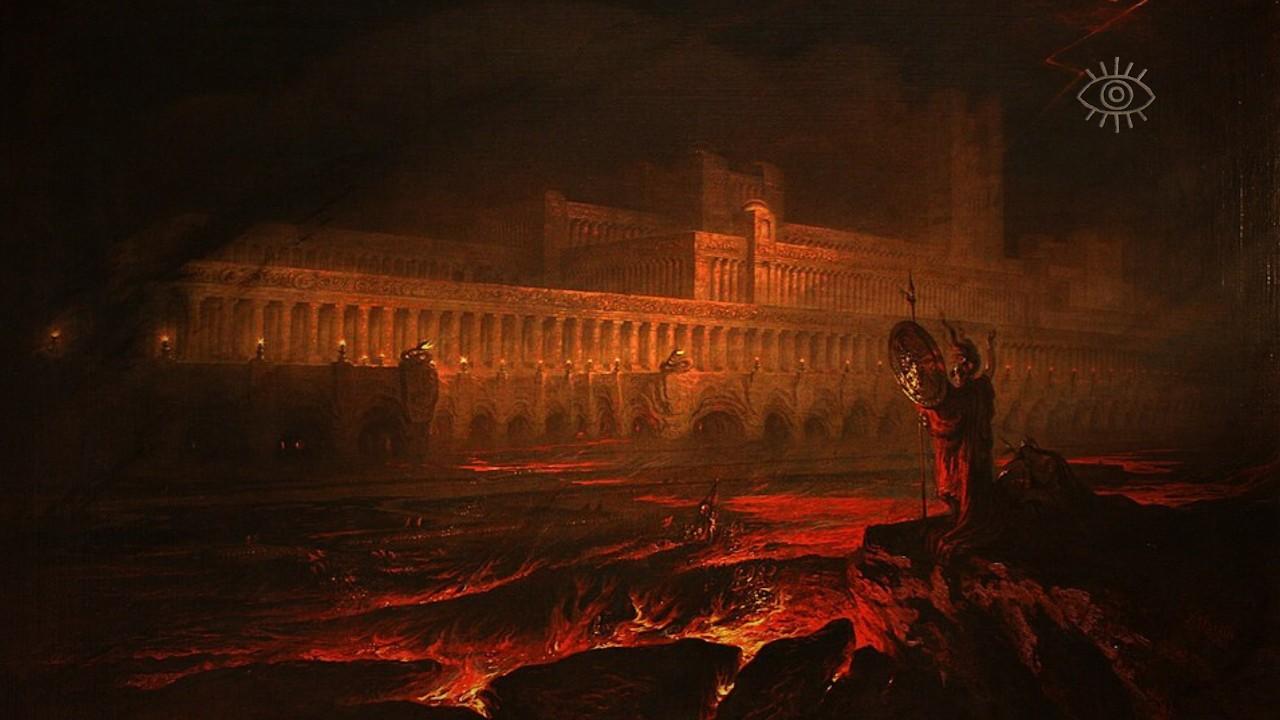
Abandon All Hope | The History of Hell From Hades to Dante
The idea of hell did not enter history in one finished form. This reading follows Egyptian judgment, Hebrew Sheol, Greek Hades, the Zoroastrian bridge, Gehenna, and arguments in early Christianity about the reach and duration of judgment. Dante gives the tradition its most enduring imaginative architecture; Milton, Swedenborg, and modern philosophers change its terms again. The focus stays on ideas about justice and the human conscience, rather than scenes of torment.
The full episode is on YouTube and Spotify. Please listen only in safe, restful contexts.
Timestamps
Jump into the video
- 0:00:00Chapter 1: The History of Hell and Its Names
- 0:04:53Chapter 2: Dante's Inferno and the Gate
- 0:15:27Chapter 3: Dante's Nine Circles of Hell
- 0:26:14Chapter 4: Egyptian Weighing of the Heart
- 0:35:40Chapter 5: Sheol and the House of Dust
- 0:44:16Chapter 6: Hades and Plato's Judges
- 0:56:28Chapter 7: Zoroaster's Bridge of Judgment
- 1:04:10Chapter 8: Gehenna and the Divided Dead
- 1:13:19Chapter 9: Hell in the Gospels and Revelation
- 1:22:28Chapter 10: Origen and the Hope of Restoration
- 1:39:41Chapter 11: Augustine and Eternal Punishment
- 1:56:57Chapter 12: Medieval Judgment in Stone
- 2:07:11Chapter 13: Milton's Hell Within the Mind
- 2:12:26Chapter 14: Swedenborg and the Chosen Hell
- 2:25:36Chapter 15: Darwin and the Moral Objection
- 2:33:08Chapter 16: Sartre's No Exit and Other People
Full transcript
For the record
Chapter 1: The History of Hell and Its Names
Who can judge a life when it is over? Dante's Inferno places a written answer over a gate. The Florentine poet gives that entrance a voice before his traveling character crosses it. A traveler can read a sign and know where a path leads. Dante's pilgrim reads a sentence that claims to know the fate of those beyond it.
The gate gives this warning. "Abandon all hope, ye who enter here." Virgil, the Roman poet guiding Dante's pilgrim, reads the inscription beside him. The warning is a statement within a poem, though its certainty has traveled far beyond it.
Behind that certainty sits a question about how much one judgment can cover. A single act can be seen while most of the life around it stays hidden. Suppose a person loses their temper in front of friends and says something cruel. Everyone in the room can rightly call the words cruel. That verdict covers the words and the hurt they caused, but it does not yet say what the speaker will do when the anger passes. An apology may follow, or years of the same outbursts may make the first one ordinary. Neither possibility changes what was said. Each changes what can be said about the speaker's life.
A completed life invites a different kind of claim. It asks someone to set many actions beside one another and to decide how much weight each should bear. A promise broken once may matter differently from a promise broken whenever keeping it became costly. A generous act might be a settled practice or a rare exception. Even a witness who knew the person well saw only some of those choices. So judging a whole life is a problem of knowledge, and also a question of who has the right to judge. What would a judge have to know before the verdict could cover the whole person?
That problem becomes sharper when the person can no longer answer. While a life continues, later conduct can alter the account another person gives of it. After death, the record is closed, but the people reading it still have partial records. A surviving letter may preserve the words that caused a quarrel while the reply has been lost. The record is complete in the narrow sense that nothing more will happen. It remains incomplete as evidence for a verdict about the writer. People may disagree without pretending that the bitter letter never existed. The difference between a known deed and a known life remains, even when there can be no further deed.
One English word gathers many of the writings that take up such judgments. In the King James Bible, hell renders several terms from older texts. One Hebrew poem may speak of the land of the dead. A Greek passage may name Hades, the realm below the living world. Another passage may use the name of a valley south of Jerusalem. Those different settings make different claims, yet their shared English label can tempt a reader to supply a single picture.
English hell descends from an older word for a concealed place. The English word hall comes from the same ancient root of covering. That origin tells us something about the word's past, but it cannot decide a religious teaching. A concealed realm does not by itself tell us who belongs there or whether anyone is judged. A later translator could choose the word for a passage whose older language carried a more specific sense. The English term then brings its own long history into the sentence.
Jean-Paul Sartre's play No Exit uses the word in a different dramatic setting. Garcin, a journalist among three dead people in one room, says, "Hell is other people." The three must speak and hear what the others say about them. The line is Garcin's speech in the play, not a description of every earlier belief about the dead.
The English text offers a small check on any hasty picture. The King James Bible sometimes renders the Hebrew term for the land of the dead as grave. A reader searching for hell in those passages would pass over the same older word.
Chapter 2: Dante's Inferno and the Gate
In Dante's Inferno, the gate speaks as the pilgrim approaches it, giving the entrance a voice before any inhabitant can explain the place. The familiar final warning is only the end of what the gate says; before it speaks of hope, it gives an account of its maker.
The gate names justice as the reason for its existence, then names divine power, highest wisdom, and primal love as its makers. The last of these can surprise a reader who expects only anger in the inscription. Dante has placed love at the entrance to a realm from which the traveler will hear no promise of release. The words make the place part of a claimed moral order, preventing the pilgrim from regarding it as an accident outside that order.
It matters who speaks. Dante the poet composes the inscription. Dante the pilgrim reads it within the poem. The gate speaks in the first person, as a literary voice given to stone. Virgil, the Roman poet who guides the pilgrim, helps him understand it. None of these speakers can simply be exchanged for another. The inscription states the poem's severe premise, while the journey tests what it means for a human being to hear it.
The poem is set in the year thirteen hundred, with Dante placing his traveling self near the midpoint of life. A path already taken has consequences, while a life is not yet complete. The historical poet had held public office in Florence before he was exiled, and later sentenced to death. The poem's traveler moves through an imagined moral world while its author writes from a changed civic life. The link is suggestive, but the pilgrim remains a character who can be surprised in ways his maker could not.
The year of the journey matters because Dante has chosen a moment before those changes in his public life. The pilgrim does not enter the gate already knowing the exile his author would experience. He must learn inside the poem what his own life may demand. That separation lets Dante write a story about judgment without presenting his personal history as the measure of every judgment. Florence remains part of his world, but the gate makes a larger claim than any city's verdict could make.
Virgil is a fitting companion for the first part of that journey because Dante had learned from his poetry. Within the story, Virgil knows the road and can explain many of its distinctions. Beatrice, a woman important to Dante's larger poem, has sent him to help. The guide's authority is therefore borrowed as well as earned. He is learned, attentive, and capable of leading another person through a place he has known, although he cannot make the final destination his own.
At the gate, instruction does not cancel unease, for Virgil cannot make the words over the entrance less absolute. A guide can describe a judgment without becoming its judge. That difference keeps the poem from sounding like a lecture delivered by one all-knowing voice. Dante's traveler often needs help understanding what he sees, and his questions reveal the gap between a rule and a life placed under it.
Immediately inside the gate is a region before the first circle. Dante gives this vestibule to people who lived without disgrace or praise, along with angels who took no side. Their place is outside the numbered order that follows. The detail makes neutrality a moral problem in the poem. These figures did not simply fail to win a contest for virtue. They withheld themselves from commitments that would have made their lives answerable to praise or blame.
The angels matter because their refusal belongs to a different order of life from a human hesitation. Dante pairs them with people nonetheless, making the same failure of allegiance visible across the two groups. The pairing enlarges the point without giving the reader a history of any one occupant. We know them by the absence of a defining act. The poem can assign that absence a place because it speaks with a completeness unavailable to a witness meeting a person for one afternoon.
The gate had spoken with the certainty of a completed judgment. The vestibule asks what a judgment can say about a refusal to choose. A person may pass through an important moment without taking the side that justice requires. A later account might call such a life prudent or untroubled. Dante's poem withholds even that comfort. The people here have avoided the marks by which a life might be remembered. Their anonymity is part of the verdict.
That moral point must be kept distinct from a familiar false quotation. Dante did not write that the hottest places in hell are reserved for those who remain neutral in a crisis. The vestibule is outside the nine circles, and its significance is not a place on a scale of heat. The invented saying turns the poem into a brisk slogan about taking sides. Dante's actual arrangement asks the slower question of what a life becomes when its owner declines to give it a direction.
There is a difficulty in that question. A refusal can arise from fear, confusion, exhaustion, or a considered wish to avoid injustice. Those motives are not identical. The poem's vestibule draws a firmer boundary than an ordinary observer could draw from one hesitation. It is a literary image of an entire life without commitment, not an instruction to condemn a neighbor after one silence. This is where the distance between the pilgrim's world and a reader's everyday judgments remains useful. The poem can make an ethical failure visible without giving its readers the same knowledge of every person.
Across the threshold, Virgil's limits grow clearer. The first circle, called Limbo, contains figures whose excellence the poem does not deny. Ancient poets and philosophers appear among them. Virgil himself belongs there. Their loss is described through desire without hope of reaching what they desire. This is not the vestibule's absence of commitment. These are people the guide respects, yet his own wisdom cannot carry him beyond his appointed reach.
The contrast complicates the authority we have been given. Virgil can recognize virtue and teach the pilgrim how to read the road. He also stands within a theological order he cannot alter. A reader may trust him as an interpreter without treating him as the source of that order. Dante lets the distinction sit beside the intimacy of the journey. The pilgrim calls Virgil his master and author. He also learns that affection and learning cannot grant the guide every power.
Several renowned figures of Greek and Roman learning stand with Virgil in Limbo. Dante gives them honor within the limits of their place. Their presence refuses an easy division between people the poet admires and people his theology can save. Virgil is especially difficult for the pilgrim because he is more than an admired name from a book. He walks beside him and gives help. The guide is an individual source of care inside an order that treats his own lack of hope as settled.
The gate's claim about love is difficult for exactly this reason. A reader may understand why a poem associates justice with wisdom and power. The presence of love raises a further demand. How can a place of permanent exclusion be made by love? Dante does not remove that difficulty by giving the pilgrim a simple answer at the threshold. He allows an inscription to claim the relation, then makes the traveler pass among lives whose stories complicate his response. The gate speaks before the journey because it states an authority the pilgrim will have to face, not because it settles every question about that authority.
Consider the guide standing beside him. Virgil's presence makes the inscription harder to reduce to a general threat. The person explaining the route is also someone whose own desire has a limit. The pilgrim has reason to be grateful to him. Gratitude cannot change where the poem places him. Dante keeps both truths in view, leaving the reader with a moral order that can be understood in its parts and still trouble the heart.
The vestibule adds a different kind of discomfort. It gives no admired teacher to stand beside. Its unnamed occupants suggest that failing to make a life legible to praise or blame can itself become a verdict. The gate claims that the whole realm belongs to justice. The vestibule shows one way that claim reaches beyond overt wrongdoing, into the quieter history of choices not made. A completed life may be judged for the commitments it never formed.
Virgil can lead a traveler past the gate and teach him where he stands. His own place reminds us that guidance and final authority are separate offices in Dante's poem. The pilgrim's trust in his guide continues, while the gate's claim remains greater than anything the guide can promise.
Chapter 3: Dante's Nine Circles of Hell
Dante's Inferno gives its realm nine circles, narrowing toward the earth's center, and their order judges kinds of wrongdoing. The descent is therefore an argument as well as a route. Moving lower does not simply mean that a scene looks more severe; it means that a different capacity or relation has been misused.
The vestibule lies outside the numbered circles, within which Dante places failures of appetite before deliberate harm and broken trust. This arrangement needs explaining because an ordinary measure might rank wrongdoing by the visible damage it leaves. Dante's poem asks how the wrong was chosen and what the choice betrayed. Appetite can carry reason away, while fraud uses reason as its instrument. Betrayal uses the confidence another person has freely given.
The early circles include people overcome by desires for food, wealth, and other goods familiar from living. The moral failure, as Virgil describes it, lies in allowing appetite to govern judgment. In the second circle, an unresting wind carries those who let desire outrun reason. That brief image shows a chosen lack of steadiness becoming a condition they cannot set aside.
This relation between deed and consequence is sometimes given an Italian name, but the English thought is clearer: a punishment answers its sin. It need not copy the act exactly, since it can show a likeness, a contrast, or a lost good. The wind does not reproduce a person's life in detail, but gives one ruling impulse a visible form. Dante turns an inward disorder into a feature of the world his pilgrim can recognize.
Treating that device as a perfect code would miss a person who is more than one impulse. Dante's figures can speak, revealing qualities beyond the category that contains them, including memory and pride. The circle states a verdict, but an encounter can show why the verdict still asks for interpretation. A reader who sees only an ingenious fit between sin and consequence misses the friction between a scheme and a speaking life.
Francesca, a woman met in the circle of desire, tells of reading with the man she loved, making the book part of her account of what they chose. Her speech can move the pilgrim without overturning the poem's placement of her. That is one way Dante keeps the architecture from becoming a chart with no human voices. A speaker may tell a persuasive story about herself, while the reader has to ask what her story includes and what it passes over.
As the descent continues, Virgil explains a broad distinction drawn from Aristotle's ethics, separating failures of self-control from more willful forms of malice. The philosopher is an authority Virgil can use to make the order intelligible. The poem does not thereby become a copy of Aristotle's book. It places an ethical distinction within a Christian vision of judgment, giving an older vocabulary a new literary task.
The distinction changes what counts as the worst offense. Someone may seize a desired good without much forethought. Another may plan to injure a neighbor. A third may create a false appearance precisely because the neighbor trusts it. Each act involves reason differently. Dante's lower circles give special gravity to the reasoning used to deceive. A gift of mind becomes a tool for violating another person's ability to judge safely.
Between appetite and deliberate deception, the poem places forms of violence. Virgil's account marks a step from being mastered by an impulse toward imposing a will on others. We do not need a list of scenes to understand the distinction. A person who loses patience and a person who calmly designs a lie both make wrong choices, but the lie enlists patience itself in the wrong. The ordered circles are an inquiry into the use of human capacities, not a contest of visible damage.
Virgil says fraud is peculiar to human beings. In the poem's moral logic, that makes it especially grave. A person capable of understanding promises can fashion a lie that depends on another person's good faith. The lie is not merely a wrong statement. It makes the hearer's ordinary reliance on words part of the means of harm. That is why the deepest distinction concerns trust. The offense breaks the relationship that made deception possible.
A small ordinary case helps show the difference. A shopkeeper may make a careless mistake in a bill and correct it when asked. A dishonest one may alter the bill knowing the customer will not check. Another may use years of honest dealing to make a false bill seem beyond question. The money can be the same. The history of trust changes the moral shape of the act. Dante's arrangement treats that history as central rather than incidental.
The final circle is frozen. At its center Satan is immobilized, and the movement of his own wings helps keep the place cold. Dante's Satan is not a sovereign who governs a kingdom independent of divine judgment. His attempted assertion of power has become a form of confinement. The image reverses a familiar picture of hell as a realm ruled by a free and commanding enemy. The figure at its bottom cannot even depart.
Ice also changes the atmosphere of the poem's moral argument. Fire often stands for anger or consuming appetite. The frozen lower circle suggests the absence of warmth where trust has been destroyed. That is an interpretation of the image, not a claim that every culture has understood cold as betrayal. Within Dante's design, the cold belongs at the far end of a path that began with unstable desires and moved toward calculated disloyalty.
One might object that such an order can make suffering look tidy. The poem gives moral ranks to lives readers could know only in fragments. Its confidence belongs to its literary world. The precision of its circles can help us ask why trust matters, while leaving us cautious about transferring its map directly onto our neighbors. A real person's motives seldom arrive with the clear labels a poem can give them. Even a deliberate wrong may be surrounded by information a witness lacks.
That caution does not make the moral distinction empty. Deceit that exploits trust has a particular force. The person deceived must learn not only that a claim was false but that a relationship supplied the opening for it. The harm reaches backward, changing the meaning of earlier words that had seemed secure. Dante's bottom circle gives spatial form to that loss of shared ground. Its severity reflects the value of what betrayal consumes.
The architecture is Dante's poetic construction. Earlier writings had sorted souls and ordered penalties, so nine circles are not the invention of judgment after death. Nor does an older sorting image prove that Dante borrowed each of its details. His poem brings its sources into a particular arrangement, shaped by the guide's explanations and the pilgrim's encounters. The same route joins an inherited moral vocabulary to a distinctive geography.
Dante's geography also gives the pilgrim a direction through ideas he cannot inspect all at once. Each descent requires him to revise the significance of what came before. A failure of restraint seems serious until the poem places it beside an abuse of reason. A calculated deception seems serious until trust itself becomes the means by which a person is deceived. The narrowing route encourages comparison, but it does not make every circle a unit on a single numerical scale.
Dante wrote the poem in interlocking groups of three lines. Its whole design has one hundred cantos, with thirty-four in Inferno. Those numbers do not explain its moral order by themselves, but they show the care of its construction. A reader moves through a highly measured work while meeting characters whose speech may disturb the ease of measurement. Form and encounter do different work. The form gives direction; the encounters make direction morally demanding.
Near the close of Inferno, the travelers pass the immobilized figure and find a way out. They come forth to see the stars again. The word for stars closes each of the poem's three great parts. In this first part it marks an exit from a world whose ranks seemed final to those within it. The journeying pilgrim is still able to move. His capacity to learn sets him apart from the completed lives whose order he has been shown.
The nine circles make a strong claim about what a wrong can reveal. Appetite, force, fraud, and betrayal differ because they use human powers and human bonds differently. Dante turns those differences into places, allowing a reader to see the moral weight of trust in the shape of the descent.
Chapter 4: Egyptian Weighing of the Heart
Egyptian judgment appears on the papyrus made for Ani, a scribe of Thebes, with a level scale at its still center. Ani's heart rests in one pan, and a feather of truth in the other. Around that small balance stand figures with distinct tasks, making judgment a matter of testimony and measure.
The papyrus was made around twelve hundred and fifty years before the common era, a long scroll of approximately twenty-four meters. Its size does not mean that it contained a single fixed Egyptian book. The modern title, The Book of the Dead, gathers selections of funerary spells that varied between manuscripts. Ani's scroll is one important witness to that tradition, not a complete statement of everything Egyptians believed.
The developed weighing scene belongs to a long history of Egyptian funeral writing, with related ideas in earlier Pyramid Texts and Coffin Texts. The version associated with the Book of the Dead gives the balance a prominent place. This history warns against saying that one artist or one century invented moral judgment for Egypt. Surviving documents show a tradition changing across many generations.
A modern reader may imagine a single volume titled The Book of the Dead, copied page for page, but Ani's scroll works differently. Selections could vary, so an omitted spell in one manuscript does not mean its community rejected the thought found in another. Conversely, a spell on Ani's papyrus should not be placed into the mouth of every Egyptian who imagined the dead. The physical scroll keeps the evidence particular because it belonged to this scribe, with words arranged for his passage.
Ani's scroll does more than show a heart and a feather. In a text often called spell one hundred and twenty-five, the deceased addresses forty-two divine figures. Each address includes a declaration that a particular wrong has not been done. The declarations concern conduct toward other people, such as hunger, tears, and honest measures. They also concern religious obligations. The scene does not divide a modern idea of ethics from a separate idea of ritual. Its speaker presents a life within a sacred order that includes both.
A false weight is a useful detail because it can be hidden in a market exchange that appears ordinary to everyone else. The buyer may see only the agreed price and the measure on the table, while the seller knows whether the measure has been altered. A declaration about honest weights makes a small private choice available to judgment. The scale in the picture then answers the scale of daily trade. This is an interpretive connection between two details in the text, not a claim that the papyrus teaches a modern theory of commerce.
The declarations are also formal. Ani is not asked to describe his feelings in his own words. The text gives him set words for standing before divine listeners and naming his conduct. Their careful number and order belong to a ritual document. Yet what they care about is familiar. Feeding a hungry person and refusing to cause tears are acts a neighbor might remember. The papyrus joins public behavior, private intention and the words a person uses to give an account of a life.
The number of listeners changes the feel of the declaration. Ani does not offer one general sentence saying that he was good. He addresses the divine figures by name and denies particular wrongs. Each statement narrows the question. A life becomes answerable through details: a measure used fairly, a need noticed, a religious obligation performed. The form offers no guarantee that the speaker's inward life matches his words. That uncertainty explains why the heart has its own role in the scene.
The heart adds a stranger kind of witness, associated in Egyptian thought with feeling, thought, and will. Ani addresses his own heart in another spell, asking it not to testify against him. The person who speaks and the part that might contradict him belong to one life. A heart scarab could carry such a protective plea, though no claim about Ani's own identified scarab is needed here. The text itself supplies the startling possibility: the speaker fears that his own heart may know something his formal declarations leave unsaid.
There is no need to treat that appeal as an admission of guilt. A ritual can prepare a person for a feared possibility without saying what actually happened. Ani's request shows how seriously the text takes testimony from within the person. If a neighbor can misremember an act, the heart in this vision is closer to the source of the act. The spell tries to keep that source from standing against the speaker. The scale remains still while the words acknowledge a possible conflict between a public account and an inward witness.
That possibility makes the balance more than a device for checking a list. A person can choose the words of a defense. The heart, in this vision, cannot simply be separated from the choices that formed it. The scene gives inward life a public role without asking a human neighbor to see directly into it. The balance is held before divine figures. Its authority belongs to the world imagined by the document.
In Ani's image, Anubis attends the balance and Thoth records the result, making their different roles legible. Judgment needs an act of weighing and a record of what the weighing shows. Osiris presides over the wider scene. These are roles within a particular Egyptian composition, not interchangeable names for one abstract judge.
The beam remains level in Ani's picture. That small visual fact matters more than a dramatic account of what might have happened if it had tipped. The Devourer waits beside the scale; if Ani failed this judgment, the Devourer ends him. In this image the alternative is an ending, not everlasting pain. The picture that survives for Ani presents the balance in equilibrium and the successful passage that follows. It should not be made into a universal rule for every Egyptian account of a failed judgment.
The equal beam also resists a simple picture of judgment as the discovery of one spectacular offense. A scale compares weights with patience. The declarations name ordinary acts alongside sacred duties. The heart's possible testimony means that the speaker's own inward history matters. Those parts of the scene do not resolve into a formula a later reader can use on another person. They express the hope that a whole life can be known more fully than a neighbor could know it.
There is another way to read the scroll's length. Twenty-four meters of writing and image were prepared for one named person. Ani was a scribe, someone whose work involved records. His funeral text gives him words to speak and places his heart before a recorded judgment. We need not invent his thoughts while it was made. The material fact is enough: a long, carefully arranged document was devoted to carrying a particular life through an imagined examination.
In some accounts of hell, the central question is where the dead are sent. Ani's scale asks first what evidence can speak for a person. His own declarations are evidence of a kind. The heart may be another. A written result gives the decision form. The scene is neither a modern courtroom nor a uniform Egyptian doctrine. It is a specific answer, preserved on one scroll, to the fear that a life might be judged by words that conceal as much as they disclose.
The level beam is quiet. Nothing in its painted poise tells us every fact of Ani's life. It shows what this text was meant to secure: his heart and his account standing together before the gods. In that agreement, the scribe's prepared words become part of a judgment he can pass through.
Chapter 5: Sheol and the House of Dust
The Hebrew land of the dead, Sheol, often gathers people without a full moral sorting. A Mesopotamian tale also sends the dead below, but gives their conditions different causes. These writings come from distinct languages, places, and religious lives. Setting them beside one another clarifies a question without turning them into one early doctrine.
In many biblical poems, the land of the dead is a limit on ordinary activity. The speaker of one psalm asks who will offer praise from the grave, expressing distress at the loss of familiar thanksgiving. A living voice sings among other living people. The psalmist imagines silence where that voice had been, asking for help while speech is still possible.
Job speaks from another need, saying in a passage longing for rest that the servant there is free from his master. That sentence gives the shared destination a social edge. Distinctions that command a person in life no longer hold the same way. The servant's release is not described as a reward for special virtue. It appears in a vision of rest that includes many sorts of people. The passage can sound consoling without becoming a doctrine of universal happiness after death.
These poems make sense when heard as poems, one fearing lost praise and another wishing to escape oppression. Their claims need not be flattened into a single statement about what every writer in ancient Israel believed. A lament and a hope use the same destination for different purposes, marking the end of familiar bonds without settling every question about divine power.
An image in Isaiah supplies another use of that destination. Dead kings rise to greet the fallen king of Babylon and ask whether he has become weak like them. The point belongs to a poem about earthly arrogance. Its underworld speaks back to a ruler who had seemed unlike ordinary people. This is neither Job's rest nor the psalmist's loss of praise. It uses the gathering of the dead to reduce a king's claim to exceptional power. The place is shared, but its literary work changes with the speaker.
A later psalm makes the last point unusually clear. Its speaker says that even if he makes his bed in the land of the dead, God is there. The King James English uses hell in that line. The verse refuses the easy claim that this realm must always mean absence from God. It also does not make every earlier lament cheerful. In one song, silence expresses fear; in another, divine presence reaches even the farthest imagined place. The difference is part of the record.
The language of a shared destination can tempt us to infer an absence of judgment. That inference goes too far. A text may speak of where the dead gather without giving its whole account of justice. Other biblical writings will make resurrection and division more explicit. Even within poems about the land of the dead, differences of status and expectation remain. What can be said safely is narrower: several passages do not organize the dead by an everlasting moral sentence of the later kind.
Mesopotamian materials require the same care. In the Sumerian tale of Gilgamesh and Enkidu, Gilgamesh asks his friend about conditions below. Enkidu's replies make offerings and family ties matter. A father of seven sons appears in a position of dignity, while a spirit without offerings depends on scraps. The contrast gives descendants a continuing role in the dead person's condition. It is not a simple picture in which all the dead are treated alike.
Nor does this tale support a sweeping assertion that nobody below is judged. Its surviving versions contain distinctions involving wrongdoing and judgments. The text has a complicated transmission, including a related passage in a later Akkadian epic. Treating every version as a continuous scene from one familiar story would conceal that history. The secure point here is the contrast between a person sustained by offerings and one who lacks them.
An ordinary meal helps explain why that contrast matters. The living place food before themselves each day, and a household may remember an absent member while doing so. A funerary offering turns remembrance into an action. In the Sumerian tale, that action bears on the dead person's condition. The thought differs from Job's picture of a servant released from a master's authority. Both are concerned with ties that cross death, but they weigh those ties differently.
The difference also guards against a misleading timeline. It would be easy to tell a story in which an early, undivided underworld gradually becomes a court of moral judgment. The surviving traditions do not line up so neatly. Their dates overlap, their genres differ, and some apparently shared destinations retain internal distinctions. A poem's silence about a judge is not evidence that its people could imagine no judgment. A tale about offerings is not a prediction of a later Christian hell.
The account from Gilgamesh and Enkidu is especially resistant to a simple map. It places some weight on the work of descendants and some on conditions belonging to the dead themselves. If a family remembers someone through offerings, that bond has force beyond the day of burial. If the same text mentions judgments, the realm cannot be described as wholly indifferent to conduct. These claims are modest because the surviving lines and versions require care. They are still enough to prevent the easy statement that ancient Mesopotamia knew only an equal, featureless fate.
The shared feature is modest and important: these texts can speak of the dead together before asking about an eternal sentence. Kinship and praise shape their thought of what follows life, as do service, memory, and presence. None of those relations is identical to a moral verdict, though each matters to the person imagining the dead.
In the Hebrew psalm of divine presence, distance itself fails to remove God. That is a different answer from the lament over lost praise, though both use the land of the dead. A reader who has only the later English word hell might miss the difference. The older passage gives a person room to speak toward God even from the place that seemed beyond ordinary speech.
Job's servant and Enkidu's remembered dead leave a further question. What survives of a person's earthly position when life ends? One text pictures release from a master's command. The other lets the living family's offerings remain significant. Their answers cannot be combined into a single map. Each makes a bond from life visible at the boundary of death, and each asks whether that bond continues to govern the person beyond it.
The land of the dead in these writings is therefore neither a blank space nor a finished court. It is a place named through familiar relationships between servants and masters, parents and children, and the singer and God. The Hebrew poem that finds God there gives its speaker one relationship no distance can finally cancel.
Chapter 6: Hades and Plato's Judges
Achilles tells a living visitor that he would rather serve a poor man than rule the dead. In Homer's Hades, this great warrior finds little comfort in an imagined throne below. His preference gives the Greek realm a quality that later moral diagrams can easily conceal. Death has deprived him of ordinary work, sunlight, and the changing chances of a living day.
The speech comes in the eleventh book of the Odyssey, where a traveler consults figures below. Achilles is a remembered hero, yet rank does not supply what he wants. His words should not become a report of what every Greek thought after death. Homer writes a particular meeting within a poem. The force of the meeting lies in a reversal of familiar honor. A servant's limited life would be preferable to a king's diminished existence among shades.
Hades is both the name of a god and a familiar name for the Greek world of the dead. Its inhabitants do not all receive identical attention in Homer. A judge named Minos appears, and a few exceptional offenders have their own conditions. Yet the encounter with Achilles does not begin by asking which penalty suits his acts. It asks what remains of a celebrated life when its bearer can no longer act. His old glory has not become a new occupation.
That contrast makes Achilles' reply more than a complaint about the surroundings. The paid servant must answer to another person, do humble tasks, and face an uncertain future. All three belong to the life Achilles would recover. He prefers a position without honor because it includes the power to do something next. Homer lets a hero measure the dead against an ordinary living day, and the day wins.
The poem's underworld also allows people to recognize one another and speak. A shade is not simply an absence. The traveler hears accounts and receives knowledge that matters when he returns above ground. Homer therefore makes the realm both distant from living action and connected to living memory. These are literary possibilities within the Odyssey, not a complete religious code for Greek households.
Later Greek philosophy puts different weight on the question of what survives. Plato, a philosopher writing dialogues, imagines postmortem judges who look past social display. In the closing myth of his Gorgias, Zeus finds a defect in an older arrangement. People have been judged while alive, still dressed and surrounded by all the signs of their standing. The judges also remain alive and can be impressed by what stands before them.
Plato's reform is drastic in concept, even though it needs no scene of violence. Judges and judged must meet after death, with clothing and reputation stripped away. A ruler's fine appearance cannot supply testimony for his conduct. The account treats ordinary status as a possible obstruction to justice. Someone accustomed to receiving honor may have developed the expectation that honor itself is evidence. Plato asks the judge to examine what the person's choices have made of the soul.
The defect Plato identifies is not that judges deliberately reward every rich person or condemn every poor one. Their eyes and ears receive a misleading mixture of conduct, reputation, and visible circumstance. A public figure can arrive with supporters ready to speak for him, while an obscure person may arrive with no advocate. Even an honest judge can be moved by what is easiest to see. Plato removes those advantages in the story so that the moral question cannot be confused with a person's standing among the living.
The image of an unclothed soul makes a philosophical claim visible. Plato describes its condition as bearing marks of wrongdoing, which his judges can recognize. This is a myth told inside an argument, not a report from a Greek court. Its purpose is to separate a person's moral history from the advantages that can conceal it. Rank, persuasive speech, and a respectful gathering cannot change the shape that repeated choices have given a life.
The judges sit where two roads divide. One leads toward a blessed destination, while the other reaches the deepest pit of the Greek underworld. The roads make a decision visible without explaining each life on the way to it. Their clear division answers the problem that prompted Zeus's reform. A person cannot plead wealth before a judge who sees only the life that was lived.
Plato also gives punishment two possible purposes in this dialogue. Some wrongdoers may improve through it. Others are treated as beyond correction and become warnings to those who can still learn. The distinction matters more than the severe language surrounding it. If a penalty can change its recipient, the judgment has a future beyond the sentence. If it only warns observers, the recipient's own moral future has closed.
A different dialogue, the Phaedo, presses that distinction. It imagines cases too grave to be cured and other serious cases that remain remediable. In the latter, release depends on forgiveness from those wronged. Time alone cannot supply that forgiveness. A person may wait through an appointed interval and still face the question of what their conduct did to someone else. Plato gives the injured party a role that a tidy map of destinations would omit.
The difference between correction and warning is not the same as the difference between kindness and severity. Both are ways of making an act matter after it is finished. A teacher corrects a student's error because another attempt remains possible. A public notice may warn others of an error that its maker cannot now repair. Plato's myths bring those functions into the imagined fate of the dead, then ask where any power to change could remain.
The Phaedo gives forgiveness a more demanding role than the passing of a fixed term. If the injured person refuses to receive an apology, the offender's changed understanding cannot simply cancel what happened. If forgiveness is offered, the relation between them can become different, though the earlier wrong remains part of its history. Plato's myth gives this human relation a place within a cosmic account. The judge can assign a condition, but the injured person has a response that the judge cannot manufacture.
His Republic offers another account, and it does not simply repeat the earlier roads. A soldier thought dead returns with a report of souls passing through judgment and preparing for new lives. The story is called the myth of Er. Plato uses it to shift attention from what follows a past life to responsibility for a future one. Souls receive possibilities and choose among them. The choice is not a free decision to enter hell, nor does it erase the judgment that came before.
In that story, the warning about responsibility is sharp. A soul cannot blame a divine distributor for every feature of the life it selects. It must attend to the character of the available life, including hidden difficulties behind attractive appearances. A prosperous position may be chosen too quickly because it looks familiar or desirable. The myth makes deliberation itself a moral task. Its chooser must look beyond the first impression of a life, just as the judge looked beyond clothing and rank.
Plato's chooser has already passed through an account of earlier deeds, but memory of a verdict does not guarantee wisdom about a new beginning. A soul may understand that some choices bring suffering and still be drawn toward the outward signs of power. The display of possible lives becomes a test of attention, asking whether a person can see beyond a promising surface before accepting its burdens. This is why the herald's assignment of responsibility matters within the story. The choice belongs to the chooser, even though the available choices belong to a larger order.
The myth does not say that every condition a living person inherits was deserved or selected by that person in ordinary experience. Its imagined interval between lives has its own premises, which cannot be imported without argument into judgments about actual neighbors. Plato's narrower philosophical point is that character shapes what looks attractive to a chooser. A person who mistakes power for a good life may repeat that mistake when offered another chance, unless judgment has also taught discernment.
These myths need not be forced into a single Greek creed. Homer gives Achilles a voice of longing within a realm of shades. Plato's Gorgias pictures impartial judgment after social coverings fall away. The Phaedo distinguishes correction from a condition beyond it. The Republic asks what a soul does with another chance. Different literary forms make different claims, even when they share an underworld vocabulary that can make them sound more alike.
The difference becomes plain if one imagines Achilles before Plato's judges. Homer's hero speaks about the value of living, not about a judgment of his own character. Plato's judges ask what has become of a person's character, even if living spectators admired that person. Neither text cancels the other. The name Hades alone cannot tell a listener whether a passage concerns loss or moral sorting. It cannot tell whether a writer imagines that change remains possible.
Virgil, the Roman poet who later guides Dante's traveler, also wrote an underworld journey in the Aeneid. That brief connection is a literary fact, not evidence that Dante copied every distinction from Plato. The Greek dialogues offer arguments about judging a soul; the Roman poem gives another traveler a route. Dante's own arrangement has already made its different claims. The shared setting is less revealing than the work each author asks it to do.
Plato's stripped judgment answers a familiar obstacle to fair assessment. A living crowd may mistake the signs of position for signs of goodness. His myth removes the crowd's advantages and asks what repeated choices reveal. Achilles had wanted one more ordinary day of action. Plato imagines a court in which all those days, including the ones nobody praised, have become the evidence.
Chapter 7: Zoroaster's Bridge of Judgment
The bridge of judgment appears in hymns associated with Zoroaster, the attributed teacher of an ancient Iranian tradition. Those hymns allude to a crossing without supplying every detail found in later accounts. Their absolute date remains disputed. The distance between the early allusion and its later elaboration matters when this image is compared with other traditions.
A bridge gives judgment a particular form. It joins one side to another, but the passage is not equally open to everyone. Conduct bears on whether the traveler can cross. The image asks how a life already lived shapes a person's next possibility. It offers a route rather than a court, and movement rather than a spoken verdict.
That form also gives a person something to do within the image, since a bridge must be approached and crossed. A court can make judgment sound like words spoken over someone who stands still. A bridge makes the completed life meet a passage whose character changes with that life. The crossing cannot be borrowed from another person, even though the tradition describes a moral order larger than any individual choice.
The oldest hymns speak of the crossing in language tied to choice and truth. They do not provide a complete illustrated journey. A listener need not picture a fixed bridge of known length, a set cast of figures, and a final event all contained in those early lines. The surviving texts differ in period and purpose. They deserve to be heard as distinct witnesses, not as pages from a single book written at one moment.
Later Persian accounts make the crossing more explicit. In one narrative, the soul waits three nights before approaching the bridge at dawn. Waiting gives the crossing a place in a sequence rather than making it an instantaneous verdict. The account then describes a bridge that widens for the righteous and narrows for the wicked. Its changing breadth gives a person's conduct visible consequence. The detail is powerful because a bridge ordinarily offers a common width to everyone approaching it. Here the same route meets people differently. The text does not ask a human observer to measure another person's standing before the traveler arrives.
The three nights also mark a distinction between the end of earthly action and the disclosure of its meaning. During a life, choices are made one after another, with room for later conduct to change their pattern. In the narrative, that sequence has ceased. A period of waiting precedes the passage, but no new deed alters the record. The bridge takes the completed life as its condition, and the dawn makes visible where that life can go.
The later narrative gives shape to a difficult interval without claiming that an earthly observer can watch it unfold. Its three nights belong to the religious text's account of the soul, not to a procedure a living witness could verify. That distinction leaves the historical evidence where it belongs. The source tells us how its authors imagined the passage and what moral meaning they gave it.
Another later element gives conscience a form the traveler meets. The person encounters an image of what their own choices have made. That is enough of the figure for this comparison. The tradition has a much fuller account of the meeting, but its essential contribution here is the connection between conduct and recognition. An inward history becomes something encountered. It is neither a neighbor's opinion nor a separate list of accusations.
The bridge can make a comparison with Plato's imagined roads tempting. Both portray a separation that follows moral assessment. But a resemblance between routes cannot establish a line of borrowing. A bridge in an Iranian text and a divided road in a Greek dialogue belong to different works with their own aims. Their dates and transmission require careful study before any historical connection can be claimed. The comparison can clarify an idea without becoming a genealogy.
The question grows more delicate when Jewish and Christian writings enter the comparison. Iranian influence on their later judgments has serious scholarly support, yet its extent and routes remain disputed. Some fully developed Persian narratives survive in sources later than the earliest Jewish writings at issue. A late surviving account may preserve older material, but that possibility alone cannot prove what another writer knew. Similar images are evidence worth considering, not a record of a conversation between authors.
One Middle Persian book of creation gives the bridge story a different horizon. It describes a final renovation in which purification reaches even the region of hell. The place does not remain a permanent opposing realm in that account. Its land is returned to an enlarged world. That claim belongs to this particular later text. It should not be placed without qualification in every early hymn or made the single settled teaching of all Zoroastrians.
The final renovation changes the meaning of judgment without making earlier choices unimportant. The bridge still distinguishes people by conduct. The later horizon asks whether such distinction must remain the world's last arrangement. A person may face a consequence that is real and yet not eternally final. Those are different claims, and the text makes room for both. Sorting can matter within a story whose last condition is restoration.
It is possible to hear that claim as the disappearance of responsibility, but the earlier crossing prevents the easy reading. Conduct is still disclosed, and differences still have consequences. Restoration concerns what ultimately becomes of the world, not a denial that anyone chose wrongly. The book's final scene therefore places two times beside one another: the personal passage after death and the renovation that belongs to the world as a whole. Treating either as the entire teaching would conceal the relation between them.
The hymns' spare bridge and the later book's renovated world thus carry different kinds of evidence. One shows that a crossing was already available to early religious imagination. The other shows how a later writer could frame the end of hell itself. Neither is proof that the whole history of hell began in Persia. The old image is valuable because it places a life's conduct directly into the act of passage, while the later work refuses to make that passage the world's final boundary.
Chapter 8: Gehenna and the Divided Dead
The valley south of Jerusalem gives Gehenna its name in later Jewish and Christian speech about judgment. Hebrew prophets associated that ground with rites they condemned. The valley remained a particular place, with a location a traveler could identify. Later use of its name asks a different question, about the fate of people after death. Keeping those uses apart prevents a place name from doing the work of an entire doctrine.
The prophetic texts make their judgment within the life of a city and its people. They condemn what was practiced in the valley, addressing conduct that could be named and stopped. A reader need not imagine a continuously burning municipal dump there. That familiar story lacks adequate evidence for the period in which the Gospel sayings arose. The valley's documented place and its prophetic association are enough to explain why the name carried weight.
The change from place to judgment name does not occur in a single surviving sentence. Jewish writings of different kinds speak about the dead, their future, and God's justice in varied ways. A geographic name can acquire moral force because a memory of condemned conduct remains attached to it. Yet the name alone cannot tell us how long a judgment lasts or whom it includes. Those questions must be answered from particular texts.
One such text is a book bearing the name of Enoch, a figure from early biblical tradition. In its section often called the Book of the Watchers, a guide shows separated chambers for the spirits of the dead. One chamber has a bright spring. Others hold spirits awaiting a great day of judgment. The geography within the story makes division visible before the last judgment has arrived. This is not yet a single completed map of every later belief called hell.
The book's name invokes an ancient figure. The surviving work belongs to a later Jewish literary world. Its oldest surviving fragments give physical evidence that portions circulated before the Gospels were written. That does not make the visions a statement of what every Jewish reader accepted. It does make them a witness to ways of imagining justice available before the Christian texts took shape.
The waiting is important. A spirit's place in these chambers is distinguished. The great day remains ahead. The scene separates an interim condition from a final decision, even if it does not settle every question later readers would ask about either. A small bright spring beside one chamber is a concrete sign of difference. The setting refuses the thought that all the dead simply occupy an indistinct common room.
The Book of the Watchers also refers to an accursed valley. That valley within the vision should not be silently identified with every later use of Gehenna. Apocalyptic writing can gather familiar geography into a scene of future judgment, but the scene is its own literary construction. A reader needs the source and its context, not a single English word imposed across places that different authors describe differently.
Daniel, a biblical book whose visions look toward a future divine reckoning, gives another kind of division. It describes many who sleep in the dust awakening, some to enduring life and others to shame. The movement is resurrection, not simply a change of rooms for spirits already waiting below. That difference matters. A body restored to life and a spirit held in a chamber answer different questions about what a person is and how judgment can reach them.
Resurrection also changes the relation between death and a human verdict. If a ruler silences someone, that ruler's success is not the last public fact about the person's life in Daniel's vision. An awakening allows the divine judge to disclose a different estimate, one no earthly court could enforce after death. The vision can therefore give hope without describing the detailed conditions of every soul between death and awakening. Its emphasis falls on a future reversal of human conclusions.
The vision in Daniel also resists the claim that every older Hebrew text offered only a common land of the dead. Biblical books were written in different settings and address different hopes. The earlier poems considered ordinary praise, service, and divine presence at the boundary of death. Daniel asks about vindication when human power seems able to settle a life unjustly. Its future awakening places the last word beyond the verdict of earthly rulers.
A report in Acts, a Christian text about the first followers of Jesus, records disagreement among Jewish groups over resurrection. It says the Sadducees denied it while the Pharisees affirmed it. The sentence should not be stretched into a complete inventory of their beliefs. It does show that claims about the future dead could remain contested within a shared religious world. A difference over resurrection is not a minor variation in the decoration of one common picture.
That dispute also explains why a later reader should hesitate before speaking of one Jewish answer to death. The argument concerns whether the person can be raised at all, not merely the length of a stay below. Two groups can read overlapping sacred writings and draw different conclusions about what those writings permit them to hope. Acts records this disagreement for its own narrative purpose, but the contrast it names is substantial.
Later rabbinic teaching supplies still another limit. One passage in the Mishnah gives a judgment lasting twelve months, then preserves an alternative duration in the same discussion. The Mishnah was compiled after the Gospels, so its written form cannot simply be placed before Jesus as a dated source. Its value here is as evidence of debate, not as a master rule for all Jewish thought. Other rabbinic texts can distinguish further groups and longer outcomes.
The neighboring alternative in that passage is easy to omit because a single memorable number is easier to repeat. Keeping both claims in view makes the source more useful. A collection of teachings can preserve disagreement without demanding that a later reader choose one voice as the only authentic one. The form of the discussion becomes evidence about how a community thought through judgment. A fixed duration was a position someone could defend, not a fact that ended argument.
Twelve months is a striking number precisely because it is bounded. It invites a reader to ask what judgment is doing during an interval. Is the time a measure of consequence, a means of cleansing, or a figure within a legal discussion? The passage's immediate alternative prevents an easy universal answer. Naming one duration without its neighbor would make a disputed teaching sound like a settled creed.
The chamber, the awakening, the valley, and the rabbinic interval can be placed beside one another without being fused. The chambers concern separated spirits before a great day. Daniel's vision concerns resurrection and two contrasting outcomes. The valley begins as geographic ground with condemned rites, then becomes a name used in judgment language. The Mishnah records a discussion of duration. Their differences carry as much historical information as their shared concern with justice.
This plurality changes what the word Gehenna can responsibly mean when heard later. It has a history, but no dictionary entry can settle what a Gospel speaker intends in a given saying. The historical valley supplies a name with moral memory. The writings around it show that the fate of the dead was still an argument, with a spring, an awakening, and even a number of months giving that argument different forms.
Chapter 9: Hell in the Gospels and Revelation
In Matthew's Gospel, the judgment scene begins with hungry people, strangers, and prisoners whose needs were met or ignored. Jesus, speaking as the king in this vision, makes care for them part of the verdict. The scene does not offer a detached rule about generosity. Those who acted ask when they ever saw the king in such a condition. They had seen ordinary people instead.
That question gives the passage its moral force. The hungry person could be fed without anyone knowing that the action would be rehearsed before a divine judge. The stranger could be welcomed because someone opened a home or shared a table. The prisoner could be visited without the visitor receiving public honor. Matthew places these acts within a religious vision in which service to the vulnerable counts as service to the king.
The scene therefore joins conduct and recognition. A person can respond well to another's need without recognizing its final significance. Another can overlook the need while imagining that proper honor would have been given to the king himself. The contrast is not between secular kindness and religious belief. The king supplies the religious meaning of the acts. Their ordinary appearance is exactly why the test can reveal what a person notices.
The people judged on both sides are surprised, which makes the scene more demanding than a list of obvious duties. They ask when the king appeared in need because they did not recognize him in those encounters. Matthew makes the answer turn on the identity of those who received or lacked care. A person's conduct toward someone unable to confer status becomes evidence of how that person responded to the king. The act was complete before its deeper relation was announced.
Matthew also speaks of an enduring punishment beside enduring life. That severe line is the text's judgment, while the scene itself is about bread, welcome and visits. In the English translation, the same adjective describes both outcomes, a detail Augustine will later make central to his argument. The Gospel passage gives its readers both the ordinary acts and the frightening scale of what follows from them.
Other Gospel passages use the language inherited from different older settings. In Luke, a story of a rich man and a poor man places the rich man in Hades. He asks for a small relief and then for a warning to be sent to his brothers. Abraham, a patriarch who speaks within the story, points him to Moses and the prophets. The exchange directs attention back to a guidance already available during life. The rich man's new knowledge does not give him a new way to act for himself.
The request concerning his brothers is easy to miss because the gulf is the story's more memorable detail. Yet it changes the subject of the conversation from his condition to the lives still being lived elsewhere. The rich man assumes that an extraordinary messenger would persuade them. Abraham answers that they already have the writings they need to hear. The story's moral pressure rests on attention to an available teaching before any dramatic warning arrives.
Luke's story also speaks of a fixed gulf between the rich man and the place he wishes to reach. The gulf is a feature of this story's moral situation. It marks separation after a life in which a poor person had been close enough to notice. The text does not require the reader to identify that Hades with every later use of Gehenna. The setting of one parable and the name of a historical valley have different histories.
That distinction is easy to lose when an English Bible uses hell for several older words. The translation may make two passages sound as if they name one place with one stable set of features. A listener can keep each account clear by asking what its speaker actually says. Luke gives a conversation across a gulf. Matthew gives a public judgment involving overlooked neighbors. Neither passage supplies all the details that later pictures might attach to the English label.
The difference reaches the speakers as well as the settings. A character in a parable asks for help and receives a reply. The king in Matthew addresses gathered people with a verdict about their conduct. Treating both scenes as equivalent descriptions of a location would hide what each scene asks its reader to recognize. Luke emphasizes guidance ignored during life, while Matthew finds decisive meaning in care offered to people who appeared ordinary.
In Mark, Jesus gives a severe warning about the consequences of wrongdoing and uses language drawn from the prophet Isaiah. The phrase evokes a judgment that does not simply cease when its hearers wish it to. It is warning language, not an invitation to visualize injury. Isaiah's older passage pictured a scene outside a city. The Gospel's use of its words needs to be read as a use of that prophetic language, not a photographic account of another realm.
Elsewhere Matthew warns that both soul and body can be destroyed in Gehenna. Some read that as pointing to a final ending, rather than an endless conscious state. But one sentence cannot settle how every other text uses the language of punishment. A careful reader has to ask what destroy means there, and how it fits with Matthew's later scene of lasting outcomes. These texts need interpretation, not a quick count of verses on each side.
The book of Revelation gives still another picture. John of Patmos, its visionary author, describes the dead judged according to books recording their deeds. He then names a lake and calls it the second death. The books express an idea familiar across many accounts of judgment: a life can be known and answered for in detail. The second death gives the outcome a different name from the destinations described in the Gospel stories.
A written record gives the judgment scene a different pace from Luke's spoken exchange or Matthew's remembered visits. Deeds are entered and then considered before a final decision. Revelation's visionary books should not be confused with any actual archive that a historian could inspect. They make the idea of complete knowledge visible to a reader who has seen how fragmentary ordinary human records are. The text imagines nothing important escaping that disclosure.
Revelation's language cannot be reduced to a single claim that every condemned human person simply vanishes. In the same chapter, another judgment is described with unending duration for the devil and his allies. Readers differ over how these statements bear on the final fate of human beings. The difference should remain visible. One phrase about a second death does not erase another statement in the text, nor does it define every earlier Gospel image.
Even the question of duration cannot be solved by taking the older adjective behind everlasting apart as if its derivation were a verdict. Words carry meanings in sentences and arguments. Some Christian readers have used other scriptural hopes to argue for restoration. Others have argued for an unending separation. The Gospel and Revelation passages supply material for that dispute, while none can be made into a complete doctrine by translating one term in isolation.
The various settings do not change one fact within Matthew's scene. A person stands before a king who asks about someone else. The king's question concerns bread given, shelter offered, and a visit made when the recipient had little power to repay it. The text makes divine judgment reach into acts too ordinary to announce their own importance. A final verdict rests, in this vision, on responses that were possible before anyone knew they would be counted.
Chapter 10: Origen and the Hope of Restoration
Origen's On First Principles begins its account of punishment with a mind that can no longer hide its own history. Origen was a Christian teacher in Alexandria and Caesarea, writing centuries before the medieval maps of the afterlife. He asks what happens when a person sees their conduct without the defenses that once made it bearable. The judge in this passage need not first produce a charge. The person's own mind recognizes what it has done.
He describes memory as disclosing a history of deeds. This is no longer the partial account another person could gather from a few encounters. The one who acted also remembers intentions that witnesses never saw. An excuse repeated for years may have sounded persuasive while each day was busy. In Origen's account, the excuse loses its shelter when the mind considers the whole pattern at once. It becomes its own accuser and witness. The image concerns recognition before it concerns any location.
Origen links this inward testimony to a letter's description of thoughts that accuse or defend a person before divine judgment. The conscience does not provide a simple list of charges, since it can also offer a defense. What changes in Origen's account is the degree of disclosure: each thought can be considered within the whole life whose course produced it.
There is a difference between remembering that an act occurred and acknowledging its moral shape. A person may know the facts of a broken promise and still explain away the promise. They may call their own convenience necessity, or describe another person's trust as naivety. Origen imagines the mind unable to preserve every such change of name. It recognizes both the deed and the account it had given of the deed. That second recognition matters because an honest judgment must address the person who made the excuse as well as the person who acted.
Origen uses the language of fire for this inward disclosure, but he does not begin by describing a scene for an observer to watch. He says that the person supplies its own fuel through its conduct. The metaphor gives consequence an intimate relation to choice. A false account of oneself cannot simply be removed by walking into a different room. The difficulty follows the mind that has practiced telling it. Origen is asking what it means to know a life truthfully when ordinary opportunities to evade that knowledge have ended.
That claim does not mean that a human witness should appoint themselves the reader of another person's secret history. Origen assigns the disclosure to a condition beyond life, within an account of divine judgment. An acquaintance may notice a pattern of evasions. They cannot know every motive, nor can they know whether the pattern has changed when they are absent. The theological claim asks what complete self-knowledge would do to a person. It does not supply a method for neighbors to issue complete verdicts.
The mind's accusation could sound like the end of the argument. Once every excuse falls away, perhaps the case is closed. Origen asks what a just response to that knowledge is for. A disclosure can expose a wrong without determining that no further change is possible. Someone who finally admits a breach of trust has not repaired it by admitting it. Yet the admission might make repair possible where a polished denial could not. His account gives recognition a place within a larger question about correction.
In another passage of On First Principles, Origen compares divine punishment to a physician's treatment. The comparison is not a promise that treatment is pleasant. It identifies a proposed purpose: removing what has made the patient unwell. A physician who names a condition has not done so merely to secure a correct label. The name guides an intervention whose value depends on what it can heal. For Origen, a judgment that exposes a moral condition may likewise aim beyond the exposure itself.
The comparison has limits. A person is not an illness, and a moral wrong is not merely an involuntary symptom. Origen's language keeps responsibility in view because the mind recognizes its own acts. His physician comparison asks whether responsibility and healing must exclude each other. If a person has made themselves capable of repeated deceit, a just correction could reveal the deceit and address the habit that sustains it. The wrong would remain wrong even if the habit were eventually changed.
It is possible to resist this proposal for reasons that deserve to be heard. If an injury has been done to someone else, curing the wrongdoer cannot by itself restore what the other person lost. A doctrine of correction can become too eager to move beyond the offense. Origen's self-accusing mind prevents that easy move. Recognition of the actual deed comes first. The physician image concerns what divine judgment might then do with a truth the person cannot deny. It does not make the truth smaller.
Even that distinction leaves another question. A treatment can fail, or a patient can resist it. If Origen pictures divine correction as effective in the end, what becomes of a rational creature's freedom? His writing does not solve the problem by making the person an object moved without consent. Elsewhere in On First Principles, he argues that God's ordering of rational creatures must leave their choices meaningful. That concern makes the hope of restoration more difficult and more interesting. The hoped-for end must involve a change in willing, not simply a change in address.
Origen therefore asks readers to consider a possible end of the whole created order. He says he offers this thought as an investigation rather than a fixed decision. God's goodness through Christ, he proposes, may recall all creatures to one end, even those now described as enemies. The small word may belongs to the posture of inquiry in this passage. The claim is large, while the author signals that he is examining what such a claim would require.
Origen's own explanation of an enemy's subjection shows why the wording needs care. One reader could imagine an enemy subdued and left permanently hostile. Origen argues instead that subjection to Christ can name a saving relation. He compares it with the willing subjection of those who already follow Christ. That reading does not come automatically from the word subdued. It is an interpretation he offers of the scriptural passage, and much of the disagreement turns on whether that interpretation is justified.
He also distinguishes what belongs to a creature by nature from what can be gained or lost through choice. In his account, an opposing power was not created evil by its essence. A rational being can turn away from good and, for the same reason, the question of a later return remains open to inquiry. This is one reason his proposal reaches farther than an ordinary hope that some people may improve. It concerns whether estrangement can become so settled that even divine goodness can find no way to address it.
That last question cannot be answered simply by declaring goodness stronger. Origen has to explain how a creature's willing can change without being abolished. He describes a long order of correction, with divine wisdom adapting its dealings to different creatures. A person who has practiced an evasive account of themselves may need more than a single disclosure to become truthful. The proposed process treats time as a medium of education. It does not describe an instant pardon that passes over the history of choices.
The proposal joins three matters that cannot be compressed into one. There is the truthful account of a person's deeds. There is a correction directed at the condition those deeds reveal. There is the possible final restoration of creatures who were estranged. One might grant the first and reject the second. One might grant a limited correction and reject the third. Origen's text makes the relation among them visible without turning each step into an uncontested conclusion.
Christian arguments for restoration have also drawn on passages of scripture that speak of a broad divine purpose. Acts speaks of a restoration of all things. First Corinthians imagines a final condition in which God is all in all. First Timothy says that God wills all people to be saved. These lines have given hope a scriptural language. No single line decides how every person meets judgment or how freedom operates. Nor does it decide whether every alienation ends. Their force lies in the question they place beside passages of final separation.
Acts speaks in a sermon about a time of restoration associated with what God spoke through the prophets. The phrase's scope has to be interpreted within that speech. It is too quick to make the word all an automatic account of every individual fate. It is equally quick to ignore the breadth of the hope because a later scheme seems settled. The verse opens an inquiry into what restoration includes, and Origen's proposal occupies one possible answer within a longer Christian argument.
First Corinthians presents an ordered future in which opposing powers are brought under Christ and the last enemy is overcome. Its movement concerns the order of creation as well as individuals. A reader can see why Origen might hear in it a horizon wider than an eternal division. Another reader can ask whether a defeated enemy has thereby become a reconciled friend. The passage does not erase that difference. It gives the restorative argument something substantial to interpret without dictating every conclusion that argument might reach.
First Timothy's statement of divine will raises a related difficulty. If God wills the salvation of all, must the final outcome match that will in each case? Some Christians answer yes, because they take the will and power of God together. Others distinguish what God desires from what creatures finally accept. The verse itself does not describe the whole route from desire to outcome. Origen's inquiry is one effort to think through that route while keeping both divine goodness and rational choice in view.
These scriptural passages also show why a historical account cannot say that the restoration proposal came from one teacher's private taste for mercy. Origen worked within a community that read common texts. He connected those texts to an account of divine education and the rational creature. Other readers of the same texts made different connections. The dispute is therefore about the meaning of shared authorities, not simply a contest between compassionate and severe personalities.
Gregory of Nyssa, a Greek bishop writing later, offers a distinct restorative account in his Great Catechism. He asks how divine justice can be joined to a benevolent purpose. His answer describes correction as removing evil from a nature that God intends for good. The wrong is addressed, but its presence is not granted the last word about what the creature can become. Gregory's argument is his own. It should not be treated as a later copy of every feature of Origen's proposal.
In one passage Gregory describes a long process of purification, then imagines thanksgiving arising from all creation. Those who needed correction and those who did not need it are both included in the final harmony he describes. The point is not a short sentence promising an easy passage. He allows the process to be difficult and extended. Its goal, however, gives the process a direction other than permanent exclusion. An outcome of shared thanksgiving changes what judgment means in the larger story.
Gregory's account also guards against a familiar false choice. One might think a restorative ending means conduct was never judged. His text speaks of correction precisely because conduct has consequences. The contrast concerns whether the consequence has a terminus and what that terminus is. A decision may be grave without remaining the person's only possible relation to the good forever. Gregory makes a case for the possibility that justice can remove what contradicts the creature's intended life.
The two writers do not settle the history of Christian belief by standing beside one another. Their works are substantial witnesses to a restorative strand in early Christian thought. They do not prove that all early Christians believed the same thing. Nor does a later refusal of their language erase what their texts actually say. A careful account has to keep the texts, their transmission, and later institutional decisions at different levels.
The surviving form of On First Principles makes that care especially important. Much of it comes through a Latin translation by Rufinus, a later Christian translator who said he softened expressions he judged troublesome. That leaves readers with a real work and a real problem. The passages can be studied and compared with other ancient witnesses, although one should hesitate before claiming to possess every Greek sentence exactly as Origen first wrote it. The uncertainty concerns wording and interpretation, not permission to ignore the surviving argument.
Later condemnations require similar precision. A condemnation of Origenist teachings was promoted in the sixth century, in the year five hundred and forty-three. Origen's name also appears in a canon associated with the council of five hundred and fifty-three. A separate set of fifteen anti-Origenist statements survives, but its relation to that council's formal proceedings is disputed. Those are distinct records. Collapsing them into one verdict would hide the distance between Origen's exploratory text and developed systems criticized much later.
The documents matter because doctrines have histories after their authors. A phrase first offered in inquiry can become a badge worn by later groups, and a criticism of those groups need not quote its first author accurately in every detail. This does not exempt an author from scrutiny. It asks the historian to identify what a document condemns before treating it as an answer to every earlier question. Gregory's later reception raises different questions again. A council record and a theological argument are different kinds of evidence.
Chapter 11: Augustine and Eternal Punishment
Matthew uses the same word for the duration of punishment and life. Augustine makes that pairing central in The City of God. The bishop does not merely repeat the Gospel's judgment scene. In the twenty-first book, he asks what readers may reasonably do with its words when mercy seems to require another ending. His answer is a sustained case for a final judgment that does not expire.
Augustine knows that some Christians find such a conclusion hard to accept. He calls them tender-hearted and says their view deserves an amicable dispute. They suppose that punishment may last for a term suited to wrongdoing, after which the condemned will be released. The term could be long. Its defining feature is that it ends. Augustine therefore begins with an argument among people who share scripture and care about divine justice. Their disagreement concerns the permanence of a verdict.
That setting matters. It would be easier to describe Augustine as answering people who did not believe judgment existed at all. His opponents in this passage accept a serious consequence. They ask whether a consequence can finish its work. A sentence may mark a wrong without remaining in force forever. The question resembles one raised by Origen's physician comparison, but Augustine's opponents here are not all saying precisely what Origen said. Some propose release for humans while keeping a final exclusion for other beings.
Augustine tests the boundary of that mercy. If a person argues for release because mercy becomes more convincing as it reaches more people, why stop at the human race? Why not extend it to the devil as well? He does not pose this as a practical suggestion. He intends to show that an appeal to ever-wider mercy does not by itself identify a principled stopping point. Once mercy is made the sole reason for changing the final sentence, the line drawn around its beneficiaries needs an explanation.
One can answer his challenge without accepting his conclusion. A defender of human restoration might think human beings and fallen angels have different histories or responsibilities. Augustine's point is that the defender must make that distinction explicit. Feeling reluctance about a human sentence is not yet an interpretation of the texts that pronounce it. His objection presses readers to say why their preferred scope of mercy follows from an authority they recognize, rather than from the scope of their sympathy.
Augustine names Origen in this discussion and says he carried the hope further, even to the devil. His account of Origen's views is part of Augustine's polemic, not a substitute for reading Origen's surviving work. Augustine also says the Church condemned Origen for other teachings, including a cycle that would make blessedness insecure. He wrote this more than a century before the sixth-century condemnation documents. His remark cannot be a reference to them. It tells us how one influential earlier bishop framed the dispute in his own time.
The issue of secure blessedness is more than a side objection for Augustine. If one imagines endless movement between happiness and its loss, a promised final life would not be secure. The saved would have reason to fear another fall. Augustine's answer to that possibility is a stable end, not perpetual oscillation. He then asks whether the same seriousness about an enduring end can be limited to the blessed alone. His opponents want an unending good condition and a bad condition that ultimately ends.
Here the shared adjective in Matthew carries its weight. Augustine observes that the text speaks of enduring punishment and enduring life in one sentence. If the word has a limited meaning in the first half but an unlimited meaning in the second, he asks for a reason within the passage. The parallel does not prove every feature of punishment's nature. It does make a selective reading of duration harder to defend. His argument depends on holding two uses of the same word together.
Augustine makes a second textual point about the destination named in that sentence's setting. The sentence addresses human beings and speaks of a fate also prepared for the devil and his angels. If one grants permanence for the latter but not the former, Augustine asks why the words of one verdict should split in two. This is different from his earlier test of how far mercy might extend. There he challenged an appeal to feeling. Here he challenges an interpretation that gives the same announced condition different durations for different recipients.
His argument does not require a reader to linger over the condition itself. Its focus is logical: one text associates the recipients with one verdict. A critic can dispute the logic by saying the text's language serves different ends for different beings, or by proposing another meaning for the judgment. But the critic must then explain the distinction rather than assume it. Augustine keeps returning to the demand that a hoped-for outcome should be accountable to the words being interpreted.
This is a grammatical and theological claim, not a claim that a dictionary entry can decide the whole matter. Words can have ranges of meaning, and context selects among them. Augustine argues that this particular context makes the two durations parallel. A restorative reader may reply by interpreting the whole sentence within a wider scriptural account of divine purpose. The disagreement then concerns how passages interpret one another. Neither side can settle it by merely announcing a preferred English gloss.
The parallel also creates an uncomfortable symmetry. The life promised to the blessed is precious partly because it can never be taken back. Augustine thinks the text gives the sentence against the condemned the same permanence. Many readers are moved by the first permanence and troubled by the second. Augustine does not hide from that difference. He insists on facing what the same sentence seems to say about both, and his confidence in that link is central to his position.
Another objection concerns time itself. A wrong action may take only a moment. How could a just punishment last without end? Augustine answers by distinguishing the duration of an offense from the measure of its penalty. Even earthly law, he says, does not sentence by matching minutes to minutes. A brief act can have a consequence extending far beyond the time it took to perform. The length of the act therefore cannot alone fix the length of a just response.
The distinction is clear even without adopting every example Augustine uses. A promise can be broken in a sentence, while the trust it supported may be altered for years. An official can sign a false statement quickly, although its effects outlast the signing. These observations do not establish that an unending penalty is just. They defeat the simpler argument that a penalty longer than the act must be unjust solely because it is longer. Augustine has removed one proposed clock, not supplied an entire measure by which to evaluate every sentence.
His argument is often misstated as if he believed a short act automatically deserves an infinite response. His actual reply in this part of The City of God is narrower. He denies that the act's duration determines a punishment's duration. He also speaks of the gravity of what the act does and the good it rejects. A reader may still ask whether any finite life can justify an unending loss. Augustine's time comparison does not remove that question. It changes the terms in which the question must be asked.
Augustine's appeal to ordinary penalties has another limit. Human courts make decisions with incomplete knowledge and within institutions that can err. The justice of a divine verdict cannot be inferred simply because a city imposes lasting penalties for brief offenses. Augustine uses familiar law to challenge a proposed rule about proportional time. His theology supplies the claimed authority of the final judgment. The analogy helps explain one distinction, while the final claim still rests on his reading of scripture and divine justice.
The distinction between a long effect and an unending one remains significant. A harmed relationship may last for decades and nevertheless change. An earthly sentence may be revised, forgiven, or end with a life. Augustine is arguing about a condition beyond those familiar limits. His opponent can grant that a wrong's consequence outlasts the wrong and still ask why no later change can matter. That is the pressure his account of final judgment must bear. The comparison with earthly law blocks a quick objection, but it leaves the theological difficulty intact.
The law comparison also distinguishes a penalty from a copy of the offense. If someone damages a valuable object in seconds, a court does not require only a few seconds of repayment. The value lost and the responsibility for losing it matter more than the time taken by the act. Augustine presses a similar distinction when he speaks of a good that could have been enduring. The rejection of such a good has a significance that its brief earthly moment does not measure. This is his theological extension of the legal analogy, and it needs that larger premise to do its work.
One can see both its attraction and its risk. It prevents a person from shrinking a serious wrong by pointing to how quickly it was done. It also asks the reader to accept Augustine's account of the good rejected before agreeing with his estimate of the consequence. A person who doubts the premise will not be persuaded by the clock example alone. The argument is strongest when its parts are kept visible: ordinary penalties disprove simple time matching, while the meaning of an unending penalty depends on a larger judgment about what was lost.
Augustine's treatment of temporary cleansing gives his position a further distinction. He does not say that every punishment after death is permanent. In the same book, he allows that some people may undergo a temporary correction after death and before the last judgment. Some effects of wrong conduct, he says, can be addressed there. That allowance matters because it prevents the dispute from becoming a simple choice between every consequence ending and no consequence ending.
The decisive line for him falls at the final judgment. A temporary condition before it may have a purifying purpose. The judgment itself, once given, does not become another stage in a process that releases everyone. Augustine rejects the claim that all punishments after death are purifying. He can recognize correction without making correction the purpose of every final sentence. Two kinds of duration therefore stand within one account: an interval that can end and a verdict he takes to be irrevocable.
This is why the word punishment is not a whole theory by itself. One consequence can correct a person who is still on the way. Another can mark a separation that is complete. They do different work even under the same broad name. Augustine insists on asking which condition a passage means, and whether it comes before or after the last judgment. Anyone who hears his allowance for a temporary cleansing as a promise that all will be restored has missed the line he draws around it.
It also explains why his account should not be compressed into an attitude of severity. He considers mercy and asks how far that argument extends. He reads paired expressions for duration, answers a proportionality objection, and admits a limited temporary cleansing. The conclusion is severe, but the steps are separate. Each can be examined without accepting the others automatically. Someone may find the grammatical argument strong and the analogy from earthly law weak. Someone else may allow temporary correction while disputing the permanence of the final line.
Book Twenty-One belongs to The City of God, a work concerned with the ends of two communities rather than with a single isolated verse. Augustine is asking what kind of final order can be secure. For the blessed, he wants a good that cannot be lost again. For those finally excluded, he reads scripture as naming a loss that cannot be reversed. This gives his account a coherence that a reader can understand even while resisting its moral conclusion. The stability of the end matters in both directions.
Because the sentence is fixed, judgment plays a different role than it did for Origen. In Origen's tentative thinking, wrongdoing brought to light might begin a long education toward restoration. In Augustine's view, some correction may happen before the final sentence, but the sentence itself settles what follows. This comparison sets two arguments side by side. It does not turn the two writers into characters in an imagined debate, or erase the differences in their times, texts and purposes.
The question of mercy is still there after Augustine's replies. He will not let compassion alone override what he takes to be a clear sentence. Yet his acceptance of a temporary cleansing shows that he can picture mercy working through correction. His limit concerns the moment when the final division is made. That limit has to stay in view to understand him. Otherwise he seems either to rule out all change after death or to leave the final verdict open. He does neither.
The old objection about a brief offense can also be restated more carefully. It is not simply that one day cannot be answered by more than one day. It is that a person may be judged for a life whose meaning was never exhausted by its worst day. Augustine's account answers this by trusting a divine judge with the complete life and by treating the ultimate sentence as just. That trust is a premise of his theology. It is not evidence that a human reader knows how to assign any neighbor to either outcome.
An earthly reader encounters the argument as a claim about divine judgment, not as a warrant to declare an individual's final place. Augustine's text attempts to justify the permanence of one kind of sentence. It does not put the whole evidence of any particular life in a reader's hands. The difference between a doctrine about possible outcomes and a verdict on a person is important. It lets the argument remain sharp without turning its listeners into judges of people they barely know.
Chapter 12: Medieval Judgment in Stone
Medieval judgment became visible over a cathedral doorway in Burgundy, where people passed beneath an image of a last division. At Autun, the west entrance to the cathedral of Saint Lazarus carried a great carved judgment. A person approaching the church could look up before crossing the threshold. The image addressed a public moving through an ordinary place, not only a reader holding a difficult book.
Its position changed the encounter. A written argument can be put down and reopened. An image above an entrance is met on the way into worship, perhaps again on the way out. The carved figures give the prospect of judgment a shared location in civic and religious life. Someone did not need to know every line of an ancient theological dispute to recognize the central figure of Christ and the divided groups around him.
The relief does not tell its viewer what every person depicted once thought or intended. It makes the result of judgment visible from outside. The difference from Origen's inward accuser is striking. His text imagines a mind encountering its own history. At Autun, a public image offers a finished arrangement to people who can see the surface but cannot inspect the lives it represents. It places a doctrine before the eyes while leaving the invisible evidence with its divine judge.
The carving includes an inscription naming Gislebertus as someone who made the work. That wording has often been taken as a sculptor's signature, and a French heritage record identifies him that way. Scholars have disputed whether the name belongs to the maker in that sense. The safer fact is the presence of the inscription. It gives us a named connection to the object without resolving every question about the person behind the work.
Even the object's later visibility has a history. The judgment was covered with plaster in the eighteenth century and uncovered in the nineteenth. A removed portion of Christ's head was identified and placed back in the middle of the twentieth century. These changes do not make the image less medieval. They remind us that what a modern visitor sees has passed through decisions to hide, uncover, and restore it. Public judgment can disappear from view without disappearing from a building's stone.
The doorway's image belongs to a larger Christian setting in which a final division had become familiar. Its force came partly from its scale and position. A figure overhead can be encountered by a crowd one person at a time. The visitor looks upward, but the picture also turns a moral claim outward toward the visitor. It is not a private visualization offered after a long argument. It is a public statement placed where passage itself gives the viewer time to notice.
Giotto's paintings in the Scrovegni Chapel at Padua offer another arrangement. On the wall behind a visitor who faces the altar stands a Last Judgment. Along the lower side walls are figures of virtues and vices. Giotto, the painter, made these parts of a broad cycle across the chapel interior. The judgment and the qualities of conduct occupy different positions in the same room. A visitor could turn toward one and walk beside the other.
That spatial relation matters more here than a tour of the painting's harsher details. The lower wall names dispositions that can govern daily action. The far wall presents an ultimate sorting. The chapel joins a life in progress to a final account without writing a philosophical proof between them. Its visitor can see the moral qualities on the way through a room whose end wall imagines consequence. Placement carries part of the argument.
The two public works do different things. The cathedral entrance meets a person at a threshold shared with a city. The chapel surrounds a smaller interior with a painted order. Both make judgment more than an idea heard from a preacher or read in a book. Yet neither establishes that medieval viewers all felt the same thing, or that images supplied a complete doctrine. People could enter with varying knowledge and attention. The works gave the subject a durable public form.
Between a completed life and a last division, medieval Christian thought also developed more precise language for an interval of cleansing. That interval should not be mistaken for a mild version of hell. Its point was that some faults could be addressed in a condition that did not have the final verdict's permanence. The distinction grew from questions already present in much earlier Christian writing. A later name for the condition did not create the questions from nothing.
Gregory the Great, a pope writing before these works of stone and paint, discussed purifying punishment in the fourth book of his Dialogues. He also considered whether actions by the living could benefit the dead. His writing shows that questions about correction after death were available long before the later medieval noun became common. Gregory did not need a fully fixed map of a separate place to ask whether some people could be cleansed before final judgment.
In one exchange, Gregory's companion asks him directly whether there can be a purifying fire after death. Gregory's answer holds two things together. A person comes to judgment with a life already lived, and yet some smaller faults may be forgiven in the world to come. He keeps this allowance narrow, and he never makes it a general second start. Conduct still matters, and not every sentence can be undone. The question is about a small unfinished part of a life whose direction is already set.
Gregory supports that limit by reading a Gospel statement about a sin not forgiven in this age or the next. He reasons that denying forgiveness for one offense in both ages implies that some other offenses may be forgiven later. A reader could challenge that inference; the Gospel line is not itself a catalogue of postmortem conditions. Its importance here is historical. Gregory shows how a Christian teacher could build an argument for a bounded interval from a textual distinction, long before a later medieval place name became standard.
His discussion gives the interval a communal aspect. If prayer for the dead can matter, then the dead are not imagined as wholly outside the concern of the living community. That claim does not mean every fate can be revised by another person's request. Gregory draws limits. The significant point is that a condition between earthly life and final judgment could remain open to aid and change. The completed record of deeds did not make every condition identical.
The historian Jacques Le Goff argued that the Latin noun for a purifying place took shape in the later twelfth century. His thesis concerns a development in naming and imagining a place, and scholars have debated its full account. It does not mean earlier Christians lacked prayer for the dead or any idea of purification. A concept can appear in prayers and arguments before it receives a stable name as a destination. The history of a noun is valuable precisely because it shows a change in how an older question could be pictured.
The noun also makes the interval easier to separate from its neighboring outcomes. One can speak of a destination by name instead of repeating a long description of a purifying process. That gain in clarity carries a risk: a name can sound as if the whole idea arrived fully formed on the day it was coined. The earlier Dialogues resist that story. They contain the question, an argument, and a limit without needing the later name to make them intelligible.
The Second Council of Lyon, in the thirteenth century, gave an important formulation about souls cleansed after death. The council's language belongs to the history of doctrine, while the cathedral carving and chapel paintings belong to the history of public images. Their dates and purposes should not be flattened into one moment when purgatory was supposedly invented. The texts and works show several ways an interval and a final judgment could become familiar across medieval life.
This interval also keeps two kinds of judgment apart. One asks whether a person is directed toward a final good. Another concerns what must be changed before that good can be received. If both are called punishment in English, the difference in purpose can disappear. The medieval discussion gave more room to name that difference. The council's formulation fixed an important part of it, while the older question of temporary cleansing remained visible behind the newer vocabulary.
Chapter 13: Milton's Hell Within the Mind
Satan speaks of hell as a condition of mind in John Milton's Paradise Lost. His first claim sounds like independence: wherever he is placed, his mind can remake the meaning of the place. The speaker is a character in an epic poem, addressing other fallen angels. His words offer a bold account of freedom before the poem lets us hear what that freedom costs him.
Milton gives Satan this sentence: "The mind is its own place, and in itself can make a Heaven of Hell, a Hell of Heaven." The two halves turn in opposite directions. An inward power could preserve good amid a harsh surrounding. It could also make a good place miserable. Satan speaks as though the power worked entirely at his command. The sentence's balance makes that confidence attractive, but it also contains the possibility of his defeat.
The place in the line is not imaginary within the poem, for Satan and his companions have been cast out of heaven. The claim is that their inner life can change what exile means. A person who has lost a position can refuse to let the loss define everything, and that recognizable strength gives the line its force. Satan goes further. He treats his own estimate of worth as able to cancel the meaning of where he stands. His mind becomes the court in which every verdict favors him.
Soon he says, "Better to reign in Hell than serve in Heaven." The words describe a preference, not an established throne. He would rather command in a diminished condition than accept a place under another's authority. The contrast asks what he values more: the good that heaven names or his own rank within any order. By his own speech, rule matters more. The line is powerful because it makes self-respect sound inseparable from dominion.
Yet reigning is a relational claim that requires others to accept an authority. Satan's inward estimate cannot itself make a kingdom, even among the fallen. He can call his surroundings a realm and address companions as followers. Neither action frees him from the judgment under which the poem places him. His speech gives the impression of sovereignty precisely where his actual freedom is limited.
That distinction matters when the famous first line is treated as a maxim for readers. A mind can change its response to circumstances. Milton's poem does not deny every form of that human capacity. It shows a speaker using the idea to avoid admitting a moral fact. Satan calls himself unconquered because surrendering his claim would require a different account of what he has done. The inward refuge can protect dignity; it can also protect an excuse.
The poem later changes his audience. Satan no longer needs to rally his companions. In a private speech, he recognizes that distance has failed to remove his condition. "Which way I fly is Hell; myself am Hell." The movement from the earlier line is exact, for there he thought mind could transform place. Here no place can transform the mind he carries. His own words, rather than an opposing character's accusation, disclose the limit of his first claim.
This is not simply a reversal from confidence to despair. Satan understands something about himself that his public speech concealed. The sentence gives him knowledge without giving him release. His ability to name the condition does not prove he will change it, since a person can speak a truth about his state and continue the habit that sustains it.
The inner hell is thus neither a physical chamber nor a diagnosis handed down by the narrator. It is a character's description of what follows him. Milton gives him eloquence enough to persuade others and enough insight to expose a weakness in his persuasion. A reader hears both, separated by the poem's time and by the difference between public address and private admission.
Those two speeches also differ in what they ask of language. The first tries to make a new condition through naming: heaven and hell might exchange meanings inside the mind. The second finds a condition that naming cannot change. The word hell has moved from a place whose value he contests to a relation with himself that he cannot escape by travel. The poem lets that altered use emerge from Satan's own speech.
Chapter 14: Swedenborg and the Chosen Hell
Emanuel Swedenborg's Heaven and Hell describes spirits moving toward communities that answer their deepest loves. Its account makes belonging, rather than a sentence issued at a gate, central to their destination. Swedenborg was a Swedish engineer and scientist who later reported visions of a spiritual world. His book appeared in seventeen fifty-eight as a record of what he said he had heard and seen. Those reports are his claimed experiences, not events independently witnessed by the reader.
The turn in his career matters because it explains the book's unusual voice. Swedenborg had worked on practical and scientific questions and held a position connected with Sweden's mines. By the seventeen forties, he described an extended spiritual crisis and began writing accounts of conversations with angels and spirits. He resigned his official post in seventeen forty-seven. Heaven and Hell speaks with the assurance of someone presenting observations, yet the world observed is one only he claims to have entered. The reader must keep those two levels apart: the form of a report and the status of its evidence.
He does not offer a brief parable whose characters stand for a single lesson. He arranges many sections into an account of how a spiritual world is ordered. Communities have affinities, directions, and boundaries. What draws a spirit toward one company rather than another is the kind of love that has become its own. This is a theology of personal formation told in the language of a place one might enter. Its very detail can make the claimed world seem familiar, but detail does not settle whether the report is true.
One inherited picture comes under direct challenge. Swedenborg says there is no single devil presiding over all the hells, a former angel who commands them as one kingdom. In his account, those in the hells came from the human race. He reads biblical names for devil and Satan as names associated with hellish communities, rather than one ruler's biography. His argument is particular to his interpretation of scripture and his reported spiritual observations. It should not be silently assigned to every Christian tradition.
The difference changes where authority appears to lie. If one imagined a monarch of hell, that figure could seem to explain the fate of everyone below him. Swedenborg instead describes many societies, their members joined by corresponding desires. The society is not a place into which an innocent person is assigned by an arbitrary overseer. It expresses a relation among people whose settled loves make one another's company agreeable to them. The supposed ruler gives way to a pattern of association.
This association is not the simple thought that people prefer friends who resemble them. A person may enjoy company that praises generosity without practicing it. Another may dislike a neighbor who tells the truth about a harm. Swedenborg is asking about a deeper and more durable preference: what kind of action and attention a person actually delights in. The outward circle of acquaintances can conceal that preference while ordinary reputations and duties remain in place. His account imagines those coverings being removed after death.
He also rejects the picture of God turning away and casting a spirit down in anger. For Swedenborg, divine goodness continues to offer itself. A spirit's response determines whether that offer can be received. This is not merely a change of verb from casting to choosing. The agency moves within the spiritual relation he describes. God is not absent; divine influence remains present, while the spirit resists it and seeks a different company.
That detail prevents an easy reading of his teaching as a person's sovereign selection from two destinations. Swedenborg writes that good comes from the Lord and evil from hell, and that human freedom exists within an equilibrium between them. His theology does not picture a self creating its own moral universe without any relation to divine action. The spirit's freedom matters because it can accept or resist the good that is offered. A settled resistance has a direction even before an imagined route is traveled.
Consider how he stages the change after death. In one section, angels receive a new spirit and speak with that person about spiritual life. The hospitality is real within Swedenborg's report. Yet someone who inwardly despises what the angels offer begins to seek another conversation. The angels do not need to push that spirit away. After meeting others, the spirit joins those whose desires resemble its own. The sequence is a claimed report, but its moral structure is clear: welcome has been offered, and affinity directs the answer.
The encounter is more exact than a general assertion that the person chooses hell. At first the spirit is in company that could instruct and help. The discomfort arises from what that company loves and says. The departure follows an inward preference disclosed by the interaction. Swedenborg wants the movement to show why an external casting action would misdescribe the cause. The spirit finds the other company desirable because its own love has made that company feel like home.
Calling the choice free still leaves a philosophical difficulty. A desire formed over many years can feel inescapable to the person who has it. If someone can scarcely bear a different kind of company, in what sense do they choose the one they enter? Swedenborg's answer locates responsibility in the long formation of what the person loves. He does not treat one moment after death as a fresh vote detached from a lifetime. The eventual direction reveals a history of willing and delighting that has become difficult to reverse.
That answer has its own limit. A history of desire is shaped by teaching, opportunity, injury, and habit as well as deliberate acts. A human observer cannot read all those influences from someone's visible preferences. Swedenborg's claimed spiritual disclosure supplies knowledge that ordinary neighbors lack. His account depends on that disclosure. It should not become an earthly permission to say that a person's companions reveal their final moral standing.
There is another difference between this movement and the older story of a soul choosing its next life. In Plato's myth, the decision concerns the life to be lived next and the responsibility for that selection. Swedenborg's spirit has already lived its earthly life. The community it seeks expresses what that life has cultivated. Both accounts take choice seriously, but the timing and the object of choice differ. The comparison helps name the difference without making their teachings identical.
Swedenborg's account also differs from a poetic speaker discovering an inward hell. Milton's Satan can make a claim about himself within a story, and a later speech can expose its weakness. Swedenborg presents a general account of spirits, divine action, and spiritual societies. The claim does not rest on one character's confession. It rests on his asserted access to a world in which desire has a visible direction. Whether a reader accepts that access is a separate question from understanding the account's internal logic.
Another section takes the relation between inward and outward further. Swedenborg says that, in the light of heaven, the outward form of a spirit discloses its ruling evil. Face, movement, and speech express what was inward. The details of his description can be harsh, but its governing idea does not require a catalogue of appearances. The exterior ceases to function as a mask. What a spirit loves becomes legible in how it is seen.
He adds a striking qualification. Among themselves, the spirits appear human to one another. The changed appearance belongs to the perspective of heaven's light. This is not a casual difference in lighting, like seeing a familiar room in morning or afternoon. Within his theology, the two perspectives have different relations to truth. Those who share a settled desire can regard one another as ordinary. An opposing measure makes that desire apparent in the very form they present.
The distinction raises a question about who can see accurately. An observer inside a community may find its habits entirely natural. Familiar speech and approval can make a practice feel harmless. From another standard, the same practice may disclose contempt for others. Swedenborg dramatizes that difference through the two appearances of one spirit. The image is his account of spiritual sight, not a claim that earthly faces literally disclose anyone's secret moral condition.
He also says no two spirits look exactly alike, even when they belong to societies shaped by similar loves. That point keeps the communities from becoming a list of interchangeable types. A shared affinity can form a group without erasing the particular history of each member. The category names a direction of love, while the person has a distinct form within it. The account is severe, but it is not an inventory of identical figures stamped from one model.
Here the burden of the visionary claim is especially clear. An ordinary investigator could observe speech and movement but could not see an inner moral state as a bodily form in heaven's light. Swedenborg reports precisely that unavailable vantage. A reader may reject the evidence, suspend judgment, or follow the argument conditionally. In each case, the source should be described as a claimed vision and a theological interpretation, not as a verified tour of another world.
Immanuel Kant, a philosopher writing after the book appeared, published a critical work called Dreams of a Spirit-Seer in seventeen sixty-six. Its presence in the record shows that Swedenborg's claims attracted scrutiny as claims of extraordinary knowledge. A brief notice of that response does not settle what the visions were. It marks the difficulty his writing presents to a reader who asks how reports of a private spiritual world can be tested.
The strongest point in Swedenborg's account can be weighed without accepting all his visions. He asks what becomes of a person once their lasting desires can no longer hide behind reputation or convenience. His answer is not a neutral law of psychology, since it belongs to a spiritual order in which divine goodness keeps inviting and a spirit can keep refusing. In his account, what looks like a destination is also the company a person has learned to want.
That last claim leaves room for a hard distinction. Wanting a company is not the same as understanding what the want has made of oneself. The spirits' appearance to one another may reassure them; heaven's light, in the report, reveals another account. Swedenborg's vision makes association voluntary while denying that self-approval is the final measure of its meaning.
Chapter 15: Darwin and the Moral Objection
Charles Darwin objected to everlasting punishment because it would include people he loved and respected. In a private memoir, the naturalist considered what he took to be the plain meaning of a Christian text. Unbelievers, on that reading, would be punished forever. His father, brother, and nearly all his closest friends would fall under the sentence. He called it "a damnable doctrine."
The objection is personal without being merely a report of feeling. Darwin asks what kind of judgment could make disbelief decisive for people whose lives he knew. He does not claim to know every thought they had or every act they performed. He knows enough to find a proposed verdict morally intolerable. The word nearly matters: he names a circle of actual relationships, not an abstract class assembled for an argument.
His memoir is not a doctrinal treatise, and the sentence does not refute a theology by itself. It identifies the cost of holding a doctrine before the person who loves those it appears to condemn. A rule may look orderly when stated without names. Applied to a father, a brother, and friends, it asks whether its measure fits the lives it claims to judge. Darwin's refusal presses the moral imagination at that point of application.
The passage also separates what a text appears to say from what its defenders might say it means. Darwin speaks of its plain language. A theologian could challenge his interpretation, distinguish kinds of unbelief, or offer a broader account of mercy. His sentence records why the reading available to him failed a test he could not set aside. It does not show that he surveyed every Christian account of judgment or that all churches taught precisely the same fate for those he named.
There is a further difficulty for any answer to his objection. Someone defending a final sentence might say that God knows each whole life as Darwin does not. That reply limits Darwin's knowledge, but it also limits the defender's knowledge of the same people. It cannot support a confident declaration that his loved ones are condemned. The difference between a doctrine naming possible outcomes and a human verdict about particular persons remains essential.
The Catechism of the Catholic Church makes that difference within a specific institution's teaching. It describes a particular judgment at death, when a person's life is referred to Christ. The word particular distinguishes this judgment of a person from the later public vision of a final judgment. It is a claim that the whole life comes before a judge with a knowledge no friend or opponent possesses. The text gives possible outcomes, including entrance through purification and immediate separation; it does not provide a list of named people assigned to them.
In its account of hell, the Catechism says that union with God requires freely chosen love. It calls hell a definitive exclusion from communion with God and the blessed, reached through a person's own refusal of God's love. The grammar of that description matters. The person is not pictured as someone seeking communion who is turned away for an accidental deficiency in a record. The condition is linked to a will that has persisted in rejection through the end of life.
Such wording answers one kind of concern while leaving another open. It resists the picture of a judge assigning an eternal fate simply because a person failed to possess a label or repeat a formula. Yet a reader can ask how freedom, knowledge, and circumstance meet in any actual unbeliever. Did a person understand what was being refused? Was their apparent refusal directed at God, or at a picture of God they found unworthy? The Catechism's general language cannot answer those questions for Darwin's father or friends from a distance.
The same document also affirms that hell is eternal. It names eternal separation from God as the chief punishment. Its teaching that people exclude themselves does not make hell a temporary correction, or take judgment out of the picture. In this teaching, a person can reject something freely and the loss can still be permanent. Anyone who hears only the phrase about choice has missed what the Catechism says about how long it lasts.
The Catechism says as well that God predestines no one to hell. It requires a willful turning away that persists until the end. This is another limit on quick human verdicts. It does not imply that every person is eventually saved, and it does not make the possibility of exclusion unreal. It says that the final condition is not assigned to someone in advance, independently of their own life and response.
These claims belong together, though none dissolves the difficulty in the others. Particular judgment says who judges and when. Self-exclusion describes the person's agency. Eternity describes the outcome's duration. The denial of predestination refuses the thought that the result was fixed before a person lived. One cannot take the consoling part of this account as the whole account, or assume that its severe part gives human observers knowledge of any named person's fate.
Pope John Paul the Second, speaking at a general audience in nineteen ninety-nine, gave an interpretation of this Catholic teaching. He described hell more as a state than a location and said it develops from premises people establish during life. He also said that divine judgment confirms a definitive separation freely chosen by the person. His language keeps both agency and judgment. The setting of a papal audience matters: these are his attributed explanations of the doctrine, not an announcement that its enduring consequence has been withdrawn.
He added an explicit caution about particular people. Without special divine revelation, he said, human beings do not know which persons are effectively involved in damnation. The statement bears directly on any attempt to place Darwin's family within a final category. It does not certify their salvation. It refuses the certainty with which someone might pronounce their loss. The moral objection remains serious even where an institution bars that pronouncement.
Chapter 16: Sartre's No Exit and Other People
Sartre's room has no mirrors. In No Exit, the missing glass makes another person's description unusually important. Three people can see one another, yet none can check an account of their own face. The room turns an ordinary dependence into a condition they cannot set aside.
Jean-Paul Sartre's play was first staged in Paris in nineteen forty-four. Its setting is a furnished room, not an arrangement of circles or a landscape beyond the living world. Garcin, a journalist, arrives with two others. Ines is a postal clerk, and Estelle is a society woman. A valet shows them in, and the room soon has only the three of them. They are dead in the play's premise, and what follows is chiefly talk.
At first, Garcin looks for the sort of ordeal he has been led to expect. The familiar equipment is absent. There is furniture, company, and time for conversation. The lack of an obvious keeper matters because it prevents him from assigning the whole burden of the room to a fourth person. Each occupant can address the others, and each has reasons to distrust what the others say. No one can retreat into a private corner of the story where their own account alone settles the matter.
The three do not make a neutral panel. Garcin needs to know how his conduct will be named. Estelle wants his attention and is prepared to give him a favorable answer. Ines sees that he wants a verdict and refuses to offer reassurance on those terms. Her judgment matters to him precisely because it does not arrive as a gift he has already secured. If he could dictate the words, they would not give him the independent confirmation he seeks.
That is a peculiarity of asking to be judged. A favorable sentence can be too easy to purchase. A listener may say what will end an argument, preserve affection, or gain something in return. The person asking then wants another witness, one who could have said the opposite. Garcin's difficulty is not a shortage of speech. It is the impossibility of commanding a free witness while still treating that witness's judgment as free.
Estelle's relation to the room is different, for without a mirror she turns to Ines for an account of how she appears. Ines can describe her, but the description comes from someone with desires of her own. Estelle wants the certainty of an image while receiving the attention of a person. A mirror would return a surface without intention, which Ines's words cannot do. They carry an interest Estelle must hear even when she wishes only to see herself.
The absent mirrors do not mean that a private, untouched self would become clear if the glass were restored. A mirror can show an expression, not the whole meaning of a life. Sartre uses the absence to expose how readily a person asks another for more than a report of visible features. One can ask, How do I look? and wait for an answer to a different question: What am I to you? The play makes the distance between those questions hard to ignore.
Ines has her own authority neither as an official judge nor as a flawless observer. She knows how to press on another person's uncertainty. Her power in this room comes partly from Garcin's recognition that she has seen him hesitate. But seeing someone hesitate does not place an entire life at one's disposal. Ines's verdict is a dramatic act within a troubled relation. The play gives it force without turning her into a divine examiner of all that Garcin has been.
She speaks of a life as something finished and available to be added up. That claim is severe because Garcin cannot promise a later deed that would change the sum. He can explain himself, contest an account, or ask for another interpretation; he cannot return to the years that the others discuss. Ines's language gives the completed life a kind of fixedness. Her presence gives the act of adding up an immediate human voice.
Still, there is a gap between a life being over and another person possessing its exact total. Ines does not need perfect knowledge to have an effect on Garcin. She needs to be someone whose opinion he cannot dismiss. He hears a verdict from a particular person in a particular room, with her own motives and limits. The effect of a judgment and its authority are not identical. Sartre's play can show the first powerfully while leaving the second open to scrutiny.
Garcin tries to find a route around that limit by persuading his judge. He can state what he wanted, explain what others called him, and insist that one label misses him. But persuasion has a cost here. The more he needs Ines to agree, the more his freedom to regard her as mistaken begins to shrink. He makes her assent the condition for believing his own account. Then her refusal has the force of a sentence he has helped to empower.
The room allows no stable bargain among the three. Each person's wish asks another person to play a role the other has not accepted. Estelle's reassuring words cannot satisfy Garcin because he knows what she wants from him. Ines's words seem valuable because they resist him, yet that resistance gives him no path to a verdict he can control. Their relations are not merely unpleasant company. They are attempts to use another person's independent view as a possession.
This is why Sartre's famous line, spoken by Garcin earlier in the play, needs care. In a later explanation recorded for audiences, Sartre said he was describing distorted relations and a person's dependence on the judgments of others. He did not mean that every relation between people is a torment. His explanation is a gloss on his own dramatic line, not an extra sentence spoken by Garcin in the room.
The distinction protects what the play can tell us. People learn about themselves through other people. A friend can see a habit we have missed. A colleague can name a harm we would prefer to call a misunderstanding. Such judgments may be corrective without enclosing either person. The trouble Sartre describes begins when someone hands over the power to settle who they are, then demands that the other person use it in a prescribed way. Mutual understanding gives way to an impossible demand for a free verdict under one's control.
Garcin's need is not simply vanity. It is understandable to want a life described fairly, especially when an accusation has become familiar. Nor is Ines's refusal proof that a harsher judgment is always more accurate. A person can resist reassurance for reasons other than a superior grasp of the truth. The drama has its pressure because both points hold. We need witnesses beyond ourselves, and their freedom means they cannot be made into instruments of our self-defense.
Near the end the door opens, and the boundary between the room and anywhere else is no longer closed, yet no one leaves. The opened door does not demonstrate that the occupants love their confinement. It shows that the obstacle the play has developed cannot be removed by changing one feature of the room. Garcin still wants Ines's assent, and walking through an open door would not give him the judgment he has stayed for.
The fact also limits a quick claim that the characters are held there by an external power alone. The room is the play's imagined afterlife, and its conditions are imposed in that fiction. But this moment gives their own relations an active part. An opening can be present without ending a dependence. Sartre lets the stage make that point without asking a narrator to pronounce a theological rule about every person.
Ines cannot stand apart from this difficulty as an impartial judge. She wants Estelle to turn toward her, and she wants Garcin to know that she is watching. Her sharp account of his weakness gives her influence, but it does not free her from needing a response. Estelle may resist her attention; Garcin may argue with her verdict. Each can deny the role another has prepared. Ines can name a pattern in Garcin's conduct without possessing the whole record of his life, and she can want Estelle without making that wish answer for Estelle.
The play's severity lies in turning that ordinary fact into an enclosure. Garcin can keep arguing and Ines can keep answering, while neither can make the other take up a chosen role. The fixed life Ines describes and the unfinished conversation before us pull in different directions. One concerns what can no longer be done. The other concerns what can still be said about it. A final human sentence never becomes available merely because someone demands one.
The question of who can judge a life receives its sharpest human limit here. Another person can witness conduct, challenge a false account, and name a pattern its subject would rather not see. No witness in Sartre's room can make those acts equivalent to knowing the whole person without remainder. Garcin's wish for Ines to certify him gives her judgment more power than the knowledge behind it can bear.
Estelle, meanwhile, cannot gain a reflection by asking for a report. Ines may tell her what she sees, and Estelle may answer or object. Those are exchanges between people, each with a position in the room. The play leaves its three occupants talking where any settled image of themselves would have to come from one of the others. Estelle must ask Ines what she can see.
Would Garcin accept the same verdict from Estelle? His refusal makes the source of a judgment matter as much as its words.
Sources & works cited
6 in all
- 1.Alice K. Turner. The History of Hell (Harcourt Brace, 1993)
- 2.Alan E. Bernstein. The Formation of Hell: Death and Retribution in the Ancient and Early Christian Worlds (Cornell University Press, 1993)
- 3.Jacques Le Goff. The Birth of Purgatory (University of Chicago Press, 1984)
- 4.Dante Alighieri. Inferno, translated by Robin Kirkpatrick (Penguin Classics). Others: Allen Mandelbaum (University of California Press), Robert Pinsky (Farrar, Straus and Giroux)
- 5.Augustine. Concerning the City of God against the Pagans, translated by Henry Bettenson (Penguin Classics)
- 6.Origen. On First Principles, translated by G. W. Butterworth (Society for Promoting Christian Knowledge, 1936)
Similar episodes
The Problem of Evil: Why Does God Allow Suffering? | Philosophy for Sleep
On Epicurus, Hume & 4 more
23 chapters · 8 sources
An innocent man, a burned fawn, and the hardest question ever asked of God.
PlayWhy Does Evil Exist If God Is Good? | Augustine of Hippo, Complete Philosophy
On Augustine
23 chapters · 22 sources
Augustine of Hippo asked why we do what we know is wrong, why nothing ever satisfies us, and where evil comes from if God is good. This episode tells the complete story of the philosopher who shaped Western thought more profoundly than almost any other figure.
PlayThe Religion That Gave Us Good and Evil | Zoroastrianism for Sleep
On Zoroaster
5 chapters · 4 sources
Where did the idea of good and evil actually come from?
Play