Metaphysics
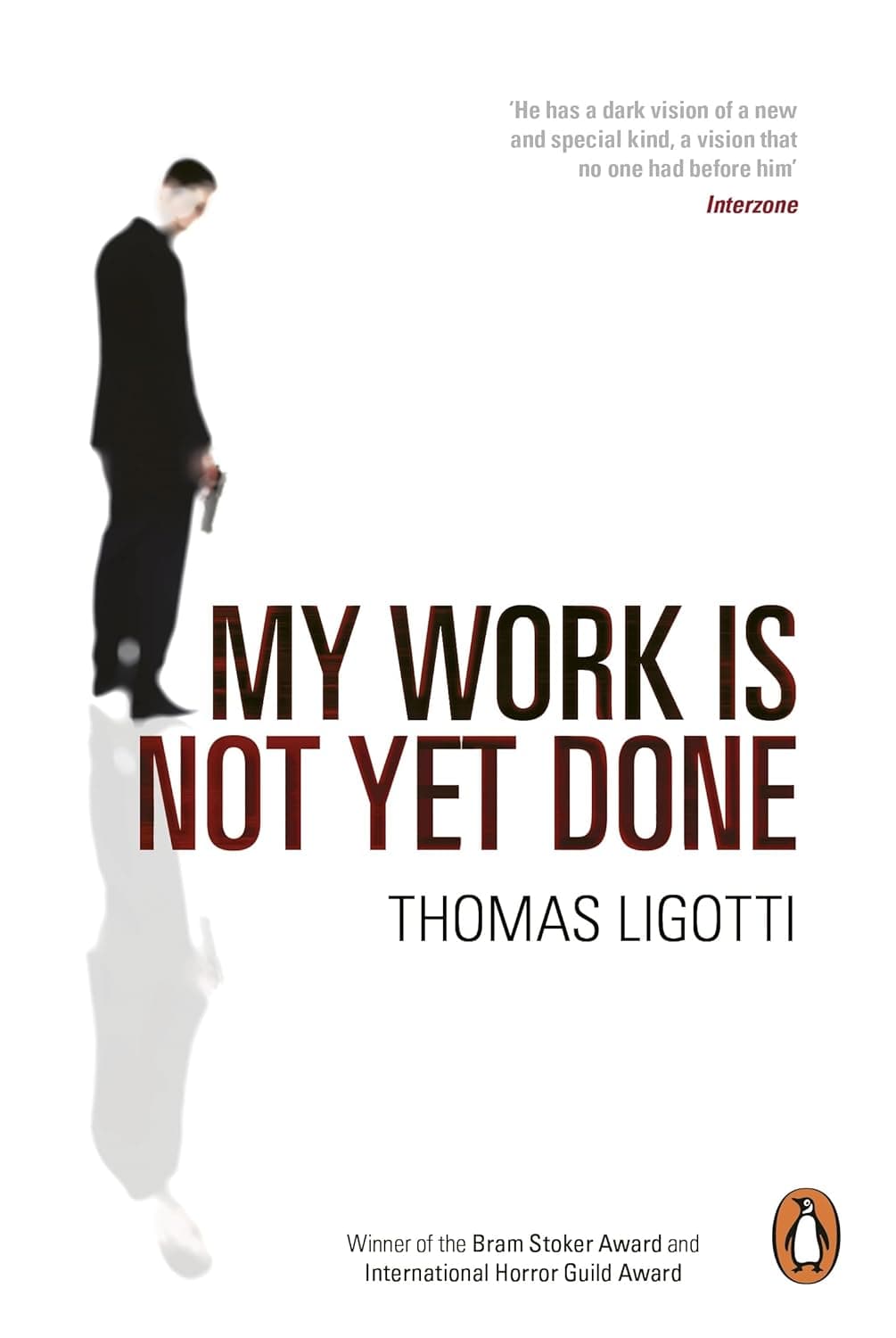
My Work Is Not Yet Done
by Thomas Ligotti(2002)
Three tales of corporate horror. The title novella, about a man pushed out of his job who discovers something stranger than revenge, is Ligotti's most accessible entry point.
Some links are affiliate links. Purchases help support the channel at no extra cost to you.
Episodes featuring this book
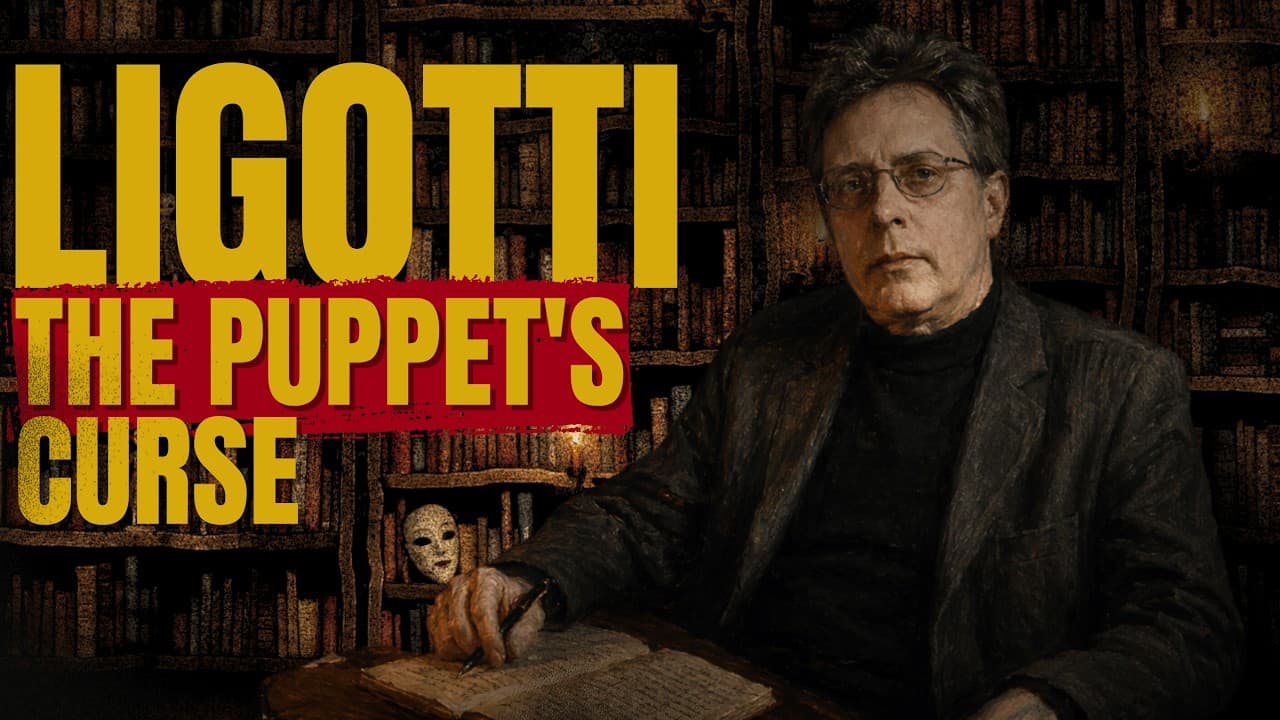
Thomas Ligotti | Conspiracy Against Life: The Pessimist Philosophy You Were Never Meant to Read
Thomas Ligotti's Complete Philosophy
Thomas Ligotti wrote horror fiction as philosophical argument, producing the most uncompromising pessimist literature of the last century. His life ran from a Catholic childhood in Detroit to the crisis at seventeen that broke his inherited sense of the world, through the decades he spent as a reference editor by day and a weird-fiction writer by night. We follow him into the small-press debut that announced a strange new voice, through the mature collections that refined it into something closer to philosophical argument, into the corporate-horror novella about a man pushed out of his job, and into the quieter late stories of decayed towns and malignantly useless factories. We examine the long, obscure tradition of philosophical pessimism that stood behind his fiction, and we turn at last to the treatise in which he finally stated his position in his own voice. A slow journey through the darkest and most carefully written American horror of our time. The full episode is on YouTube and Spotify. Please listen only in safe, restful contexts.
24 chapters8 sources
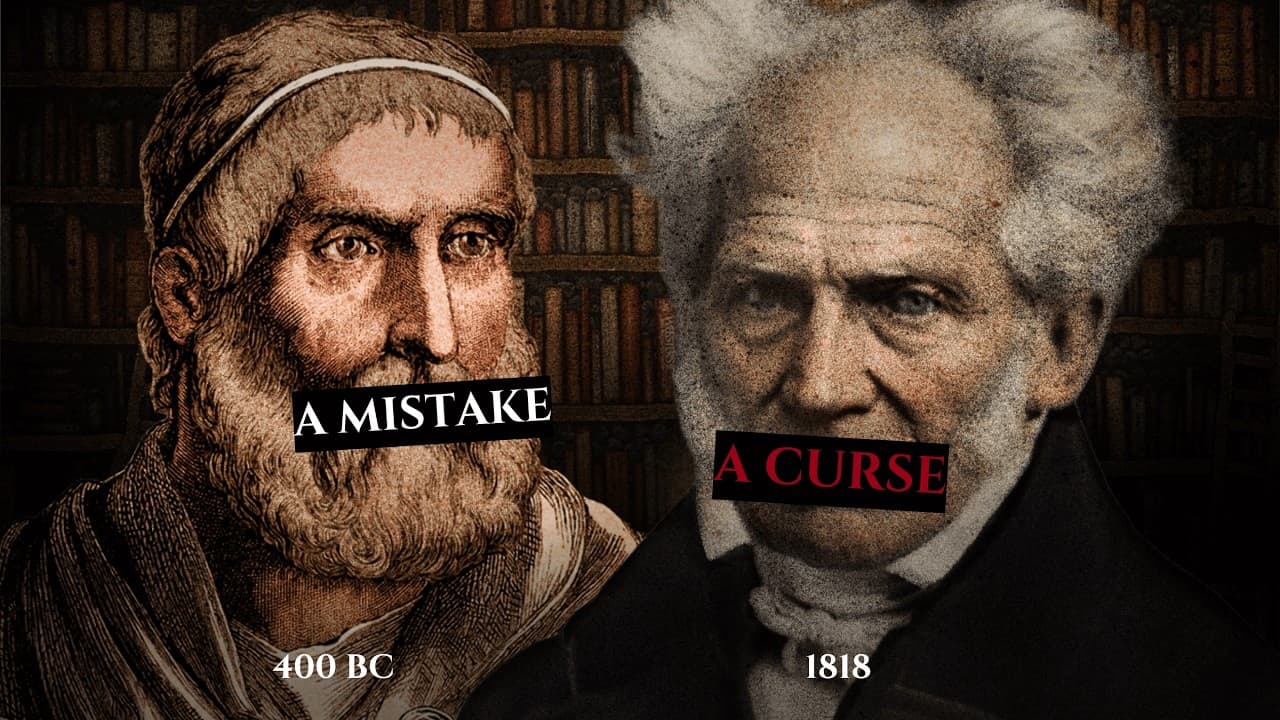
Best of All Is Never to Be Born | Antinatalism for Sleep
The oldest, strangest verdict in philosophy, that it might be better never to have been born. Long before the word existed, the wisest voices of the ancient world kept arriving at the same strange verdict, that it might be better never to have been born at all. This episode follows that thought across the centuries, from a captured satyr and the chorus of a Greek tragedy to the systematic pessimism of Schopenhauer, who made suffering the ground note of existence. From there it moves through the strangest corners of the tradition, a philosopher who imagined a God who chose to die, a Norwegian who called consciousness an evolutionary mistake, and a sleepless Romanian who turned despair into aphorism. At its center stands the modern argument that made the idea respectable again, David Benatar's claim that coming into existence is always a harm, with the questions of consent, suffering, and the harm we do woven around it. Along the way it gives the other side a full hearing, including its greatest adversary, the thinker who answered the ancient verdict by daring to love his fate. The full episode is on YouTube and Spotify. Please listen only in safe, restful contexts.
22 chapters8 sources
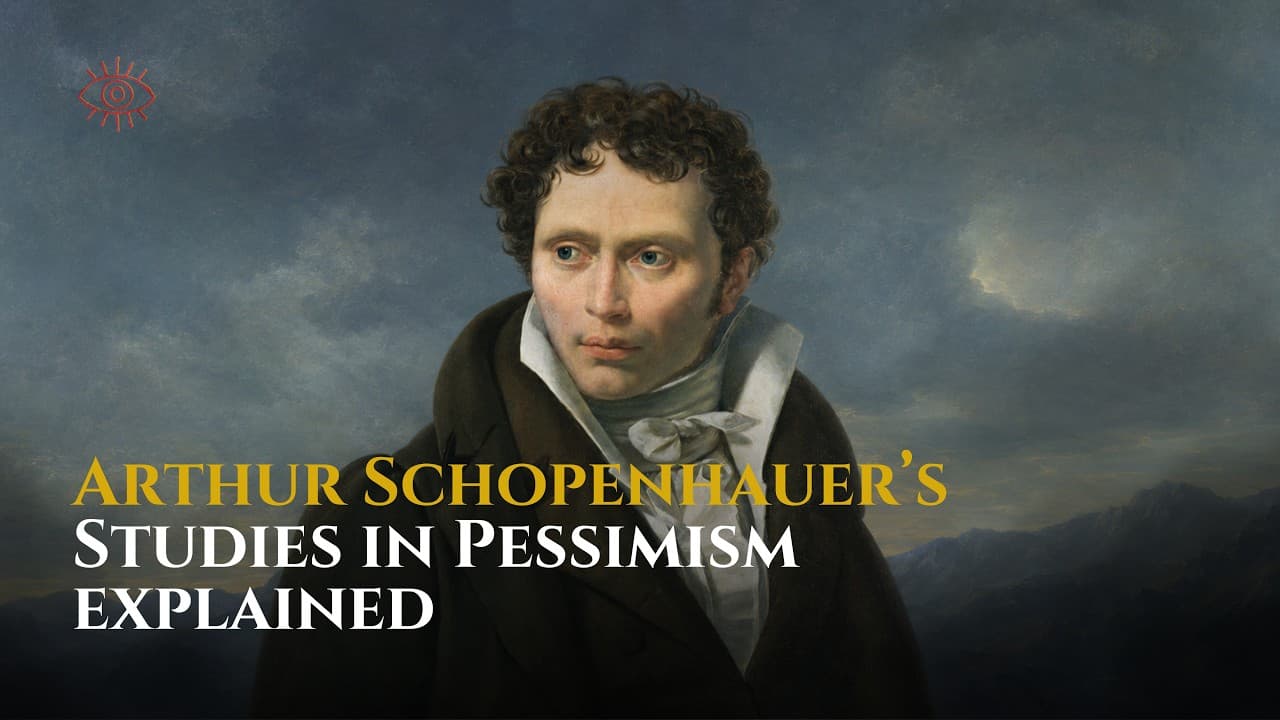
The Vanity of Existence | A Quiet Reading of Schopenhauer's Studies in Pessimism
The clearest pessimist in philosophy on suffering, time, death, and the strange consolation of expecting nothing. Studies in Pessimism gathers the darkest and most readable essays of Arthur Schopenhauer, selected from the late miscellany that finally made him famous and translated into English by T. Bailey Saunders. This reading moves through the whole of it in the book's own order. It opens with the great case for pessimism, that suffering is positive and happiness only the absence of pain, and descends through the emptiness of time, the question of suicide, and a strange dialogue in which a frightened man is told what he will be after death. It passes through sharp observations on human nature and three essays that turn the same cold eye on education, on women, and on noise, before closing with a famous parable of porcupines and the long afterlife of a book that refuses every comfort. The full episode is on YouTube and Spotify. Please listen only in safe, restful contexts.
8 chapters6 sources
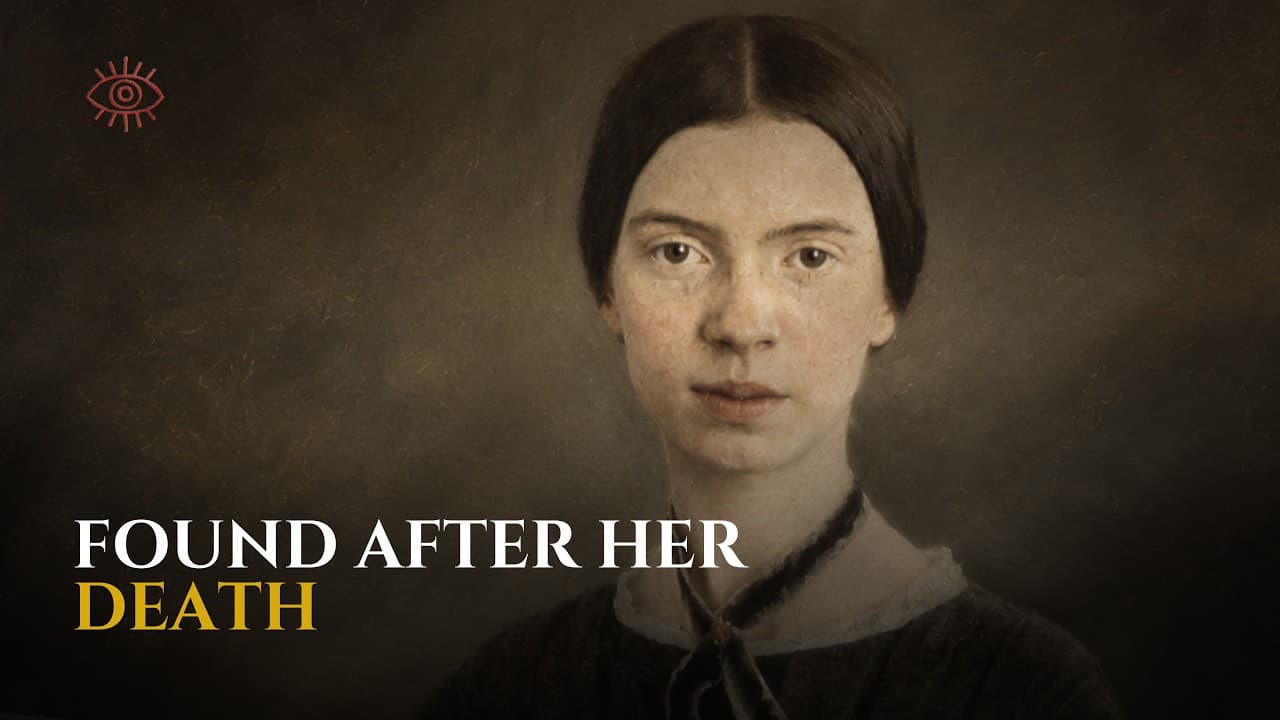
Emily Dickinson on Death, Immortality and the Inner World | For Sleep
She died unknown, leaving eighteen hundred poems in a locked box. This is the mind that hid them. In May of 1886, a woman almost nobody knew died in a brick house in Amherst, Massachusetts, and her sister found a locked box holding the largest secret in American literature. This episode begins inside that discovery and follows the whole life that produced it: the girl who would not stand for Christ at Mount Holyoke, the white-dressed woman who chose a locked door as a vocation, the letters that built a world she refused to enter, and the astonishing war years when she wrote nearly a poem a day while her eyesight failed. We read the great poems slowly and completely, the carriage ride with Death, the fly at the deathbed, the loaded gun, the wild nights and the great renunciation, the slant of winter light, and we end with the editors, lovers, and rivals who fought for decades over her manuscripts, and with the question of why every age remakes her and none has finished with her. The full episode is on YouTube and Spotify. Please listen only in safe, restful contexts.
23 chapters8 sources
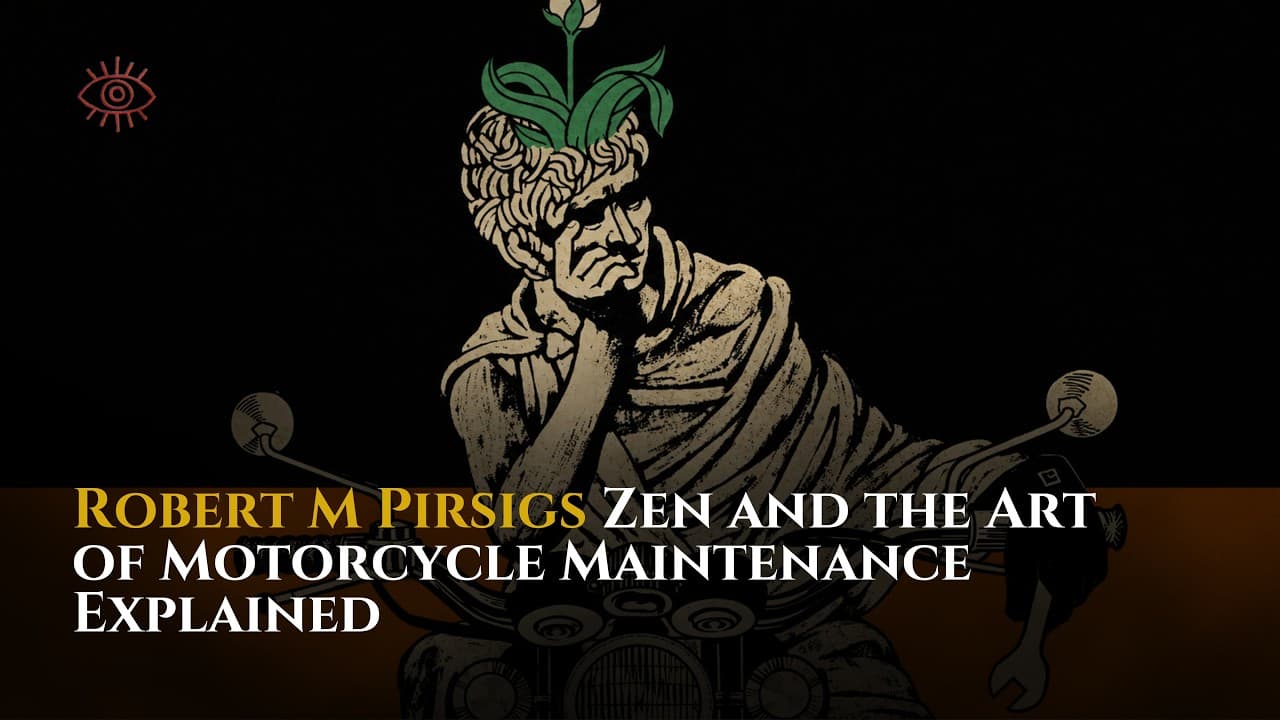
Robert Pirsig's Zen and the Art of Motorcycle Maintenance | Book Summary
A motorcycle trip across the American West becomes an inquiry into quality, care, and what the modern mind has forgotten.
In nineteen seventy-four, the technical writer Robert Pirsig published a first-person account of a motorcycle journey west from Minneapolis, undertaken with his young son and two friends, which opened outward at intervals into a sustained philosophical Chautauqua on the meaning of quality in a mechanical age. This episode is a guided reading of that book from the inside. It follows Pirsig's road from the opening watch-glance through the distinction between classical and romantic understanding, through the ghost of the former self he calls Phaedrus, through the demolition of the subject-object split, and into the mountains where stuckness, gumption, and peace of mind become the practical heart of the argument. It is a patient, unhurried reading for listeners who want to spend an evening inside one of the most widely read works of serious American philosophy. The full episode is on YouTube and Spotify. Please listen only in safe, restful contexts.
7 chapters
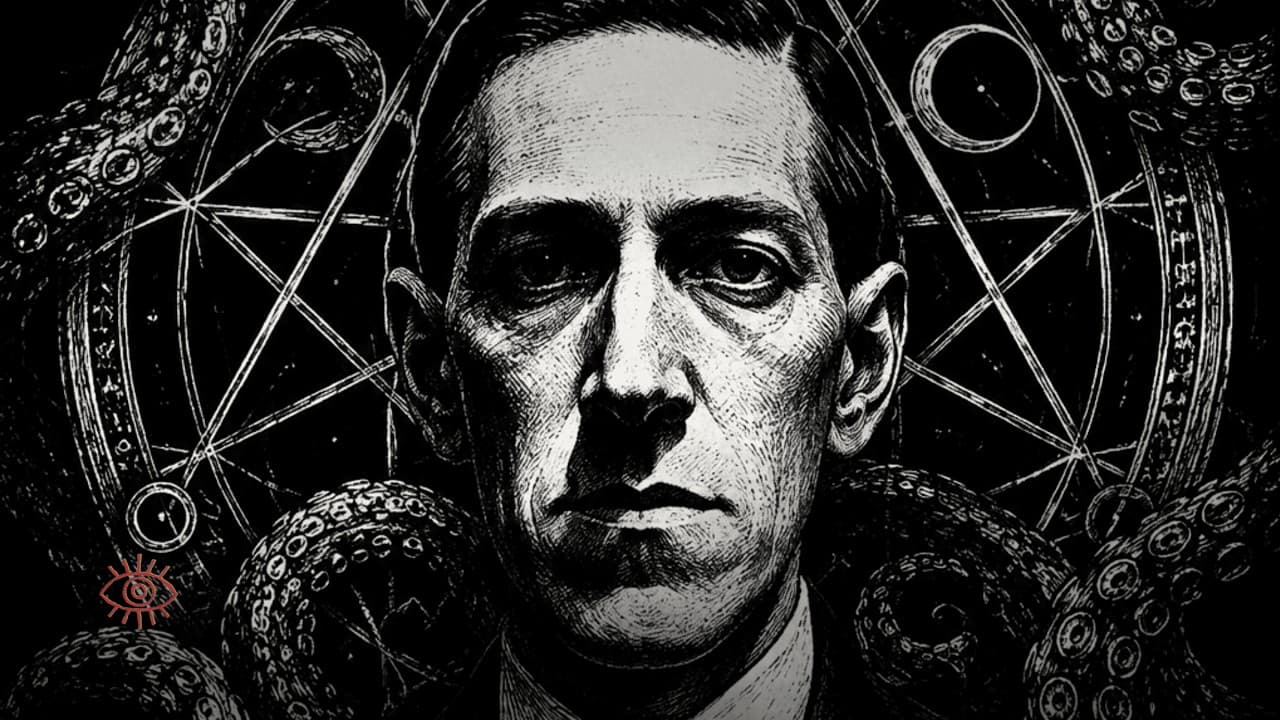
The Dark Philosophy of Cosmicism | H.P. Lovecraft
HP Lovecraft's Complete Philosophy for Sleep
The universe is not hostile. It is indifferent. Which is worse. It begins with a boy and a telescope on a hill in Providence, Rhode Island, and ends with a view of the cosmos that science keeps confirming. We explore his materialism and his intellectual formation, from the ancient atomists through Schopenhauer and Haeckel. We unpack the core claim of cosmicism, that the universe operates on scales and according to principles that are simply beyond human comprehension. We examine his major stories as philosophical texts, from "The Call of Cthulhu" to "At the Mountains of Madness" to "The Colour Out of Space." We address his racism honestly and philosophically. And we ask the question his work leaves behind: what does it mean to live with dignity in a cosmos that does not know you are here? The full episode is on YouTube and Spotify. Please listen only in safe, restful contexts.
10 chapters5 sources