Existentialism
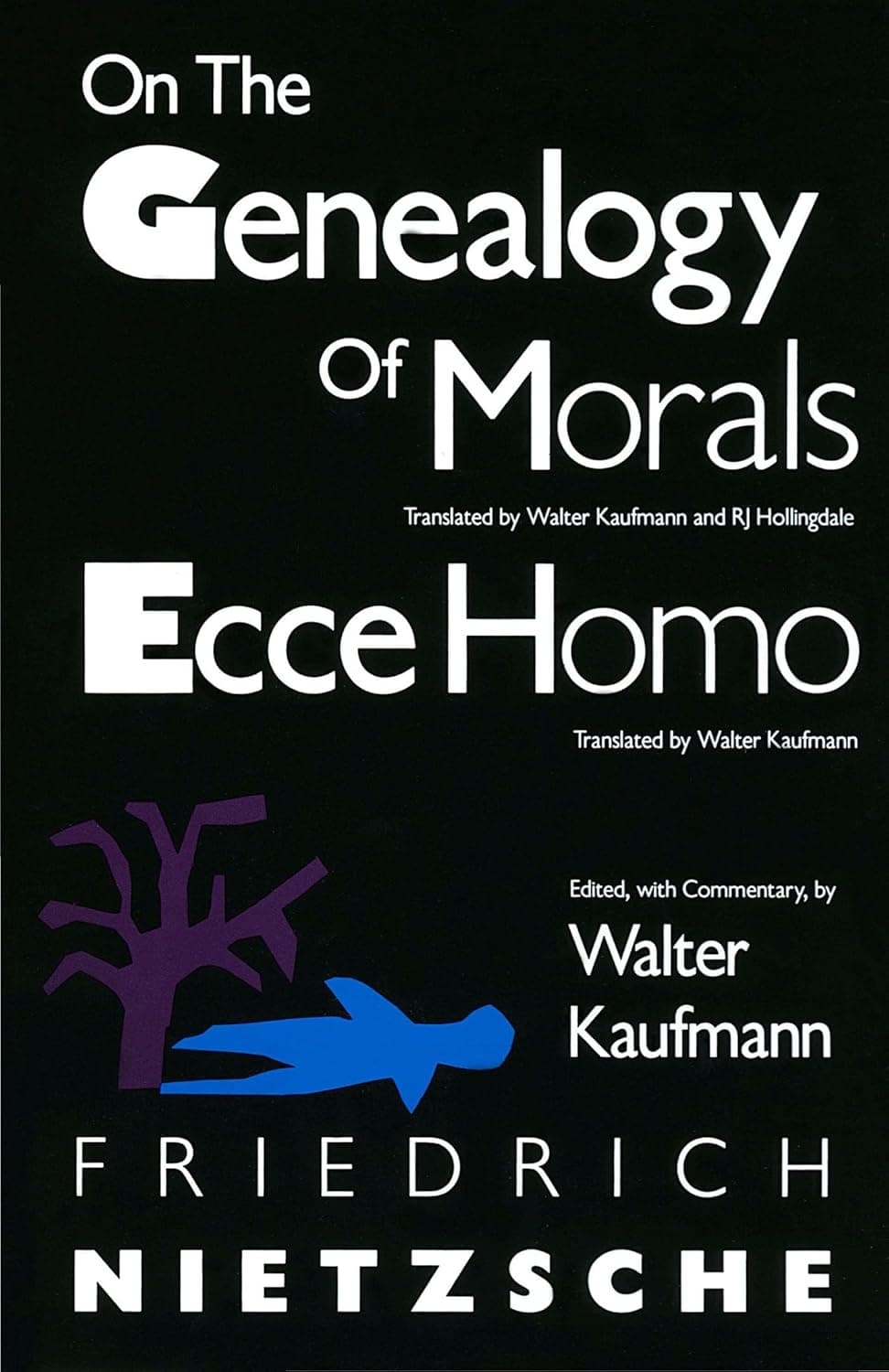
On the Genealogy of Morals / Ecce Homo
by Friedrich Nietzsche(1887)
Two essential Nietzsche works: a fierce investigation into the origins of moral values, paired with his flamboyant intellectual autobiography.
Some links are affiliate links. Purchases help support the channel at no extra cost to you.
Episodes featuring this book
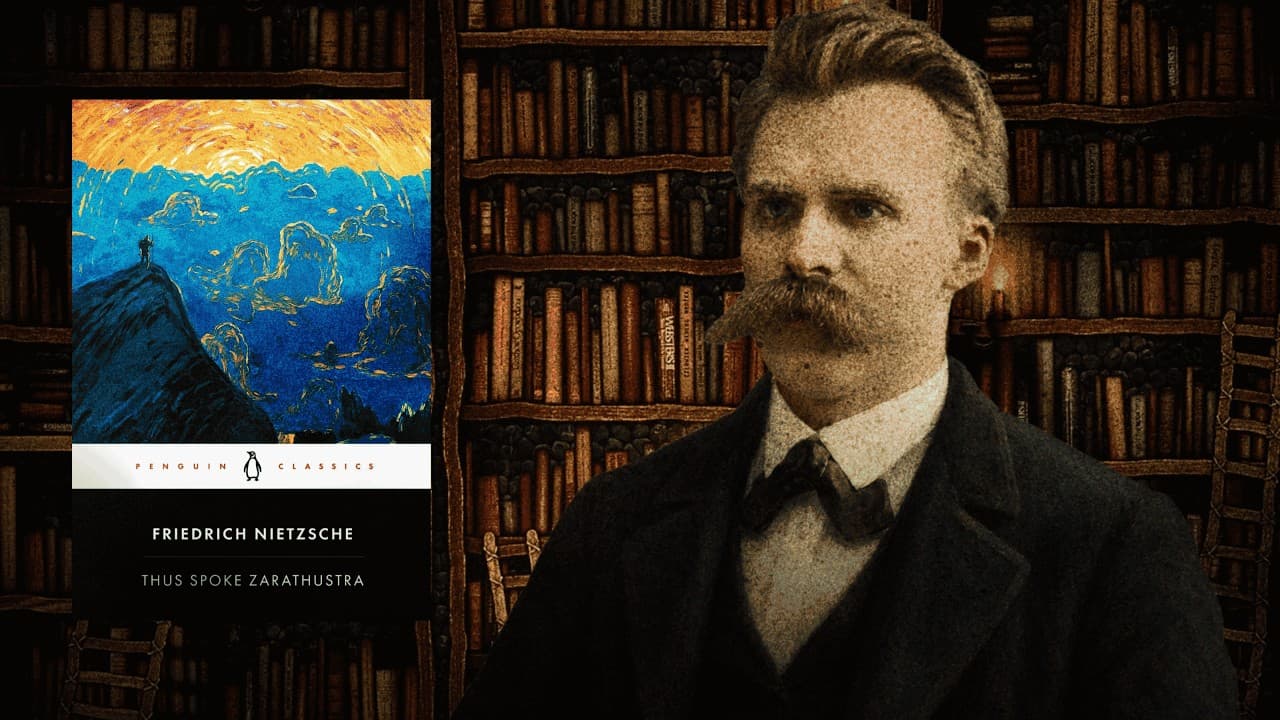
Thus Spoke Zarathustra by Nietzsche
A hermit comes down from his mountain to teach that humanity must overcome itself, and learns how hard his own teaching is to bear. This episode walks through Friedrich Nietzsche's Thus Spoke Zarathustra, the strange counter-scripture he wrote in the mountains in bursts of ten days at a time. We follow Zarathustra from his descent and the death of God, through the marketplace where the crowd laughs at the overman and cheers for the last man, into the great speeches, the three transformations of the spirit, and the teaching that meaning must be made on the earth rather than awaited beyond it. At last we reach the thought that nearly breaks him, that everything will return exactly as it was, forever, and the long struggle to say yes to it. We read the parables and songs as what they are, a book that preaches rather than argues, and we keep the ideas clear without flattening them. No background in philosophy is needed to follow along. The full episode is on YouTube and Spotify. Please listen only in safe, restful contexts.
3 sources
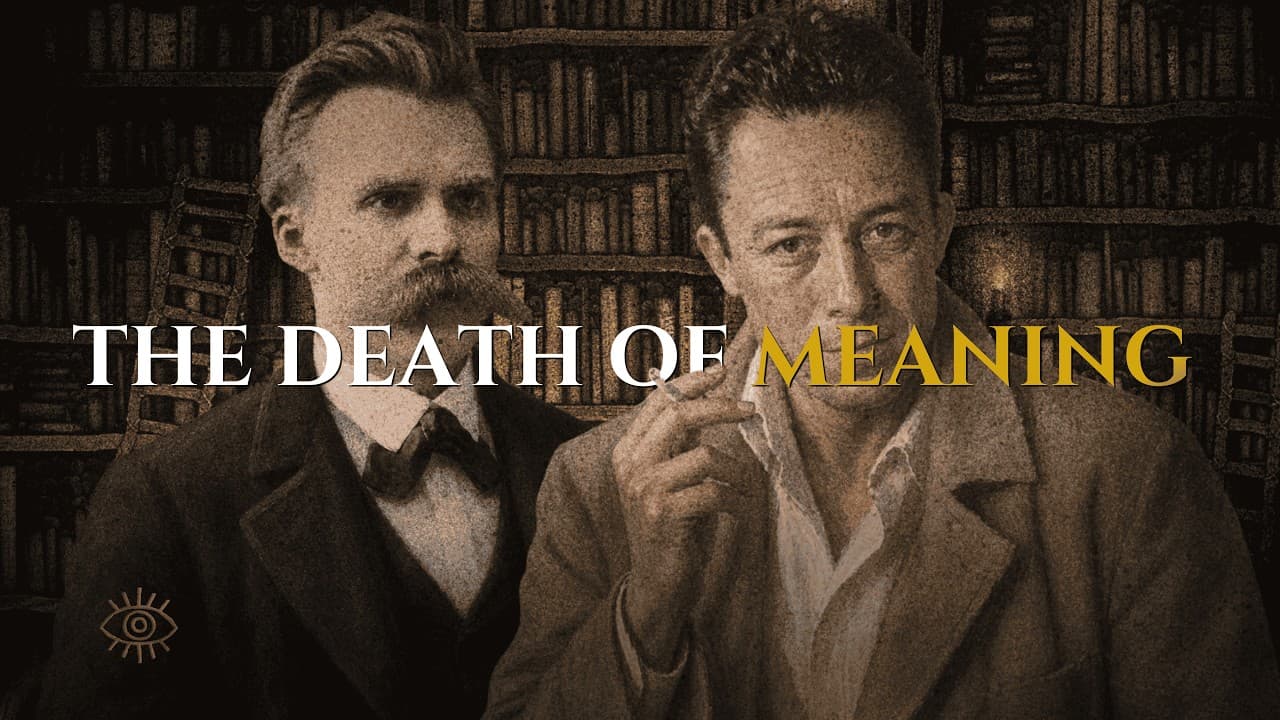
The Philosophy of Existential Nihilism
From Nietzsche to Camus
Nothing matters. These two words have haunted Western philosophy since the nineteenth century, when the foundations of meaning began to crack and the greatest minds were forced to confront a terrifying possibility: that the universe has no purpose and human life has no cosmic significance. This episode traces the complete history of existential nihilism, from Schopenhauer's suffocating pessimism through Dostoevsky's feverish challenges in the Grand Inquisitor, to Nietzsche's shattering diagnosis of the death of God. It then explores the existentialist responses: Heidegger's confrontation with the nothing, Sartre's radical freedom, and Camus's philosophy of the absurd. The journey concludes with Viktor Frankl's will to meaning forged in Auschwitz, Thomas Nagel's analytical treatment of absurdity, and the question as it remains for us today. The full episode is on YouTube and Spotify. Please listen only in safe, restful contexts.
15 chapters12 sources
Nietzsche: God is Dead and We Have Killed Him
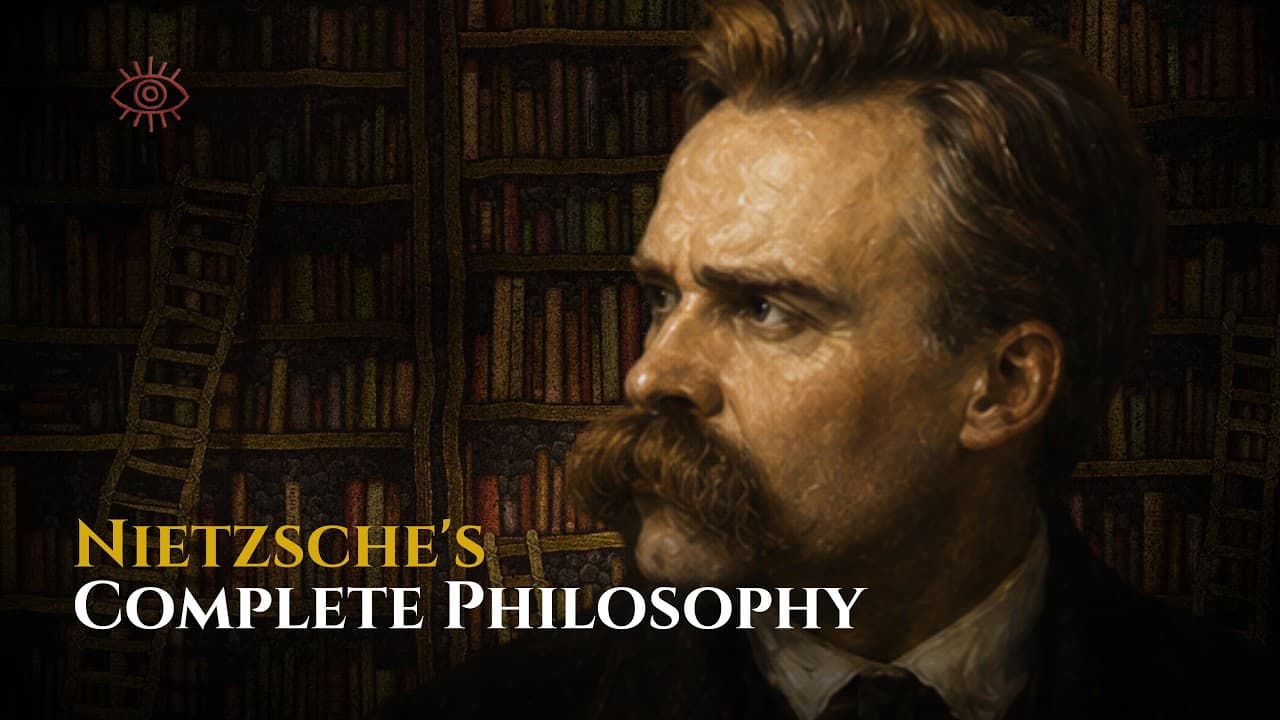
Nietzsche's Complete Philosophy
Friedrich Nietzsche diagnosed the death of God not as triumph but as catastrophe, recognizing that the foundation Western civilization had rested on for two thousand years had collapsed. This three-hour exploration traces his journey from pastor's son in Rocken to solitary philosopher, through his masterworks including The Birth of Tragedy, Thus Spoke Zarathustra, Beyond Good and Evil, and On the Genealogy of Morals. It examines his core concepts in depth: the death of God, will to power, eternal recurrence, the Ubermensch, amor fati, and the distinction between master and slave morality. The episode follows his friendship and break with Wagner, his decade of solitary wandering, his collapse in Turin, and the posthumous distortion of his work by his sister Elisabeth and the Nazi appropriation that followed. His influence on Freud, Heidegger, existentialism, Foucault, and Deleuze confirms that the questions Nietzsche raised about nihilism, values, and human flourishing remain urgently alive today. The full episode is on YouTube and Spotify. Please listen only in safe, restful contexts.
22 chapters15 sources
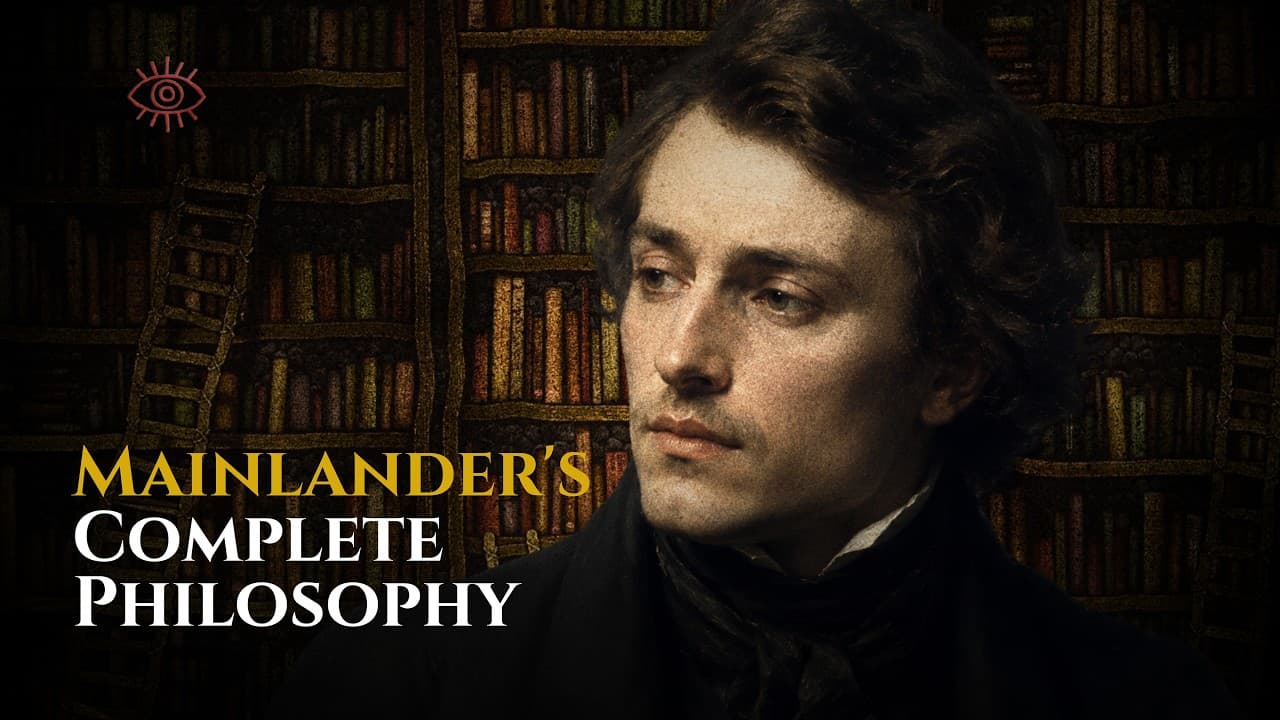
The Darkest Philosopher Who Ever Lived | Philipp Mainländer
Before the world began, he argued, God chose not to exist, and shattered into the universe in order to die. In a rented room by a German river, a mild and dutiful bank clerk finished the strangest book of his century, and then quietly ended his own life. This episode follows Philipp Mainländer, the poet and philosopher who took Schopenhauer's darkness further than anyone had dared. We trace his single great work, The Philosophy of Redemption, the strange drive he found beneath all life, the calm he took from a running-down cosmos, and the rescue he promised, which is simply rest and nothing more. Along the way we meet his gentle serenity, his quarrel across time with Nietzsche, and the uncanny way modern science has come to echo his cooling universe. It is a patient walk to the far edge of pessimism, and gently back. The full episode is on YouTube and Spotify. Please listen only in safe, restful contexts.
14 chapters6 sources
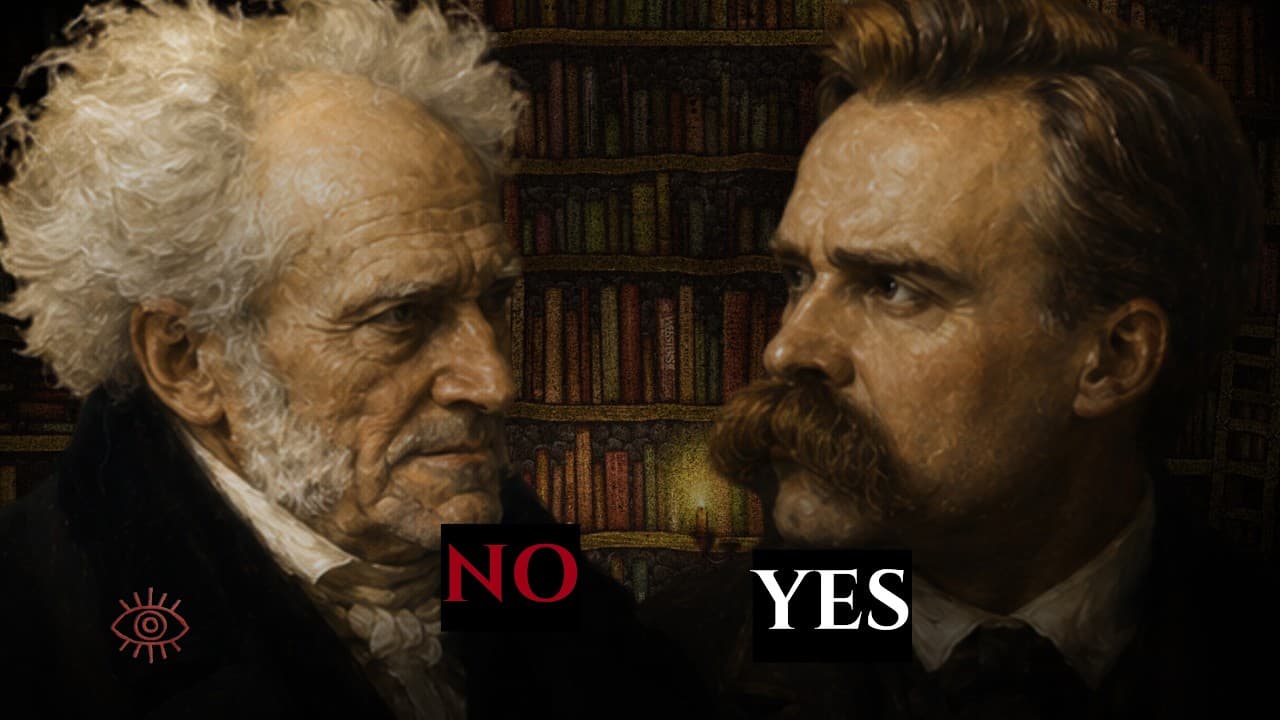
Is Life Worth Living? | Nietzsche vs Schopenhauer | Philosophy for Sleep
One of them concluded that the only wise response to life is to want less of it. The other spent his life arguing for wanting all of it back, forever, exactly as it was. As a lonely student, Friedrich Nietzsche found a dead philosopher's book on a bookshop table and fell under a spell that would shape everything he became. This episode follows the long, strange bond between Nietzsche and his first master, Arthur Schopenhauer, from devotion to open war. We meet the bitter, solitary Schopenhauer and his vision of a blind striving world where life is suffering. We watch the young Nietzsche pour that vision into his first book, then slowly turn against it, until he answers the darkest case ever made against existence with the wildest possible affirmation of it. Along the way we trace the will, pity, the death of the hidden true world, and the thought that measures whether a life could be loved enough to live again. The full episode is on YouTube and Spotify. Please listen only in safe, restful contexts.
16 chapters8 sources
When Life Suddenly Feels Meaningless | The Existential Crisis
Why do people who have everything still wake at three in the morning certain that none of it means anything? This is a long, unhurried history of the moment the floor of ordinary life gives way. It begins with a celebrated novelist who, at the height of his fame and fortune, quietly hid a rope from himself, and from that single human crisis it opens outward across the centuries. We follow the confrontation with meaninglessness through the oldest scriptures and the calm arguments of antiquity, through a believer terrified by an infinite and silent cosmos, through the philosopher of endless striving, and into the thinkers who made this dread the very center of their work. We sit with the death of God, with radical freedom, with the absurd, with a survivor who found a reason to endure the unendurable, and with a tradition that meets the void by loosening its grip on the self. The episode closes not with a tidy answer but with the quiet question of how a person comes back to life. The full episode is on YouTube and Spotify. Please listen only in safe, restful contexts.
22 chapters8 sources