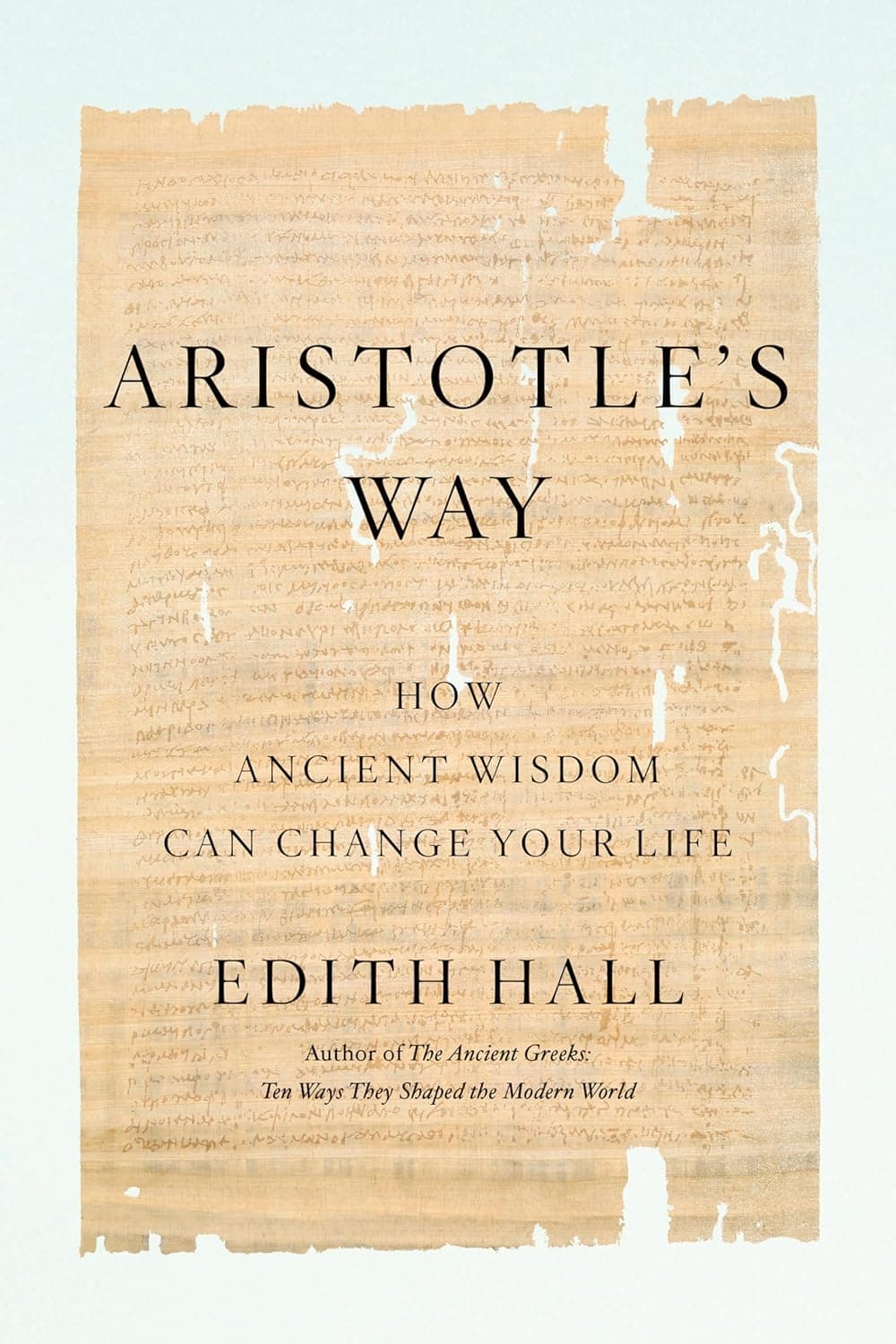
Episodes featuring this book
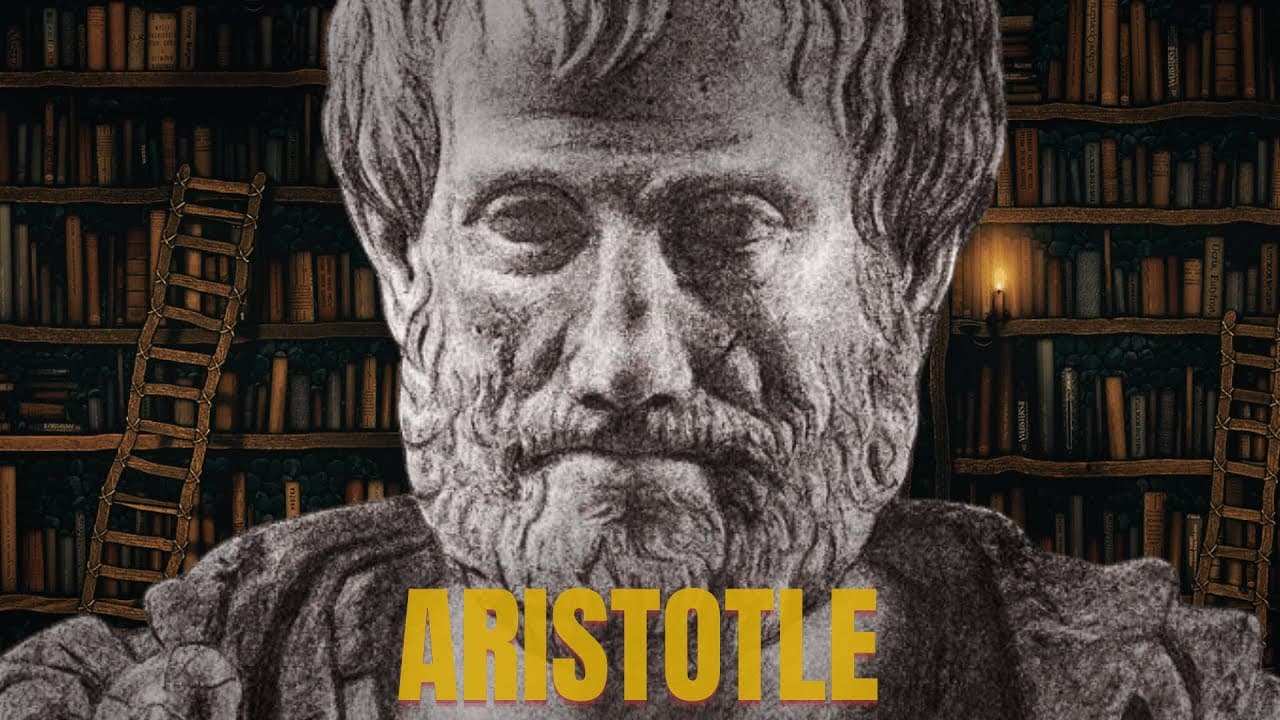
From Logic to Ethics | Aristotle's Complete Philosophy
Aristotle's Complete Philosophy
Aristotle spent twenty years studying under Plato, then walked away and built a rival system that would dominate Western thought for two millennia. This episode traces his life from the court physician's son in Stagira, through the Academy, his years tutoring Alexander the Great, and the founding of the Lyceum in Athens. It examines his major contributions across logic, metaphysics, ethics, politics, and poetics: the categories of being, hylomorphism, the four causes, the unmoved mover, the function argument, eudaimonia as the highest good, the doctrine of the mean, practical wisdom, and the vision of the good life laid out in the Nicomachean Ethics. Dante called him the Master of Those Who Know, and for centuries no one in the Western or Islamic world could think seriously about the world without first thinking through Aristotle. The full episode is on YouTube and Spotify. Please listen only in safe, restful contexts.
17 chapters10 sources
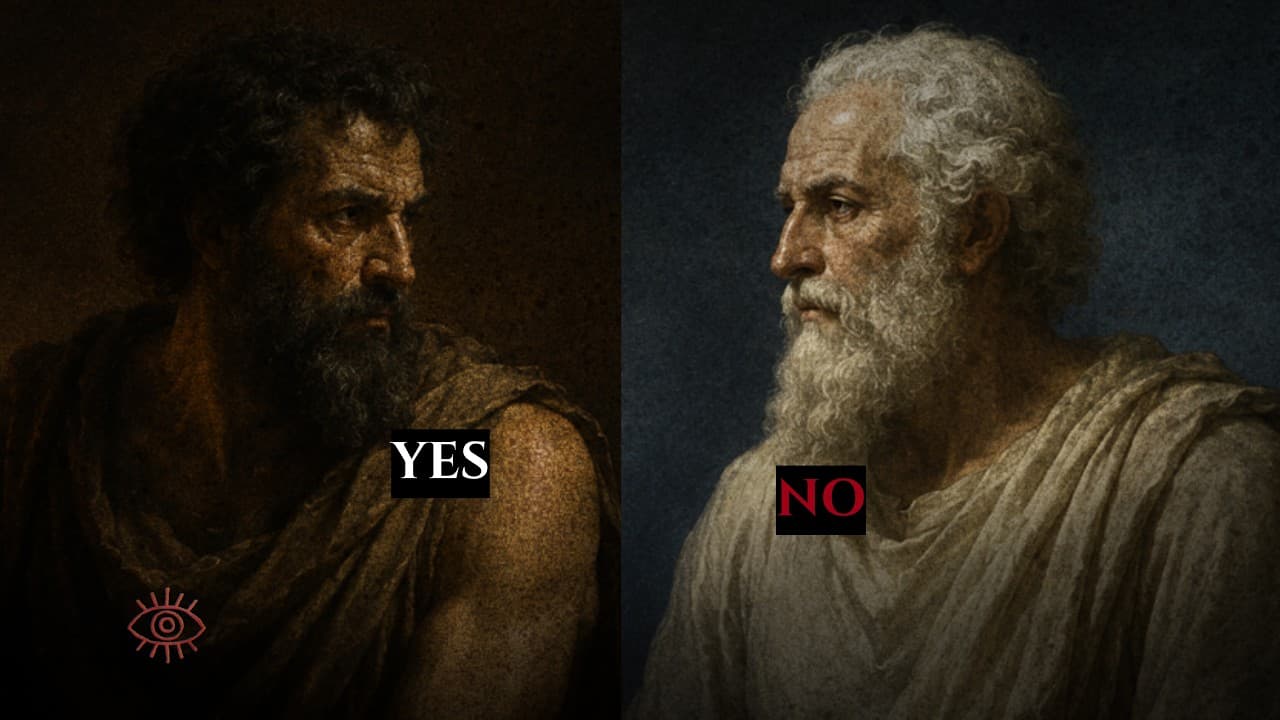
Is Change Real? | Heraclitus vs Parmenides | Philosophy for Sleep
Two Greeks at opposite edges of the ancient world gave opposite answers to the same question, and nearly every philosopher since has stood somewhere between them. This episode follows the quarrel from its beginning. We meet Heraclitus, the lonely riddler of Ephesus who hid his one book in a temple and taught that everything flows, that the world is a river and a living fire held in tune by a hidden measure. We cross the sea to meet Parmenides, the calm lawgiver of the Greek west who used pure reason to argue that change is impossible, and that whatever truly is must stand motionless and one. We follow their collision through the famous paradoxes of Zeno, through Plato's daring attempt to give each thinker a world of his own, through Aristotle's quieter answer, and into our own age, where the same argument lives on in physics and in the felt passing of time. It is a walk through the two deepest things we feel: that everything changes, and that nothing is ever truly lost. The full episode is on YouTube and Spotify. Please listen only in safe, restful contexts.
15 chapters7 sources
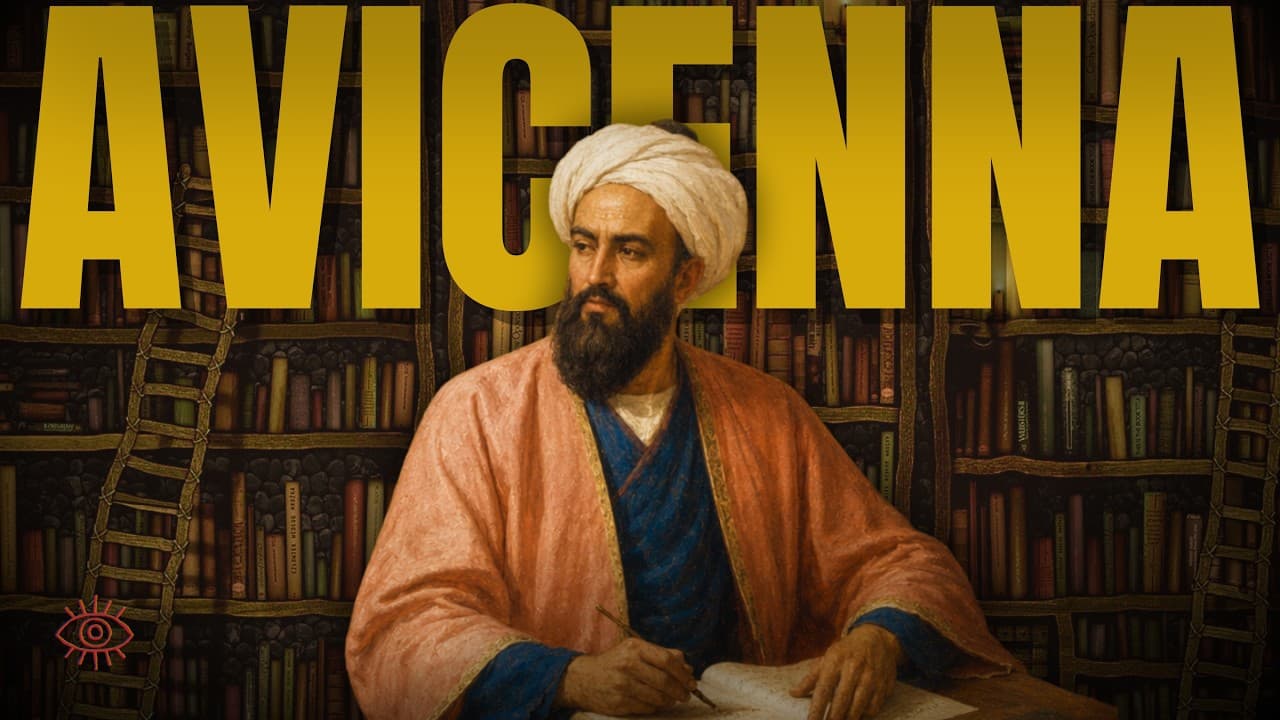
The Philosopher Who United Greek Thought and Islam | Avicenna for Sleep
Avicenna's Complete Philosophy
How did a physician writing by lamplight in a mountain fortress come to shape five centuries of world philosophy? The philosopher who called himself Avicenna was born in nine hundred and eighty near Bukhara, memorized the Quran at ten, read Aristotle's Metaphysics forty times, and then built a philosophical system so comprehensive that it became, in two separate civilizations, the foundation on which later thought was constructed. This episode traces his life from the Samanid libraries of his childhood through the courts and prisons of his middle years to the final synthesis he achieved in Isfahan. We work through his great philosophical encyclopedia, his proof that a necessary being must exist, his famous thought experiment about a soul floating in empty space with no sensory contact of any kind, his account of the inner faculties of the mind, his theory of how prophetic knowledge works, and the three allegorical works that say what the philosophy cannot quite say in argument. We follow his ideas into the Latin West, where Thomas Aquinas read and transformed them, and through the Islamic tradition, where Suhrawardi and Mulla Sadra built new philosophies on his foundations. One of the great minds of any civilization, examined at full length. The full episode is on YouTube and Spotify. Please listen only in safe, restful contexts.
25 chapters3 sources
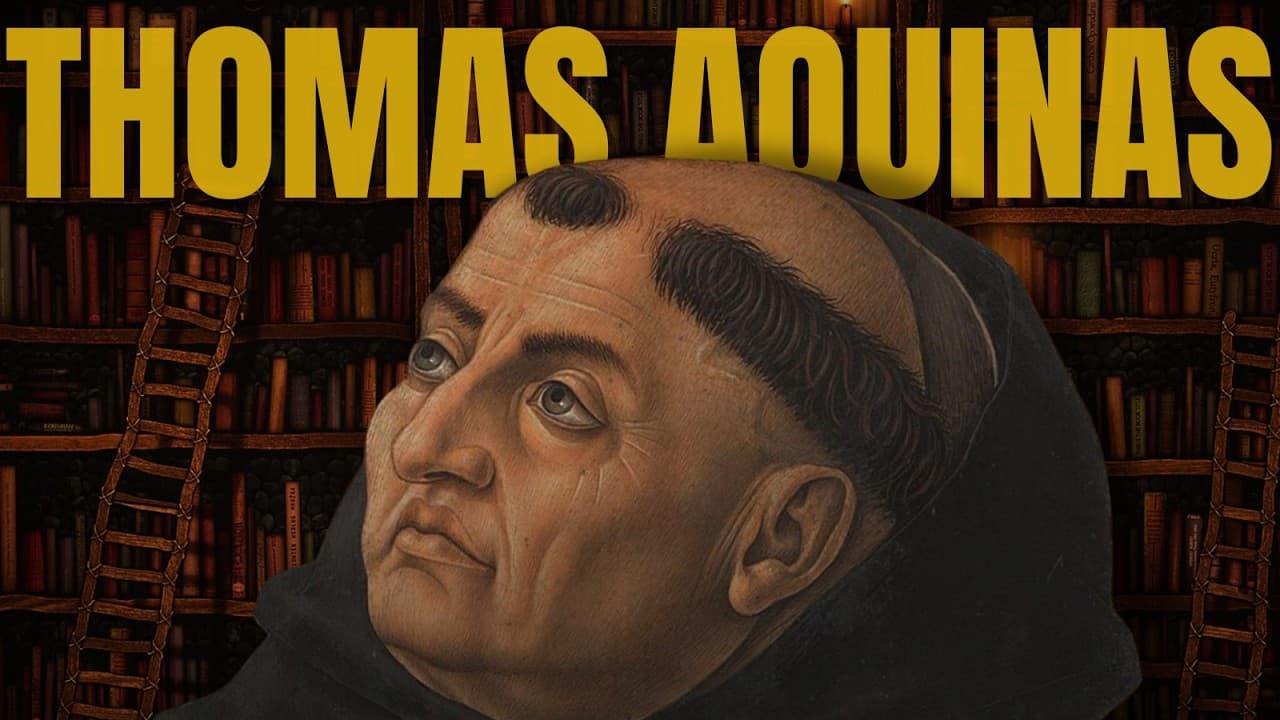
The Saint Who Made Aristotle Christian | All of Thomas Aquinas's Philosophy Explained
All of Thomas Aquinas's Philosophy Explained
Thomas Aquinas synthesized Aristotelian philosophy with Christian theology to build one of the most comprehensive intellectual systems in Western history. This episode follows his life from his childhood at Roccasecca through his defiance of family opposition to join the Dominican order, his studies under Albertus Magnus, and his career at the University of Paris. It examines his masterwork the Summa Theologica in depth, including the Five Ways of proving God's existence, his metaphysics of being and existence, divine simplicity, natural law ethics, the theory of virtue, and his understanding of grace. The story concludes with his mystical vision of December 1273, when he declared all his writings to be straw, and the long arc of his legacy from condemnation to canonization to the modern Thomistic revival. The full episode is on YouTube and Spotify. Please listen only in safe, restful contexts.
20 chapters4 sources
Beyond the Empty Will | Murdoch and Moral Vision
Iris Murdoch finds moral freedom in the patient work of seeing reality beyond the self. This episode follows The Sovereignty of Good as a triptych of moral inquiry. It begins with the inner change that occurs when a person learns to see another more justly, even without any outward action. It then follows Murdoch's account of prayer, Freud, grace, and the possibility of retaining moral transcendence after the traditional idea of God has faded. The final movement enters Plato's images of the sun and the cave, before turning to beauty, art, love, death, chance, and humility. Throughout, Murdoch challenges the picture of morality as a series of isolated choices and proposes attention as the patient activity through which consciousness becomes more truthful, less selfish, and more responsive to the real world. The full episode is on YouTube and Spotify. Please listen only in safe, restful contexts.
7 chapters6 sources
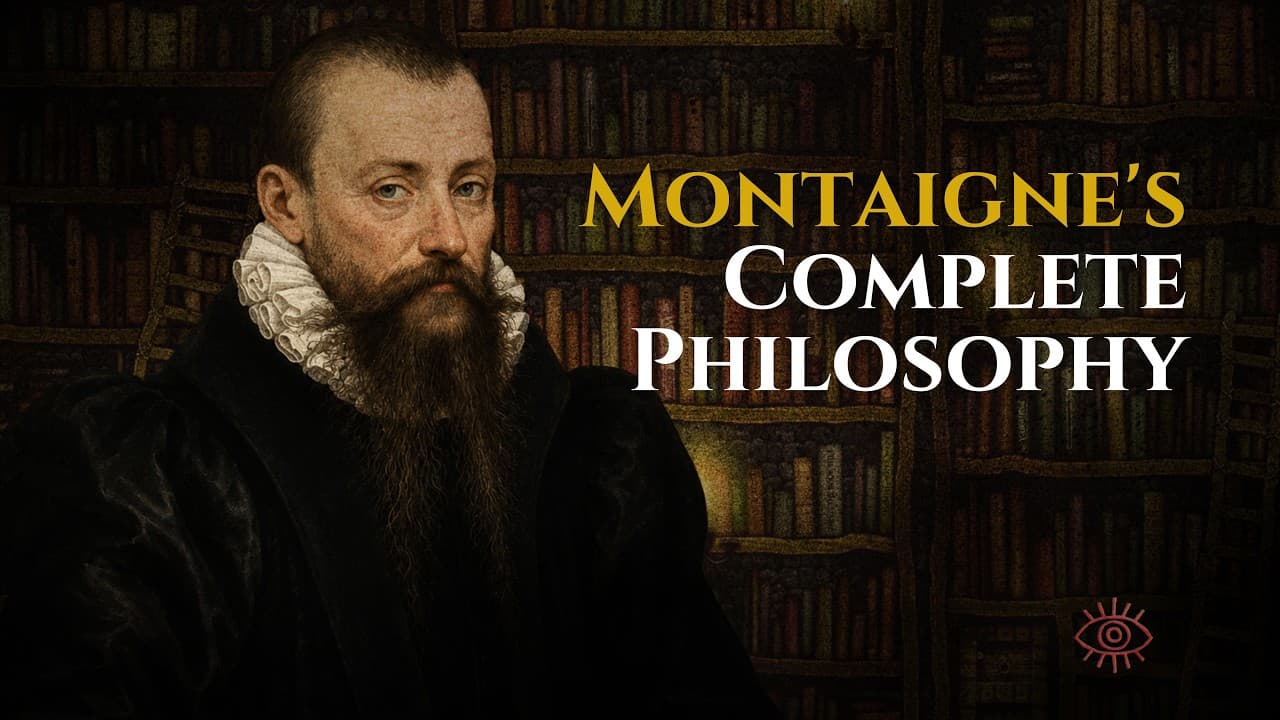
He Wrote About Himself for 20 Years and Described Us All | Montaigne
He locked himself in a tower to study one ordinary man, and ended up describing everyone who would ever read him. In fifteen seventy-one a French nobleman withdrew from public life to a round library at the top of a stone tower, and there, to tame his own restless mind, he began the strangest and most intimate book of its age. This is the story of Michel de Montaigne and the work he modestly called his attempts, the essays that invented a whole way of writing. We begin with his unusual life, the strange education, the one friendship that shaped everything, and the loss that turned him inward. From there the great themes of the book: his bottomless doubt and its gentle motto, his study of the ever-changing self, his hatred of cruelty in a country torn apart by religious war, his acceptance of the body and its pains, and the serene wisdom of his final years. Along the way we meet a mind that set out to know one person and ended by knowing everyone. The full episode is on YouTube and Spotify. Please listen only in safe, restful contexts.
15 chapters7 sources