Political Philosophy
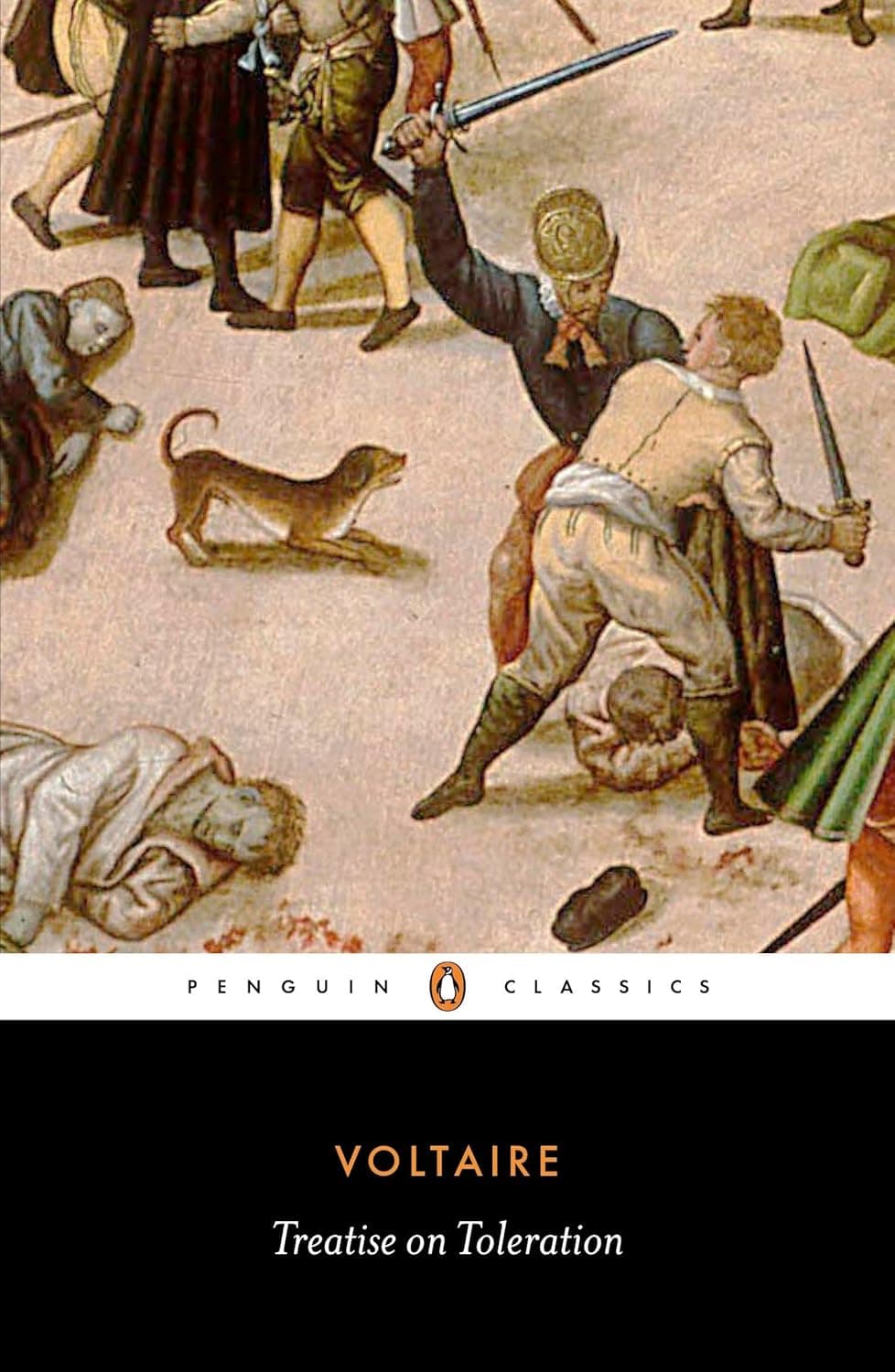
Treatise on Toleration
by Voltaire (trans. Desmond M. Clarke)(1763)
Written in response to the judicial murder of Jean Calas, Voltaire's 1763 plea for religious tolerance is one of the foundational texts of modern human rights thinking.
Some links are affiliate links. Purchases help support the channel at no extra cost to you.
Episodes featuring this book
The Writer Who Helped Start a Revolution | Voltaire for Sleep
Enlightenment, Candide, and the War on Fanaticism for Deep Sleep
He wrote twenty thousand letters and made half of Europe afraid of him. Francois Marie Arouet, known as Voltaire, was the most famous writer in eighteenth century Europe and the most devastating enemy of fanaticism, superstition, and cruelty that the French language has ever produced. We follow him from his birth in Paris in 1694, through two imprisonments in the Bastille, through his three year exile in England and his discovery of Newton and Locke, through the Lisbon earthquake that destroyed his patience with Leibnizian optimism, through the writing of Candide, through the Calas affair, through the founding of the town of Ferney, through the Philosophical Dictionary, and finally through his triumphant return to Paris in 1778, where he died surrounded by the city that had once exiled him. The full episode is on YouTube and Spotify. Please listen only in safe, restful contexts.
10 chapters5 sources
The Problem of Evil: Why Does God Allow Suffering? | Philosophy for Sleep
An innocent man, a burned fawn, and the hardest question ever asked of God. This episode follows the problem of evil from its oldest telling to its newest defenses. It begins with a man who loses everything in a single afternoon and refuses every easy explanation, then traces the great answers, evil as absence, the best of all possible worlds, and the earthquake and the novel that broke optimism's public standing. From there the argument sharpens into the twentieth century, a charge of outright contradiction, the celebrated defense that answered it, a theodicy of growing souls, and a dying fawn that changed the question from proof to evidence. The second half belongs to skeptical theism, the claim that human minds cannot survey the reasons a God might have, and to the objections that press it, moral paralysis, spreading doubt, horrendous evils, animal pain, and divine silence. The episode ends where the argument now stands, between a rock and a rope. The full episode is on YouTube and Spotify. Please listen only in safe, restful contexts.
23 chapters8 sources
"Led by an Invisible Hand" | Adam Smith Complete Philosophy For Sleep
He wrote the book that built the modern world, then ordered everything else burned. Adam Smith spent his last days making sure most of his life's work went into the fire. What survived was enough to change the world. This episode follows the quiet son of a Scottish port town through the lecture halls of Glasgow, the salons of Paris, and the long silent decade in which he wrote the Wealth of Nations. Along the way it restores the half of Smith the modern world forgot, the moral philosopher of sympathy and conscience, the inventor of the impartial spectator, the friend who risked his reputation to defend a dying unbeliever, and the fierce critic of merchants, empires, and slavery. The invisible hand is here too, all three times Smith ever used it, read slowly and in context. Two great books, one unhurried story, told as a serious essay and paced for rest. The full episode is on YouTube and Spotify. Please listen only in safe, restful contexts.
22 chapters8 sources
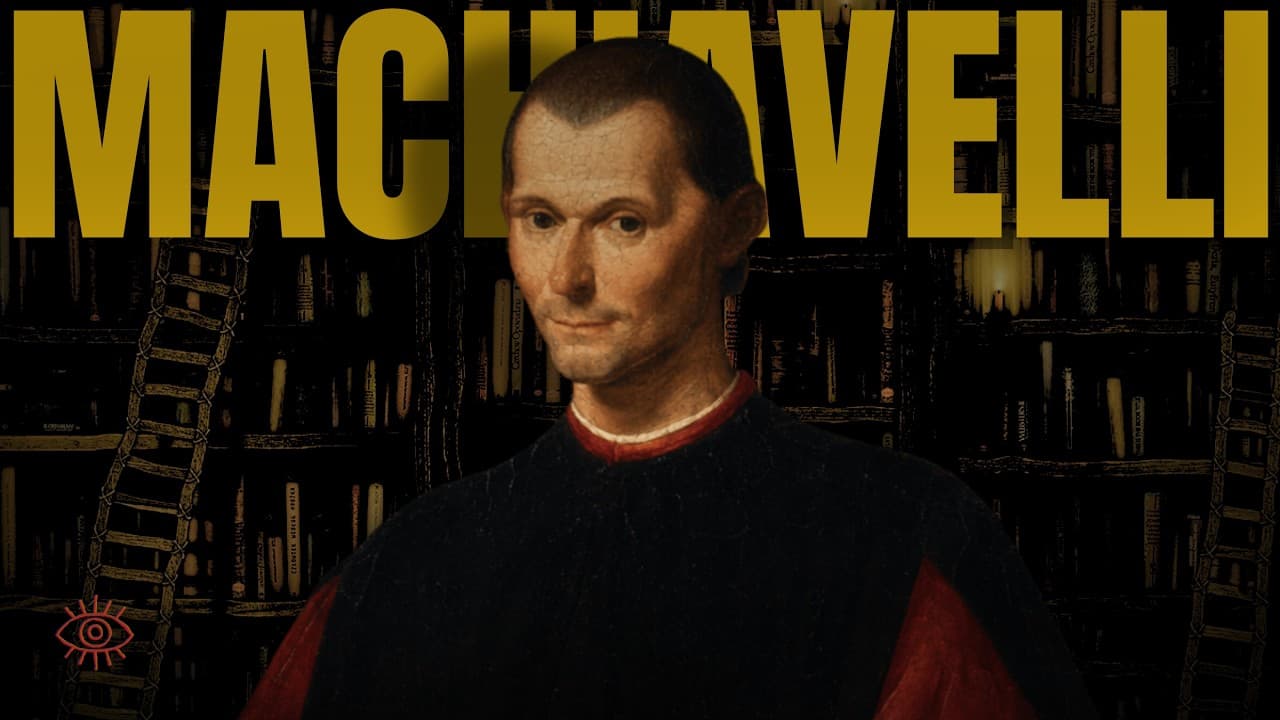
Machiavelli Was Not Teaching Evil | His Philosophy for Sleep
Machiavelli's Complete Philosophy
The world does not reward good intentions. We follow Machiavelli from a young diplomat watching power operate in the courts and camps of Renaissance Italy to a philosophical vision that five centuries of enemies have not been able to destroy. We explore his years as a servant of the Florentine Republic, his arrest, torture, and exile, and the desperate circumstances in which he wrote The Prince. We unpack his central argument, that anyone who wants to understand politics must begin with the world as it is rather than as it ought to be. We examine virtu and fortuna, the fox and the lion, cruelty well used and cruelty badly used. We enter the Discourses on Livy and discover a passionate republican behind the supposed teacher of tyrants. We confront the problem of dirty hands, and ask the question Machiavelli leaves behind: what does it cost to see the world without illusions? The full episode is on YouTube and Spotify. Please listen only in safe, restful contexts.
10 chapters6 sources
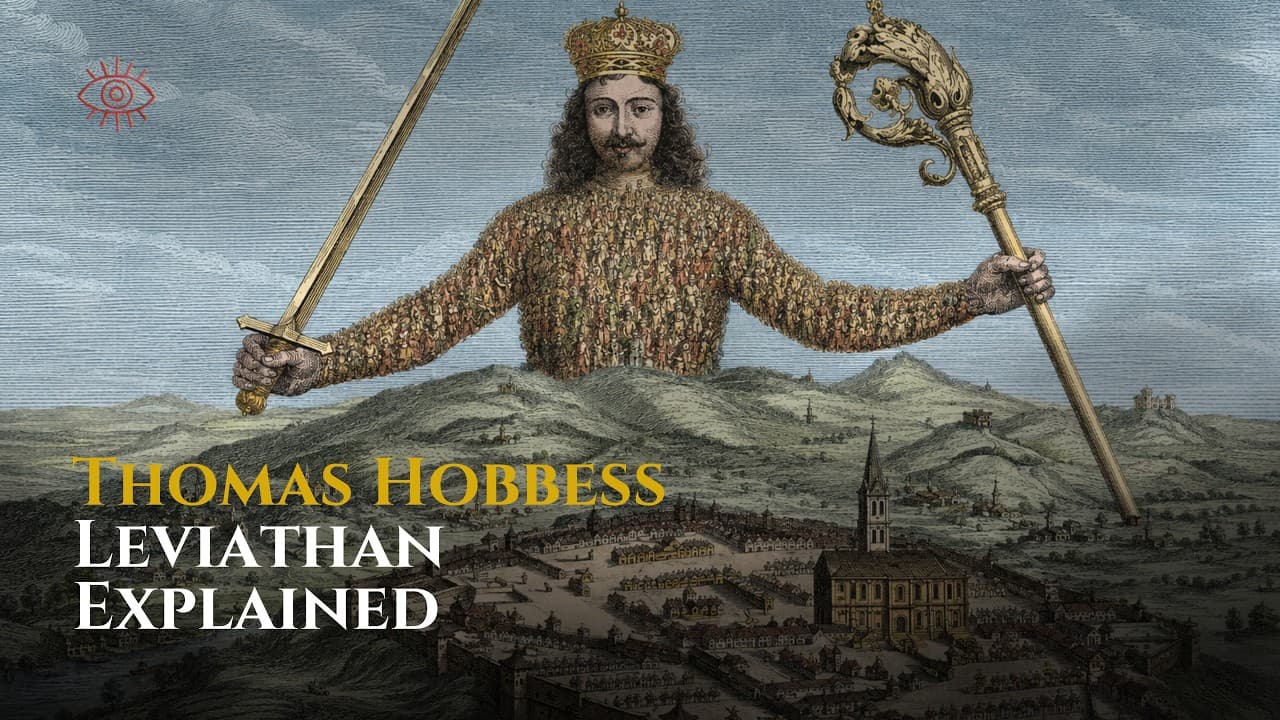
Thomas Hobbes's Leviathan | Book Summary
The book written in exile in sixteen fifty-one that grounded all political authority in fear and changed the way the Western world thinks about power. In sixteen fifty-one, Thomas Hobbes published the most radical work of political philosophy in the English language. Written while England was tearing itself apart in civil war, Leviathan builds its entire argument from a single disturbing premise: that human beings, left without sovereign authority, exist in a condition of perpetual war against one another. This episode moves through Leviathan in full, from the materialist psychology of Part One, where all sensation, imagination, and reason reduce to matter in motion, through the famous state of nature argument and the covenant that creates the artificial giant of the Commonwealth, through Hobbes's insistence that sovereign authority must be absolute and undivided, to his deeply unsettling argument in Parts Three and Four that no religious institution has any authority independent of civil power. We close with the long afterlife of a book that offended everyone and has continued to demand answers ever since. The full episode is on YouTube and Spotify. Please listen only in safe, restful contexts.
7 chapters
Beyond the Empty Will | Murdoch and Moral Vision
Iris Murdoch finds moral freedom in the patient work of seeing reality beyond the self. This episode follows The Sovereignty of Good as a triptych of moral inquiry. It begins with the inner change that occurs when a person learns to see another more justly, even without any outward action. It then follows Murdoch's account of prayer, Freud, grace, and the possibility of retaining moral transcendence after the traditional idea of God has faded. The final movement enters Plato's images of the sun and the cave, before turning to beauty, art, love, death, chance, and humility. Throughout, Murdoch challenges the picture of morality as a series of isolated choices and proposes attention as the patient activity through which consciousness becomes more truthful, less selfish, and more responsive to the real world. The full episode is on YouTube and Spotify. Please listen only in safe, restful contexts.
7 chapters6 sources