Ancient Philosophy
The Republic
by Plato(~375 BCE)
One of the most influential works in Western philosophy. Contains the Allegory of the Cave, the theory of Forms, and Plato's vision of the ideal state.
Some links are affiliate links. Purchases help support the channel at no extra cost to you.
Episodes featuring this book
All of Neoplatonism | Plotinus's Complete Philosophy
Everything pours outward from a single nameless source, and everything is quietly trying to find its way back. In the third century, in the crowded city of Rome, a gentle teacher built the last great philosophy of the ancient world. This episode follows Plotinus, the founder of what we now call Neoplatonism, from his youth in Roman Egypt and his years with a secret master in Alexandria to the circle of devoted students who gathered around him. We trace his single luminous vision of reality, a great outpouring from one source down through mind and soul to the very edge of matter, and the long road home by which a person may climb back. We stay a while with his thoughts on beauty and on time, on evil and the goodness of the world, on the self that never fell, and on the rare and wordless union he was said to have reached four times. The full episode is on YouTube and Spotify. Please listen only in safe, restful contexts.
15 chapters7 sources
On Plato and the Cave You Never Left | Complete Philosophy For Sleep
Forms, the Cave, the Republic & the Soul | 3 Hours
What if everything you have ever seen, touched, or believed was just a shadow on a wall? Plato shaped Western civilization for more than two thousand five hundred years. This episode traces his thought from its origins in the death of Socrates through the Theory of Forms, the Allegory of the Cave, the vision of the philosopher king in The Republic, the epistemology of recollection, Diotima's ladder of love in the Symposium, and the arguments for the immortality of the soul in the Phaedo. It also examines the political philosophy of The Republic, its controversial vision of a just society governed by those who have seen the Good, and the late dialogues where Plato turned a critical eye on his own theory of Forms. The full episode is on YouTube and Spotify. Please listen only in safe, restful contexts.
10 chapters7 sources
Is Change Real? | Heraclitus vs Parmenides | Philosophy for Sleep
Two Greeks at opposite edges of the ancient world gave opposite answers to the same question, and nearly every philosopher since has stood somewhere between them. This episode follows the quarrel from its beginning. We meet Heraclitus, the lonely riddler of Ephesus who hid his one book in a temple and taught that everything flows, that the world is a river and a living fire held in tune by a hidden measure. We cross the sea to meet Parmenides, the calm lawgiver of the Greek west who used pure reason to argue that change is impossible, and that whatever truly is must stand motionless and one. We follow their collision through the famous paradoxes of Zeno, through Plato's daring attempt to give each thinker a world of his own, through Aristotle's quieter answer, and into our own age, where the same argument lives on in physics and in the felt passing of time. It is a walk through the two deepest things we feel: that everything changes, and that nothing is ever truly lost. The full episode is on YouTube and Spotify. Please listen only in safe, restful contexts.
15 chapters7 sources
Capitalist Realism for Sleep
Why does capitalism feel inevitable even when its crises reveal how fragile it is? Mark Fisher's Capitalist Realism is a short, restless book about the strange feeling that capitalism is not merely dominant, but unavoidable. This episode follows Fisher's own sequence, from the futureless world of Children of Men and the performance of anti capitalism in Wall E, through the classroom where students experience reflexive impotence, the post Fordist demand for no long term, and the office where bureaucracy becomes a form of anti production. We then enter the book's dreamwork of changing realities, its Kafkaesque encounter with a centerless system, and its final proposal for a Marxist Supernanny who might restore public culture without restoring the old father. A quiet reading of one of the most vivid political books of the early twenty first century. The full episode is on YouTube and Spotify. Please listen only in safe, restful contexts.
7 chapters6 sources
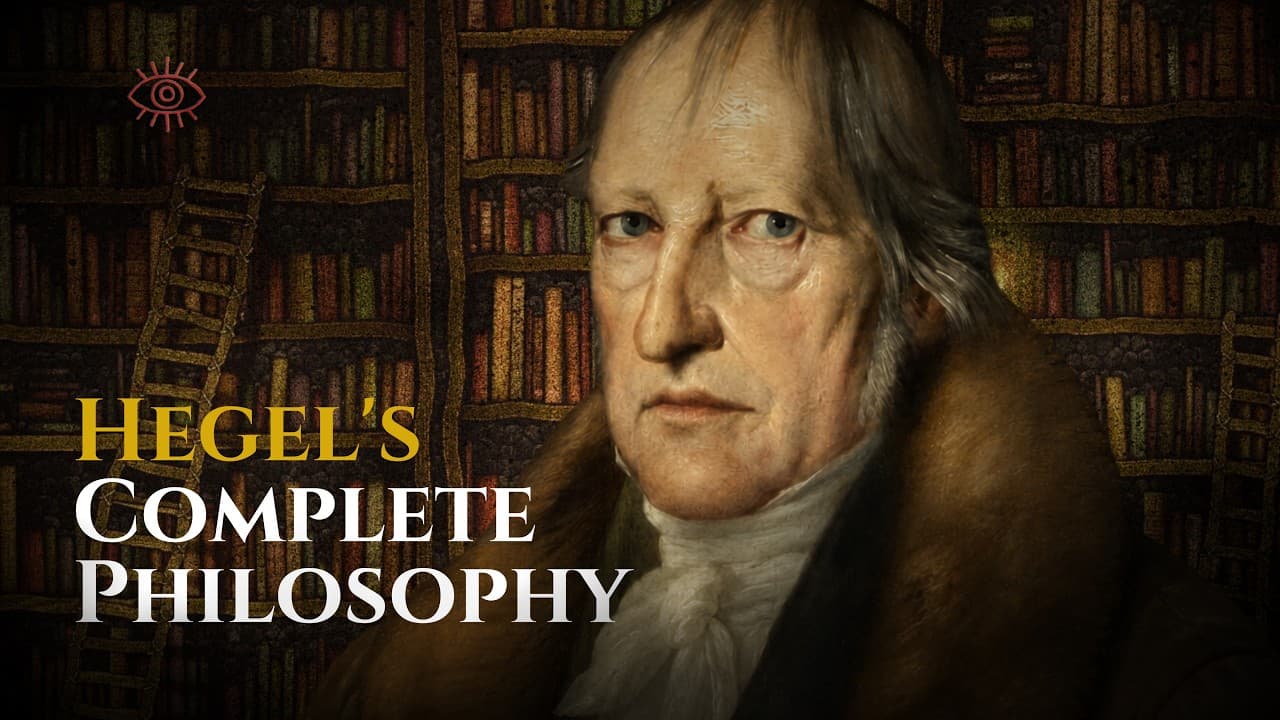
No One Is Free Alone | Hegel and the Need to Be Seen
He lived through revolution, war, and the collapse of everything that had looked permanent, and insisted that reason was moving through all of it. Georg Wilhelm Friedrich Hegel was born into a modest world and rose, against long odds, to become the most commanding philosopher of his age, the last great thinker who dared to explain nearly everything as a single unfolding whole. We follow his diagnosis of a broken modern world and his lifelong search to make it whole again. We watch his ladder of consciousness rise rung by rung, the meeting of master and servant that would echo for two centuries, his forbidding logic, his vision of history as the slow growth of freedom, and his readings of art, of religion, and of the state. And we end with the storm that broke over his grave, and with the strange, patient wisdom of an owl that takes flight only at dusk. The full episode is on YouTube and Spotify. Please listen only in safe, restful contexts.
15 chapters7 sources
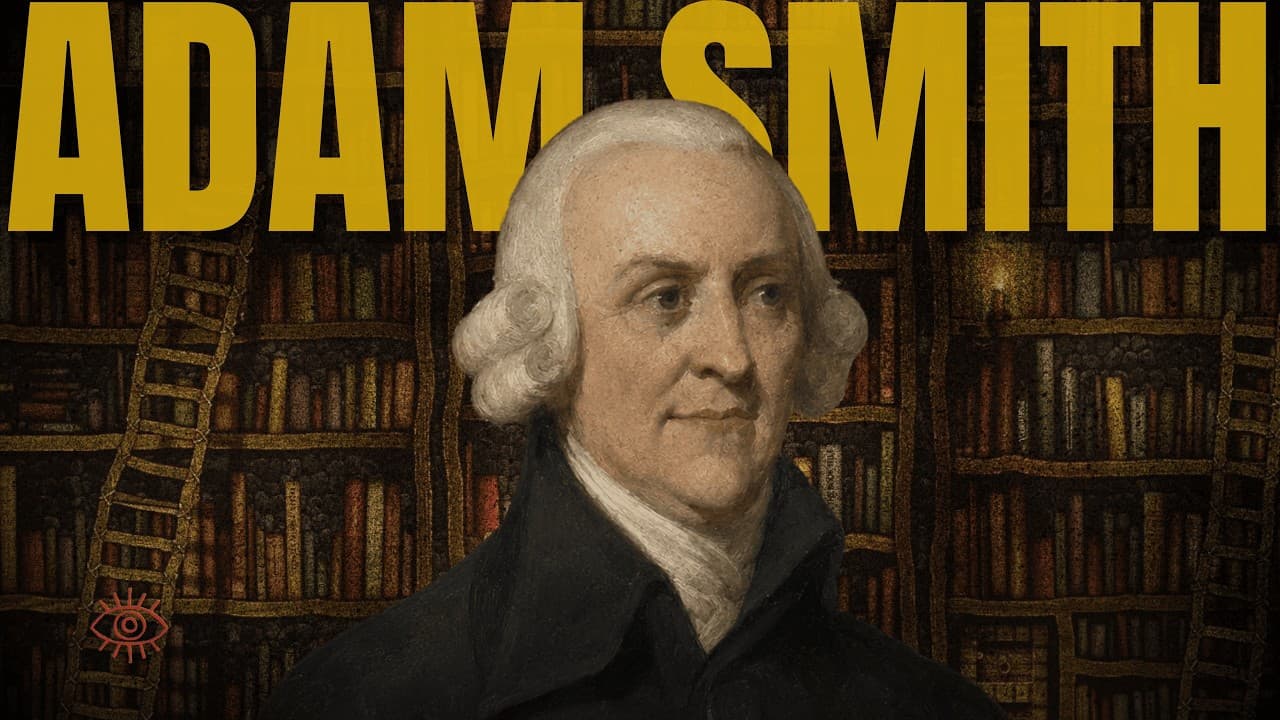
"Led by an Invisible Hand" | Adam Smith Complete Philosophy For Sleep
He wrote the book that built the modern world, then ordered everything else burned. Adam Smith spent his last days making sure most of his life's work went into the fire. What survived was enough to change the world. This episode follows the quiet son of a Scottish port town through the lecture halls of Glasgow, the salons of Paris, and the long silent decade in which he wrote the Wealth of Nations. Along the way it restores the half of Smith the modern world forgot, the moral philosopher of sympathy and conscience, the inventor of the impartial spectator, the friend who risked his reputation to defend a dying unbeliever, and the fierce critic of merchants, empires, and slavery. The invisible hand is here too, all three times Smith ever used it, read slowly and in context. Two great books, one unhurried story, told as a serious essay and paced for rest. The full episode is on YouTube and Spotify. Please listen only in safe, restful contexts.
22 chapters8 sources