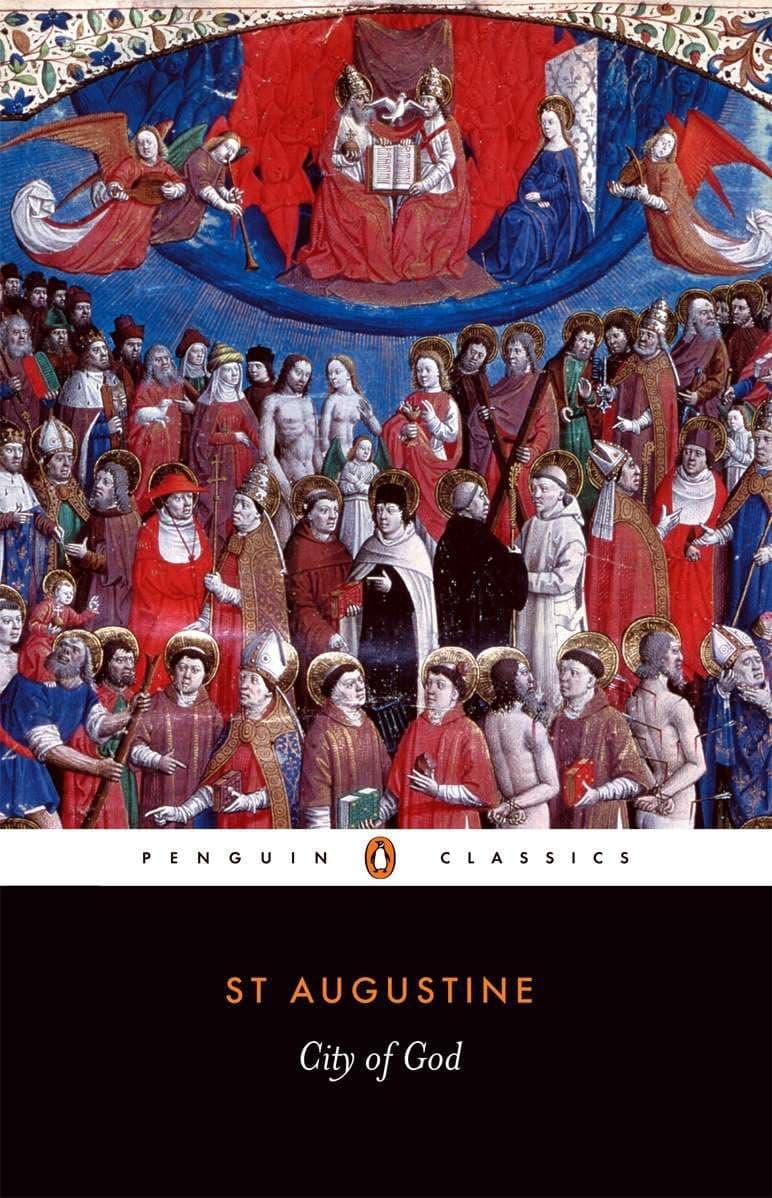
Philosophy of Religion
City of God
by Augustine(426)
Augustine's monumental defense of Christianity against pagan critics, contrasting the earthly city with the heavenly city across the sweep of human history.
Some links are affiliate links. Purchases help support the channel at no extra cost to you.
Episodes featuring this book
The Problem of Evil: Why Does God Allow Suffering? | Philosophy for Sleep
An innocent man, a burned fawn, and the hardest question ever asked of God. This episode follows the problem of evil from its oldest telling to its newest defenses. It begins with a man who loses everything in a single afternoon and refuses every easy explanation, then traces the great answers, evil as absence, the best of all possible worlds, and the earthquake and the novel that broke optimism's public standing. From there the argument sharpens into the twentieth century, a charge of outright contradiction, the celebrated defense that answered it, a theodicy of growing souls, and a dying fawn that changed the question from proof to evidence. The second half belongs to skeptical theism, the claim that human minds cannot survey the reasons a God might have, and to the objections that press it, moral paralysis, spreading doubt, horrendous evils, animal pain, and divine silence. The episode ends where the argument now stands, between a rock and a rope. The full episode is on YouTube and Spotify. Please listen only in safe, restful contexts.
23 chapters8 sources
Why Does Evil Exist If God Is Good? | Augustine of Hippo | Complete Philosophy
Augustine of Hippo | Complete Philosophy
Augustine of Hippo asked why we do what we know is wrong, why nothing ever satisfies us, and where evil comes from if God is good. This episode tells the complete story of the philosopher who shaped Western thought more profoundly than almost any other figure. It follows Augustine from his African childhood to the streets of Carthage, through nine years with the Manichaeans, to the garden in Milan where everything changed. The episode explores his revolutionary ideas: evil as the absence of good, the will divided against itself, time existing only in the mind, memory as a palace larger than the world, grace that breaks chains human effort cannot loosen, and the two cities built on two loves that have been at war since the beginning of history. It also confronts the difficult dimensions of his legacy, including his teachings on predestination, original sin, and the endorsement of coercion against religious dissenters. The full episode is on YouTube and Spotify. Please listen only in safe, restful contexts.
23 chapters22 sources
The Most Reluctant Convert | C.S. Lewis for Sleep
The most reluctant convert in England wrote children's books, letters from a devil, and one of the coldest, clearest arguments of the last century. This episode traces the whole arc of a remarkable life and mind. We begin in a cold Belfast childhood and a wartime trench, follow a brilliant young atheist through the long, reluctant argument that led him back to belief, and settle in among the Oxford friendships that shaped him. From there we move slowly through the great works: the stab of longing he called Joy, the plain wartime broadcasts that made him famous, the fierce little book on objective value that secular readers still admire, the letters of a tempting devil, the bus ride to the edge of heaven, the lion in the snowy wood, and the pagan myth he retold as his masterpiece. And we end where his own life ended, in a late and unexpected love, a shattering grief, and a quiet death. The full episode is on YouTube and Spotify. Please listen only in safe, restful contexts.
16 chapters8 sources
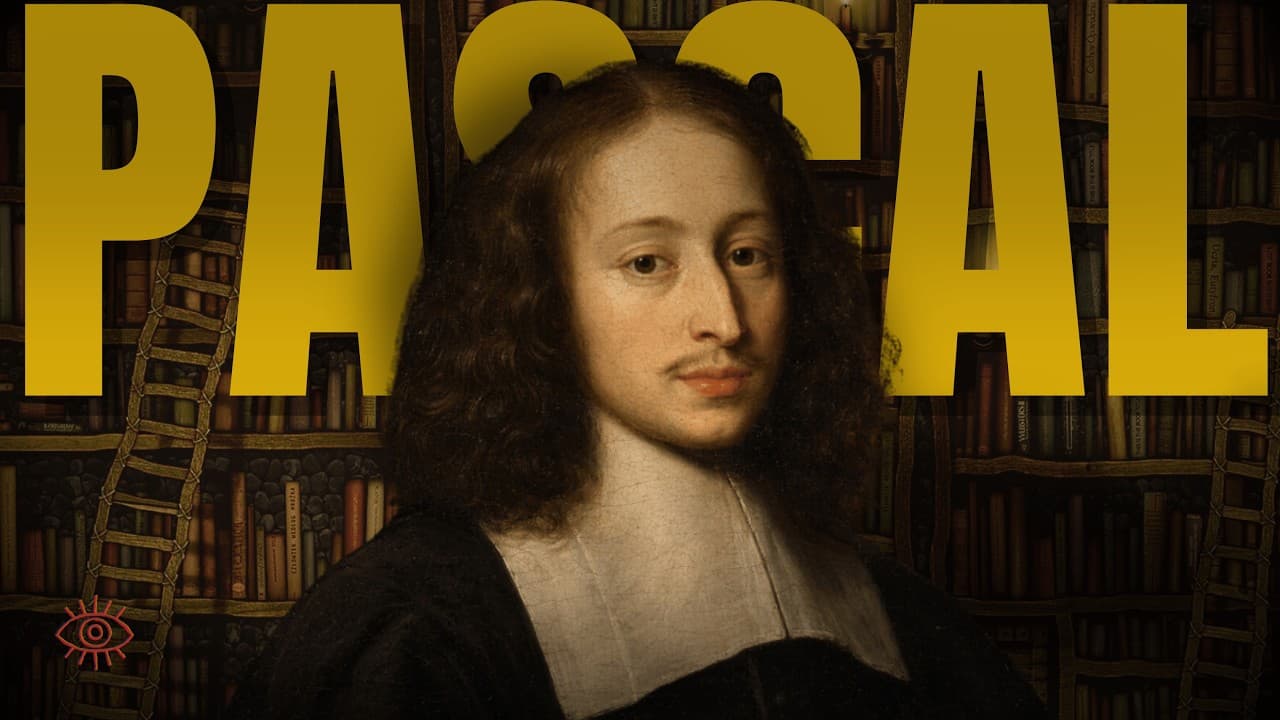
Blaise Pascal | The Mathematician Who Found God
Pascal's Complete Philosophy
The man who proved that nature does not abhor a vacuum, and then wrote the most honest account ever given of why the universe terrifies us. Blaise Pascal lived only thirty-nine years, and in those years he changed mathematics, physics, probability theory, and the history of Western prose. But at the center of his life was a night in November of 1654 that he could never describe, only remember. After that night he turned from the world of scientific triumph toward a book he would never finish, a book about what it means to be a human being suspended between two infinites, looking for a God who chooses to remain hidden. This episode follows Pascal from the Paris household where he taught himself geometry in secret as a child to the small room in which he died, with the record of his conversion sewn into the lining of his coat. The full episode is on YouTube and Spotify. Please listen only in safe, restful contexts.
10 chapters5 sources
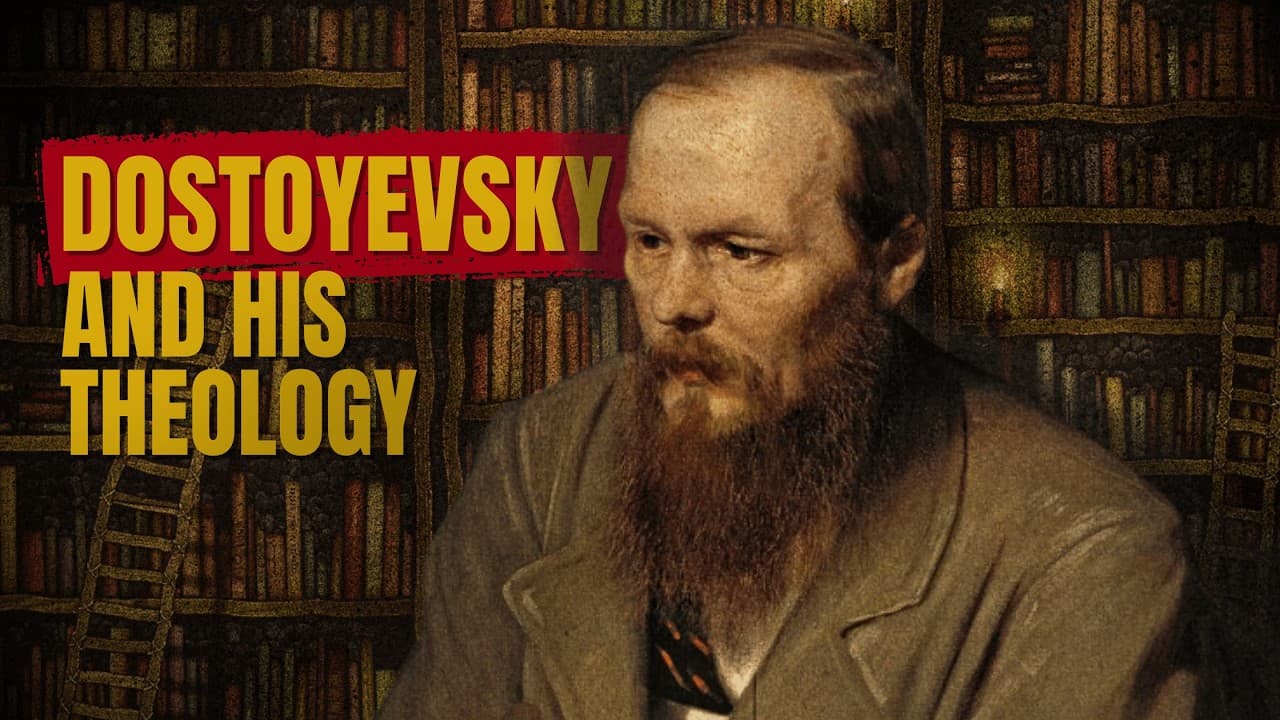
If There Is No God, Everything Is Permitted | Dostoevsky's Hidden Theology For Sleep
Orthodox Theology, the Church Fathers & the Novels
Hell is not punishment from God. It is the inability to love. This three-hour episode traces the Orthodox Christian tradition that shaped everything Dostoevsky ever wrote, from Isaac the Syrian and Maximus the Confessor to Gregory of Nyssa and the hesychast monks. What does it mean that sin is not a crime requiring penalty but a sickness requiring healing? That salvation is not a transaction but a transformation of the whole person? These are the questions buried inside The Brothers Karamazov, The Idiot, and Crime and Punishment. This episode is a companion to our earlier Dostoevsky exploration. Where that episode examined his ideas through a philosophical and psychological lens, this one traces them to their source: kenosis, theosis, apophatic theology, prelest, and sobornost. The full episode is on YouTube and Spotify. Please listen only in safe, restful contexts.
5 chapters7 sources
Capitalist Realism for Sleep
Why does capitalism feel inevitable even when its crises reveal how fragile it is? Mark Fisher's Capitalist Realism is a short, restless book about the strange feeling that capitalism is not merely dominant, but unavoidable. This episode follows Fisher's own sequence, from the futureless world of Children of Men and the performance of anti capitalism in Wall E, through the classroom where students experience reflexive impotence, the post Fordist demand for no long term, and the office where bureaucracy becomes a form of anti production. We then enter the book's dreamwork of changing realities, its Kafkaesque encounter with a centerless system, and its final proposal for a Marxist Supernanny who might restore public culture without restoring the old father. A quiet reading of one of the most vivid political books of the early twenty first century. The full episode is on YouTube and Spotify. Please listen only in safe, restful contexts.
7 chapters6 sources