Essays
The Denial of Death Won Its Pulitzer Two Months After Ernest Becker Died
The Denial of Death argues that every culture is a scheme for denying mortality, and its author was finishing it under a diagnosis of terminal cancer.
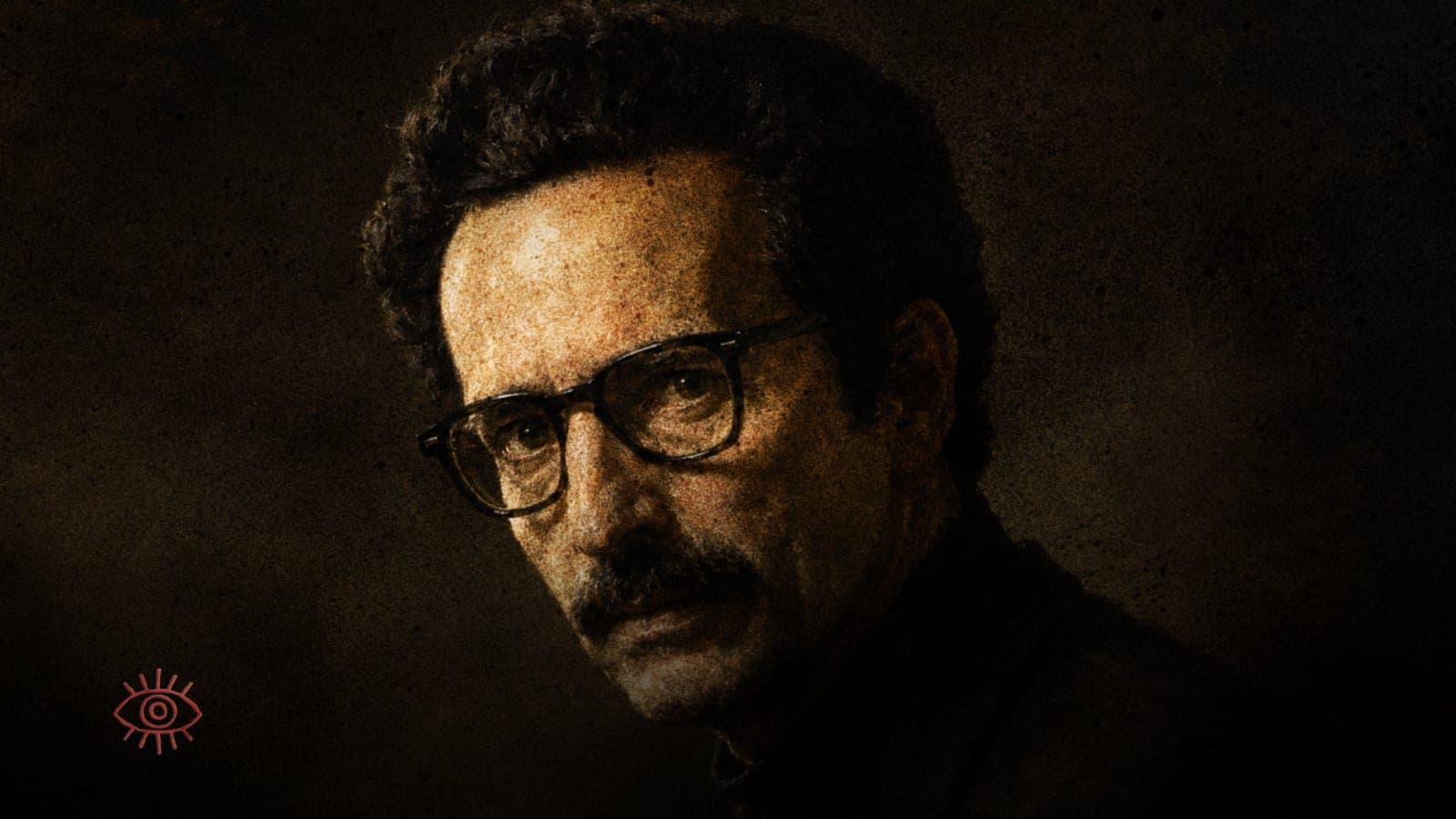
In the last week of 1973, a writer named Sam Keen set a small tape recorder on the table beside a hospital bed on the Canadian west coast. He had telephoned the house and been told the man he wanted was too ill; he telephoned again the next day and was told the man wanted to do it, while there was still strength and clarity to spend. Ernest Becker was forty-nine years old, dying of cancer of the colon. The book he had published a few weeks earlier was The Denial of Death.
Its argument runs to several hundred patient pages and fits in a sentence. No human being can look straight at their own extinction, and the entire structure of a personality, together with the entire structure of the culture that personality is assembled out of, exists so that nobody has to.
The tape in that room, then, was the argument's own author agreeing to look straight at it, on the record, with the thing itself weeks off. He said as much during the conversation: his dying was about to become the test of everything he had written, an experiment, the only fully honest one he would ever get to run. He died on 6 March 1974, at a hospital just outside Vancouver. Two months later the book was awarded the Pulitzer Prize for General Nonfiction.
The argument has since travelled further than the name attached to it. Hundreds of laboratory experiments have been built on it, and the phrase immortality project circulates among people who could not say where it came from. The gap is worth closing, because the biography is not decoration here. It is the one case study the book could not include.
Fired at Berkeley, Where the Students Voted to Pay Him
Becker was born on 27 September 1924 in Springfield, Massachusetts, into a family of Jewish immigrants. In 1945, aged twenty, serving in the infantry, he was with a unit that took part in the liberation of a Nazi concentration camp. He rarely spoke about it afterwards and never built a career on the memory. The question he carried away was not the pious one about how God could permit such a place. It was narrower and worse. What is it in ordinary people, who love their children and fear the dark and want to be thought good, that equips them to organise horror on that scale and to feel righteous while doing it.
The route to an answer was slow. An undergraduate degree at Syracuse, a post at the American embassy in Paris, a marriage to a woman named Marie, a spell in Italy. The desk did not hold him. In his early thirties he went back to Syracuse as a graduate student in cultural anthropology, took his doctorate in 1960, and arranged his teaching with one foot in anthropology and the other in psychiatry, a habit that made him close to unemployable. He crossed lines his colleagues maintained for a living, and asked the largest available questions at a moment when the human sciences rewarded small, measurable ones.
At Berkeley, where he took a lecturer's position in 1965, his courses filled past capacity and students who were not enrolled turned up to listen. When the administration decided against keeping him, the students petitioned and protested, then voted to pay his salary themselves, thirteen thousand dollars out of their own pockets. The university's counter-offer was to hire him as an educational consultant who would teach only courses carrying no credit, an arrangement that kept him without standing while looking generous. He turned it down and left.
San Francisco State came next, a psychology department, and he arrived as the campus tore itself apart. When the college leadership called in the police against striking students he resigned, in the first weeks of 1969, as a matter of conscience. He was in his mid-forties with a shelf of remarkable books and no secure position anywhere. Later that year he crossed into Canada, to Simon Fraser University outside Vancouver, into a department that housed anthropology, sociology and political science under one roof. He had five years left.
The Vital Lie, and Why Character Works Like Armour
Everything rests on one plain fact. This is the animal that knows it is going to die, not merely that it dies, as the deer and the beetle and the oak all do. The difference is advance knowledge, carried around, impossible to put down. A deer feels sharp fear when a wolf is near, but it does not lie awake dreading a wolf that has not come, and it does not know that outrunning every wolf it will ever meet changes nothing about its own heart stopping one day. Becker's opening line calls this fear a mainspring of human activity, designed largely to keep the fact of death out of sight.
This raises an obvious objection. If the terror sits down there, why is ordinary life not one long scream. Because nothing would get done: a creature that felt its own annihilation at full volume could not hold a job or cross a busy street. So the mind buries the knowledge and builds a functioning life on top of the trapdoor, an accomplishment Becker rated as the price of health rather than a failure of nerve.
What gets built on top is a person. Becker took the phrase character armour from the maverick analyst Wilhelm Reich and widened it into a theory of personality. The habits and beliefs and steady concerns that make somebody recognisably themselves are a structure laid down in childhood to keep one piece of knowledge from ever arriving: the person whose whole self is control, who meets every situation by ordering it, or the cynic, armoured in detachment because nothing is allowed to matter enough to wound. By adulthood the work is finished and invisible, and the defence has disappeared into the identity.
He called the result the vital lie: a lie because it keeps the terms of the situation permanently out of view, vital because nobody can function without it. The pettiness of an ordinary day, the mortgage, the promotion, the slight from a colleague turned over at three in the morning, is usually filed under shallowness, but Becker read it as a triumph of defence: small solid preoccupations fill the whole field of vision and leave no gap for the void to show through. The trivial is a shield held against eternity, held up all day long.
Follow that and the categories invert. Mental health stops being clear sight and becomes the condition of not seeing, of having defences good enough that reality never lands. The person whose armour has cracked, sinking under a darkness that will not lift, is often perceiving something accurate about the smallness of the world their whole worth was staked on, and is being destroyed by the accuracy. The map for this dread was drawn a century earlier by Kierkegaard, who called it the dizziness of freedom. Becker's other great debt was to Freud: what Freud read as sexual, Becker read as the body and the grave wearing a costume.
The Immortality Project, and the Evil It Licenses
Defence is half the account. On its own it would leave a species crouched behind the furniture waiting for the end. Human beings also rise up against death and try to defeat it.
The logic is easy to state. Nobody can live forever as a body, so arrangements are made to live forever as a symbol. Attach the perishable self to something larger that will outlast it, pour a life into that, and collect a share of its permanence. Becker called the enterprise the immortality project, driven by a need he placed deeper than hunger or desire, the need to be a hero in a scheme of things that means something. Much of the groundwork came from Otto Rank, the runaway analyst who located the human problem in the wish to be the author of one's own existence.
Then the anthropologist's move. If everyone needs to feel heroic, the instructions are issued ready-made by the culture. A culture, in this redefinition, is a hero system, a codified structure of roles specifying how significance is earned in terms a given society will honour, whether by killing enemies, fathering children, amassing a fortune, or making a beautiful and lasting thing. The content varies; the function holds steady, even where heaven has emptied out. Somebody who laughs at religion still needs to be a hero against death, and pours the same energy into a career or a cause, seeking salvation in the language of achievement rather than the language of God. It is one reason retirement can hollow a person out so fast: the role that supplied a sense of significance is gone.
Built into the design is a fault. One immortality project and another may not fit inside the same world. If a person's sense of mattering forever depends on their god being the true god, a rival god and a foreign way of living register as a threat, because their existence suggests that whole bid for eternity might be arbitrary, one story among many.
That fault is the subject of Escape from Evil, assembled by his editors in 1975 from what he had been racing to finish as the cancer took him. Evil, in his usage, means whatever seems to carry death: decay, the impure, the stranger, the enemy. The oldest remedy on record is the scapegoat, the loading of a community's formless dread onto a chosen victim who is then driven out, buying a brief collective immortality. A frightened crowd can be handed a new immortality project and a scapegoat in the same breath, and behind the machinery of a modern state, that old ritual scales up into industrial killing. Hence the hardest sentence he ever wrote: the greatest human evils are committed mostly by people convinced they are doing good, purifying a corrupted world, and the men who ran the last century's organised horrors, including the kind of place he had walked into in 1945, largely understood themselves that way. The noblest human motive and the most murderous one turn out to be the same motive. There was no cure on offer, since removing the denial of death would remove the human being: only sight, and a lowered certainty, which he thought might make a creature marginally less lethal.
Terror Management Theory Took the Argument Into a Laboratory
For years after he died the theory sat where he had left it, kept alive among general readers by the Pulitzer and dismissed by the profession that should have been most interested. It was too sweeping, too literary, and above all untestable. A claim like everyone spends their whole life denying death does not obviously fit inside an experiment.
In the 1980s three social psychologists decided otherwise. Sheldon Solomon, Jeff Greenberg and Tom Pyszczynski read Becker, were seized by him, and set out to take the thing into a laboratory. Their method was plain: remind people quietly of their own death, then measure what changes. The reminder might be a questionnaire about their own mortality, or an interview conducted, by design, in front of a funeral home. Sometimes it was subtler: a single word flashed on a screen too fast for the conscious mind to catch. They called the approach terror management theory.
Across hundreds of experiments the finding held. A brush with the thought of death, including one the subject never consciously registers, stiffens the defence of that person's own worldview and group. Reminded of mortality, people judged those who shared their beliefs more warmly and those who differed more harshly, turned more punitive toward rule-breakers, and grew more suspicious of outsiders. In the years after the terrorist attacks that opened the new century, the effect showed up outside the laboratory, where nudging populations toward thoughts of death measurably increased support for strong and aggressive leaders and for harsh measures against enemies.
In 2015 the three of them gathered the whole body of work into a book called The Worm at the Core, borrowing the title from William James, who had written that a worm sits gnawing at the root of even the brightest ordinary happiness.
The objections deserve stating, and Becker would have insisted on it. Is the fear of death the single master motive of a human life, or one great motive tangled among several, bound up with desire and attachment and the animal will to keep going. Many serious readers think he turned one key in every lock. There is also the charge that he read the whole of human culture through an anxious, individual, death-haunted lens belonging to the modern West, and that other traditions have met death with less frantic denial than he assumed was universal. The fair verdict is that the book illuminates a great deal of human behaviour and leaves some of it unexplained.
What Becker Said Into the Tape Recorder
Applied to its author, the theory predicted a collapse. If nobody can face death without the vital lie, then the man who described the lie, dying with his eyes open and his defences going, should have come apart. He did not. What the people around him saw, and what the recording holds, was a lucid and hard-won calm.
The strangest part is that a man who had written his whole life from outside religion began, at the end, to speak of God. A sceptic expects one explanation, the frightened person reaching for comfort in the dark. Becker gave the opposite account. It came, he said, from the loss of his character armour. As the defences thinned under the sheer pressure of dying, something arrived that they had spent a lifetime keeping out.
He put the shape of it in a form worth carrying. Joy, hope and trust are not issued in advance of the terror. They are reached, if they are reached at all, on the far side of it, after passing the whole way through the forlornness and the full sight of one's own nothingness. There is no route around, only through.
That leaves a question his dying raised and did not answer. Following Rank, Becker had come to think the task was never to strip away every illusion, which leaves a person naked before the terror, but to find the most life-giving one, generous enough to let somebody create and love and face the end. Perhaps what he found in that room was the best available illusion, and the theory holds. Or perhaps he stood in the plain facts of his condition with no armour left, and found that what waited there was something other than the annihilation his own book had predicted.
He did not settle it, and the unsettled version is more honest than a tidy one would have been. He had spent a working life arguing that nobody can look directly at death, and then he looked, with a machine running beside the bed and nothing left to protect, and reported back something that neither confirms the argument nor destroys it. The laboratories came afterwards. The tape came first.
---
Adapted from a longform audio episode on Ernest Becker, produced for Sleepy Philosophy Radio.
The Newsletter
New essays and episodes, delivered quietly.
By subscribing you consent to receiving occasional emails. Unsubscribe any time via the link in every email or at /unsubscribe.
Reflections
Loading...
Related Episodes
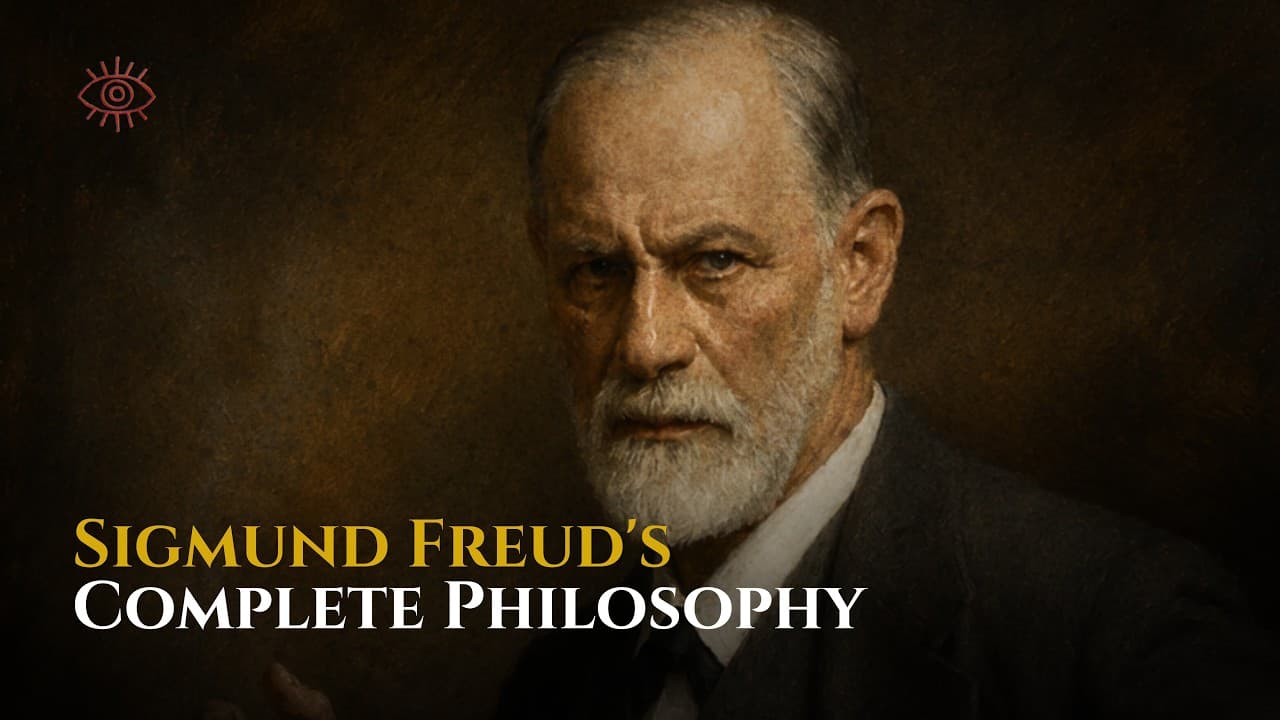
There Are No Accidents | Sigmund Freud's Complete Psychology
He set out to be the coldest of scientists, and ended by telling the strangest story modern people had ever heard about themselves. This is the life and the mind of Sigmund Freud. We begin in his consulting rooms in Vienna, among the ancient statues he could not work without, and follow him from a provincial childhood to the discovery that made his name, the claim that most of the mind is hidden, and hidden on purpose. We move through his masterwork on dreams, his scandalous account of childhood, the drama he found buried in every family, and the movement that made him famous and cost him his dearest friends. We watch his vision darken, after a war, into a theory of the wish for death and the permanent discontent of civilization. And we follow him to the end, through illness, exile, and a death met on his own terms, into the strange afterlife of ideas that science keeps rejecting and no one can quite escape. The full episode is on YouTube and Spotify. Please listen only in safe, restful contexts.
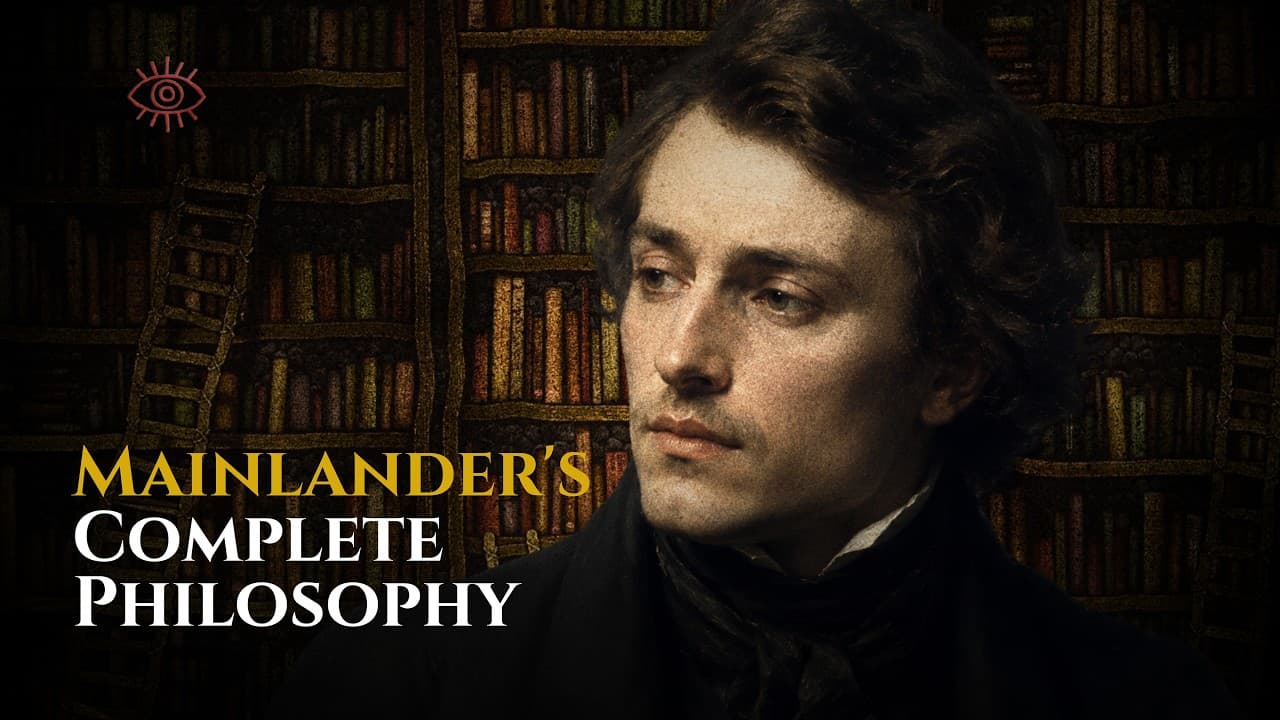
The Darkest Philosopher Who Ever Lived | Philipp Mainländer
Before the world began, he argued, God chose not to exist, and shattered into the universe in order to die. In a rented room by a German river, a mild and dutiful bank clerk finished the strangest book of his century, and then quietly ended his own life. This episode follows Philipp Mainländer, the poet and philosopher who took Schopenhauer's darkness further than anyone had dared. We trace his single great work, The Philosophy of Redemption, the strange drive he found beneath all life, the calm he took from a running-down cosmos, and the rescue he promised, which is simply rest and nothing more. Along the way we meet his gentle serenity, his quarrel across time with Nietzsche, and the uncanny way modern science has come to echo his cooling universe. It is a patient walk to the far edge of pessimism, and gently back. The full episode is on YouTube and Spotify. Please listen only in safe, restful contexts.
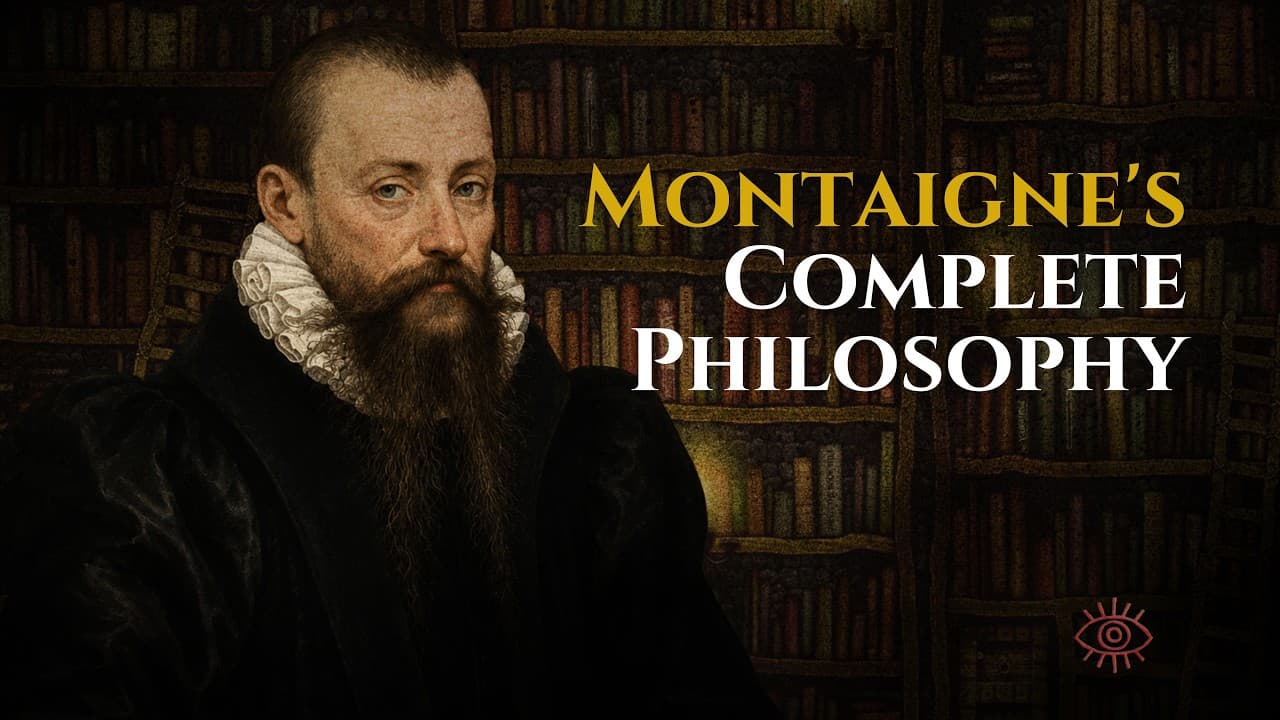
He Wrote About Himself for 20 Years and Described Us All | Montaigne
He locked himself in a tower to study one ordinary man, and ended up describing everyone who would ever read him. In fifteen seventy-one a French nobleman withdrew from public life to a round library at the top of a stone tower, and there, to tame his own restless mind, he began the strangest and most intimate book of its age. This is the story of Michel de Montaigne and the work he modestly called his attempts, the essays that invented a whole way of writing. We begin with his unusual life, the strange education, the one friendship that shaped everything, and the loss that turned him inward. From there the great themes of the book: his bottomless doubt and its gentle motto, his study of the ever-changing self, his hatred of cruelty in a country torn apart by religious war, his acceptance of the body and its pains, and the serene wisdom of his final years. Along the way we meet a mind that set out to know one person and ended by knowing everyone. The full episode is on YouTube and Spotify. Please listen only in safe, restful contexts.