Essays
A Censor Cut the Answer From Notes from Underground. Only the Despair Survived.
In the spring of 1864 a government censor deleted the chapter where Fyodor Dostoevsky made his case for faith, and the book that reached readers kept its blasphemy and lost its cure.
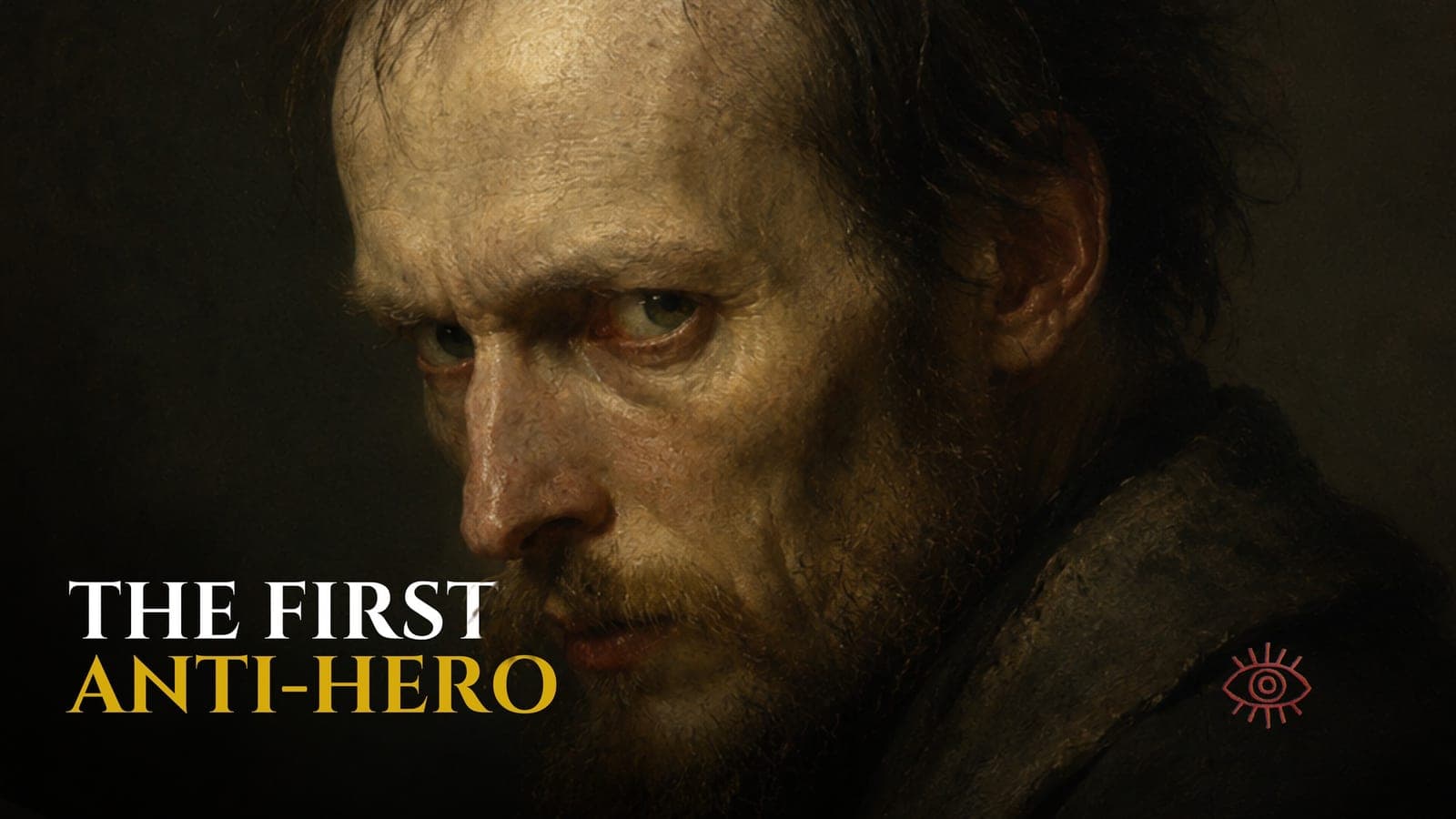
In the spring of 1864, in a rented apartment in Moscow, a woman lay stretched out on a table beneath a cloth. She had died that day, worn down by years of consumption that had thinned her almost to nothing and ended, at the last, in a cough that would not stop. A man sat beside her through the night. He did not pray in any form the church would have recognized, and he did not fill the page in front of him with weeping. He opened a notebook and, in a small hurried hand, wrote a sentence that was half a cry and half a problem to be solved: "She is lying on the table. Will I ever see her again?" Then, strangest of all, he began to reason. He wrote that to love another person the way a person loves themselves, in the way Christ commanded, is impossible on this earth, that something stands in the way, and that the something is the self: the hard, stubborn kernel of the "I" that walls each person inside a single skin and keeps it from crossing into another.
The man was Fyodor Dostoevsky, forty-two years old, in debt, and in those same weeks finishing a short, furious book narrated by a man who cannot love anyone at all. That book is Notes from Underground, and it is famous now for two things: it is usually credited with putting literature's first anti-hero on the page, and its narrator delivers one of the most quoted lines in Russian fiction, the boast that two and two making five is sometimes "a very charming thing." What almost nobody outside specialists knows is that the book which gave the century its coldest narrating voice was written beside a deathbed by a man privately testing whether love could cross the gap between two people at all, and that the version now in print is missing a chapter. A government censor cut it, and Dostoevsky wrote about the cut in a letter to his brother Mikhail.
The Year His Journals Failed and His Wife Was Dying
By 1864 Dostoevsky had already lived several lives. In his twenties he had been a literary sensation, praised on his first novel as a major new talent, and watched the praise curdle within a year or two. At twenty-eight he was arrested for belonging to a circle that met to read banned books and imagine a juster Russia. He was marched out one December morning to be shot, made to stand and wait as the first men were bound to the posts and the sentence was read, and told only then that the Tsar had commuted it: a piece of theater staged by the state to teach obedience through terror. In place of death came four years of hard labor in Siberia and a stretch of army service at the empire's edge. He did not see Petersburg again for a decade, and he came back from it no longer trusting any system that promised to perfect people by force of argument.
He returned in 1859 to a literary culture that had moved on without him, run now by a younger generation certain that reason and enlightened self-interest, properly taught, would make everyone good. With his older brother Mikhail he founded a journal called Time to argue against that certainty, and for a while it thrived. In 1863 the government shut it down over a single article about a Polish uprising that a censor chose to read as unpatriotic, cutting off his income and leaving the brothers with the venture's debts. A second journal, Epoch, followed the next year, underfunded from the start. He was writing now out of need rather than ambition, chasing money he had usually already spent, and he made the need worse in the way people sometimes do. At the gaming tables of European spa towns he had discovered roulette, which took hold of him with the force of a second illness, and a turbulent love affair abroad wounded him further.
Through all of it his first wife, Maria Dmitrievna, was dying. He had married her years earlier, during the exile years, and the marriage had brought both of them more torment than peace. By the early 1860s her consumption was advanced. He had moved her to Moscow for its milder air and shuttled between her sickbed and the collapsing journal in Petersburg. Part of Notes from Underground appeared in the journal's first issues of that year. The rest appeared in April, the very month she died. That same summer his brother Mikhail died suddenly too, and the two losses together nearly broke him. Mikhail's death left behind not only grief but debt: unpaid printers, a widow and children, obligations Dostoevsky signed his name to though they had never been his. He would spend years staying one step ahead of the men he owed, subject throughout to a seizure disorder that could level him for days. The book was written inside that vise, in snatched and feverish hours, by a man losing the people closest to him while creditors wrote to him and a magazine collapsed under his hands.
A Narrator Built to Make You Uncomfortable
Notes from Underground opens by daring the reader to leave. "I am a sick man," the narrator announces, before he has given his name or described the room he is writing from. "I am a spiteful man. I am an unattractive man." He is a retired minor official, forty years old, who has inherited just enough money to stop working and has withdrawn into a shabby corner of Petersburg he calls, with something like pride, his hole. From inside it he addresses an imagined audience of comfortable readers as "gentlemen," anticipating their objections and insulting them before they can be raised.
Dostoevsky presented the whole thing as a found document, the private notebook of an invented man, and stepped forward only once, in a brief footnote, to say so. But the footnote also does something else. Such a person, he wrote, "not only may but must exist in our society, if we consider the circumstances under which that society has taken shape." The narrator is not a freak to be examined behind glass. He is a diagnosis of a type the age was producing on its own.
This was new, and it is the reason the book keeps answering the question of what an anti-hero is. Literature before this had generally handed its confessions to the noble and the wounded, figures whose suffering ennobled them and whose honesty a reader was meant to admire. This narrator is honest to a degree that unsettles rather than flatters. He tells the reader the truth about his own smallness to make the reader uncomfortable, and he predicts, correctly, that his listeners will trust him less the more he confesses. He has the full interior life and claim on the reader's attention that a hero gets, with none of the qualities that would make him admirable. He cannot love, he rarely finishes anything he starts, and he cannot even manage to stay spiteful for long.
The book is built in two unequal halves that run backward in time. The first is a long, circling argument about consciousness, freedom, reason, and the future. The second drops the argument and tells a handful of scenes from his life sixteen years earlier, when he was still out among people and still capable of being wounded by them. The reader meets the finished creature first, hardened and alone, and is shown the evidence for how he got there only afterward.
The Arithmetic He Refuses to Accept
The theoretical half of the book turns on a quarrel with mathematics, and the narrator knows how absurd that sounds and states it anyway, because the absurdity is the point. Twice two makes four, he grants, is an excellent thing. But twice two makes four, he adds, is also a piece of insolence: it stands in the road with its hands on its hips, entirely sure of itself, indifferent to whether anyone likes it. "Twice two makes four is not life, gentlemen," he says. "It is the beginning of death."
What he means by this becomes clear once he names what he calls the wall: everything that cannot be otherwise, the whole hard order of fact that meets a person whenever they push against the world. The laws of nature are a wall. The truths of arithmetic are a wall. The circumstances of one's birth are a wall, and death waiting at the end is the last and highest stretch of it. Reasonable people tell you to bow to the wall, to call your acceptance of it maturity, and get on with living inside the limits it draws. The narrator will not do this. He is not claiming that if he wishes hard enough the wall will fall, or that two and two will politely rearrange themselves into five. He grants the wall its full solidity. What he denies is that the solidity obliges him to want any less. To submit, to let arithmetic reach in and edit his own desires because those desires cannot be satisfied, is the one surrender he refuses to make.
This is why he prizes the useless protest over the comfortable peace. "Twice two makes five," he says, "is sometimes a very charming thing." He is not asserting a falsehood and does not believe one. He is defending the right to prefer the impossible, to keep open a door where the arithmetic insists on a wall, to hold onto some part of himself that no one's sum has accounted for. A man who has agreed that twice two makes four, and has let that agreement decide what he is permitted to hope for, has in some sense already died: he has become a thing reality can finish calculating. The line has outlived the book that made it because it names a discomfort most people recognize, the suspicion that a life lived entirely by correct answers would not be much of a life. The book does not let the reader enjoy that insight cleanly, though. The narrator's protest has nowhere to land. He is not raging at a tyranny he might overturn. He is banging his head against the number four, and there is no glory in it, only a man who will not come in out of the cold.
The Tenth Chapter, and What the Censors Struck Out
Here is the fact the book's fame usually leaves out. When the first half appeared in the journal early that year, a government censor went through it, and did his work in a way that is almost hard to believe. In a letter to his brother Mikhail, written in March, Dostoevsky poured out his fury. The censors, he wrote, are swine. Where he had mocked and blasphemed and let the narrator tear down every settled value, they had let it stand and raised no objection. But where, out of all that demolition, he had drawn his conclusion, where the argument turned toward the need for faith and for Christ, that they had struck out entirely.
Dostoevsky called it the most important chapter of the book's first half, the place where the essential thought was meant to appear. Somewhere in the narrator's ranting there was to have been a break in the clouds, a single turn toward faith and love, and that turn is exactly what the censor removed. The book went out into the world with its descent intact and its one ascent cut away. The manuscript pages are lost, and nobody today can read the deleted words; only Dostoevsky's letter proves they once existed.
Set that next to the notebook from the deathbed. In the privacy of his own hand, with no censor to trouble him, Dostoevsky had already written that a human being cannot love another as fully as it loves itself, that the self stands in the way, and that only one figure in history had ever managed to cross that distance completely. The exit from the underground, on this reckoning, is the surrender of that self in love. The narrator of Notes from Underground is the isolated "I" in its purest form: a mind so sealed inside itself that it cannot love or cross over into another person. Late in the book a young woman offers him plain human tenderness with both hands, and for one unbearable instant he wants to accept it and knows exactly what he is refusing, and still cannot. He is the disease the notebook names, carried to its extreme and denied the cure. The chapter the censor cut, whatever its exact wording, would almost certainly have named that cure directly. Dostoevsky spent the rest of his working life writing the missing chapter over again, through other characters, in the novels that followed. In this first and coldest of his major books, it survives only as a hole.
An Honest Complication, and the Reader Left in the Corner
It would be tidy to end there, with a wronged author and a philistine bureaucrat, but the book resists tidiness. It is not clear the restored chapter would have saved the book, or that it should have. The negations Dostoevsky gave his narrator are so alive and so nearly unanswerable that many readers, reading only what survived, have doubted whether any turn toward faith could have overpowered them. It is possible that Dostoevsky, in the heat of writing, made the disease more convincing than he could make the cure, and that even the uncut book would have left the underground with most of the best lines. The hole the censor made may only have deepened a hole that was already there: an honest artist's difficulty in refuting, cheaply or on schedule, a despair he understood from the inside. That difficulty is what keeps the book from reading as a sermon. Its faith, where it survives at all, is present only the way health is present to a sick man, as something named in the dark and never delivered.
Almost no one noticed the book when it appeared. It came out in a failing journal in a year of private catastrophe, with no hero to admire and no plot to speak of, and it sank while the great novels that followed drew all the light. It took the following century, and philosophers looking for the origins of their own preoccupations about freedom and dread, to call it what it plainly was: one of the founding texts of existentialist writing; the Stanford Encyclopedia of Philosophy still turns to this book first when it wants to show what the anxiety of choice feels like from inside a mind. A writer working generations later would open a very different novel with a narrator declaring himself unseen by the society around him, and end it with that narrator sitting in a hole underground, telling his furious story, reaching back on purpose to a corner in Petersburg. None of that was visible in 1864. What was visible was a small, difficult book, its argument for despair left standing at full strength and its argument against despair removed by a man doing his job, and a narrator whom Dostoevsky, in the plainest line he ever gave him, called an inevitable product of the age rather than a curiosity. He is still talking from the corner. The chapter that might have answered him is still gone.
---
Adapted from a longform audio episode on Notes from Underground, produced for Sleepy Philosophy Radio.
The Newsletter
New essays and episodes, delivered quietly.
By subscribing you consent to receiving occasional emails. Unsubscribe any time via the link in every email or at /unsubscribe.
Reflections
Loading...
Related Episodes
One Moment of Happiness | Dostoevsky's White Nights
Four summer nights in a city where the sun never sets, and a lonely dreamer who meets a young woman waiting for someone else. This episode walks through Fyodor Dostoevsky's early story White Nights, told over four luminous Petersburg nights and a single morning. We meet the dreamer, a man so sealed inside his own head that he has befriended the houses of the city because he cannot speak to its people, and we follow what happens when he meets Nastenka weeping at a canal railing and is asked to be her friend on the single condition that he not fall in love. We trace the warmth and the self-deception of his inner life all the way down, and the quiet question the story keeps asking, what one moment of happiness is worth to a person who has been allotted almost none. No background in the book is needed to follow along. Please listen only in safe, restful contexts.
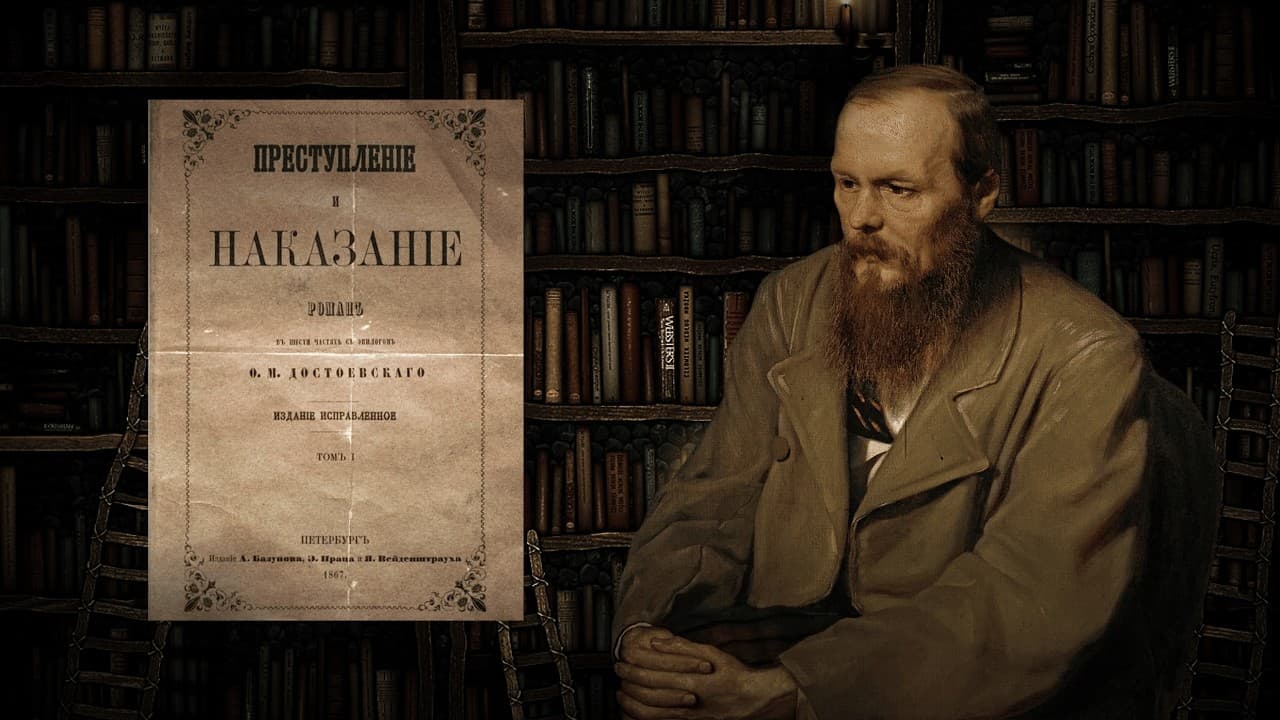
Fyodor Dostoevsky's Crime and Punishment | Book Summary
A slow walk through the novel in which a theory is put to the test with an axe. This episode traces Fyodor Dostoevsky's Crime and Punishment from the Wiesbaden hotel room where it was drafted in the summer of 1865 to the Siberian riverbank where it ends. We follow Rodion Raskolnikov from the rehearsal in the pawnbroker's apartment, through the murder and the long delirium that follows, into the cat and mouse interviews with the investigator Porfiry Petrovich, into the narrow room where Sonya reads from the Gospel of John, and finally into the Haymarket and the voluntary confession. Along the way we sit with Marmeladov in the tavern, read the mother's letter, meet Svidrigailov in his long bored afternoon, and walk with Raskolnikov through one of the longest and strangest interior arguments in the nineteenth century novel. The full episode is on YouTube and Spotify. Please listen only in safe, restful contexts.
If There Is No God, Everything Is Permitted | Dostoevsky's Hidden Theology For Sleep
Orthodox Theology, the Church Fathers & the Novels
Hell is not punishment from God. It is the inability to love. This three-hour episode traces the Orthodox Christian tradition that shaped everything Dostoevsky ever wrote, from Isaac the Syrian and Maximus the Confessor to Gregory of Nyssa and the hesychast monks. What does it mean that sin is not a crime requiring penalty but a sickness requiring healing? That salvation is not a transaction but a transformation of the whole person? These are the questions buried inside The Brothers Karamazov, The Idiot, and Crime and Punishment. This episode is a companion to our earlier Dostoevsky exploration. Where that episode examined his ideas through a philosophical and psychological lens, this one traces them to their source: kenosis, theosis, apophatic theology, prelest, and sobornost. The full episode is on YouTube and Spotify. Please listen only in safe, restful contexts.