Existentialism
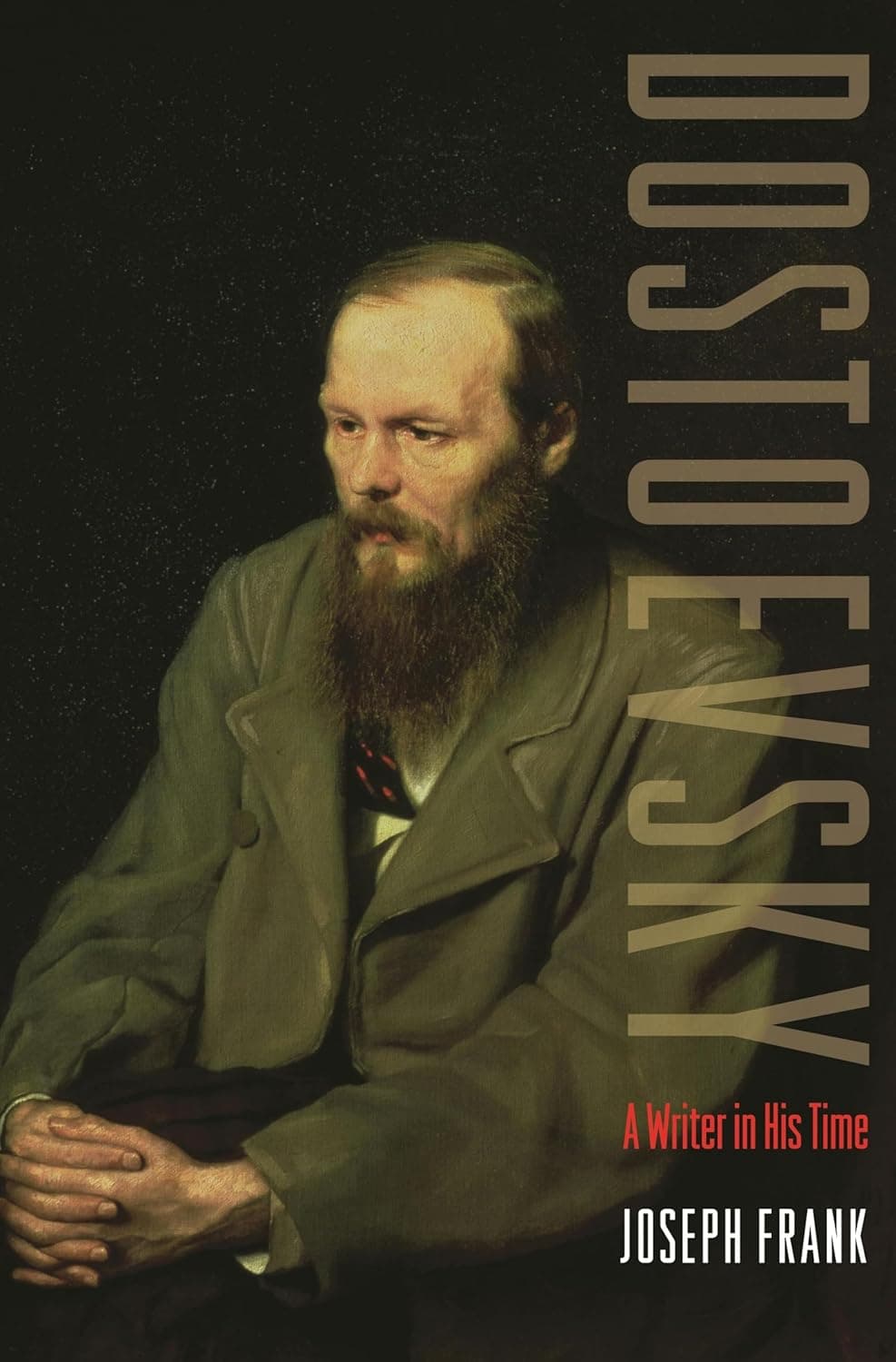
Dostoevsky: A Writer in His Time
by Joseph Frank(2010)
The definitive single-volume biography of Dostoevsky, placing his literary genius within the turbulent political and intellectual currents of 19th-century Russia.
Some links are affiliate links. Purchases help support the channel at no extra cost to you.
Episodes featuring this book
Beauty Will Save The World | Dostoevsky's Philosophy For Sleep
Dostoevsky's Philosophy for Sleep
Fyodor Dostoevsky spent four years in a Siberian labor camp and emerged convinced that human beings are not rational creatures who occasionally act irrationally, but irrational creatures who occasionally manage reason. This three-hour episode traces his life and philosophy through Crime and Punishment, Notes from Underground, The Idiot, Demons, and The Brothers Karamazov. We examine the underground man's revolt against the crystal palace of rationalism, Raskolnikov's theory of the extraordinary individual and its collapse, the problem of suffering in a world that might have no God, Ivan Karamazov's rebellion and the Grand Inquisitor, and Dostoevsky's insistence that freedom, even the freedom to suffer, is what makes us human. His novels do not argue positions. They stage collisions between ideas and watch what survives. The full episode is on YouTube and Spotify. Please listen only in safe, restful contexts.
27 chapters9 sources
Man Is Not a Piano Key | Dostoevsky's Notes from Underground
Literature's first anti-hero opens by telling us that he is sick, that he is spiteful, and that he will see no doctor out of pure defiance. In the winter of a year that would take almost everyone he loved, a broke and grieving writer set loose the strangest voice in Russian literature. This episode stays inside that single short book, Notes from Underground, and follows its narrator all the way down. We begin at the desk where it was written, then enter his war on reason, on the science of happiness, and on the gleaming palace of the perfect future. We follow him out of his head and into the world, to a humiliating dinner, a snowbound street, and an encounter with a young woman that becomes the truest and cruelest scene he ever lived. Along the way we uncover the chapter a censor quietly cut, and the buried answer it removed. What remains is the first modern confession, and a mind we still recognize as our own. The full episode is on YouTube and Spotify. Please listen only in safe, restful contexts.
15 chapters6 sources
When Life Suddenly Feels Meaningless | The Existential Crisis
Why do people who have everything still wake at three in the morning certain that none of it means anything? This is a long, unhurried history of the moment the floor of ordinary life gives way. It begins with a celebrated novelist who, at the height of his fame and fortune, quietly hid a rope from himself, and from that single human crisis it opens outward across the centuries. We follow the confrontation with meaninglessness through the oldest scriptures and the calm arguments of antiquity, through a believer terrified by an infinite and silent cosmos, through the philosopher of endless striving, and into the thinkers who made this dread the very center of their work. We sit with the death of God, with radical freedom, with the absurd, with a survivor who found a reason to endure the unendurable, and with a tradition that meets the void by loosening its grip on the self. The episode closes not with a tidy answer but with the quiet question of how a person comes back to life. The full episode is on YouTube and Spotify. Please listen only in safe, restful contexts.
22 chapters8 sources
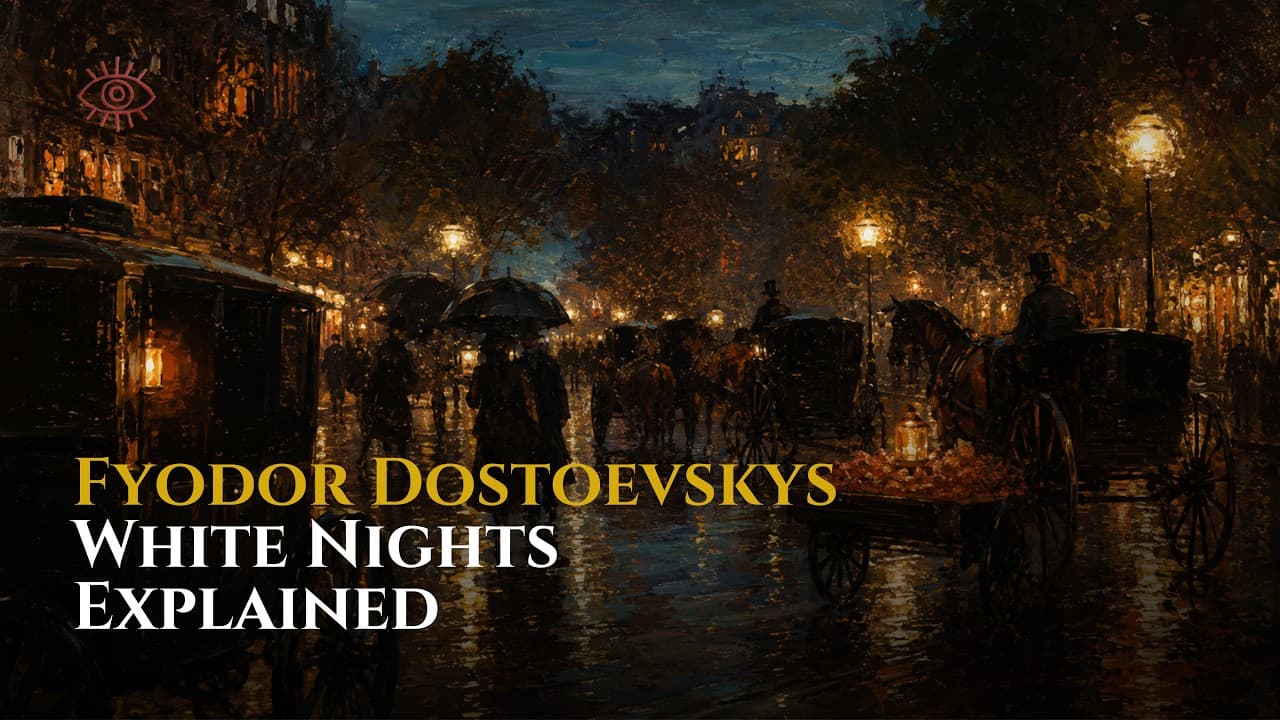
One Moment of Happiness | Dostoevsky's White Nights
Four summer nights in a city where the sun never sets, and a lonely dreamer who meets a young woman waiting for someone else. This episode walks through Fyodor Dostoevsky's early story White Nights, told over four luminous Petersburg nights and a single morning. We meet the dreamer, a man so sealed inside his own head that he has befriended the houses of the city because he cannot speak to its people, and we follow what happens when he meets Nastenka weeping at a canal railing and is asked to be her friend on the single condition that he not fall in love. We trace the warmth and the self-deception of his inner life all the way down, and the quiet question the story keeps asking, what one moment of happiness is worth to a person who has been allotted almost none. No background in the book is needed to follow along. Please listen only in safe, restful contexts.
3 sources
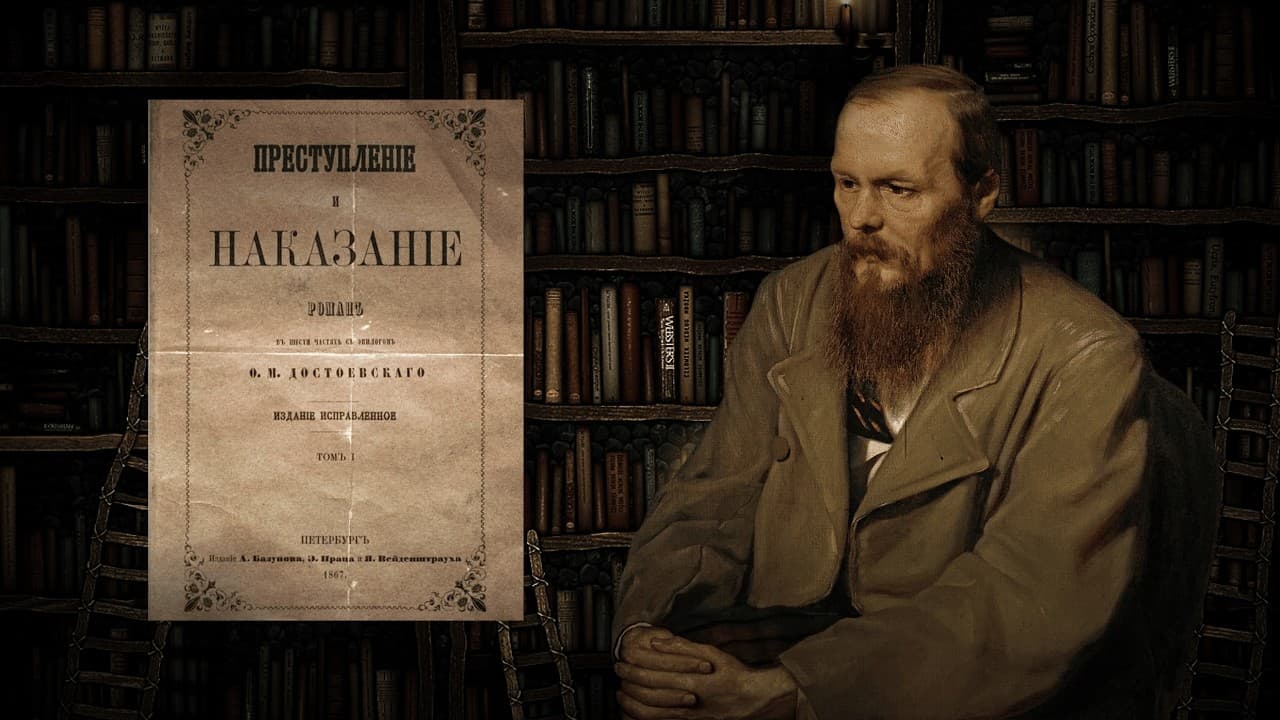
Fyodor Dostoevsky's Crime and Punishment | Book Summary
A slow walk through the novel in which a theory is put to the test with an axe. This episode traces Fyodor Dostoevsky's Crime and Punishment from the Wiesbaden hotel room where it was drafted in the summer of 1865 to the Siberian riverbank where it ends. We follow Rodion Raskolnikov from the rehearsal in the pawnbroker's apartment, through the murder and the long delirium that follows, into the cat and mouse interviews with the investigator Porfiry Petrovich, into the narrow room where Sonya reads from the Gospel of John, and finally into the Haymarket and the voluntary confession. Along the way we sit with Marmeladov in the tavern, read the mother's letter, meet Svidrigailov in his long bored afternoon, and walk with Raskolnikov through one of the longest and strangest interior arguments in the nineteenth century novel. The full episode is on YouTube and Spotify. Please listen only in safe, restful contexts.
8 chapters6 sources
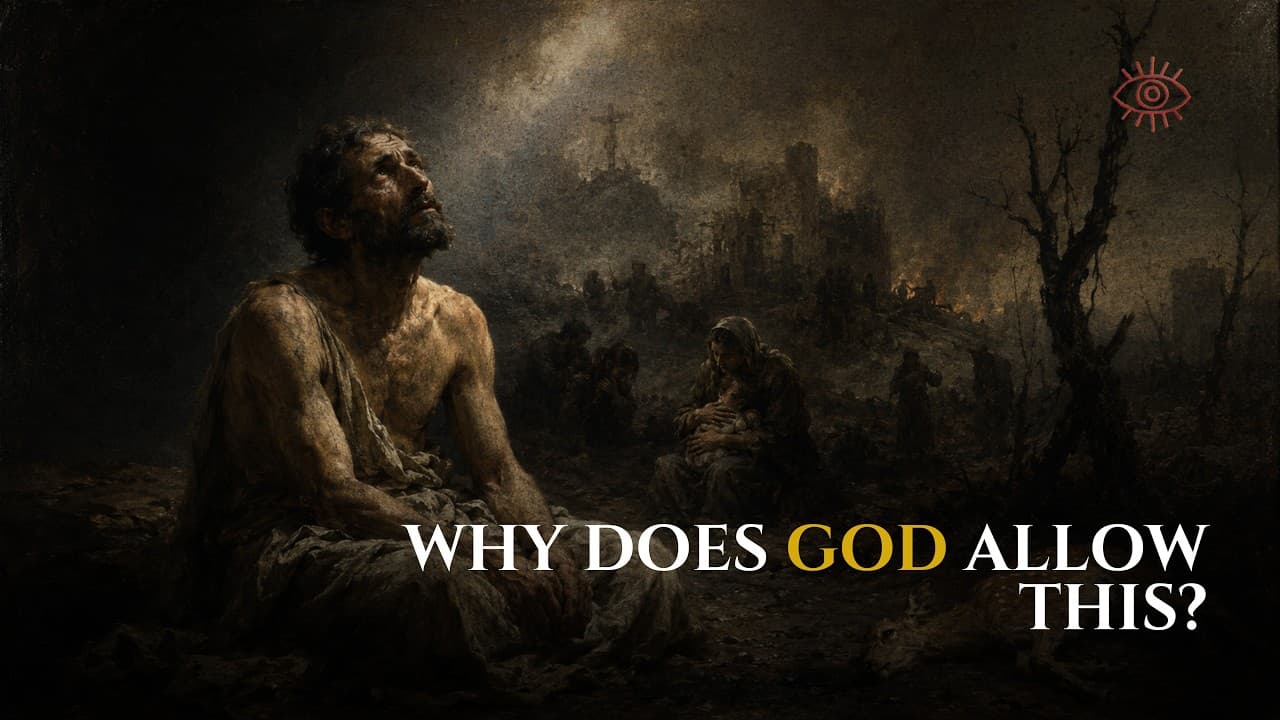
The Problem of Evil: Why Does God Allow Suffering? | Philosophy for Sleep
An innocent man, a burned fawn, and the hardest question ever asked of God. This episode follows the problem of evil from its oldest telling to its newest defenses. It begins with a man who loses everything in a single afternoon and refuses every easy explanation, then traces the great answers, evil as absence, the best of all possible worlds, and the earthquake and the novel that broke optimism's public standing. From there the argument sharpens into the twentieth century, a charge of outright contradiction, the celebrated defense that answered it, a theodicy of growing souls, and a dying fawn that changed the question from proof to evidence. The second half belongs to skeptical theism, the claim that human minds cannot survey the reasons a God might have, and to the objections that press it, moral paralysis, spreading doubt, horrendous evils, animal pain, and divine silence. The episode ends where the argument now stands, between a rock and a rope. The full episode is on YouTube and Spotify. Please listen only in safe, restful contexts.
23 chapters8 sources