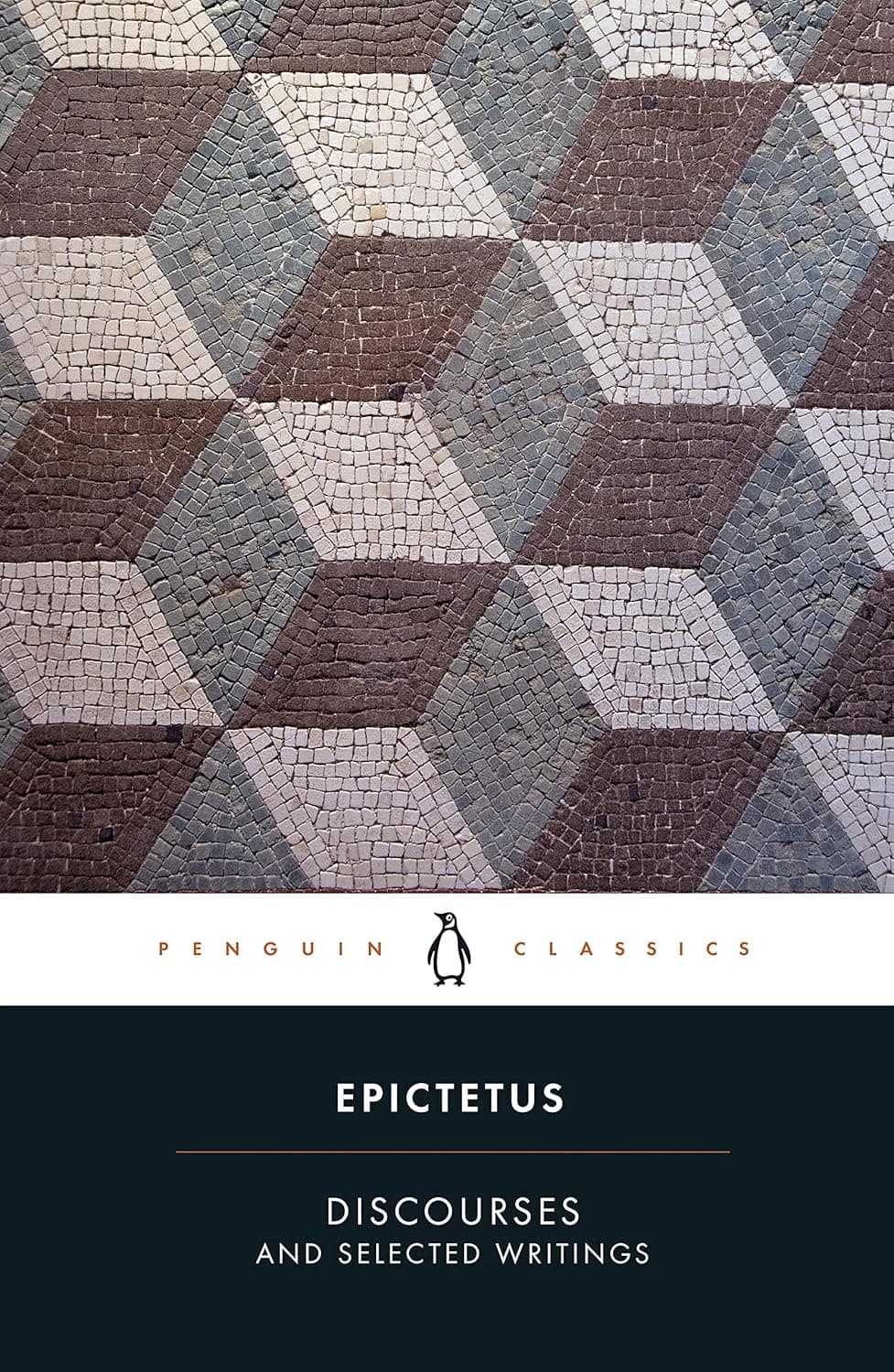
Stoicism
Discourses and Selected Writings
by Epictetus(~108 CE)
A collection of Epictetus's teachings as recorded by his student Arrian, covering core Stoic principles on freedom, resilience, and living in accordance with nature.
Some links are affiliate links. Purchases help support the channel at no extra cost to you.
Episodes featuring this book
On Stoicism | The Art of Living Without Fear for Sleep
Marcus Aurelius, Seneca & Epictetus | 3 Hours of Ancient Wisdom
Marcus Aurelius governed the Roman Empire and wrote private notes reminding himself that none of it mattered. Seneca amassed enormous wealth and wrote letters on the poverty of the soul. Epictetus was born a slave and taught that no one had ever been enslaved who understood what was truly their own. This episode traces Stoic philosophy from its origins with Zeno in the Painted Stoa through its three great Roman practitioners. It examines the dichotomy of control, the four cardinal virtues, the Stoic understanding of emotion and desire, the discipline of assent, the practice of premeditatio malorum, the cosmopolitan vision of a world citizenry, and passages from the Meditations, the Letters to Lucilius, and the Enchiridion that have helped people endure difficulty for two thousand years. The full episode is on YouTube and Spotify. Please listen only in safe, restful contexts.
14 sources
Nothing Lasts, and That Is the Point | Marcus Aurelius' Complete Philosophy For Sleep
Marcus Aurelius' Complete Philosophy
Marcus Aurelius ruled the Roman world and spent his nights writing to himself about how little any of it mattered. This three-hour episode explores Stoic physics, the dichotomy of control, virtue ethics, death, impermanence, and the discipline of perception, from Marcus's education under the finest teachers in Rome to the grinding years of frontier warfare and the devastation of the Antonine Plague. The Meditations, composed in Greek during military campaigns on the Danube frontier, was never intended for publication. It is a philosophical journal, a record of one man's attempt to hold himself to the demands of Stoic virtue while governing an empire in crisis. We present Marcus Aurelius's philosophy as a serious system, not a collection of motivational quotes: its physics, which held the universe to be a single living rational organism; its epistemology, which located moral failure in judgments rather than events; and its ethics, which declared virtue the only genuine good and everything else indifferent. The full episode is on YouTube and Spotify. Please listen only in safe, restful contexts.
10 chapters5 sources
How to Live Without Wasting Your Life
William B. Irvine turns ancient Stoic exercises into a practical philosophy for meeting loss, uncertainty, anger, and mortality. William B. Irvine begins with the fear that a life can be spent striving without ever becoming fully one's own. He then follows Stoicism from its Socratic beginnings through Zeno, Seneca, Epictetus, Musonius Rufus, and Marcus Aurelius, before entering the book's practical heart. Negative visualization, the limits of control, fatalism, voluntary discomfort, and daily self observation become ways of changing how desire meets reality. The journey continues through duty, friendship, insult, grief, anger, fame, luxury, exile, old age, and death. The final movement considers why Stoicism declined, what modern readers misunderstand about it, and how Irvine's adapted version might be tested in ordinary life. The full episode is on YouTube and Spotify. Please listen only in safe, restful contexts.
7 chapters6 sources
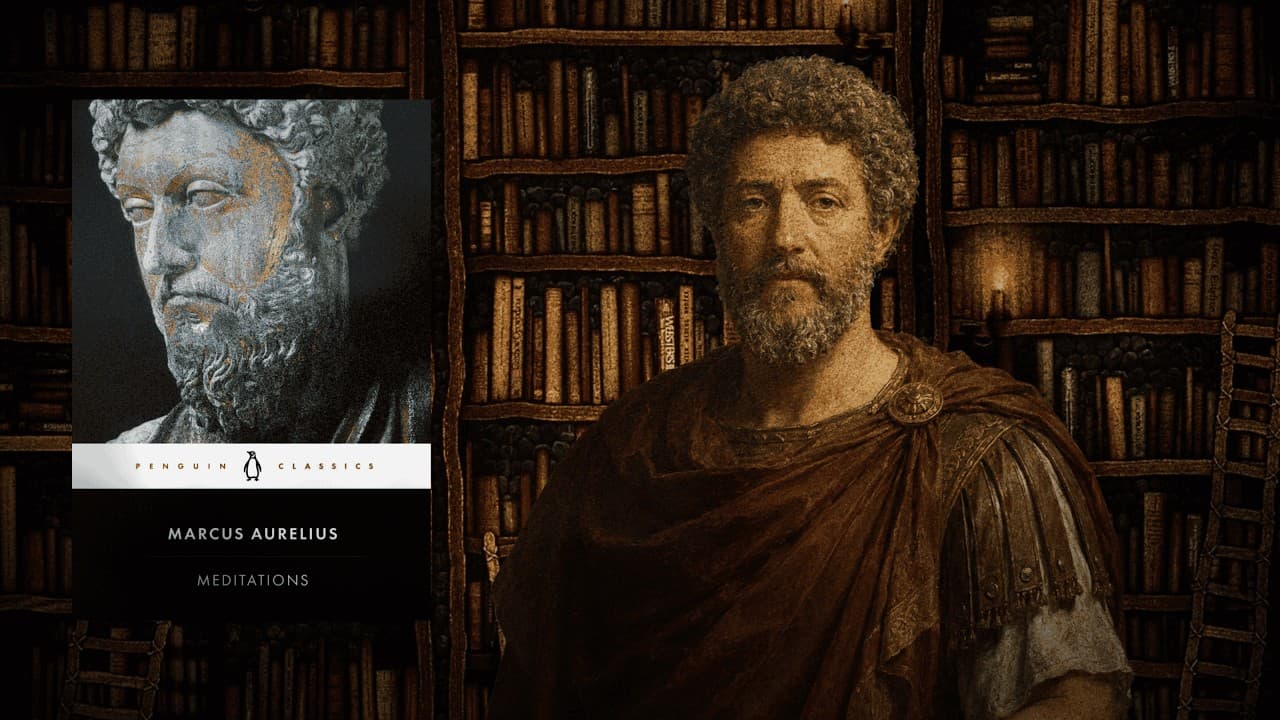
The Inner Citadel | Meditations by Marcus Aurelius
The private notebook of a Roman emperor, written by lamplight in a war camp and never meant to be read. This episode reads Marcus Aurelius's Meditations slowly and in full, the diary a tired emperor kept on the northern frontier to steady his own mind. We begin with the long opening of debts, the people who made him, then move to the heart of the book, the one part of a person no enemy can seize, the judgments we give or withhold. We sit with his returning lessons on death, on other people, on the passing moment, and on the order of the world, and we treat the constant returning not as a flaw but as the discipline it was, a man reasoning himself, night after night, into the character he feared he lacked. No background in philosophy is needed to follow along. The full episode is on YouTube and Spotify. Please listen only in safe, restful contexts.
3 sources