
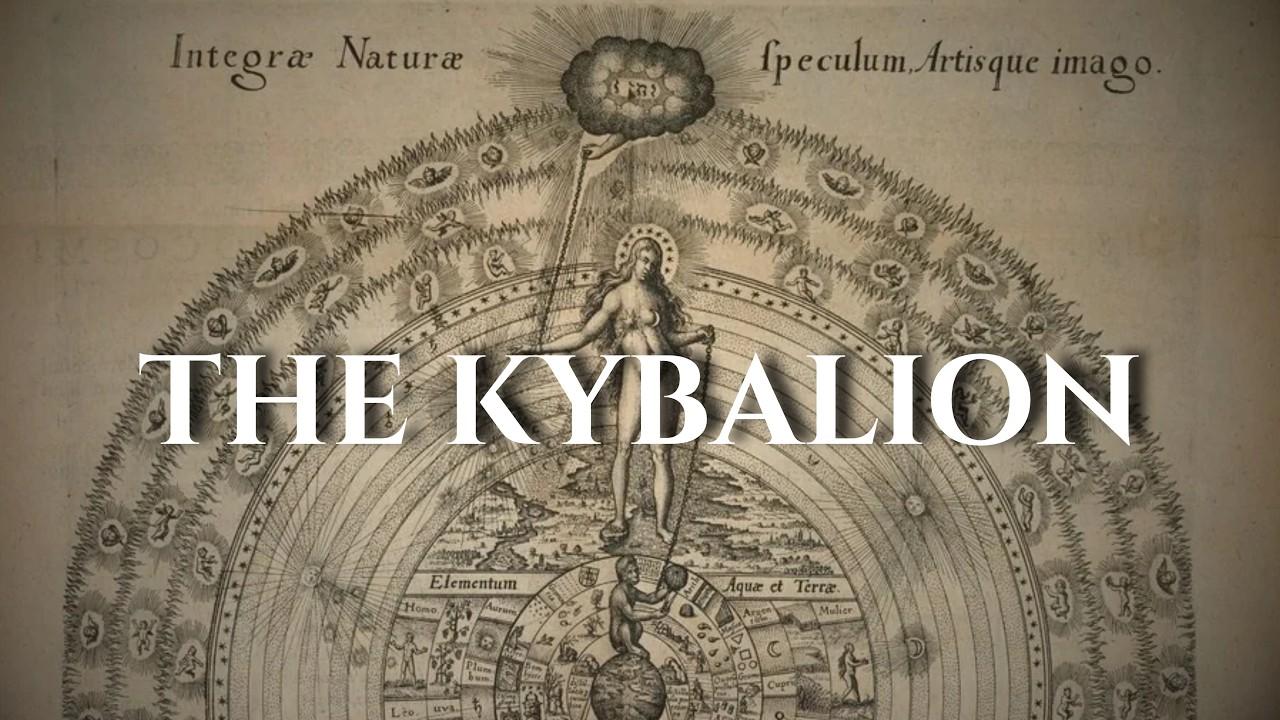
The Universe Is Mental | The Kybalion's Seven Hermetic Principles
The Kybalion places a living mind beneath the visible universe and presents seven principles for understanding existence. This carefully researched narration follows Mentalism, Correspondence, Vibration, Polarity, Rhythm, Cause and Effect, and Gender, giving each its own argument and concrete examples. It distinguishes the book's American New Thought setting from its claims of ancient authority, and separates its speculative cosmology from established physics. The discussion also considers mental transmutation, deliberate attention, the relationship between a creator and a created individual, and the demand that knowledge enter action. Atkinson's Thought Vibration helps locate its publishing world, while the ancient Hermetica, including the Corpus Hermeticum, provides a contrast with the modern numbered system. The book's afterlife is considered through its portable maxims and the historical framing of The Kybalion: The Definitive Edition. The aim is to understand what the text actually proposes without turning mental practice into promises that wishes control physical events.
The full episode is on YouTube and Spotify. Please listen only in safe, restful contexts.
Timestamps
Jump into the video
- 0:00:00Chapter 1: The Kybalion and Its Real Origins
- 0:13:50Chapter 2: Mentalism and the Mental Universe
- 0:33:30Chapter 3: Correspondence and the Unseen
- 0:48:58Chapter 4: Vibration and the Language of Science
- 1:04:25Chapter 5: Polarity and Degrees of Feeling
- 1:20:18Chapter 6: Rhythm and the Return of Moods
- 1:35:48Chapter 7: Cause and Effect and Human Freedom
- 1:51:48Chapter 8: Gender and the Creative Mind
- 2:07:25Chapter 9: Mental Transmutation and Attention
- 2:21:00Chapter 10: The All in Every Individual
- 2:37:30Chapter 11: The Kybalion and Its Afterlife
- 2:51:34Chapter 12: Knowledge Intended for Use
Full transcript
For the record
Chapter 1: The Kybalion and Its Real Origins
Ancient wisdom needs a history as well as a name. The Kybalion belongs to the history of American spiritual writing, with a first publication in nineteen hundred eight. Its popular image as an Egyptian manual gives too little attention to the modern argument it actually prints. It attributes its teachings to Hermes, the legendary teacher of Hermetic philosophy. Its subtitle invokes ancient Egypt and Greece, while its argument speaks in the language of a movement concerned with thought. Reading it accurately requires attention to both the authority it claims and the world that produced it.
The title page names Three Initiates rather than three identifiable authors, and that signature gives the reader a relationship before it gives a biography. Someone understands a hidden teaching and offers an introduction to it. The reader approaches as a student. The book's best-known claim, that the universe is mental, places thought beneath everything that can be seen or touched. A table and the person sitting beside it would belong to one underlying intelligence. Is everything we see made of mind?
The Seven Hermetic Principles provide the book's framework, a set of laws intended to explain existence and guide conduct. Their numbering makes an enormous ambition easy to grasp. The authors propose that a limited set of relationships can organize matter, feeling, action, and spiritual life. The same arrangement that accounts for a physical process should illuminate a human difficulty, and a reader confronted by scattered teachings receives a way to put them together. That promise of order is part of the book's attraction.
The printed volume came from the Yogi Publication Society in Chicago. The name of the publisher and its location place the physical book within a recognizable publishing world. The volume was written in English for readers already encountering occult teaching and mental science. Its introduction addresses people who possess fragments of knowledge and find those fragments hard to reconcile. The authors offer a unifying framework rather than an account of a newly excavated manuscript. Their stated purpose assumes a reader surrounded by competing explanations.
New Thought was an American movement that gave spiritual importance to the activity of the mind. Its writers explored belief, expectation, will, and the relationship between mental life and outward circumstances. The movement contained different teachings rather than a single doctrine enforced by one institution. Books and magazines could make a system available to readers outside a formal religious community. The printed lesson became an important vehicle, and a reader could study alone and regard that study as a practical discipline.
The Kybalion shares that setting through its vocabulary and its concerns, and it speaks about mental treatments and about changing states of feeling. It expects the reader to recognize schools of mental science. These references are part of the argument rather than accidental additions to an ancient document. They identify the kind of problem the authors want to solve. A person knows something about suggestion or willpower but lacks an explanation that connects them with the wider universe. The book supplies that connection.
William Walker Atkinson, an attorney and prolific New Thought writer, is usually credited with the book. The attribution should retain that careful wording. The original signature does not become a signed confession merely because an explanation is persuasive. Atkinson wrote under several names and worked as an editor and publisher of spiritual literature. His known writing belongs to the same world of practical mental instruction. The association makes historical sense without requiring three hidden teachers whose identities can be confidently supplied.
One of Atkinson's books bears the title Thought Vibration or the Law of Attraction in the Thought World. It appeared in nineteen hundred six through the New Thought Publishing Company, and the title puts thought beside a term drawn from accounts of movement and energy. That combination helps locate the intellectual atmosphere around The Kybalion. Mental activity is treated as something more powerful than an inward commentary on life. It is presented as an active force whose workings might become intelligible through laws.
An unsigned teaching can make its authority seem independent of a person's ordinary career, and a named author invites questions about education, evidence, and the circumstances of composition. Three Initiates invites a different question about the reader's readiness to understand. The phrase describes a status within a teaching relationship. It also removes much of the ordinary biographical material through which a reader might judge an author. These are effects of the signature, whether or not its maker intended each one.
The book's introductory account describes an oral inheritance passed from teacher to student, and it treats secrecy as a means of protecting difficult knowledge. The maxims are presented as fragments of an older teaching, while the surrounding prose supplies their explanation. That distinction is visible in the printed design, where sayings receive a separate typographical treatment. A reader sees an apparent ancient voice enclosed within a modern commentary. The arrangement gives the maxims authority before their historical origin has been established.
The arrangement identifies what the book claims about itself, but it does not document an unbroken transmission from ancient Egypt. A printed statement that a teaching remained unwritten cannot substitute for surviving evidence of its route. The historical record of this volume begins with its publication and its publishing context. Its account of secrecy belongs to the material that needs interpretation. It cannot serve as the sole evidence that the account is true.
The difference matters because Hermetic philosophy has an actual textual history. Ancient writings associated with Hermes include theological dialogues about divine mind, the cosmos, and human knowledge. Scholars study these writings as works of late antiquity, and they contain different voices and arguments rather than the modern book's numbered system. The shared concern with mind creates a real point of contact. It does not make every teaching placed under Hermes's name identical in origin or meaning.
The Emerald Tablet belongs to another strand of the Hermetic inheritance, a text associated with correspondences between higher and lower things. Its history and its alchemical reception extend beyond this volume's purpose, and a phrase can travel between traditions while acquiring a different job in each one. In The Kybalion, inherited language helps organize a system of mental laws. That use deserves study in its own right. It need not become a claim that the whole system was already present in the earlier text.
Does modern authorship remove every reason to read the book? Its value as an argument remains a separate matter from its claimed ancestry, and a proposal about attention may deserve examination even when its ancient credentials are weak. A speculative account of the universe may be worth understanding without becoming established knowledge. Historical correction changes the terms of reading. It allows the text to appear as a particular work with particular commitments, rather than a sealed container of timeless authority.
The authors use the voice of instruction with considerable confidence, and they describe the reader as someone capable of advancement through study. Their explanations often move from a familiar example to an expansive conclusion. The small example feels available to ordinary understanding. The conclusion reaches far beyond it. This movement is central to the experience of reading the book, and it gives the narration a responsibility to identify where observation ends and the proposed system begins.
The book frequently asserts agreement between its teaching and science, and such statements also belong to its historical voice. They tell a reader how the authors wanted their claims to be received. A claim of scientific agreement requires its own support, including clear definitions and evidence for the relationship asserted. A physical term can carry precision in one setting and suggestion in another. Treating the text seriously includes noticing that change rather than accepting every confident comparison at face value.
A useful reading begins with the distinction between an explanation and a promise, and an explanation attempts to show why a thing has a particular character. A promise assures the reader that understanding will deliver a result. The Kybalion often brings these two together. It describes a law and then presents knowledge of that law as access to greater power. The reader should be able to ask how the result follows. The confidence of the prose cannot do that work by itself.
There is also a difference between an inward event and an outward one, and a person can reconsider an insult and experience a changed feeling about it. That change gives direct evidence about the person's interpretation. It supplies less evidence about whether thought can govern an independent physical process. The book's ambition crosses that boundary. Its explanations need to be heard with enough care that the familiar case does not quietly certify the extraordinary one.
The title's spelling provides another small limit to certainty. The volume describes an older teaching under the same name but does not supply a verifiable ancient document carrying it. An attractive account of a word's hidden origin would add mystery without adding knowledge. The title can be spoken and recognized without inventing an etymology. The printed name is sufficient for identifying the work. Its historical significance comes from how the book uses that name and from what readers encounter beneath it.
The reader's position within the book is unusually important. It offers instruction to someone who wants more than information. Advancement depends on understanding and applying the teaching. This makes reading feel active, even when the text is discussing the widest reaches of existence. A person can imagine a connection between a page about the cosmos and a change in their own character. The practical invitation accompanies the speculative account throughout the volume.
That invitation can be understood without treating the student as inadequate. The book's language often separates those who master from those who are carried by circumstances. A careful reader can examine the distinction without accepting its judgments about other people. Limited control may reflect conditions the individual did not choose. Difficulty following a teaching does not establish a lower spiritual rank. An account of human agency should remain capable of recognizing dependence as well as effort.
The Kybalion therefore has a setting, a voice, and a method of claiming authority. The setting is a world of published spiritual instruction. The voice speaks as a guide to laws whose reach exceeds ordinary experience. The method joins attributed maxims with explanations intended for a modern student. These features give the text its particular shape. They also place obligations on a reader who wants to understand rather than merely repeat it.
The distinction between historical origin and philosophical meaning leaves room for a patient encounter with the printed words. An ancient label can be assessed through the available record. A mental teaching can be assessed through the argument it actually makes. Neither assessment requires contempt for the reader who first found something valuable in the book. An unsigned title page remains an unsigned title page, even when the ideas printed behind it become familiar.
Chapter 2: Mentalism and the Mental Universe
"The All is Mind; the Universe is Mental." The Kybalion gives its first principle a sentence that joins two claims. One identifies the underlying reality of existence with mind. The other describes the universe as a creation within that reality, rather than something standing outside it. Mentalism is the book's name for this view. The word concerns what the universe is made of at its deepest level. It carries a much larger claim than the observation that thoughts affect feelings.
The All names whatever includes everything that truly exists, and a pebble, a body, and a distant star would have to belong to it. An independent second reality would also have to be included, or the proposed whole would cease to be all. The book begins its reasoning from the comprehensiveness of this name. It then asks what such a reality must be like. Its answer moves toward something infinite, enduring, and free of any outside power.
The reasoning is easiest to hear through a boundary. A person draws a circle on paper and calls everything inside it the whole. The paper beyond the circle immediately presents a problem. The circle contains a selected region rather than everything that exists. For the book's ultimate reality, there can be no equivalent outside. There is nowhere from which an external agent could act upon it. The name demands inclusion of whatever might otherwise appear beyond the edge.
This is a conceptual demand rather than a discovery made by searching a larger area. Walking beyond the drawn circle would only produce another place to include, and the book uses the idea of totality to rule out an external limit. Its reasoning concerns the meaning of an ultimate whole. It cannot be tested by visiting the edge of the universe and looking over it. The proposed source is also deeper than the collection of objects that happen to be visible.
The authors connect this comprehensiveness with eternity. If the ultimate reality began, something would have to account for its beginning, and that source would then belong to the whole as well. If it disappeared, the account would have to explain what could bring about its disappearance. The book refuses an outside cause in either direction. Its source must therefore be independent of the beginnings and endings experienced by particular things. A leaf can fall while the ultimate reality remains.
The claim of unchanging reality requires more care, and the book reasons that there is nothing else into which the whole could change. It could gain nothing from outside and lose nothing to an outside place. Yet a room can be rearranged without importing furniture or removing it. Change can concern relationships among things already present. Totality by itself does not obviously rule out that possibility. The authors' stronger conclusion depends on their view of an underlying reality distinct from its changing expressions.
They draw that distinction between what appears and what sustains appearance. A plant develops leaves and then sheds them. Its visible condition differs across its life. The book treats this changing world as a manifestation of something with a more enduring nature. That move supplies the framework for its contrast between the universe and The All. One changes through time while the other grounds the possibility of change. The contrast is asserted as necessary for a complete account of existence.
Why identify that underlying reality with mind? The authors consider matter and energy before reaching their preferred answer. Matter as ordinarily encountered seems unable to explain the full range of living and thinking activity. Energy, understood without life or awareness, appears inadequate for the same reason, and the book seeks a source that contains what its expressions possess. If thought exists within reality, the ultimate source must be capable of accounting for it. The authors choose living mind as their description.
The argument has a recognizable attraction. A description of everything that omitted awareness would leave out the very activity through which the description was made. A person can weigh a stone and list its physical properties, and that list differs from the person's experience of seeing and understanding the stone. The book gives experience a fundamental place rather than treating it as an incidental difficulty. Its chosen source can support a universe that includes consciousness from the beginning.
An objection enters at the step from inclusion to resemblance. A source can produce an effect without having the same properties in the same form. Flour and water can become a loaf whose shape belongs to neither ingredient alone, and this familiar difference does not prove that matter produces consciousness. It shows why the demand that a source already possess every quality of its result needs an argument. The Kybalion treats that demand with more confidence than its explanation earns.
The authors also give mind a special breadth, and they do not mean a human intelligence enlarged until it occupies a vast space. Their ultimate mind is infinite and living, while its inward nature exceeds ordinary understanding. Human thought supplies an analogy rather than an exact portrait. A person remembers breakfast and plans an appointment. The proposed source cannot be reduced to a larger collection of memories and plans. Its relation to the universe is presented as fundamental rather than personal.
This makes the doctrine different from the claim that only one person's experience exists, and the table does not depend on the reader continuing to look at it. Other people do not become imaginary extensions of that reader. The book places all finite minds within a reality that exceeds each of them. A person can misunderstand the world without altering the whole that sustains it. Private conviction therefore cannot be substituted for the universe's underlying nature.
The distinction also limits the familiar phrase that thoughts create reality. Within this doctrine, reality depends on universal mind, and it does not follow that each passing human thought produces whatever the thinker wants. A passenger may picture an empty carriage while sitting among other passengers. The image exists as a mental event, and the occupied seats remain part of a shared situation. The book's cosmic claim and the individual's power are different claims requiring different support.
Creation presents the authors with a problem that their idea of totality makes especially sharp. A carpenter shapes a chair from wood already available in the workshop, and the chair depends on material that the carpenter did not create. An ultimate source could have no comparable supply outside itself. Nothing independent would be waiting for it to use. The book must explain how a universe can appear without external material or an external place in which to put it.
One possibility would make the universe a piece cut from the ultimate reality. The authors reject this picture because their source cannot lose a part and remain unchanged. They need creation without a reduction in the creator. Human imagination appears to offer an illustration. A person forms an image of a garden without cutting away part of the mind to manufacture it. The garden takes shape within thought while the thinker remains capable of other activity.
The book extends that illustration to cosmic creation. The universe exists within the infinite source as the imagined garden exists within a finite mind. The relationship gives the authors an account of dependence without an external stock of material. It also explains why the universe can contain many distinct things while relying on one underlying reality. A path and a tree differ within the imagined garden, and their difference need not divide the mind that makes them available.
The example explains how the doctrine is meant to work. It does not establish that a garden imagined by a person resembles the creation of an actual universe. Human imagery occurs within a life already supplied with experience. The person has seen plants and paths before forming the image. The proposed universal source would have to account for experience itself. Extending the analogy across that difference requires more than the observation that imagining is possible.
The book presents its source as unknowable while describing several of its necessary features, and this creates a limit rather than an immediate contradiction. A closed box can be known to occupy space without revealing everything inside it. In a similar way, the authors claim knowledge of the source's relationship to existence without claiming access to its entire inward nature. The difficulty concerns how much can legitimately be said. A statement about living mind already reaches beyond an empty acknowledgment of mystery.
Calling the source unknown should therefore neither end inquiry nor excuse every assertion. The reader can ask what a proposed feature contributes and how the reasoning supports it. Infinity follows within the book's account from the absence of anything outside the whole. Mentality requires an additional judgment about what can account for consciousness. These steps carry different weights. Treating them separately makes the argument clearer than accepting or rejecting its whole vocabulary in a single gesture.
The doctrine's practical difficulty concerns the status of the world people inhabit. If a universe is a mental creation, the word mental might seem to make it less real. The authors answer by distinguishing two viewpoints. From the standpoint of the ultimate source, changing things lack its complete independence. From the standpoint of a finite person, those same things form the conditions of life. The book calls these the absolute and relative standpoints.
A stone provides its blunt example. Kicking it produces an encounter that cannot be removed by a theory about its underlying nature. The foot belongs to the same world as the stone, and both remain subject to its relationships. The example does not prove a mental universe, and it is not offered here as a demonstration of one. It makes the book's intended practical meaning clear. Dependence on a deeper source does not free a person from ordinary consequences.
The word real is doing two jobs in this discussion, and it can mean something that exists independently of all conditions. It can also mean something that counts within the conditions of a life. A rented room depends on an owner and a building. That dependence does not make its walls irrelevant to the tenant. The authors reserve ultimate reality for their source while accepting the relative world as the place in which finite beings act.
This approach avoids one easy misuse of the doctrine. A person who calls the world an illusion may try to ignore an obligation or a physical limit. The Kybalion explicitly criticizes that response, and its student must acknowledge the world encountered through ordinary faculties. The argument asks for a change in the understanding of dependence, not a license to disregard consequences. The fact that a thing changes or depends on something does not remove its importance within a human life.
The relative standpoint includes relations with other people, and a promise can affect someone even if every participant belongs to a mental cosmos. The person's trust is one of the actual conditions under which the promise is made. The doctrine cannot convert that trust into an expendable appearance without damaging its own practical teaching. Life within the created world requires recognition of its relationships. Their deeper dependence offers no ready excuse for treating them carelessly.
Mentalism offers a particular answer to the concern about mind and what can be seen. It places material appearances within a living source rather than outside awareness altogether, and the person who sees and the thing seen belong to one proposed ground. That unity is the doctrine's philosophical attraction. The gap between an illuminating picture and a demonstrated explanation remains. A listener can understand the answer the book gives while retaining that distinction.
There are also different forms of humility available to the reader, and one concerns the small place of a finite intelligence within a larger whole. Another concerns uncertainty about whether this description of the whole is correct. The authors emphasize the first more readily than the second. A careful reading can make room for both. A person need not identify with ultimate power in order to take thought seriously, and need not claim certainty in order to examine a compelling idea.
The authors' distinction between religion and theology supplies another part of their account that can easily disappear behind the famous sentence. They use religion for a person's inward recognition of the source and their relationship to it. Theology receives a less favorable meaning, associated with attempts to assign human qualities and intentions to ultimate reality. These are the book's chosen definitions rather than neutral descriptions of every religious practice. The distinction helps explain the particular spiritual posture its mentalism seeks to encourage.
The authors resist an account that makes the source desire praise or become susceptible to flattery. Their criticism concerns the projection of ordinary human needs into something described as infinite. A person may appreciate recognition because they can be uncertain, overlooked, or dependent upon others. Those conditions have no straightforward place within the source as the authors define it. Attributing them would weaken the distinction between a finite personality and ultimate reality. The book's living mind is therefore presented without an ordinary person's appetite for approval.
This refusal changes what reverence can mean within the doctrine. The student is not bargaining with a larger personality by offering praise in exchange for a desired result. The intended attitude concerns recognition of dependence and a place within existence. A person can acknowledge that relationship without claiming access to a divine preference about each event. The description narrows the kind of spiritual confidence the system can legitimately support. Belonging to its proposed source cannot automatically certify a particular wish as the source's intention.
The book makes a parallel distinction between inquiry into what can be thought and speculation about what exceeds thought altogether. It favors an investigation of the relationships available to reason. Its vocabulary for the rejected speculation is more restrictive than ordinary philosophical usage. The reader should retain that difference instead of treating the authors' definitions as a verdict on whole disciplines. Their immediate purpose is to mark a limit around the inward nature of the source. The limit gives their confidence about its manifestations a contrasting restraint.
That restraint is valuable only if the descriptions actually respect it. Calling the source living mind still supplies a positive feature that asks to be understood. The authors cannot reject every question about that feature merely because the source exceeds complete knowledge. A partial account remains accountable for the claims it does make. The distinction between recognizing a relationship and explaining ultimate being can help preserve that accountability. The reader can ask about the argument's steps while accepting that some further questions remain unresolved.
The student who accepts the doctrine consequently receives a relation rather than a private conversation with the source. The source sustains existence without becoming a character whose changing mood explains each personal event. That difference can make the account less intimate, yet it also prevents easy claims about divine favoritism. An unforeseen obstacle remains something to understand within finite life. The authors' universal mind offers a ground for that life rather than an ordinary personality whose wishes the student can confidently report.
The imagination example leaves the source present throughout what it creates. Every detail of the imagined garden depends on the mind in which it appears. No separate material supplier waits beyond the scene, and no corner becomes independent merely because the thinker pictures it distinctly. That is the relationship the doctrine asks a reader to understand. Its reach exceeds any single person's ability to remake the conditions encountered at the next appointment.
Chapter 3: Correspondence and the Unseen
An astronomer's observatory supplies The Kybalion with a picture of knowledge reaching beyond immediate access. The principle of Correspondence makes that reach central to its account of understanding. The astronomer remains beside an instrument while reasoning about something too distant to touch or visit. Geometry connects what can be measured with what cannot be approached directly. The book borrows this relationship for a much wider ambition, extending from visible phenomena into unseen levels of existence.
"As above, so below; as below, so above." The saying gives a reader two directions of comparison. An understood relationship among accessible things may suggest a relationship among things outside ordinary experience. A proposed higher order may also help interpret a familiar event, if the relationship genuinely holds. The words above and below indicate a difference of level rather than merely a physical difference of height. Their brevity gives the comparison a reach that its explanation must then justify.
The book grounds this proposed correspondence in a common source, the living reality on which its universe depends. Everything that belongs to one source should exhibit related principles, even when its forms differ greatly. A process encountered in one setting can therefore illuminate another setting that remains obscure. The authors use resemblance as a means of reasoning from the known into the unknown. Their ambition exceeds a collection of pleasing likenesses between objects that happen to look similar.
Geometry helps because a relationship can remain exact despite a difference in size or distance. Two figures with the appropriate shared structure can disclose a proportional relation between their sides. The figure nearest the observer provides access to a quantity otherwise difficult to establish. The force of the inference comes from the relationship, which can be specified and checked. Similarity alone would leave too many possibilities open, since unrelated things can share a superficial appearance.
The book wants its comparisons to carry that kind of reliability into spiritual inquiry. The difficulty is that it supplies no equivalent procedure for checking the higher level independently. An observatory allows observations against which an inference can be assessed. A claim about a spiritual plane often rests on the very comparison intended to establish it. The analogy may provide an intelligible description while leaving the existence and structure of the proposed plane uncertain. These are separate achievements.
What makes one resemblance useful while another merely entertains? The relevant feature must connect with the question being asked. The shape of a leaf may resemble a hand without explaining how a hand moves. A structural relationship can guide inquiry when it supplies a reason to expect a particular consequence. The comparison then offers something that further experience can challenge. The Kybalion often proceeds with less opportunity for that challenge, because its destination lies beyond ordinary access.
The authors distinguish physical, mental, and spiritual planes as broad classes of phenomena. The physical concerns material things and forms of force. The mental includes living activity and different degrees of mind. The spiritual contains levels of being placed above the ordinary human condition. These names organize the proposed universe so that a reader can move through it conceptually. They are presented as connected ranges rather than three detached regions separated by empty space.
The book also calls these divisions artificial and arbitrary, a concession that changes how the map should be read. A boundary assists study without necessarily marking a sharp break in reality. The authors describe neighboring degrees as shading into one another, making precise separation difficult. Their classes provide convenience of thought rather than a survey of places with fixed borders. That qualification belongs beside the classification, since forgetting it makes the system look more rigid than its own account.
A plane in this account is therefore neither a country nor a room reached by traveling through ordinary space. It is closer to a degree of manifestation within the book's scale of existence. The authors try to combine the language of condition with the language of dimension. Their explanation remains difficult because a measurable dimension usually requires a specified procedure of measurement. The proposed scale has no comparable instrument provided to the reader. Its place within the system is conceptual and speculative.
The physical range receives subdivisions that mix familiar materials with proposed subtle forms. Solids, liquids, and gases occupy one part of the classification. Other parts contain forms of matter described as beyond the recognition of ordinary science. The book also places an ethereal substance between matter and energy, presenting it as a connecting medium. These divisions show how the authors arrange their account. The act of arranging them does not supply evidence that every item in the arrangement exists.
This is a recurring problem with comprehensive maps of unseen things. A table can make categories appear equally established by setting them beside one another. The reader sees a familiar item and an unfamiliar one beneath matching headings. The familiar item's credibility can then spread across the page without a corresponding argument. Reading the classification carefully requires asking what supports each entry. The symmetry of the design is evidence of the author's organizing choice rather than evidence of equal support.
The mental range makes the continuity more striking by assigning degrees of mind to minerals, plants, animals, and human beings. The authors imagine a larger family of living activity than ordinary language usually acknowledges. They also place unseen elemental beings between the more familiar classes. These beings serve as connecting members in the proposed scale. The result is a densely populated universe whose intervals contain different forms of life. It is the book's cosmology, not an inventory established through observation.
The authors' own illustration uses the black and white keys of a piano. Familiar kinds of life occupy one set of positions, while the unseen classes provide intermediate possibilities. The piano makes the proposed arrangement easy to picture, because adjacent keys belong to a larger musical system. Yet an image of intermediate keys cannot establish that unseen living beings occupy corresponding positions. It clarifies the arrangement intended by the authors while leaving its factual status unchanged.
The spiritual range contains beings whose capacities exceed the human condition, including advanced teachers and other elevated forms of intelligence. The book describes them in general terms because ordinary readers supposedly lack the experience needed for greater detail. This creates a tension between the promise of explanatory unity and the limits of available description. The reader receives a hierarchy while being told that its higher members cannot be adequately understood. The classification remains more detailed than the evidence offered for it.
The hierarchy also carries a practical message about development. A human being occupies a position on a scale rather than an absolute boundary beyond which growth becomes impossible. The possibility of greater understanding gives the system its direction. A person can think of study as movement toward capacities already represented elsewhere in the map. The map encourages aspiration by making human limitation appear provisional. That encouragement can be understood without certifying the unseen inhabitants used to express it.
The source contains claims about stages of human development that should be treated with particular restraint. Its divisions are speculative spiritual rankings rather than established measures of people's worth or ability. A population cannot be responsibly sorted by placing its members at positions on an unverified cosmic ladder. The listener needs the role those claims play in the system, which is to make advancement imaginable. Understanding the system requires no acceptance of its hierarchy as a judgment upon actual people.
Correspondence differs from the claim that events occur for the sake of a particular observer. A resemblance between an outward occurrence and an inward concern does not by itself show a personal message. The book's principle concerns a proposed order across levels of existence. Reading every coincidence as instruction adds another claim about intention, addressed meaning, and the observer's importance. That added claim requires its own support. The phrase above and below cannot automatically settle it.
An everyday comparison can show how easily usefulness exceeds certainty. A gardener examining a dry patch may compare it with another patch whose plants are flourishing. Shared conditions suggest which difference might matter, and the comparison directs attention toward soil or water. The gardener can then inspect those conditions and revise the explanation. The comparison earns its practical role through this possibility of correction. A resemblance that admits no correction performs a different job, closer to interpretation than investigation.
The book's principle can be heard as an invitation to seek relationships rather than accepting isolated fragments. That invitation has intellectual value when it makes a problem clearer. A description of the physical world and a description of human feeling need not be sealed away from one another. Comparisons can offer questions worth pursuing. The strength of an answer, however, depends on what happens after the resemblance is noticed. An orderly beginning remains a beginning rather than a completed demonstration.
The phrase as below, so above makes the risk especially visible. A person may understand a finite process and use it to describe an infinite one. The familiar process then supplies details that the larger account would otherwise lack. Those details can also bring human assumptions into a reality described as exceeding human understanding. The analogy grants access at the possible cost of projecting the known too confidently. The book's acknowledgment of unknowability places a real limit on its method.
Its account of the ultimate source shows that limit within the text itself. The authors allow correspondence to illuminate the source's manifestation while hesitating to explain its inward being. The distinction prevents their analogical method from having unlimited jurisdiction. What appears within a created order may offer clues about creation without revealing why the source exists. The reader therefore encounters a method that the book both celebrates and restricts. Keeping the restriction audible gives the principle a more exact meaning.
There is a difference between drawing connections and erasing differences. A medical diagnosis and a moral judgment may both involve interpreting evidence, yet they answer different questions. Treating them as interchangeable could distort both the patient's condition and the person's responsibility. Correspondence works best as comparison when the relevant difference remains visible. The Kybalion's ambition sometimes presses toward one explanation for many domains. The listener can follow that ambition while asking what each domain contributes that another cannot replace.
The proposed planes supply the book with a place for almost every kind of phenomenon it wishes to discuss. Their breadth is part of their appeal, since a reader receives a picture that seems to omit nothing important. Breadth also makes the picture difficult to assess as a whole. A system can include an event by naming a position for it without explaining how that event occurs. Inclusion and explanation must therefore remain distinct when considering what the map achieves.
The observatory comparison has a more modest lesson available within it. Knowledge can reach beyond direct contact through relationships that have been established with care. The person making an inference need not handle the distant object to know something about it. That reach becomes trustworthy through constraints, which exclude conclusions as well as allowing them. A method able to support any conclusion would lose the power that makes inference useful. The unexplored region cannot decide in advance which comparison deserves confidence.
The book's choice of a scale gives unfamiliar phenomena neighboring positions beside familiar ones. Its caveat about arbitrary divisions prevents those positions from becoming exact coordinates. A reader can use the diagram as a way of hearing the authors' intended continuity, then examine the support for each relationship separately. The piano's intermediate keys remain an illustration of how their categories are arranged. The instrument can sound a note without supplying evidence about an invisible being.
Chapter 4: Vibration and the Language of Science
A rapidly turning wheel gives The Kybalion an image of movement that can appear to be still. The principle of Vibration uses that image to explain its proposed range from matter to spirit. The wheel's appearance changes with the way its movement meets the observer's perception. The authors extend the comparison to a spiritual activity imagined as too rapid for ordinary recognition. Apparent stillness becomes compatible with an underlying motion that the eye cannot distinguish.
"Nothing rests; everything moves; everything vibrates." The saying carries the principle in its shortest form, gathering many different processes under a single claim. The book presents movement as fundamental rather than exceptional. A solid object can appear inactive while containing processes hidden from direct sight. The authors then make a stronger proposal, claiming that differences between forms of existence depend on their rates and modes of vibration. That additional step gives the principle its distinctive reach.
The distinction between movement and vibration matters for understanding the proposal. Movement is a broad word that can include a change of position or condition. Vibration usually indicates an oscillating activity, a movement with some repeated variation. A stone rolling down a slope and a sounding string both move, but the descriptions specify different processes. Treating them under one general word can disclose a resemblance while concealing what each process needs for explanation. The book often favors the unifying description.
Its account joins matter, energy, mind, and spirit along a scale of activity. More subtle forms occupy positions associated with higher rates, while gross forms occupy positions associated with lower rates. The scale makes difference appear continuous, as if the same basic process could become increasingly refined. A reader can imagine passing from a familiar material condition toward an unfamiliar spiritual one without crossing an absolute break. That continuity is central to the principle's intended explanatory power.
The authors use musical pitch as another way to make the scale intelligible. A vibrating object can produce different effects as its activity changes, including a sound within a listener's hearing. The book asks the reader to imagine rates beyond the audible range and effects beyond familiar perception. Its presentation makes an extension of rate feel like an extension of possibility. The musical example clarifies how an unseen difference might matter. It does not establish every effect the larger system assigns to increasing vibration.
The text also draws upon accounts of particles and their movement, describing familiar matter as something more active than its surface appearance suggests. These passages belong to the scientific vocabulary available to its authors. Their terms sometimes combine categories that a more precise physical account would distinguish. Reading them as historical language allows the listener to understand their purpose without treating them as an authoritative description of atomic structure. The philosophical use of the vocabulary is the immediate subject.
The author's purpose is to make stability compatible with activity at another scale. A reader sees a table that seems to remain unchanged and hears that its apparent solidity conceals movement. The familiar object becomes an invitation to think beyond the senses. This is a legitimate invitation when the account of the hidden process comes from independent evidence. The difficulty arises when an established hidden process is used to authorize a quite different hidden process without comparable support.
The book's treatment of ether makes its historical setting particularly audible. Ether appears as a proposed subtle medium associated with the transmission of forms of energy. The authors place it within their broader ordering of matter and force. Their explanation uses a scientific proposal to give spiritual classification a material connection. This detail should remain attached to the text's account, rather than being silently replaced by another physical theory. The passage shows what vocabulary the argument actually employed.
A metaphor can remain suggestive after its physical background becomes doubtful or changes. Calling a feeling heavy can communicate an experience without giving its weight in pounds. The phrase succeeds because the listener understands a comparison between bodily burden and mental condition. The word vibration can also work in this suggestive way when used to describe a disposition or atmosphere. The Kybalion frequently wants more than suggestion. It presents mental vibration as a real process within a universal law.
That stronger use requires a way to distinguish one rate from another. A statement that courage occupies a higher frequency than fear would need more than a preference for courage. It would need a definition of frequency appropriate to the proposed mental activity. It would also need a procedure that different observers could use and assess. The book provides no such procedure for establishing a spiritual rank from a measured mental rate. Its language therefore outruns its available measurement.
Can a measurable physical vibration establish the book's whole spiritual scale? The physical process supplies evidence about its own behavior. Extending that evidence into a hierarchy of feelings and spiritual beings requires additional connections that the example does not provide. A string's rate can be relevant to its sound without ranking a human intention. The distinction preserves the precision of the physical example. It also makes the speculative extension easier to understand as the authors' proposal rather than a scientific result.
The principle attaches value to the direction of the scale. Higher activity becomes associated with greater spiritual development and power. That association is not contained in the bare idea of movement. Faster motion need not mean better conduct, greater understanding, or a more admirable person. The value enters through the book's account of development. A reader who overlooks that addition may confuse a moral or spiritual preference with a description of physical speed.
The same problem appears in the phrase low vibration when it becomes a judgment upon another person's condition. The phrase can make grief, fatigue, or discouragement sound like evidence of lesser being. The book's scale supplies no reliable instrument for making that judgment. A person's circumstances may require attention to loss, effort, and material need. A ranking word can obscure those circumstances by presenting them as a position in a spiritual order. Understanding the vocabulary does not require using it against people.
The text's account of mental influence makes the scale more active. The authors propose that a state generated in one mind can induce a corresponding state in another. They interpret this influence through the same language used to organize their universe. Ordinary experience does include ways that people affect one another through speech, expression, and conduct. The proposed transmission of a mental vibration adds a particular mechanism to that observation. The familiar influence does not by itself establish the additional mechanism.
A rehearsal room offers a concrete distinction between these claims. An impatient conductor speaks sharply, and the players become less willing to take risks. The change can be described through audible words, visible responses, and the performers' interpretation of authority. Calling the room's atmosphere a vibration may add an evocative description. Claiming that a specific unseen frequency produced the effect adds a different explanation. That explanation would require evidence beyond the fact that the rehearsal changed.
The example also shows why different explanations can matter practically. If the difficulty involves a conductor's instructions, clearer instructions might improve the rehearsal. If it involves fear of criticism, a different response to mistakes might help. A single description of vibratory quality can make these distinctions harder to hear. The book's broad vocabulary aims to unify, while a practical investigation may need to separate. Both the unifying ambition and its possible cost deserve a place in the reading.
The spiritual attraction of the principle comes partly from its refusal to make visible matter inert at the deepest level. The world appears filled with activity even where the eye encounters firmness and stillness. A reader can experience this picture as an invitation to humility about ordinary perception. What seems obvious may depend on the scale and method of observation. That humility is compatible with restraint about what has been established. Limited perception does not make every hidden explanation equally credible.
The authors move from humility toward confidence by invoking advanced teachers who supposedly understand more of the scale. The student receives an assurance that their present limits can be overcome. This assurance gives the teaching an educational direction, yet it also transfers part of the evidential burden to a figure unavailable for ordinary examination. The existence of a better-informed teacher cannot be inferred solely from the reader's present ignorance. Ignorance leaves a question open rather than supplying a particular answer.
The book's wheel contains a useful warning about appearance even within its own illustration. The observer's experience does not always present the underlying activity transparently. That warning can support a search for better methods of observation. It can also be misused as an excuse to reject any observation that conflicts with a preferred account. The difference lies in whether the new method makes the process more accountable. An explanation should identify what would count against it as well as what seems to fit.
The word energy presents a related difficulty when it moves between domains. Within a physical account, it has a defined role in describing processes. In ordinary speech, it can refer to a person's vigor or willingness to act. In a spiritual system, it may name an unseen capacity that has no specified unit. Those uses can communicate different things successfully. A conclusion drawn from one use cannot simply be carried into another because the same word appears in both sentences.
The Kybalion's style makes that transfer feel natural by describing a continuous universe beneath the different vocabularies. Its mental source, the proposed intelligence underlying existence, supplies the reason for seeking one pattern throughout. The continuity is the premise that enables its extension of vibration beyond physical examples. It is also a premise that needs to be remembered as a claim of the system. The visible example alone cannot prove the invisible continuity that makes the example useful to the authors.
The principle remains intelligible when its claims are separated according to their reach. Physical activity hidden beneath an apparently stable surface is one claim. A spiritual hierarchy expressed through rates of activity is another. The influence of attention and conduct upon feeling belongs to a further set of questions. Distinguishing them gives the listener room to assess each without losing the book's intended connection. A combined vocabulary can be understood without being granted combined proof.
The book's musical example is especially effective because it joins sensation with a process that can vary. A change in the process accompanies a change in what the listener hears. The illustration supplies the authors with an experienced relationship between rate and manifestation. Their wider system then assigns new manifestations beyond that experience. The transition is the significant place to pause intellectually, since a possibility imagined beyond the range of hearing is not yet an observed spiritual condition.
The unmeasured part of the scale can function as a picture of development rather than a physical theory. A reader may think of their activity as becoming more coherent or attentive without assigning it an invented frequency. This reinterpretation has its own limits, because it softens claims the authors present with greater certainty. It should be described as a way of reading the image, rather than a secret scientific meaning hidden inside it. The original text's ambitions remain available for scrutiny.
The wheel's apparent stillness depends on a relationship between activity and perception, giving the authors a striking way to express unseen intensity. Its philosophical force comes from making that possibility imaginable. Its evidential force remains tied to the process it illustrates. The reader can retain the distinction while following the book's movement toward a more subtle order. A sounding instrument can tell an observer something about motion, while the moral worth of the person playing it requires another judgment.
Chapter 5: Polarity and Degrees of Feeling
Hot and cold occupy the same thermometer in The Kybalion's explanation of Polarity. The instrument gives apparently opposed descriptions a common scale on which their difference can be followed. Water called cold can become warmer without first acquiring an entirely different kind of existence. The point where ordinary speech changes its description depends partly on the comparison being made. The authors use this familiar uncertainty to ask what an opposition really contains.
The principle says that opposites can share a nature while differing in degree, and its claim is more precise than saying that every dispute has two sides. A disagreement between two people may concern incompatible beliefs rather than positions on a single scale. Polarity describes things understood as different manifestations of one underlying quality. The thermometer supplies that quality in the form of temperature. The authors' practical interest lies in finding comparable relationships within mental life.
Their formulation includes several sayings about duality, extremes, and the reconciliation of apparent contradictions, and those sayings do not all express exactly the same proposition. A pair of extremes can share a scale without every contradiction becoming reconcilable. A disagreement about whether a letter arrived cannot be settled by locating a position between arrival and nonarrival. The book's many formulations need to be heard through its strongest concrete example. Degrees explain some oppositions more successfully than others.
The thermometer also reveals that names and measurements perform different jobs, and a measurement locates a condition on the chosen scale. A word such as warm relates that condition to expectations and experience. Water suitable for one use may feel cold in another setting. The variation in language does not eliminate the actual difference between the conditions. It shows that an opposition in ordinary description can depend on context as well as on the underlying quantity.
The book adds brightness and darkness to its illustrations, again treating contrast through degrees. The reader can picture a room receiving more or less illumination rather than two substances struggling for possession of it. This example supports the possibility that a negative description may identify a relative absence, and the authors then bring that possibility into their account of feeling. An unwanted state might be changed through strengthening a different state, rather than through direct conflict with an independent adversary.
Fear and courage supply the most important mental pair in this account. The authors place them along a common range, making change between them a matter of degree. A fearful person can therefore move toward courage without becoming an entirely different being, and the description gives development a continuity that absolute labels tend to conceal. Calling someone fearful can sound like a verdict upon a fixed character. A scale allows a reader to imagine a condition that admits movement.
The distinction has practical force even before the book's larger theory is accepted. A person preparing to make a difficult request may experience less fear after arranging what needs to be said. The situation remains demanding, and the person remains recognizably the same person. A change in the degree of feeling can alter what action becomes possible. The scale helps describe that change without making one moment stand for an entire identity. It gives the judgment room to become more exact.
The book also places love and hate at opposing ends of a shared range, and its account passes through liking, disliking, and conditions where either description becomes uncertain. The choice is significant because affection and hostility can both involve intense attention to the same person. Their apparent opposition conceals a continuing relationship with an object of concern. The authors see this continuity as a basis for transformation. A feeling can change its direction while retaining something of its underlying activity.
Love and hate, however, do not behave exactly like measurements of temperature. Affection can coexist with resentment, and hostility can coexist with dependence. Someone may care about another person's welfare while disliking the way that person behaves, and these combinations suggest several dimensions of feeling rather than one simple line. The book's model highlights one useful relationship but can conceal others. A reader needs enough precision to recognize mixture as well as movement.
The middle of a scale may also be described too quickly as indifference. Low affection and low hostility can produce little concern, yet other states are possible. A person may suspend judgment because information is incomplete. Another may care greatly while refusing either admiration or condemnation. The same outward hesitation can carry different inward relationships. A single line is therefore most useful when the quality being compared has been clearly identified rather than inferred from a word alone.
The authors restrict transformation to qualities belonging to the same class. Their explanation gives an intentionally odd contrast, observing that love cannot become a direction or a color. The restriction prevents polarity from meaning that anything can turn into anything else through a change of will. Mental change follows the proposed relation between the two poles of an appropriate quality, and this condition makes the doctrine more specific. The reader must first identify what kind of feeling or activity is involved.
The restriction also makes the choice of an opposite important. Disappointment does not necessarily require the cultivation of excitement, and it may require a more accurate expectation about what could have happened. Shame may concern another person's judgment, a real failure, or a mistaken responsibility. Each condition suggests different work. The book's general instruction to move toward a preferred pole remains incomplete until the relevant quality is understood. Naming a desirable state is only part of identifying a suitable change.
What would courage mean for the person making the difficult request? It could mean speaking despite an appropriate awareness of risk, and that meaning differs from removing every trace of fear before speaking. The distinction matters because fear can supply useful information about a situation. A person entering an unsafe agreement would gain little from making concern disappear while leaving the agreement unchanged. Mental development should make action more discerning as well as more possible.
The book often treats the preferred pole as positive and the unwanted pole as negative. These words carry judgments about desirable direction within its account. Love is placed above hate, and activity above inactivity. The ranking can guide the proposed practice, but it needs attention to circumstances. Activity is not always more fitting than a deliberate refusal to act. Affection is not always a reason to maintain a relationship that requires distance. A preference becomes responsible only through the situation it addresses.
This issue is especially important when the text includes good and evil among its examples. Treating them as degrees can encourage the hope that conduct may change. It can also make a serious moral difference sound like a minor adjustment on a neutral scale. A broken promise involves obligations and effects upon another person, which cannot be measured solely by the promiser's feeling. The polarity model needs an account of what is good before it can guide movement toward it.
The capacity for transformation is distinct from permission to disregard responsibility. Someone who has acted badly may become more considerate, and that possibility should remain open. The earlier act can still require acknowledgment and repair, and a changed inward condition does not automatically change what another person needs. The book's emphasis on inner transformation becomes stronger when it is joined to the relationships through which conduct takes effect. A scale of feeling alone cannot complete that task.
The principle can help loosen the authority of a label without treating every label as meaningless. A person described as impatient may be more patient in some circumstances than in others. That variation offers useful information about where improvement is possible. The description should become more exact rather than disappear altogether. Polarity has practical value when it replaces a verdict with a direction that can be followed. It becomes less useful when it turns every distinction into an illusion.
The authors connect their preferred direction with the assertion that one pole can dominate another. The desirable state is presented as capable of displacing the undesirable one within its class. This gives the practice an active orientation, asking the student to cultivate rather than merely to suppress. The claim needs no second account of universal mind to be intelligible. Its immediate subject is how the student attends to and develops a quality. The larger cosmic explanation remains the book's supporting framework.
Cultivation implies time, which distinguishes the practice from an instant declaration of change. A person may act with some courage before feeling fully courageous. Repeated action can then give the quality a more stable place in the person's conduct. The book itself points toward study and practice rather than a single wish. Its confident language sometimes obscures that ordinary demand. Hearing the demand restores a relationship between the desired direction and the actual work involved.
The scale also makes partial change worth recognizing. Someone who can speak one honest sentence in a difficult meeting has done something different from remaining entirely silent. The difference need not be enlarged into complete mastery. It can stand as a specific change with a specific consequence. Absolute descriptions tend to obscure such improvements by recognizing only success or failure. A model of degrees can preserve the significance of movement that remains incomplete.
Incomplete movement should not become an excuse for endless self-surveillance. Constantly locating oneself on a scale of virtue can turn attention away from the person or task that needs it. The speaker at the meeting may become more concerned with measuring courage than with making the request accurately. A useful direction should support the relevant action. It should not require every feeling to be inspected as evidence of spiritual standing. The practical relationship can remain modest and concrete.
The book's confidence about changing other people's poles introduces a further limit. A person can offer support, reasoning, or a different perspective, and those contributions may affect another's feeling. The other person retains a claim to interpret the situation and respond in their own way. Treating them as a condition to be adjusted can obscure that claim. A theory of transformation needs to recognize who has the authority to choose the desired direction. Assistance becomes different from manipulation at that point.
The thermometer's clarity makes the mental comparisons attractive, but human feeling includes an object and a meaning. Water can be warmer without understanding the change. A person's courage concerns something they regard as difficult or important. Their account of that thing affects what courage can reasonably mean. This difference keeps the mental principle from becoming a mechanical procedure. A scale may describe a change without supplying the interpretation that makes the change worthwhile.
The phrase that all truths are half-truths also needs a limited hearing. A viewpoint can reveal one aspect of a complex condition while overlooking another. That insight encourages attention to what an explanation leaves out. It does not make every accurate statement half false, since some statements specify a limited fact adequately. The book uses the phrase to resist one-sided understanding. Its value lies in that resistance rather than in a rule that dissolves every possible certainty.
The doctrine of poles is most compelling where ordinary words make a changeable condition appear permanently divided. Warm and cold can sound like opposed kinds of reality until a measurement supplies a shared range. Fearful and courageous can sound like opposed kinds of person until conduct reveals variation. The common range gives a reader a way to understand continuity through change. Its success depends on choosing a quality that actually supports the relationship being described.
The imagined speaker's request can remain difficult after the feeling changes, which gives the practical example a fitting measure of success. The speaker may state a need accurately, hear a refusal, and retain enough composure to ask what follows. Courage need not supply a favorable outcome in order to have mattered. The words spoken have become more faithful to the situation the person wished to address. A scale of inner feeling has served something beyond its own measurement.
Chapter 6: Rhythm and the Return of Moods
A clock's pendulum supplies The Kybalion with its central image for the principle of Rhythm. Movement toward one side is followed by movement toward the other, forming a pattern across time. The book places changing moods within a comparable relationship, presenting advance and retreat as parts of a larger motion. A period of enthusiasm can be followed by discouragement without either condition becoming permanent. The authors seek a way to understand that alternation and to lessen its authority over conduct.
Their account distinguishes a swing toward a pole from arrival at its furthest extreme. A pendulum can move repeatedly without occupying every possible position on the scale imagined by the observer. The distinction keeps rhythm from requiring absolute states of elation and despair. The relevant claim concerns a tendency of movement between opposed directions. The pattern may occur within a narrower range while remaining recognizable as alternation. This qualification makes the proposal less crude than a compulsory passage between extremes.
The authors apply the pattern across many domains, including living growth and the fortunes of nations. They describe conditions of emergence, development, decline, and renewal as expressions of the same principle. These examples give the doctrine a breadth that exceeds the ordinary clock. The book wants temporal change to display an intelligible order rather than a succession of unrelated events. Its account makes reversal part of the proposed structure, which can change how a reader understands disappointment.
At the level of feeling, the attraction is easy to hear. A person's confidence may differ between the beginning of a project and a later period of effort. Early progress creates a sense that the task will continue without difficulty. A delay then makes the same task appear less promising. If each feeling is treated as a complete report on reality, judgment moves with it. The book asks the student to recognize a pattern larger than either report.
Its preferred response is called neutralization, which means reducing the student's involvement in the backward swing. The authors describe two levels of consciousness and propose that the student occupy the higher one. The unwanted motion supposedly continues below that level rather than disappearing from the universe. This makes the practice different from a claim that rhythm can be abolished. The student seeks a changed relationship to the movement while the law remains intact. The distinction is essential to the account.
The word higher here belongs to the book's proposed hierarchy of awareness. It describes a position from which the person can recognize a changing mood without becoming wholly directed by it. The description can be heard through an ordinary distinction between feeling discouraged and accepting discouragement as a command. A difficult task may feel pointless while retaining reasons for completion. The student tries to preserve those reasons when the feeling changes. This modest interpretation explains the practical intention without verifying a separate plane of consciousness.
The project offers a concrete case in which recognition can alter the next action. A person restoring a damaged cabinet begins with enthusiasm for the finished object. Later work consists of removing old fittings and correcting mistakes that seem to produce little visible progress. Discouragement can then turn the whole project into evidence of poor judgment. The person may instead recognize that the stage itself has changed. Continuing a necessary repair need not await the return of the original excitement.
The example gives a useful meaning to steadiness without requiring indifference to feeling. A mood can carry information about fatigue, a mistaken plan, or a need for assistance. Neutralization becomes less discerning if it dismisses every unfavorable feeling as merely a backward swing. The person restoring the cabinet should still notice an unsafe tool or an unsuitable material. A stable relationship to the goal needs flexibility about the method. Persistence is valuable only when there remains something worth persisting in.
Does a changing mood always contain an equal opposite waiting to arrive? The book presents balance with confidence, yet a mental life can change in many ways. A feeling may fade without producing an equivalent contrary feeling. Several concerns can also coexist, giving a person's condition more complexity than one motion between two ends. The pendulum clarifies one pattern of alternation rather than proving an exact law for every experience. Its precision as an instrument does not automatically transfer to emotional life.
The authors add compensation to their account, describing a relation between the extent of movement in opposite directions. In the clock illustration, the visible balance makes the idea seem concrete. Applied to feeling, the doctrine becomes an account of the relationship between pleasure and pain. The book proposes that a capacity for intense enjoyment accompanies a capacity for intense suffering. It then reaches beyond a single observed life to explain how the proposed balance might be maintained across lives.
That extension matters because the doctrine does not simply say that pleasure will immediately be punished by an equal pain. The authors describe pleasure as a return from suffering already experienced, allowing the relevant suffering to belong to an earlier life. This is a speculative explanation involving reincarnation, the proposed continuation of an individual through more than one life. It can accommodate imbalance within the life a reader actually knows. It also moves the alleged balancing process beyond ordinary evidence.
The extension can offer a feeling of order when experience appears unfair. A person whose life contains disproportionate hardship might be placed within a larger sequence whose other parts remain unseen. The book's system supplies an imagined account of how a balance could exist. That account should not be mistaken for an explanation established about the person's actual history. Unknown lives cannot responsibly be used to assign someone a hidden debt. The speculative balance leaves the obligation to respond to present need unchanged.
The moral issue enters when an account of cosmic fairness replaces attention to a particular situation. A worker receiving less than the agreed wage has a claim concerning an agreement. An assurance that another part of existence will compensate the loss does not settle that claim. The same applies to a person whose hardship has a practical remedy. The book's cosmic narrative can be understood as part of its worldview without allowing it to cancel ordinary responsibility toward others.
Its compensation discussion also includes an ordinary observation about tradeoffs. A person who gains one advantage may lose another, since time and resources cannot always serve every purpose simultaneously. A demanding career might reduce time available for friendships. This kind of tradeoff can be examined through identifiable choices and conditions. It differs from the stronger assertion that every person's pleasure and suffering will reach an exact cosmic balance. The familiar tradeoff should not certify the larger assertion merely because both are called compensation.
The word balance can conceal that difference between two relationships. In one relationship, an added commitment displaces an alternative use of time. In the other, an unseen law guarantees an eventual equality of experience. The first permits an inquiry into the relevant costs and benefits. The second requires evidence for a law whose operation the text places beyond a single lifetime. Keeping the meanings distinct allows the listener to hear what the authors add to ordinary observation.
Neutralization creates a further question about the promised balance. If an advanced person avoids much of the painful swing, the relation between pleasure and pain seems to change. The authors distinguish the law itself from the level at which its effects are experienced. The student supposedly rises beyond the ordinary operation while remaining within the larger order. This distinction supports the book's promise of mastery. It also makes the proposed balance harder to assess, since an apparent exception can be assigned to another level.
The practical interpretation of neutralization is more accessible than the cosmic bookkeeping. A person can learn to let a mood inform a decision without deciding everything. Discouragement might suggest a pause for reconsideration rather than abandonment of a valuable commitment. Confidence might support action without proving that every obstacle has been understood. The change concerns authority rather than the complete elimination of feeling. The student becomes less willing to treat a passing state as the only source of judgment.
The book describes will as the means of maintaining a chosen position, and its language can sound more forceful than the practice warrants. Will is not unlimited merely because a person can sometimes refuse an impulse. Sustained effort depends on conditions that include health, help, and the character of the task. The text offers a philosophy of mental discipline rather than an adequate account of every source of emotional difficulty. Its practical claim should remain proportionate to what that discipline can plausibly address.
There is a difference between recognizing an emotion and ordering it to be absent. Recognition acknowledges what is occurring without making it the whole description of the situation. An order to feel differently can add frustration when the feeling persists. The book's description of allowing motion to continue elsewhere can be read as an attempt to preserve this difference. The person need not win a direct conflict with every state. They seek a broader basis for action while a state remains present.
The cabinet restorer can therefore finish a measured task without pretending that the work has become enjoyable. A fitting can be replaced and a joint checked while enthusiasm remains low. Completion supplies a fact different from the mood's account of the project. The fact may later affect feeling, but that change is not required for the action to have value. The separation gives a tangible meaning to the book's hope for steadiness. It makes steadiness available in an imperfect form.
An account of rhythm can also encourage patience toward another person's changing response. Someone may sound decisive at one meeting and hesitant at the next because their condition has altered. Patience leaves room to ask what has changed rather than immediately assigning a settled character. It should not require accepting unreliable conduct indefinitely. A shared obligation can remain real through variation in feeling. The useful application preserves both the person's complexity and the agreement that needs to be honored.
The principle treats time as important to understanding a state. A moment can appear complete while belonging to a larger process whose direction remains uncertain. The book's pendulum gives that uncertainty a proposed structure, making reversal recognizable before it becomes a personal verdict. The structure is most useful when it encourages observation across time. It becomes less useful when it supplies a prediction that experience is never allowed to challenge. A pattern should remain answerable to the cases it claims to describe.
The authors' range of examples creates a particular emotional effect. Growth and decline appear as ordinary features of existence rather than proof that something has gone uniquely wrong. That perspective can reduce the demand for permanent enthusiasm. It can also become too broad if it treats every decline as an inevitable phase beyond intervention. A project may need a changed plan, and an institution may need repair. Understanding a pattern should support those responses when the circumstances warrant them.
Rhythm gives the student a way to place a feeling within time without treating the feeling as worthless. The backward movement is something to recognize and respond to, with a response that can remain deliberate. The book's stronger promises depend on its invisible hierarchy and balancing law. Its more accessible practice concerns the relation between a passing condition and a continuing purpose. The distinction lets a reader examine the practice without having to settle every claim about the universe.
The restorer's cabinet eventually contains repairs made under different conditions of feeling. Some fittings were replaced with eager attention, while others were checked during a period of discouragement. The finished work need not disclose which mood accompanied each task. Its usefulness depends on the accuracy of the joints and the care taken with the material. A passing feeling has occupied the work without becoming its sole author, and a measured task remains available for examination after the feeling changes.
Chapter 7: Cause and Effect and Human Freedom
Chance names an unrecognized cause in The Kybalion's account of Cause and Effect. The principle gives every occurrence a place within an uninterrupted order of events. Something may surprise the observer without standing outside that order. The difference concerns what the observer knows, rather than a break in the relationships through which things happen. The authors use that difference to challenge an ordinary way of speaking about accidents and unexpected results.
Their example begins with a die whose upper face seems to emerge by chance. The book points toward conditions affecting its fall, including the throw and the surface on which it lands. The result appears uncertain because the observer cannot follow every relevant condition, and the authors imagine that complete knowledge would remove that uncertainty. Given exactly the same conditions, the same result would follow. This is the model of causal order through which they explain apparent randomness.
The die's usefulness lies in separating surprise from the absence of explanation. A person may have no practical way to predict its landing while still expecting a physical process behind it. Ignorance about the details does not make the event independent of everything preceding it, and the book turns this distinction into a universal claim that nothing escapes law. That claim is a philosophical commitment of the system. The example makes it intelligible without establishing its scope across every possible kind of event.
The authors also discuss many throws and the distribution of outcomes, treating regularity across repeated trials as another expression of order. A collection can display a pattern even when an individual result remains difficult to anticipate. This observation prevents uncertainty from being confused with total disorder, and it also shows that different questions require different explanations. Knowing something about a distribution differs from knowing which face will appear on the next throw. The text tends to bring both under one comprehensive law.
Probability can describe uncertainty precisely without becoming a mysterious agent that pushes an object. The book argues against treating chance as if it were a separate power outside the universe. That criticism does not dispose of every meaningful use of probability. A person can employ a statistical description while remaining agnostic about whether the underlying process is completely determined. The Kybalion's universal conclusion requires its own defense, and its rejection of a personified chance should not silently settle every question about randomness.
The principle's account of causation is also more careful than the simple claim that one object manufactures another. The authors say that cause and effect concern events, and an event follows earlier events within a continuous relationship. The objects involved participate in that relationship rather than producing existence from nothing. This distinction brings the explanation closer to a sequence that can be followed. A cause is part of a history, and the relevant history may extend beyond the nearest visible occurrence.
The text illustrates that reach through a dislodged stone, assigning its movement to a wider set of conditions. Rain has affected the ground, and earlier processes have shaped the stone and the slope. The visible fall occupies a small place within that longer history. The authors' interest lies in showing how an apparently isolated occurrence depends on relationships that exceed the immediate scene. The example is an argument about explanation rather than an invitation to dwell on its effects upon a dwelling below.
The branching of causes matters as much as their sequence. Rain has a history different from the history of the stone, though the two converge in one event. Following one line backward would leave other relevant lines unexplored. An account of everything contributing to an occurrence could therefore become vastly larger than the occurrence itself. The book uses this complexity to explain why ordinary knowledge remains partial. A limited explanation can be useful without being the complete history imagined by its universal principle.
Its speck of soot offers a gentler and more detailed version of that complexity. The particle is traced toward material that once belonged to a tree and then became coal. It later enters a human activity of noticing and writing, and the authors extend the chain through the typesetter and proofreader toward the reader's thought. A minute physical event becomes part of the production of a page. The example gives causal connection an intellectual and social dimension as well as a material one.
The soot passage is particularly revealing because it places the act of explaining inside the order being explained. The author does not stand outside events to describe them from an untouched position. Seeing the particle contributes to writing, and writing contributes to further activity. The explanation itself becomes an event with consequences. This feature makes the principle more than a distant picture of physical processes. It includes the reader's encounter with the book within its proposed continuity.
The printed page also shows how causes can operate through meaning, and a typesetter handles characters whose arrangement may affect a reader's judgment. The judgment may then contribute to a choice. An adequate account of that process needs more than the motion of ink or paper. It also needs the reader's interpretation of what the words say. The book includes thought among the events of its universe, giving meaning a causal role within its wider system.
The authors next apply their law to desire, asking where the feeling of wanting comes from. Someone who claims freedom because they do what they want may overlook how the wanting was formed. Family habits, circumstances, suggestions, and changing moods can contribute to an impulse. The chosen action may then express forces the person has never examined, and this is one of the principle's strongest human observations. Doing something willingly does not necessarily mean understanding why it became desirable.
The question shifts the focus from an outward obstruction to an inward history. A person may be free to accept or refuse an invitation while feeling that refusal is impossible. The difficulty can arise from a learned need to please rather than from any explicit command. Looking at the impulse's history may reveal a choice previously hidden by the feeling of necessity. The book wants self-understanding to change the person's participation in causation, and awareness becomes an event that can alter later events.
If a decision has causes, can it still belong to the person making it? The book avoids a complete resolution of the dispute about freedom and necessity. It treats each position as incomplete when stated without attention to level or meaning. A human being can be bound in one respect and freer in another. The authors therefore make freedom a matter of development rather than an all-or-nothing condition. The student's task is to become less passively governed by unexamined influences.
Their language of becoming a cause rather than an effect should be heard with this qualification. Every person already contributes to later events, even while responding to earlier conditions. The proposed improvement concerns the quality of participation. A person who understands an impulse can introduce reflection or a chosen commitment into the process. That added activity changes what the causal account includes. The student does not cease to have a history in order to influence what happens after it.
The book's masters remain subject to higher laws while exercising greater control at lower levels. Their freedom is therefore relative within the system, since the universal order continues to include them. This claim prevents mastery from meaning complete exemption from causation. It also leaves the philosophical question of ultimate freedom unsettled. Greater control over an impulse is a practical achievement different from proving that the controlling judgment has no causes. The authors' model concerns increased agency within a law-governed world.
That distinction can be understood through a person learning to respond to criticism. An immediate defensive reply may come from a familiar habit. Recognizing the habit allows the person to check whether the criticism identifies something accurate. The later reply then includes an assessment that the immediate one lacked. Both replies have causes, but they express different relationships to the situation. The second gives a clearer place to the person's considered reasons, which is one intelligible meaning of greater agency.
The presence of reasons does not make the account purely inward. The person may need time, accurate information, or a relationship in which disagreement is possible. A demand for self-mastery can conceal those conditions when it presents every limitation as a failure of will. The book emphasizes the student who changes rather than the environment that permits change. A complete account of agency should include both. Understanding causation invites attention to the available conditions instead of assigning every result to character.
The principle also makes room for assistance to be causally important. A friend's clarification can become part of the process through which someone reaches a better decision. The decision remains theirs without requiring that every contribution originate inside them. Dependence on help and meaningful agency can coexist. This point matters because the book's contrast between the master and the passive person can sound excessively solitary. Causal understanding can disclose beneficial relationships as well as influences that deserve resistance.
An explanation of conduct should also be distinguished from an excuse for it. Identifying the conditions behind a broken agreement may help prevent another failure. It does not erase the agreement or the other person's need for repair. Responsibility can include responding to consequences and changing the conditions that produced them. The causal account becomes practically valuable through that response. Merely supplying a history without addressing what follows would leave the explanation incomplete as a human activity.
The reverse error makes every consequence evidence of deservedness. An event can have causes without being a fitting reward or punishment. A delayed train may alter several people's plans, regardless of their diligence or character. The book's universal order supplies no automatic moral verdict on each affected person. Confusing causal connection with moral desert would add a claim the event itself does not contain. The difference preserves a space for fairness within a world where many conditions remain beyond individual control.
The text's emphasis on law can encourage inquiry where resignation would otherwise prevail. A repeated failure might have identifiable conditions that could be changed. Someone missing appointments could discover a conflict in their planning rather than accept an unalterable personal defect. This approach uses explanation to make intervention possible. The useful result depends on finding actual contributing conditions. A general assurance that everything has a cause offers a direction for inquiry, while the inquiry must supply the particulars.
Complete causal knowledge remains beyond the ordinary agent described by the book. The soot's history expands across physical processes and many people's activity. A person deciding what to do cannot wait for that whole history to become available. Practical reasoning works with selected relationships relevant to a purpose. The selection can be justified and revised without claiming omniscience. The principle's comprehensive picture should therefore support limited investigation rather than make action impossible until every cause has been traced.
The doctrine does not by itself make prediction easy. A world of uninterrupted causes could still contain more interacting conditions than a person can follow. The book's die illustrates that distinction even within its own chosen model. An orderly explanation and a usable forecast are different achievements. Recognizing the difference can temper the promise of mastery without abandoning inquiry. The person can improve a decision through better knowledge while accepting that some outcomes remain beyond reliable anticipation.
The student's aspiration becomes most defensible when it concerns a specific influence. Someone may choose to examine a habit of immediate agreement, then create time to decide more carefully. The altered response has a traceable relationship to that intervention. There is no need to describe the person as ruler of all circumstances. The improvement is substantial precisely because it is particular. It adds a considered act to a situation in which an unexamined impulse once supplied nearly the entire response.
The soot passage ends with thoughts and acts entering further relationships beyond the author's ability to follow them. A reader need not accept every part of the book's cosmology to recognize this ordinary reach of an action. A clarification given to one person may contribute to a decision whose consequences extend elsewhere. The distance of those consequences does not make them fully controllable. It gives care a reason to remain attentive to what can actually be known before a promise is made.
Chapter 8: Gender and the Creative Mind
Generation gives The Kybalion's principle of Gender its intended subject, extending from physical production into the creation of thought. The authors use masculine and feminine to name two functions that they place throughout existence. One initiates or directs an activity, while the other develops what the activity brings into being. Their account includes both functions within each person. The principle should therefore be heard through its particular vocabulary rather than through an assumption about separate kinds of people.
"Gender is in everything; everything has its Masculine and Feminine Principles; Gender manifests on all planes." The formulation gives the claim a universal reach. The book distinguishes this use of gender from sex, which it treats as one physical manifestation. Its wider subject is the production of forms and conditions. The terminology remains shaped by a comparison with reproduction, even when its application moves beyond physical bodies. That metaphor supplies both the doctrine's organizing power and some of its difficulties.
The two functions are supposed to cooperate rather than perform identical tasks. The initiating function supplies direction, and the generative function carries out the work of development. A direction without development produces no completed creation. Development without a selected direction may remain governed by impressions received from elsewhere. The authors see their conjunction as necessary for deliberate activity. This gives the principle a practical meaning within their account of how a person thinks and chooses.
The labels do not establish an obligation for men to command and women to receive. The book assigns both capacities to everyone, which prevents that social division from following directly from its terms. Its preference for masculine will can nevertheless invite readers to value the functions unequally. A careful account must retain the generative function's active contribution. The text itself describes it as doing the work of creation rather than merely remaining empty until another power arrives.
The authors also appeal to electricity and particles as an illustration of their pairing. They associate one function with a positive designation and the other with a negative one. Their explanation then challenges the suggestion that negative should mean weak or unreal. This qualification is important because the ordinary evaluative meanings of the words could make the comparison misleading. Electrical signs do not themselves express superiority or moral worth. The book wants the generative side to be recognized as powerful.
The electrical discussion belongs to the text's historical account of matter rather than a scientific demonstration of universal gender. The authors interpret an account of particles through their chosen categories of generation. Naming an activity masculine or feminine does not add a measurable property to the process. It provides a comparison that the system then treats as explanatory. The distinction allows the listener to follow what the text intends without accepting its reproductive vocabulary as an established physical law.
The book's mental application is more detailed and more accessible than its account of particles. It asks the student to distinguish what is experienced from the capacity that can attend to that experience. Feelings, habits, memories, and preferences make up an identifiable personal condition. The authors call that side the Me. The side that can direct attention and witness the formation of thought receives the name the I. These are functional descriptions within their proposed model of mind.
The distinction begins through an ordinary way of speaking about possession. A person says that they have a fear, a memory, or a habit. The language makes the condition appear as something experienced rather than the whole experiencer. The book invites the student to follow that separation until familiar personal features can be regarded as contents of awareness. It then assigns a distinct role to the directing capacity. The difference is meant to support greater control over how those contents develop.
The argument does not require that memories or feelings become worthless. A memory can contain something essential to understanding a relationship. A preference can express a considered commitment rather than a passing appetite. The distinction between a person and a condition should create room for examination, not require the removal of everything that makes the person particular. The book's language sometimes encourages a strong separation. Its practical value depends on keeping the contents available for judgment after they have been distinguished.
The Me supplies imagination with material and carries out the development of an idea. The I can select a subject, sustain attention, and direct the work toward a chosen purpose. The authors associate these roles with their feminine and masculine functions. Their terminology makes a process of thinking resemble a process of generation. The result is an account of cooperation inside a single person's activity. It should not be mistaken for proof that two separate persons inhabit the mind.
The distinction can be heard through someone composing a letter of reconciliation. The person decides to address a disagreement and tries to identify what needs to be acknowledged. Images, memories, and possible phrases then arise as the letter takes form. Some material is useful, while other material belongs to an impulse to defend or accuse. The person can redirect attention toward the chosen purpose without supplying every word through an explicit command. Direction and development contribute differently to the same act.
The example also prevents direction from appearing sufficient by itself. Deciding to write a considerate letter does not instantly produce an adequate account of what happened. The writer needs memories, language, and an understanding of the other person's position. The generative work can disclose a difficulty the initial intention overlooked. Deliberate activity may therefore require revision of the direction as well as faithful execution. The two functions cooperate most successfully when neither is treated as infallible.
The text's distinction between conscious and other forms of activity draws upon discussions familiar to its publishing world. It names Thomson Jay Hudson, a writer whose account separated objective and subjective aspects of mind. The authors use that discussion as a point of comparison rather than accepting every part of it. The reference locates their mental model within a conversation about dual functions of thought. It also shows that their explanation engages contemporary theories instead of remaining isolated within a claimed ancient inheritance.
Their model then becomes an account of suggestion, the process through which an idea introduced by someone else influences a person's thought or action. The book describes the receiving function as developing an impression that comes from another person's directing activity. The receiver may eventually experience the resulting idea as their own. This is the central concern beneath its elaborate vocabulary. An origin can become obscure while an idea acquires authority inside the person who received it.
How can a thought feel personal while borrowing another person's direction? Someone may repeat a confident judgment heard from an admired teacher until its source becomes less noticeable. The repeated judgment can then influence what evidence they seek and how they interpret disagreement. The feeling of ownership develops through use rather than through independent examination. The book's model makes this process imaginable as an introduced impression growing within receptive activity. The observation concerns influence, while the proposed transmission mechanism remains a separate claim.
The authors extend that mechanism to telepathy and other alleged psychic phenomena. Those extensions should remain clearly attributed to the text. They present an unseen projection of mental activity as an explanation of influence between people. Ordinary persuasion through language does not establish the existence of that projection. The listener needs to understand how the book connects the claims without being asked to accept them as verified occurrences. The more familiar case gives an entry into the model rather than proof of its full reach.
The source's bird-and-egg comparison expresses its fear of an alien thought developing inside an unsuspecting mind. The analogy portrays influence as displacement, with something introduced taking the place of what would otherwise have developed. The image is forceful, but an actual human exchange can have many different forms. Learning from another person may enlarge understanding rather than displace it. The significant question is whether the received idea can be examined. Its external origin alone does not make it harmful.
The book's answer to unexamined influence is stronger deliberate direction. The student should participate in forming thought rather than leave the activity governed entirely by impressions from others. That demand can support intellectual independence when it includes a willingness to investigate. It becomes less useful if independence means refusing help or believing that every borrowed idea is inferior. A person's thought can be their responsibility without being entirely their invention. Examination matters more than the fantasy of an untouched origin.
The letter writer's language makes that difference concrete. A useful phrase learned from someone else may help state responsibility more accurately. Borrowing it need not make the letter less sincere. The writer must understand what the phrase commits them to and decide whether it fits the actual situation. Mere repetition would leave the borrowed words in charge. Considered use gives them a place within the person's own judgment, allowing influence and agency to coexist.
The model's gendered terminology can obscure this relationship by attaching too much authority to direction. A receptive capacity is essential for hearing correction, recognizing another person's experience, and discovering material a settled intention would overlook. The text gives generation a wide field but tends to praise the forceful will that directs it. A responsible reading should ask what direction receives from what it directs. Thought becomes more adequate through exchange between these functions rather than through permanent command by one side.
There is also an ethical difference between influencing someone and taking over their judgment. Explaining a reason allows the other person to assess it. Using pressure to make disagreement feel impossible changes the conditions under which assessment occurs. The book celebrates strong influence in language that can fail to mark this boundary. Its student needs a standard beyond the successful production of another person's response. Consent and the ability to question matter even when an influence appears effective.
The source names public speakers and performers among people who can affect an audience. A performer can evoke feeling through an acknowledged artistic relationship, where the audience knows that a presentation is occurring. That differs from disguising persuasion as an independent judgment already belonging to the receiver. The outward result may look similar while the relationship differs. A general category of mental influence should not erase those distinctions. The roles through which influence occurs are part of understanding it.
The book's two functions also invite a question about the directing self. If the I can stand apart from a thought, its next decision may itself become something observed. The model does not completely explain where direction comes from or how its authority is justified. It gives the student a practical distinction between experiencing and directing. That distinction can be useful while leaving a deeper account of selfhood unfinished. Treating a useful division as a complete anatomy of mind would ask more of it than it supplies.
The creative pairing therefore has a narrower intelligible form beneath its cosmic vocabulary. A purpose can direct mental work, and mental work can develop something the purpose alone did not contain. The relationship can be examined in writing, planning, and the reconsideration of a disagreement. Its value does not require a physical law of universal masculine and feminine particles. The book's broader claims remain part of its particular system. The functional account can still clarify what deliberate creation involves.
The letter of reconciliation may change during composition because the writer discovers an acknowledgment that the first intention omitted. Direction has made space for the work, while the work has improved the direction. The finished letter then belongs to a person who can explain why its words were chosen. Its borrowed language and remembered events do not prevent that responsibility. The recipient receives something they can read, question, and answer, with their own judgment remaining part of the relationship.
Chapter 9: Mental Transmutation and Attention
"True Hermetic Transmutation is a Mental Art." The Kybalion uses transmutation to name a deliberate change in mental states and conditions. The word carries the suggestion of one thing becoming another, yet the immediate subject is the activity of mind. A habit of attention can change, and a person may acquire a different response to a familiar difficulty. The authors place that practical possibility inside their much larger account of mental power.
The book connects its terminology with alchemy, the tradition of transforming materials through a disciplined art. Its interpretation makes the transformation of metals an image for inward change. That interpretation belongs to this text and should not replace the varied historical purposes of actual alchemical work. The mental art is the subject the authors choose to emphasize. Its meaning becomes clearer through the instructions they actually offer than through an extended account of furnaces or laboratory practice.
The most direct instruction links will, attention, and a changed state. The person selects a direction, brings attention to it, and maintains that attention through practice. The authors describe the resulting change in their language of mental activity, and the procedure itself is more concrete than the cosmic vocabulary surrounding it. Its sequence gives the student something to attempt rather than only a proposition to believe. A chosen subject receives a different place in the person's thought.
The instruction's simplicity leaves important work to the person applying it. Attention must have an object that can be understood, and the desired condition must mean something specific. A direction such as becoming better supplies too little information for a practical attempt, and a direction such as examining a particular mistake before replying offers a clearer task. The book's general formula becomes useful through that specification. Without it, a declaration of intention can be mistaken for an actual change in activity.
The distinction between intention and attention can be heard through someone learning a difficult piece of music. The intention to perform accurately does not identify the passage that needs work. Attention can locate where the difficulty occurs and remain with it long enough to distinguish its components. Practice then supplies activity through which the selected difficulty may change, and the relationship is practical and limited. A thought about improvement needs contact with the task before it can help produce an improvement.
This example differs from demanding a desirable feeling through sheer force. The person does something with the object of attention and receives information about the result. The error can be heard again, which allows a correction to be assessed. The book's procedure becomes more accountable when understood through such a relationship. Attention does not merely announce what the world should be like. It participates in an activity whose outcome can answer the person's expectation.
The authors stress cultivation of an alternative quality rather than constant struggle against an unwanted one. Their account draws upon the relationship between poles, qualities that they understand as varying within a shared range. The practical instruction is to give mental work a desirable direction instead of keeping the undesirable state at its center. This is a change in what occupies attention. Its effect depends on the condition involved and on what the new activity actually supplies.
A musician who repeats only the judgment that a passage is impossible gives little attention to its solvable details. Dividing the passage into manageable units changes the immediate task, and the person can then identify a fingering, hear a rhythm, or test a transition. The unwanted judgment may become less authoritative because a more informative activity has replaced it. This interpretation gives the book's instruction a concrete mechanism through ordinary practice. It avoids treating mere preference as sufficient power over the task.
The book sometimes presents patience and persistent study as conditions of the art. These conditions matter because a result may emerge unevenly rather than through a single act of will. A person can understand an instruction while remaining unskilled at applying it. The gap between understanding and performance is familiar in any demanding activity. A philosophy of mental practice should preserve that gap instead of turning it into evidence of deficient belief. Learning includes unsuccessful attempts that provide usable information.
The authors also make extraordinary claims about advanced practitioners controlling physical elements and large natural processes. They state their belief in teachers possessing such capacities while acknowledging that those teachers do not publicly display them. The claims belong to the book's occult worldview. The source does not offer evidence that would establish those capacities for an independent observer. The distinction between an inward practice and physical control becomes especially important here. Success at directing attention cannot certify mastery over weather or other natural events.
The authors' reasoning depends on their first principle, the proposed mental source in which the universe exists. If the underlying universe is mental, they argue that a mental art can affect its conditions. The conclusion still requires an account of what a finite person's activity can reach. A person belongs to the proposed source without necessarily possessing all of its capacities. The cosmic premise alone cannot specify the scope of an individual's influence. The missing connection is practical as well as philosophical.
The difference can be expressed through a simple question about access. A person may know that a library contains a desired volume without having permission to enter every room. Knowledge of the institution's existence does not grant every power exercised within it. In the same way, a theory about reality's underlying nature cannot automatically grant an individual command over all its expressions. The comparison concerns scope rather than skepticism about every possible change. Limited influence can remain real without becoming universal control.
What would count as evidence that a mental practice helped? A specific change in action or experience would need to be identified before the result is interpreted. The person might record that a troublesome passage can be played more accurately under comparable conditions. They might also acknowledge what remains difficult and what other help contributed. That kind of account allows improvement to remain particular. It gives the practice credit without making every favorable occurrence evidence of a cosmic law.
The same approach matters when a practice fails to produce the hoped-for result. Failure can suggest that the method needs revision, that the task has been misunderstood, or that additional support is needed. It should not automatically be assigned to insufficient faith in the theory. An explanation that blames the practitioner for every failure protects itself from examination. The Kybalion's confident promise of mastery needs a reading capable of preserving the student's right to learn from contrary results.
The promised transformation also raises the issue of purpose. A stronger capacity to direct attention can serve accuracy, generosity, or domination. The skill alone does not decide which purpose deserves pursuit. The book recognizes that mental influence can be used in different directions, which gives its practical art an ethical problem. Knowledge of a method needs a standard for its use. The desirable state cannot be defined solely by the power it grants to the person developing it.
Inward work has an ethical boundary where another person's judgment becomes the object of control. Encouraging someone to reconsider a conclusion can preserve their freedom to assess the reasons. Trying to produce assent while concealing the attempt changes the relationship. The text's celebration of influence needs this distinction if its art is to serve human development rather than mere success. A changed response is not enough to establish a good use. The manner in which it was obtained also matters.
The student may also need to choose between changing an interpretation and changing a situation. A difficult working arrangement can involve both an anxious response and an unfair expectation. Attention to the response may help a person speak more clearly about the expectation. It should not make the expectation disappear from consideration. Mental practice becomes inadequate when it directs all effort toward inward accommodation. The person can gain composure while retaining a reason to request a different arrangement.
This is one place where the book's promise can be given a practical limit without losing its useful demand. A person need not remain wholly governed by the first interpretation that appears. They can examine what the interpretation assumes and whether another account fits the facts. The examination can support a more deliberate response. Its result may be acceptance, refusal, or a request for help. The value of the practice lies in better contact with the situation rather than a required favorable feeling.
The art of attention is also selective, since a person cannot give equal attention to everything at once. Choosing an object necessarily leaves other things outside the immediate focus. That limitation should become part of the practice rather than a hidden cost. A musician concentrating on one passage may overlook the overall movement until the passage is returned to context. Similarly, mental work upon one response needs occasional reconsideration of the larger situation. Selection creates a task, and context helps judge its result.
The authors' emphasis on will can make selection seem entirely voluntary, yet attention sometimes resists direction. Concern, fatigue, and unfinished obligations can repeatedly interrupt a chosen task. Those interruptions may contain information rather than merely display weakness. A person may need to address an obligation before the intended work becomes possible. The practical sequence can therefore include arranging conditions as well as directing thought. A workable method should accommodate the actual limits of the person who uses it.
The source's general formulas offer less detail than a full manual of practice would require. The authors regard the principles as a way to interpret many teachings rather than an exhaustive set of exercises. That choice makes the book portable and adaptable, but it leaves the student responsible for much of the application. A reader should know where a concrete interpretation has been supplied by their own reasoning. An application can be worthwhile without pretending that every detail came directly from the printed instruction.
The musician's improvement offers a fittingly bounded result. A passage once treated as one impossible difficulty becomes several identifiable tasks. Some tasks improve quickly, while others require a changed approach or advice from another player. The person's attention has acquired a more informative object, and the work can be heard by someone else. The result gives no authority over distant physical events. It gives the player a better relationship to a particular activity they have chosen to learn.
Chapter 10: The All in Every Individual
Charles Dickens and his character Micawber provide The Kybalion with a literary illustration of the source within its creation. The book asks how a character can depend on an author's mind while remaining a distinct figure within a story. Micawber has recognizable traits that distinguish him from other characters. His existence in the work nevertheless comes through Dickens's creative activity. The example lets the authors describe a relationship of presence without a simple identity between creator and created figure.
The relevant claim concerns The All, the proposed living source on which the book makes every being depend. The authors say that the source is present throughout what it creates. A character's activity receives its form and vitality through the author's mind, giving a finite illustration of that proposed relation. The character does not contain the author's entire life or range of capacities. Dependence can therefore be complete in one respect while identity remains absent in another.
The book uses the distinction to criticize a person who declares themselves the whole divine reality. An individual can be sustained by the source without becoming identical with everything that exists. The authors imagine the absurdity of a fictional character claiming to be the writer. The claim would ignore the difference between a particular role and the creative activity through which many roles become possible. Their point is directed against a misuse of spiritual belonging. Presence of the source does not authorize an unlimited claim about the individual.
The distinction gives the doctrine a particular form of humility. A person can regard their existence as dependent on something larger without treating themselves as an alien fragment excluded from it. The source is proposed as inwardly present rather than merely distant. That relationship can give ordinary life a significance beyond its visible scale. At the same time, the individual's limits remain. The book wants belonging and limitation to coexist instead of making spiritual confidence erase the conditions of a finite life.
The literary illustration has limits that the authors themselves acknowledge. A fictional character does not ordinarily possess an independent awareness through which to assess the writer. A human being experiences a world with other people and consequences extending beyond one person's composition. The analogy clarifies dependence but cannot establish every feature of the proposed divine relationship. Hearing its limits preserves the actual work it does. A picture can make a difficult distinction accessible without becoming an exact account of cosmic creation.
The source's presence is also different from the idea that every individual has an equal share of a divisible material. The authors do not imagine a supply distributed until nothing remains with the creator. Their source sustains every created form without being reduced to a collection of portions. The literary comparison helps here because an author's creative activity can be expressed in several distinct characters. Their differences do not require assigning each a separate piece of the author's physical body.
This account gives the book a way to think about unity and individuality together. An individual has a particular position within the created order, with differences that remain meaningful at that level. The underlying source gives that order a shared ground. The authors avoid the choice between complete separation and the disappearance of every distinction. Their proposed relationship permits a person to be particular while dependent. It is a philosophical picture whose appeal comes from preserving both belonging and recognizable identity.
The book then gives the relationship a temporal direction through an account of cosmic creation and return. It describes an outpouring through which the universe becomes involved in increasingly material forms. It pairs that movement with an indrawing through which life develops toward the source. These are descriptions within its speculative cosmology. Their purpose is to make development part of a larger process rather than an isolated human aspiration. The proposed universe has a direction as well as an underlying ground.
The text uses the involvement of an artist in creative work to make the outpouring imaginable. The artist becomes absorbed in what is taking shape, with attention directed into the creation. The authors extend this image toward an infinite process of manifestation. Its force comes from a familiar experience of concentration, where a task can occupy awareness so fully that other concerns recede. The extension remains analogical. An artist's absorption explains the intended picture rather than documenting a moment in the history of the universe.
The return movement introduces a distinctive account of individuality. The authors describe undifferentiated activity becoming distinct units that develop through material, mental, and spiritual forms. What returns is presented as enriched by development rather than simply restored to its earlier condition. The cosmos becomes a history of increasingly articulated life. That narrative gives the human student's effort a place within something much larger. The individual's growth is imagined as participating in a process extending across vast ranges of existence.
The final return is described as expansion rather than annihilation of the individual spirit. The book wants to express union with the source without making development pointless. If every acquired distinction simply vanished, the proposed history would seem to lose what it produced. The authors instead imagine a relation beyond ordinary limits of individuality. Their description seeks to preserve meaning at the limit of their own model. It remains a report of spiritual teaching rather than an outcome established through accessible evidence.
The speculative narrative can express a human desire to belong without losing everything particular. A person values connection but may also fear becoming interchangeable within a larger whole. The book's account makes unity compatible with developed individuality. Its attraction concerns that permanent difficulty as much as the fate of universes. A listener can understand why the picture matters without needing to treat its cosmic sequence as known history. The imagined relationship speaks to a recognizable concern about what connection costs.
The narrative also gives development a broadly upward direction, with apparent setbacks included within a larger movement. The authors place great confidence in eventual return toward the source. That confidence can lend purpose to effort but also risks making every event look retrospectively necessary for progress. A setback may require repair whose importance remains specific. The cosmic direction should not erase the obligation to examine what happened. A philosophy of development becomes less adequate when the destination explains away every difficulty along the route.
The book's own inquiry becomes more restrained when it asks why the ultimate source creates at all. The question concerns motive rather than the proposed process. A human writer might create for pleasure, recognition, or the need to express something. Those familiar purposes presuppose a condition the activity may alter. The ultimate source is described as already complete and without an outside need. The book therefore cannot straightforwardly transfer a human motive to the source it has defined.
The authors reject several explanations that would make the source seek something it lacks. A need for companionship would imply loneliness, while a need for improvement would imply incompleteness. Their description of the source rules out both. This refusal follows from the system's commitments rather than from direct observation of divine intention. It demonstrates how a philosophical account constrains its own possible answers. A concept introduced to solve one difficulty can make another question harder to address.
Could creation follow from the source's inward nature without becoming a response to lack? The book considers that possibility but worries that necessity would make the source subject to something. If an inward impulse compelled creation, that impulse would seem to hold the decisive authority. The authors want their source to remain free of compulsion, including compulsion described as internal. Their difficulty concerns what freedom could mean for something already identified with all reality. Ordinary accounts of choosing have little purchase upon that description.
The distinction between a reason and a cause becomes unstable at this point. The book's cause-and-effect order, its account of events as law-governed, applies within the created universe. The source stands outside that dependence in the authors' scheme. Asking for the event that made it create would therefore apply an internal relation beyond the range assigned to it. The question can be meaningful to a human thinker while receiving no answer within the system. The text recognizes that boundary rather than filling it with a confident invented motive.
The source's completeness also changes the familiar idea of creative satisfaction. A person may be pleased by finishing something that did not previously exist. The pleasure gives an account of why they return to the activity. The book hesitates to place this pattern within an infinite source, since an acquired satisfaction would suggest a change. Its refusal leaves a genuine difficulty visible. The literary illustration describes a relationship within creation more readily than it explains why creation occurs.
The authors present a story in which Hermes responds to the question by closing his lips and remaining silent. This should be heard as a legend reported by the book rather than a verified exchange. The story gives the limit of explanation a concrete expression. A teacher who has explained much withholds an answer at the point where the system reaches its source. The silence can suggest either an unavailable answer or a boundary of the student's understanding. The text leaves room for both interpretations.
There is a valuable difference between a silence that marks uncertainty and a silence that claims secret knowledge. In the first case, the teacher acknowledges a limit shared with the student. In the second, the teacher remains authoritative because an answer supposedly exists beyond the student's readiness. The legend can carry either effect depending on how it is read. A responsible reader should know which meaning they are granting it. The absence of speech does not provide independent evidence for an answer withheld.
The difficulty about motive also tests the analogical method the book uses elsewhere. A human creation can reveal how something depends upon mind, yet its maker's reasons may fail to apply to an infinite source. The comparison therefore has a boundary within the text. The authors can explain manifestation through a finite illustration while refusing to explain ultimate being through the same illustration. That restriction keeps the image from becoming a complete biography of the divine. Its reach remains partial even inside the system.
The ordinary character's individuality becomes more understandable when placed beside that restriction. Micawber is a figure whose meaning depends on a particular creative work, rather than a key to every motive Dickens ever possessed. The example clarifies one relationship at a chosen level. It does not permit the character to explain the author's entire life from within the story. The book's use of the figure is strongest when heard with the same discipline. A partial illustration can disclose dependence without claiming exhaustive access to its source.
The account of indwelling presence also has a possible ethical implication that remains distinct from its proof. If each being belongs to a shared living ground, contempt for another being sits uneasily with that belonging. The book does not develop this implication into a detailed account of obligations. A reader can nevertheless ask how the doctrine should shape conduct if accepted. Spiritual unity ought to make something more demanding of the person's relationships. It should not exist solely as a reason for confidence in personal power.
That demand must remain attentive to difference. Shared origin would not make another person's needs identical with the student's desires. Respect can require listening to a particular account of what someone needs, including a request that the student withdraw. An idea of unity becomes ethically thin if it refuses those distinctions. The literary analogy preserves particular characters within a common creative ground. Its human application should preserve particular people rather than turning them into interchangeable signs of a cosmic principle.
The book's account of return offers assurance at a scale beyond ordinary evidence, while its question about motive reveals an unresolved boundary. Both features belong to the same work. The reader encounters a system confident about the direction of existence and hesitant about the reason for its beginning. The hesitation matters because it prevents the cosmos from becoming a human plan enlarged without limit. The source is meant to exceed the motives through which a person usually understands action.
The legend's silence leaves the teacher and student within a recognizable relation, even though the imagined subject exceeds their ordinary knowledge. A question has been asked, and no spoken explanation follows. The reader can interpret the gesture without inventing the words that might have been withheld. The book's ambitious account reaches a place where its own finite illustrations no longer carry it forward. The closed lips belong to that reported legend, with no historical conversation supplied behind them.
Chapter 11: The Kybalion and Its Afterlife
Seven named principles make The Kybalion easy to carry beyond the pages that explain them. Each principle has a brief formulation that can be remembered separately from the surrounding argument. The arrangement gives the book a distinctive form of portability, allowing a reader to keep several sayings after forgetting their qualifications. That form helps explain its influence as a modern statement of Hermetic philosophy. Influence concerns what the work enabled readers to retain and use, alongside the historical question of where its teachings originated.
The number gives a complex worldview an apparent completeness. A reader knows where the set begins and ends, and can attach new material to a recognizable position. This makes the system easier to teach informally than a collection whose boundaries remain uncertain. Someone can name a principle before supplying its fuller account. The advantage comes with a cost, since a remembered label may become detached from the limits that made its original explanation intelligible. Portability favors the compressed statement.
The maxims also have a verbal form suited to repetition. Many begin with a broad claim about everything, placing the reader inside an order with no obvious exception. Others connect familiar oppositions through a compact phrase. Their grammar creates confidence before the reader has followed the argument. A saying can therefore feel explanatory even when the phenomenon it is supposed to explain remains unclear. The book's afterlife depends partly on this capacity of a formulation to travel without its supporting prose.
The missing personal biography makes the maxims available in another way. A reader does not need to admire a particular life before approaching the teaching. The signature of initiates places the authority in the instruction rather than in a public character. This can make the text adaptable to different settings of spiritual study. Its anonymity can also discourage scrutiny by making the source seem beyond ordinary historical questions. Both effects follow from the form in which the work presents itself.
The book's language of a master key reinforces that adaptability. A key promises access to material already encountered, giving a reader a way to return to other teachings with a new interpretation. The authors describe their work as a framework for reconciling rather than as a complete inventory of occult phenomena. This position leaves room for different readers to bring different interests to it. The same text can appear to illuminate several bodies of knowledge because its categories are broad enough to receive them.
That breadth helps explain why a reader may find the book personally significant without agreeing with every claim. A person interested in attention can focus on its practical instructions. Another can find an account of cosmic belonging, while a third can be drawn to its explanation of opposites. The architecture permits partial entry. The reader's selection may produce a coherent personal interpretation whose boundaries differ from the original work. Such an interpretation should be recognized as selective rather than mistaken for the whole text.
The process also allows the reader to contribute much of what makes a maxim seem useful. A broad statement can be connected with a particular experience whose details the text never supplies. The reader remembers the experience and attributes the resulting illumination to the saying. The relationship can be valuable, yet the experience may be doing much of the explanatory work. Understanding reception includes noticing this contribution from the reader. A book's effect does not always reveal what its words establish independently.
The Kybalion's spiritual vocabulary can also give ordinary practices an enlarged significance. Attention becomes part of a universal mental art, and steadiness becomes participation in a cosmic order. A person may find motivation in that enlargement. The practice no longer appears as a small adjustment confined to one task. This can be a powerful form of interpretation even where the cosmic claim remains uncertain. The effect upon motivation belongs to the history of use, while the claim's truth requires a different assessment.
The book's relation to Hermetic philosophy is consequently both historical and interpretive. It helped make a particular modern system recognizable under an older tradition's name. That recognition does not mean the numbered principles summarize every ancient Hermetic text. A reader encountering older dialogues may find different emphases, forms of address, and theological concerns. The modern system supplies one route into an interest, with boundaries shaped by its own aims. It should not become the measure by which all earlier material is forced to fit.
The difference becomes significant when a familiar modern label determines what a reader expects from an ancient source. An absence may then be interpreted as a secret meaning rather than evidence of a different text. The reader searches for the seven principles because the later book made them seem definitive. This can obscure what the earlier source actually says. A historical reading allows each work to have its own organization. It does not require every document associated with Hermes to conceal the same modern scheme.
The work's wide influence also makes the language of manifestation a tempting simplification. A reader can extract a claim about mental power and turn it into a promise that desire produces an outward result. That simplification neglects the book's own insistence upon laws, study, and the conditions of finite life. It also adds a guarantee the practical examples cannot support. The modern text is already ambitious without requiring that added promise. Its afterlife includes the risk that its most memorable claims become stronger as they travel.
The problem is especially visible when a remembered maxim becomes advice to another person. A claim that thought matters can be offered as encouragement. Turned into a complete explanation of another person's hardship, it can become an accusation. The listener's actual circumstances then disappear behind a theory of their inward condition. This change concerns the use of the text rather than a new physical discovery. A successful account of reception should make room for both the encouragement and the misuse that broad formulas permit.
The definitive edition edited by Philip Deslippe, a scholar of religion, provides a documented point in the work's later publication history. Its historical introduction examines the book's setting and its authorial attribution. The edition also prints The Seven Cosmic Laws, a related work attributed to Atkinson. These features change the reading encounter by placing the familiar text beside historical explanation and another piece of writing. The book can be approached as a published work with a context rather than solely as an inherited secret.
The publisher describes that edition as addressing the questions surrounding the unnamed initiates and the origins of the text. That description supports the importance of historical inquiry to the book's reception. It does not supply access to every document behind the editor's conclusions. A narration should therefore avoid presenting a detailed archival story it has not independently checked. The relevant fact is the edition's combination of the original work, historical introduction, and supplementary text. The source's claims can remain proportionate to what is available.
The added work's title shows how a set of numbered laws can serve another organizing project. A reader now encounters the familiar architecture within a broader body of writing. The comparison can make the system's literary and instructional character easier to recognize. It also gives the presumed author's production a visible place beside the anonymous signature. The meaning of the original maxims does not automatically change. What changes is the framework through which the reader understands their presentation and relationship to other published material.
Historical attribution can reduce an apparent mystery without making the reading experience empty. The reader may lose a picture of three ancient guardians while gaining a more concrete account of spiritual publishing. The work's ideas then become available for comparison with a writer's known concerns. This shift can make disagreement more precise, because the text is no longer protected by indefinite antiquity. A particular argument can be accepted, revised, or rejected through its content. Its historical setting gives criticism somewhere to begin.
An ordinary library shelf makes the shift tangible. The book can sit beside ancient dialogues, modern spiritual instruction, and works investigating their histories. Each neighboring volume has a different relation to evidence and authority. The reader can move among them without treating the shelf as proof that they all say one thing. A tradition is often understood better through its differences than through an insistence upon perfect agreement. The modern volume becomes one participant in that reading rather than a compulsory key to every other text.
The distinction between influence and authentication is particularly useful here. A work can reshape the language through which people approach a tradition even when its historical claims are weak. Its success as an introduction can make those claims harder to question because familiarity begins to resemble authority. The two assessments should remain independent. Influence explains how a text acquired importance in reading and practice. Authentication asks what evidence supports the origins and transmissions it asserts. One does not settle the other.
The text's architecture also supports repeated reading, since a person can return to one principle with a changed difficulty in mind. The same sentence may acquire a different application because the reader's circumstances have changed. This need not mean that the sentence contained an unlimited hidden content. The encounter joins a stable formulation with a changing interpretation. A careful reader can appreciate the relation while continuing to ask what the formulation actually commits them to. Return can deepen understanding without requiring stronger claims.
The afterlife of the book therefore includes an important act of separation within reading itself. A person can identify the source's statement, the interpretation they have supplied, and the result of applying that interpretation. These are connected events with different kinds of support. Keeping them distinct makes personal testimony more informative. The reader can explain what mattered without claiming that one successful encounter proved an entire universe. The effect becomes specific enough for another person to understand and question.
The numbered sayings make that specific account harder to maintain when they are treated as sufficient by themselves. A label can offer an impression of recognition while leaving the listener without a developed explanation. The surrounding prose matters because it contains restrictions and distinctions that the formula omits. The difference between remembering and understanding remains important even when the remembered words are accurate. A portable maxim earns fuller meaning through the work of reading rather than through repetition alone.
The definitive edition gives that work of reading a physical form by placing explanation beside the familiar text. The reader can turn between the anonymous teaching and an account of its publication history. The added context does not choose every philosophical judgment in advance. It supplies distinctions through which the judgments can become more exact. The original work receives a historical introduction, and its seven principles occupy their printed places beside a separately titled account of cosmic laws.
Chapter 12: Knowledge Intended for Use
Knowledge has an obligation to action in The Kybalion's account of what a student possesses. The book compares unused knowledge with precious metals stored away without serving a purpose. Possession can look like achievement while leaving the relevant capacity undeveloped. A person may remember a saying and discuss it accurately without allowing it to affect a decision. The authors challenge that separation between acquisition and use, making practice part of what understanding should become.
"Knowledge, like wealth, is intended for Use." The sentence gives the practical demand a memorable form. Wealth can provide resources for something beyond the act of keeping it, and knowledge should likewise enter activity. The comparison does not require every piece of learning to produce an immediate visible result. It questions the attitude that possession alone completes the work. A student gains something whose significance includes how it can serve a purpose outside its own display.
The image of hoarding identifies a particular temptation in spiritual study, and accumulating books can make the student feel progressively more capable without testing that capacity. Familiar names and maxims become signs of membership in a world of instruction. The student can then confuse an expanding collection with a changed relationship to conduct. The book asks for a different kind of evidence. A teaching needs to become something the person can use responsibly rather than merely something they can recognize.
The demand also changes what it means to claim a principle as one's own. Memorization gives the words a place in a person's memory. Application requires judgment about a situation, which makes the person responsible for how those words are interpreted. The authors say that the teaching is not truly the student's until it has been used. Their wording joins understanding with participation. Ownership becomes more demanding than accurate quotation because it includes the consequences of a chosen interpretation.
A notebook of promises offers a concrete place to hear that demand. A person can write down a resolution to be more reliable and then admire the resolution's clarity. The words describe something that has not yet occurred. Keeping an actual appointment gives the resolution a different status, while missing it creates a need for reconsideration. The notebook remains useful as a record, but its value depends on a relationship with conduct. The written intention cannot substitute for the promised act.
That relationship does not make reflection inferior to outward activity. Careful thought may be necessary before a person knows what an obligation requires, and a hurried action can express a poor understanding more forcefully than inaction would. The book's demand for use should therefore include deliberation where deliberation serves the task. The relevant difference concerns whether thinking contributes to a purpose or merely protects the thinker from having to meet it. A thoughtful pause can belong to action in the broader sense.
The law of use is presented as universal within the book's system, and the authors make withholding expression a conflict with the order of existence. This is their spiritual interpretation of a practical demand rather than an independently established law governing every instance of knowledge. Its force comes from giving the student a reason to move beyond possession. A listener can examine the demand through actual obligations without adopting every proposed cosmic consequence. The human case remains available on its own terms.
The demand creates an important test for a philosophy that values mastery. If greater understanding remains a private distinction, its benefit may be confined to the student's self-image. A capacity that contributes to another person's understanding has a different use. The book's comparison with hoarded wealth opens this possibility even though it does not supply a complete account of social responsibility. Knowledge can be shared, explained, or put to work in cooperation, and its expression need not consist of commanding circumstances.
Sharing requires attention to the other person's needs rather than merely a desire to demonstrate possession. An explanation can overwhelm someone with names while leaving their actual question untouched, and another explanation can identify a relevant distinction and give them room to judge it. Both may display learning, but they serve different purposes. The second gives knowledge a use beyond the speaker's standing. The book's practical demand becomes more substantial when the receiver's understanding is included in what counts as success.
The student also needs to distinguish confidence from reliability, and a principle can be delivered with assurance while remaining too broad for the situation. The person receiving it may be persuaded by the voice rather than helped by the account. Responsible use includes knowing where a teaching's reach ends. The ability to state a limitation can therefore be part of knowledge rather than a failure of authority. An explanation that identifies its boundary may serve the listener better than an unlimited promise.
Can a belief help someone without proving that the belief is true? A person may become more patient through an image that organizes their effort, and that benefit supplies evidence about the person's encounter with the image. It leaves a wider claim about the universe to be assessed through other grounds. The distinction lets useful experience remain valuable without becoming universal certification. A student can describe a practical result accurately while withholding a conclusion that the result cannot establish.
The distinction also protects the result from having to bear too much weight. If every improvement is made evidence of an entire worldview, an ordinary setback can threaten the whole interpretation. The person may then conceal difficulty to preserve the theory, and a bounded account permits the improvement and the setback to be heard together. The practice becomes something that can be learned from rather than something that must always be defended. Its value remains connected with what actually happened.
This is especially important when the student teaches another person. A personal success does not guarantee the same result under different conditions. The other person may have a different difficulty, different resources, or a different purpose. Presenting the practice as an invitation to examine those conditions allows the relationship to remain honest. Presenting it as a guaranteed outcome gives the teacher more authority than the experience supports. Knowledge intended for use needs restraint about the promises made in its name.
The notebook's appointment can show how use produces correction. The person may discover that an intended commitment conflicts with another obligation they failed to consider. Keeping both is impossible under the existing arrangement. The useful response is to renegotiate honestly rather than regard the difficulty as proof of an inadequate inner state. The act of application has exposed a missing condition in the original resolution. The resolution can become more accurate through that exposure, which gives practice an intellectual role.
The book's emphasis on fixed laws might seem to leave little room for revision. A law appears to remain the same while the student learns to conform to it. Yet the student's interpretation of the law can change. A misunderstood application may need correction even when the principle is retained. This difference gives a reader room to develop within the text's framework. The student can examine their understanding without imagining that every question amounts to abandoning the entire system.
Revision can also reach the framework itself when the evidence warrants it. A reader may retain an insight about effort while rejecting its proposed cosmic mechanism. That change can be described openly rather than disguised as the book's hidden intention. The student's responsibility includes identifying what they have altered. A selective reading becomes more trustworthy when its selections are visible. The result is a relationship with a text in which understanding and disagreement can be expressed with equal accuracy.
The idea of use therefore gives the book a point of contact with a broader practice of inquiry. An explanation enters a situation and receives resistance from details it may have overlooked. The resistance can improve the explanation if the person remains willing to examine it. A doctrine protected from every consequence would lose that opportunity. The notebook's revised commitment is more informative than an untouched ideal because it includes a condition encountered in practice. Knowledge has become answerable to the activity it was meant to serve.
The standard of use should also include proportion. A limited improvement can matter without being announced as complete transformation. Keeping one difficult promise does not settle every future obligation. It provides a particular fact about what the person did under particular conditions. The book's elevated language can obscure such facts by inviting the student to think mainly in terms of mastery. A more exact account gives incomplete achievements their proper value. The person can build upon them without pretending that limitation has disappeared.
There is an ethical benefit to that exactness. Other people can understand a modest claim and decide whether it fits their own experience. They are less able to assess an assertion of invisible spiritual rank. Describing what was attempted, what changed, and what remains difficult makes knowledge more shareable. The description supplies material for judgment rather than demanding deference to status. Use then includes the possibility that another person will question the student's interpretation and contribute something it lacked.
The book's distinction between law and its application leaves a practical task even for a reader who remains uncertain about its worldview. That reader can ask what an interpretation leads them to do. Does it make a promise more accurate, a disagreement more intelligible, or an explanation more responsible? These are questions about conduct rather than a demand for a particular feeling. They permit the text to be examined through consequences that can actually be described. The assessment need not begin with total acceptance or total dismissal.
The obligation to action also prevents study from becoming an endless postponement of ordinary responsibilities. A person can always acquire another account before deciding what to do. Sometimes additional learning is necessary, while sometimes it becomes a way to avoid a decision already understood. The difference depends on what the missing knowledge would change. The notebook can identify a question that genuinely needs an answer or reveal that the next task is already clear. Reflection serves responsibility when it remains connected with that distinction.
The student does not need a public performance of transformation to meet the book's demand. A fulfilled commitment may be known only to the people it concerns. Its value comes from the relationship served rather than the number of witnesses. This gives use a form different from displaying spiritual accomplishment. Knowledge can become effective through an ordinary act whose importance remains local. The person who received an accurate explanation or a kept promise has encountered something more substantial than the student's claim to possess a teaching.
The notebook acquires corrections beside its first resolutions as the person learns what their commitments actually require. Some entries become more specific, and others are withdrawn before they mislead anyone. The record can contain both fulfilled acts and failures requiring repair. Its usefulness grows through the accuracy of that record rather than through a constant assertion of progress. Another person can read it and understand what has been promised, which leaves a real basis for agreement and correction.
The Kybalion's printed contents gives one small indication of the work its broad words require. The term Gender receives an entry, and Mental Gender receives a separate entry directly after it. A reader can locate both without relying on the compact list of principles alone. The difference appears in the book's organization before any interpretation of its cosmic reach is accepted. Its contents gives two consecutive sections to Gender and Mental Gender.
Does a thought become more trustworthy because it promises power, or because its meaning can be tested in an action?
Sources & works cited
4 in all
- 1.Three Initiates. The Kybalion: A Study of the Hermetic Philosophy of Ancient Egypt and Greece, Yogi Publication Society
- 2.William Walker Atkinson, Three Initiates, and Philip Deslippe. The Kybalion: The Definitive Edition, Tarcher
- 3.William Walker Atkinson. Thought Vibration or the Law of Attraction in the Thought World, New Thought Publishing Company
- 4.Brian P. Copenhaver (translator and editor). Hermetica: The Greek Corpus Hermeticum and the Latin Asclepius in a New English Translation, with Notes and Introduction, Cambridge University Press
Similar episodes
Hermeticism: The Ancient Philosophy That Explains Everything Connects to Everything
On Hermes Trismegistus
10 chapters · 14 sources
In ancient Egypt, a figure known as Hermes Trismegistus, the Thrice Greatest, was said to hold the deepest secrets of the cosmos. The Greeks merged their god Hermes with the Egyptian god Thoth, and from that union a philosophy was born that would quietly shape Western thought for two thousand years.
PlayAll of Neoplatonism | Plotinus's Complete Philosophy
On Plotinus & Plato
15 chapters · 7 sources
Everything pours outward from a single nameless source, and everything is quietly trying to find its way back.
Play